US Visa Stamping – Complete Documents Checklist for Interview Day

Walking into a US consulate on US visa stamping day with the wrong documents – or missing a critical printout – can mean a wasted trip and a rescheduled appointment weeks away. The US consulate does not allow resubmission of missing documents on the spot. If something is absent from your file, the officer will either ask you to return or place your case in administrative processing, which adds weeks to the timeline.
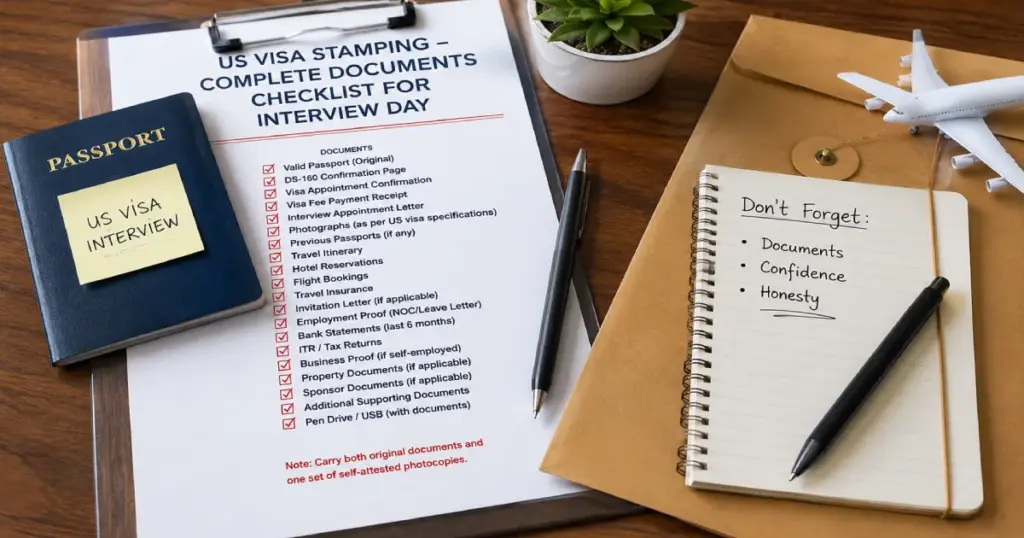
This checklist is built from official US Department of State guidance and real applicant experiences across Indian consulates – Mumbai, Delhi, Chennai, Hyderabad, and Kolkata. The documents are split into two stages: the OFC biometrics appointment and the actual visa interview. Getting both stages right is equally important. A rejected biometrics submission forces a rescheduled interview, and Indian US consulate appointments are notoriously hard to rebook at short notice.
Whether you are applying for a B1/B2 visitor visa, H1B, F1 student visa, or dependent H4 – this guide covers the mandatory documents for every category, what optional documents to bring, and what the consulate specifically prohibits inside the building.
Quick Facts – US Visa Stamping
Biometrics (OFC appointment) comes before the interview – bring appointment letter and passport only
DS-160 confirmation page with barcode: mandatory – print it, do not rely on phone
MRV fee receipt: mandatory – keep the printout from the time of payment
Passport: valid for at least 6 months beyond intended stay – bring all old passports too
Phone and electronics: NOT allowed inside the consulate – leave at home or use paid locker
Interview: typically 3 to 5 minutes – short, direct, factual answers work best
H1B dropbox (interview waiver): severely restricted from September 2025 – most applicants attend in person
Stage 1 – OFC Biometrics Appointment Documents
The OFC (Offsite Facilitation Center) or VAC (Visa Application Center) is where fingerprints and a digital photograph are collected. This appointment happens before your actual consulate interview. Keep this stage simple – the centre only needs to confirm your identity and collect biometrics.
- OFC/VAC Appointment Confirmation Letter – printed, showing your name, appointment date, time, and location
- Current Passport – original, not a photocopy
- DS-160 Confirmation Page – printed, with barcode clearly visible
- MRV Fee Payment Receipt – printed from the ustraveldocs.com payment confirmation
That is all. Do not bring a thick file of supporting documents to the OFC – it is not required and creates unnecessary confusion at the entry check. Electronics, including mobile phones, are generally allowed at OFC centers (unlike the consulate itself).
Stage 2 – Visa Interview Day: Mandatory Documents
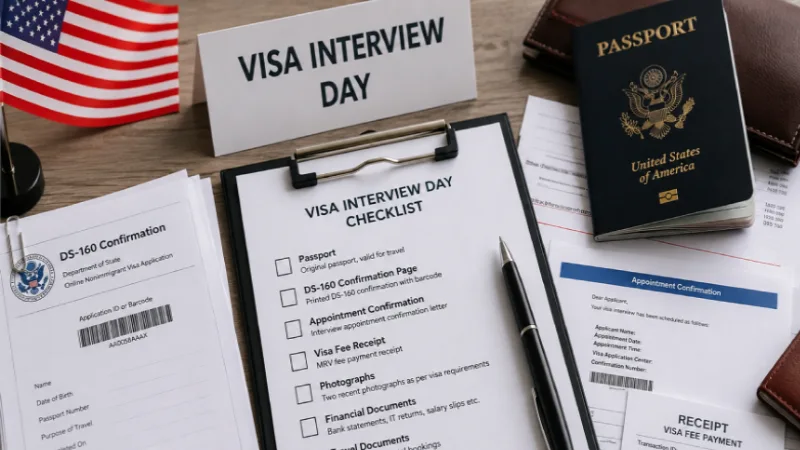
The interview at the US Consulate or Embassy is where your visa is actually decided. Every document below is either officially required or consistently expected at Indian consulates based on the visa type.
Universal Mandatory – Every Applicant
- DS-160 Confirmation Page – printed with barcode (the same one from OFC, or a fresh print)
- Visa Interview Appointment Letter – printed from ustraveldocs.com
- MRV Fee Receipt – proof of payment
- Current Passport – original, valid for at least 6 months beyond intended US entry date
- All Old/Previous Passports – especially important if any contain prior US visas, I-94 records, or prior visa refusals
- Passport-Size Photographs – 2 recent photos (51mm × 51mm, white background) even if digital were uploaded; some consulates ask for physical copies
For B1/B2 Visitor Visa Applicants
- Bank statements – last 6 months showing stable balance and income
- Salary slips – last 3 months
- Employer letter confirming employment, position, salary, and approved leave
- ITR (Income Tax Return) copies for last 2–3 years
- Property documents, fixed deposits, or other Indian asset proof
- Return flight reservation (not purchased – just a reservation showing your intent to return)
- Hotel or accommodation confirmation in the USA
For H1B Visa Applicants
- I-797 Approval Notice (original) – USCIS approval for your H1B petition
- Labor Condition Application (LCA) copy
- Employment offer letter from your US employer – job title, salary, duties, and that the offer remains open
- Latest 2–3 pay stubs if already working on H1B in the US
- Original educational certificates, degree, and transcripts
- Updated CV/resume
- If consultant: client letter or end-client project details
For F1 Student Visa Applicants
- I-20 form issued by your US university or college – signed by DSO
- SEVIS fee payment receipt (Form I-901)
- University acceptance letter
- Financial proof – your own funds or sponsor’s bank statements + sponsorship letter
- Academic transcripts and mark sheets from previous study
What Is Not Allowed Inside the US Consulate
The US Consulate building has strict security rules. Attempting to bring prohibited items will result in you being turned away at the gate – with no refund or rescheduling allowed on the day.
- Mobile phones and smartphones – not allowed inside; use the paid locker service outside
- Laptops and tablets – prohibited
- Bags larger than A4 size – check specific consulate guidelines; many allow only a small clear plastic bag
- Food and beverages
- Pens (the consulate provides pens inside)
- Children’s toys and baby seats – call the consulate for specific guidance on family appointments
What Happens Inside the Consulate – Interview Process
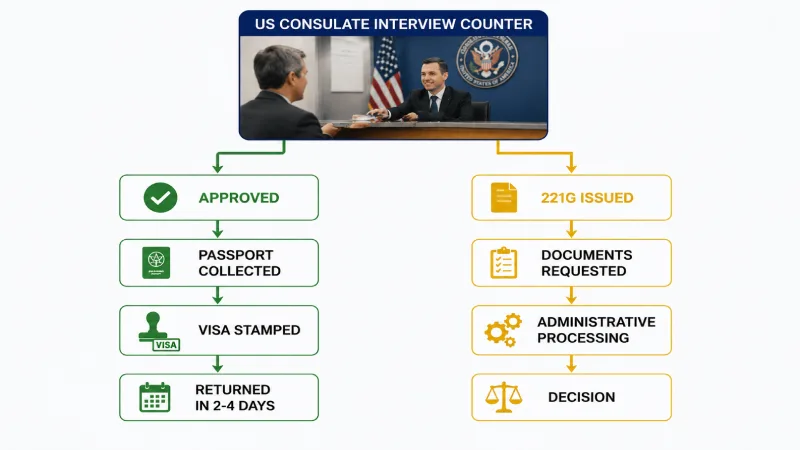
Most US non-immigrant visa interviews last 3 to 5 minutes. The officer has already reviewed your DS-160 before you walk in. They are checking for consistency between your application, your documents, and your verbal answers. Short, direct, factual answers consistently outperform long, elaborate explanations.
- You approach the counter when called – no sitting interview
- Fingerprints are taken digitally at the interview counter
- The officer asks questions about your purpose, employment, finances, and ties to India
- If approved on the spot: your passport is taken for visa stamping and returned within 2–4 working days by courier or collection
- If issued a 221(g) form: additional documents or administrative processing required – respond promptly via the method specified on the form
Also Read on RoamVisa
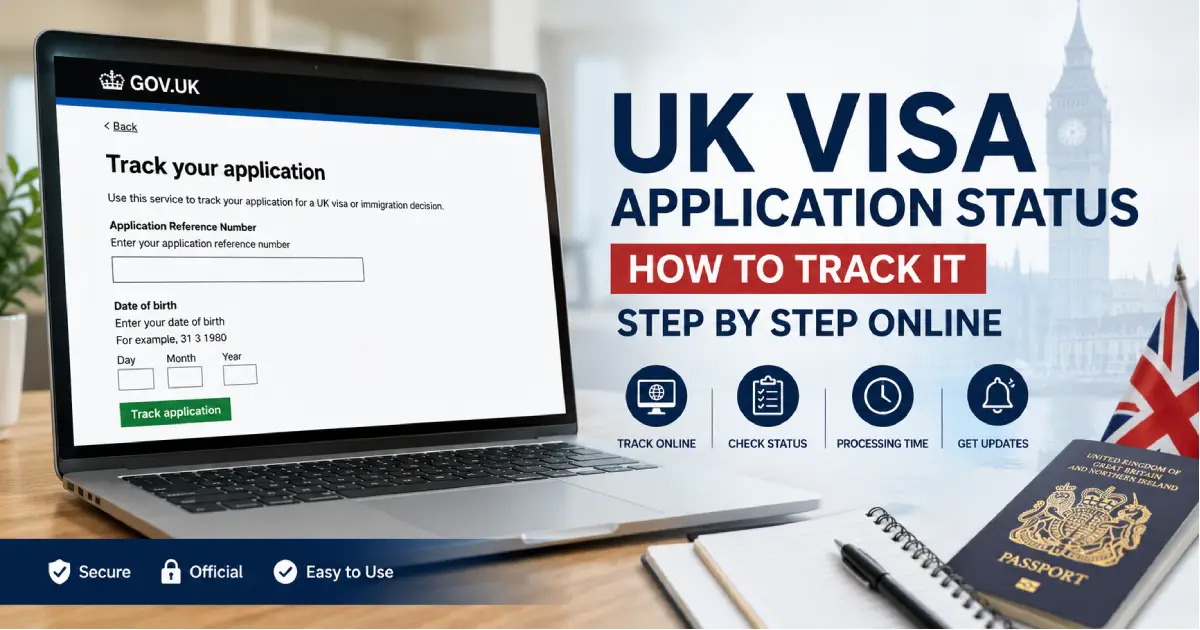
➤ UK Visa Application Status – How to Track It Step by Step Online
Final Thoughts
The single biggest mistake Indian applicants make on US visa stamping day is not missing a document – it is going in underprepared for the interview itself. The officer already knows what is in your DS-160. Your job is to confirm it clearly and concisely in person. Print everything. Do not rely on your phone to show documents at the consulate gate or at the interview counter.
A dead battery or slow screen is not an excuse the consulate will accept. DS-160, appointment confirmation, and MRV receipt – all three need to be physically in your hand. If you are going for H1B stamping in India for the first time, remember that the dropbox interview waiver has been severely restricted since September 2025. Plan for an in-person interview and book your appointment as early as possible – peak season consulate slots in Mumbai and Delhi fill up 6 to 8 weeks in advance.
Frequently Asked Questions
What documents do I need for US visa stamping in India?
Mandatory for all: DS-160 confirmation page (printed), visa interview appointment letter, MRV fee receipt, current passport, all old passports, and 2 passport photos. Additional documents depend on your visa type – B1/B2 applicants need bank statements and employer letters; H1B applicants need an I-797 approval notice and LCA copy.
Can I use my phone to show the DS-160 at the US consulate?
No. The US Consulate requires a printed DS-160 confirmation page with the barcode clearly visible. Electronic documents on phones are not accepted at the gate or counter. Print all documents before your appointment.
Are mobile phones allowed inside the US consulate?
No. Mobile phones and other electronics are prohibited inside the US Consulate building. Use the paid locker facilities outside or leave your phone with someone who accompanies you.
What is a 221g form in US visa stamping?
A 221g is issued when the consular officer cannot make an immediate decision on your visa. It requests additional documents or indicates your case requires administrative processing. Respond promptly via the specific method listed on the 221g letter – email, in-person submission, or courier as directed.
Do I need to bring original documents or copies for US visa stamping?
Both. Bring originals and carry photocopies of everything. Some consular counters retain copies and return originals. For documents like degree certificates and bank statements, having both the original and a clear photocopy ready prevents delays at the counter.