Canada is one of the world’s premier Grizzly bear watching in Canada destinations, with British Columbia holding the largest concentrated population of coastal grizzlies anywhere on earth. The Great Bear Rainforest – 1.5 million acres of temperate rainforest stretching along the BC coast – is a genuine wildlife sanctuary where grizzly bears live in their natural habitat, fishing for salmon, raising cubs, and occasionally tolerating respectful human observers. For Indian tourists planning a Canadian trip beyond typical Toronto-Banff-Niagara itineraries, adding 3-5 days of grizzly bear watching in coastal BC delivers a wildlife experience that competes globally with African safari or Yellowstone winter for quality.
This guide covers exactly where to go, when to go, which operators consistently deliver the best bear sightings and ethical experiences, and what to realistically expect on a Canadian grizzly bear watching trip. Research cross-referenced from Knight Inlet Lodge, Tide Rip Grizzly Tours, Grizzly Bear Lodge, Khutzeymateen Wilderness Lodge, Great Bear Nature Tours, Homalco Wildlife Tours, Sea Wolf Adventures, plus traveller reviews on Tripadvisor and SafariBookings. All operators listed are legitimate and established – avoid fly-by-night operators that occasionally advertise cheap bear tours with low success rates.
Quick Facts – Grizzly Bear Watching Canada
✓ Canada has 25,000+ grizzly bears – the largest population outside Alaska
✓ British Columbia holds 15,000+ grizzlies – highest concentration globally
✓ Great Bear Rainforest on BC coast is the world’s best grizzly watching destination
✓ Best season: August to October during salmon runs when bears concentrate at rivers
✓ May-June is secondary season for spring bears feeding on sedges, shellfish and mating behaviours
✓ Top operators: Knight Inlet Lodge, Tide Rip Grizzly Tours, Khutzeymateen Wilderness Lodge, Great Bear Nature Tours, Homalco Wildlife Tours, Sea Wolf Adventures
✓ Budget 500-1,200 CAD per day for guided grizzly viewing; 3-4 day packages 2,500-5,500 CAD per person
Top Grizzly Bear Watching Destinations in Canada
1. Knight Inlet – The Iconic Bear Watching Destination
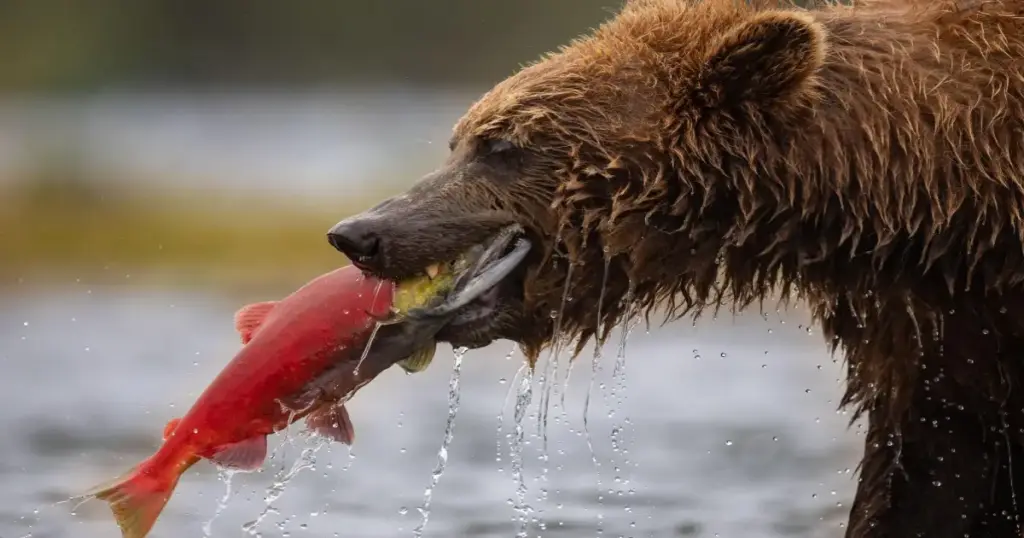
Knight Inlet is a 125-kilometre long fjord on the BC mainland coast – arguably the single best grizzly bear watching location in Canada. The combination of large salmon-bearing rivers (particularly the Glendale River), extensive sedge grass estuaries for spring feeding, and decades of non-threatening human presence at viewing stands has produced a grizzly population that is remarkably habituated to respectful human observation. Bears fish for salmon in full view of tourists from late August through mid-October, and bears also feed on sedges and beach crabs in spring from May through June.
Knight Inlet Lodge is the premier accommodation – Indigenous-owned (K’omoks First Nation partnership), floating wilderness lodge operating May 21 through October 15. 3 to 7-night packages cost 3,500-7,500 CAD per person including floatplane from Campbell River, all meals (legitimately excellent West Coast cuisine with fresh Knight Inlet seafood), guided bear viewing from boat and land-based platforms, and wilderness activities (kayaking, estuary exploration). The lodge is remote – accessible only by floatplane – which adds to the wilderness authenticity. This is the premium Canadian grizzly experience.
2. Tide Rip Grizzly Tours – Day Trip from Telegraph Cove
Tide Rip Grizzly Tours operates day trips into Knight Inlet from Telegraph Cove on northern Vancouver Island. This is the best day-trip option for travellers who cannot commit to 3+ night lodge packages. Full-day tours depart at 7 AM, cross Johnstone Strait in Coast Guard-certified boats, and spend several hours at prime bear viewing locations in Knight Inlet. Success rate: 95 percent for grizzly sightings – genuinely excellent. Continental breakfast and lunch included. 540 CAD per person for full-day tour.
Telegraph Cove is 210 kilometres northwest of Campbell River on Vancouver Island. The small former fishing village (population about 20) has become a base for multiple wildlife tour operators. Combined with Telegraph Cove whale watching from Prince of Whales or Stubbs Island, you can easily do a 3-4 day Vancouver Island wildlife trip covering grizzly bears plus orcas plus humpbacks from a single base. Best for: travellers doing Vancouver Island road trips, budget-focused wildlife viewers, visitors combining with Telegraph Cove whale watching.
3. Great Bear Rainforest – Multiple Operators
The Great Bear Rainforest is the larger coastal ecosystem encompassing Knight Inlet, Khutzeymateen, and multiple other bear watching destinations spanning 1.5 million acres of coastal BC. Multiple operators deliver lodge-based experiences in different sections of the rainforest. Key options:
Great Bear Nature Tours (Great Bear Lodge) operates from Port Hardy at the northern tip of Vancouver Island from early May through October. National Geographic Adventure has rated Great Bear Lodge among the best adventure travel companies on earth. Maximum 18 guests per session delivering intimate wilderness experience. 4-night packages 3,000-4,500 CAD per person. Grizzly Bear Lodge is another boutique option with waterfront accommodation in the central BC coast, operated by a family with long ties to the area. Fewer guests, personalised service, bear watching plus whale watching combined itineraries.
4. Khutzeymateen Wilderness Lodge – Northern BC
Khutzeymateen Grizzly Bear Sanctuary is Canada’s first and only federally designated grizzly bear sanctuary, located in the northern coast of BC within Tsimshian First Nation traditional territory. The lodge is a secluded floating accommodation (8 deluxe guest rooms) accessible only by water, with wood-fired sauna, dockside fire pit, and sea kayaks available. Bear viewing is done by boat along the estuarine channels where bears feed on sedges and salmon. 4-6 night packages 4,500-8,000 CAD per person. Best for: travellers wanting the most premium and remote Canadian bear experience, photographers seeking less-visited locations, couples on anniversary or honeymoon trips.
5. Homalco Wildlife Tours – Bute Inlet
Homalco Wildlife Tours is an Indigenous-owned operation (Homalco First Nation) operating in Bute Inlet – another pristine coastal fjord on the BC mainland. Tours depart from Campbell River on Vancouver Island, travel through the Salish Sea to Bute Inlet, and then access viewing platforms and ground-viewing locations by bus. August (pre-salmon run) through October (peak salmon season) is the viewing window. Day tours 450-600 CAD per person. Multi-day lodge packages 2,500-4,500 CAD. Best for: travellers interested in Indigenous-led wildlife experiences, those wanting to support First Nations tourism, visitors combining with Campbell River base.
6. Sea Wolf Adventures – Broughton Archipelago
Sea Wolf Adventures is another Indigenous-led operator (Musgamakw Dzawada’enuxw First Nation) operating in Broughton Archipelago and Great Bear Rainforest. Combines grizzly bear viewing with whale watching and First Nations cultural experiences. Partnership with Sointula Lodge provides accommodation. Full-day tours 500-700 CAD per person. Excellent for travellers wanting to understand the cultural context of the coastal ecosystem alongside the wildlife viewing.
When to Go – Season-by-Season Analysis
May and June – Spring Bear Season
Spring is the secondary season for BC grizzly bear watching. Bears emerge from winter hibernation, feeding on fresh sedge grasses and succulents in the estuary meadows, overturning rocks to find crabs and shellfish, and during May-June, engaging in breeding behaviours – courtship, mating, and defence of mates. Viewing is from boats in the estuarine channels rather than at specific salmon fishing locations. Bears are leaner (having lost weight over winter) and often sport matted ‘bed head’ winter coats that haven’t yet shed. Success rates: 75-85 percent at good operators. Lower tourist volumes, cheaper packages, easier booking. Best for: travellers who prefer smaller crowds over peak-season bear activity.
July – Transition Month
July is generally considered shoulder – bears are feeding on sedges and berries but salmon haven’t started running yet in most rivers. Bear sightings happen but are less predictable than August-October peak. Some operators (particularly Knight Inlet Lodge) run strong July packages; others reduce operations in July. Success rates: 70-85 percent. This month works for travellers who specifically want warmer weather (average high 20-22C) and drier days compared to September-October.
August through October – Peak Salmon Season
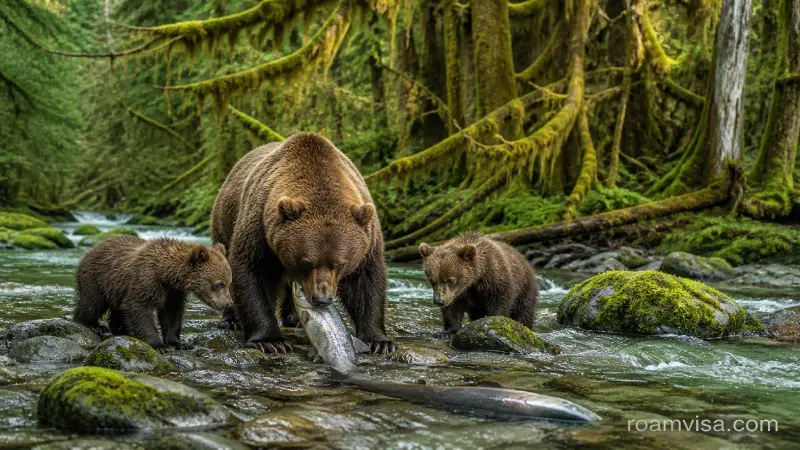
August-October is the iconic Canadian grizzly bear watching season. Chum salmon, pink salmon, and sockeye salmon run up coastal rivers to spawn, and grizzly bears concentrate at the rivers to feed. This is the period when bears are most visible, most active, and most photogenic. Sightings per day: 3-10 bears typical at peak in good locations. Behavioural variety: fishing, eating, playing, cubs learning, sow-cub interactions, occasional territorial disputes. Success rates: 95 percent or higher at established operators.
September is arguably the optimal month – peak salmon, peak bear activity, reasonable weather (10-16C), fewer tourists than August. October has the highest bear density as bears frantically feed before hibernation (hyperphagia) but weather is wetter and cooler. August has warmest weather but slightly less predictable salmon timing. Book September dates 6-9 months ahead for premium operators; August dates 9-12 months ahead.
What the Bear Watching Experience Actually Looks Like
The reality of Canadian grizzly bear watching is significantly calmer and more structured than most visitors expect. You do not hike through wilderness hoping to spot bears. Instead, operators have established viewing platforms, pontoon boats with shallow drafts that access river mouths, and structured protocols that put guests in consistent bear-viewing positions while maintaining safe distances and ethical practices.
Typical day on a multi-night lodge experience: 7 AM wake-up and breakfast; 8 AM departure by boat to morning viewing location (estuary or river mouth depending on season); 2-4 hours watching bears at 50-100 metre distance through binoculars and camera long lenses; return to lodge for lunch; afternoon activity (kayaking, forest walk, optional second viewing session); dinner; evening presentation on bear biology and conservation. The pace is genuinely relaxing – this is not intense hiking tourism but rather sustained observation-focused wildlife viewing.
Typical day on a Tide Rip day trip: 7 AM meet at Telegraph Cove dock; 2-hour boat cruise to Knight Inlet (continental breakfast served); 3-4 hours at prime bear viewing locations; lunch served on boat; return to Telegraph Cove around 4-5 PM. Longer day and faster pace than lodge-based experiences but accessible for travellers without multi-night commitment.
Photography expectations: bring a telephoto lens (400mm minimum, 600mm ideal). Most guides carry spotting scopes for guest use. Bear distances typically 50-100 metres – you will need magnification for good photos. Mobile phone photos will not capture the quality you are seeing with binoculars. A small tripod is helpful in variable light conditions. The rainforest environment is often low-light and requires higher ISO settings than open savannah.
Budget for Indian Travellers
Realistic 5-day Canadian grizzly bear watching trip for two Indian travellers including flights and all ground costs:
| Cost Category | Budget (INR) | Mid-Range (INR) | Premium (INR) |
| Return flights IN-Vancouver for 2 | 2,00,000-2,80,000 | 2,40,000-3,20,000 | 3,20,000-4,50,000 |
| Vancouver/Victoria 2 nights hotel | 20,000-35,000 | 40,000-80,000 | 1,00,000-2,00,000 |
| Grizzly lodge package (3-4 nights) | 4,00,000-5,50,000 | 5,50,000-8,50,000 | 9,00,000-16,00,000 |
| Internal flights/transport | 30,000-50,000 | 50,000-90,000 | 1,20,000-2,00,000 |
| Food meals outside lodge | 10,000-15,000 | 18,000-28,000 | 35,000-60,000 |
| Canada visa + travel insurance | 20,000-25,000 | 20,000-25,000 | 20,000-25,000 |
| TOTAL for 2 (5 days) | 6,80,000-9,55,000 | 9,18,000-13,93,000 | 14,95,000-25,35,000 |
The honest reality: Canadian grizzly bear watching is premium-priced travel. 9-14 lakh INR mid-range for two travellers 5-day trip. The alternative (Tide Rip day trips from Campbell River) dramatically reduces cost – same two travellers doing 2-night Vancouver Island trip with 1 full-day grizzly tour at Tide Rip costs 3.5-5 lakh INR including flights. Budget-focused travellers should opt for Tide Rip day trip rather than lodge package for first-time visit.
Combined Itineraries – Making the Most of a Canada Trip
Option 1: Vancouver Island Wildlife Week (Budget)
5-7 day itinerary based on Vancouver Island.
- Day 1-2: Vancouver city and arrival.
- Day 3: Ferry to Vancouver Island, drive to Telegraph Cove.
- Day 4: Tide Rip Grizzly Tours full-day Knight Inlet (540 CAD per person).
- Day 5: Telegraph Cove whale watching with Prince of Whales (170 CAD per person).
- Day 6-7: Return drive to Vancouver, final night.
Total: 3-5 lakh INR for two.
Best for: budget-focused travellers, first-time BC visitors, travellers wanting to experience both bears and whales.
Option 2: Knight Inlet Lodge Premium (Mid-Range to Premium)
6-8 day itinerary with Knight Inlet Lodge as centerpiece.
- Day 1-2: Vancouver arrival and acclimatisation.
- Day 3: Fly to Campbell River, floatplane to Knight Inlet Lodge.
- Day 4-6: Three days bear viewing at lodge.
- Day 7: Return floatplane, Vancouver.
- Day 8: Depart.
Total: 9-14 lakh INR for two including lodge package.
Best for: dedicated wildlife enthusiasts, photographers, couples wanting premium experience.
Option 3: Complete Canadian Safari (Premium)
10-14 day itinerary combining grizzly watching with other BC wildlife.
- Day 1-3: Vancouver and Whistler. Day 4: Transfer to Vancouver Island.
- Day 5-7: Knight Inlet Lodge grizzly watching. Day 8: Transfer to Tofino.
- Day 9-10: Tofino whale watching and rainforest. Day 11: Ferry to Vancouver.
- Day 12-13: Vancouver or fly to Calgary for Banff. Day 14: Depart.
Total: 15-25 lakh INR for two.
Best for: honeymoon or anniversary trips, travellers doing once-in-a-lifetime Canadian wildlife experience.
Mistakes Indian Tourists Make on Canadian Grizzly Trips
- Booking in May-June expecting salmon-fishing grizzlies – spring bears feed on sedges and estuary foods, not salmon. If you want the iconic salmon-fishing bear photos, book August-October.
- Underestimating the cost of lodge-based experiences – Knight Inlet Lodge and Khutzeymateen are premium-priced at 4-8 lakh INR per person for multi-night packages. Budget-conscious travellers should use Tide Rip day trips instead.
- Trying to self-organise bear viewing without professional operators – accessing Knight Inlet or Khutzeymateen independently is logistically difficult (requires boat, navigation, local knowledge) and ethically problematic without proper bear-viewing protocols. Use established operators.
- Packing inadequate wet-weather gear – the Great Bear Rainforest is genuinely wet year-round. Proper waterproof outer shell, waterproof pants, and waterproof boots are essential. Indian rainy-season gear is not sufficient.
- Bringing inadequate camera equipment – bear distances of 50-100 metres require telephoto lenses. Mobile phones produce tiny bear-in-rainforest images. Rent a proper telephoto lens in Vancouver before departing for the lodge if you do not own one.
- Not applying for Canadian visa with enough buffer time – Indian visitor visa processing can take 8-12 weeks. Apply 4-5 months before travel date.
- Missing the booking window – premium operators (Knight Inlet Lodge, Khutzeymateen) book 6-12 months ahead for September peak dates. Last-minute bookings either face no availability or 30-50 percent premium pricing.
Plan the Broader Canada Trip
Canadian grizzly bear watching pairs naturally with Vancouver Island whale watching for a complete Pacific Northwest wildlife experience. Our whale watching Vancouver Island best tours season and species guide covers the orca, humpback, and gray whale watching operators that complement bear watching perfectly – Tide Rip Grizzly Tours from Telegraph Cove plus Prince of Whales whale watching from the same cove delivers a 3-4 day wildlife trip covering bears plus 3 whale species without travelling extensively.
For getting to Canada cheaply from India, our Cheapest Months to fly to Canada with real seasonal fare data shows November, January, and February deliver 30-40 percent fare savings versus peak summer rates – though these are NOT the grizzly bear watching months. For grizzly trips in August-October, book flights 4-6 months ahead during moderate shoulder-season fare windows to balance flight and activity availability optimally.
Final Thoughts
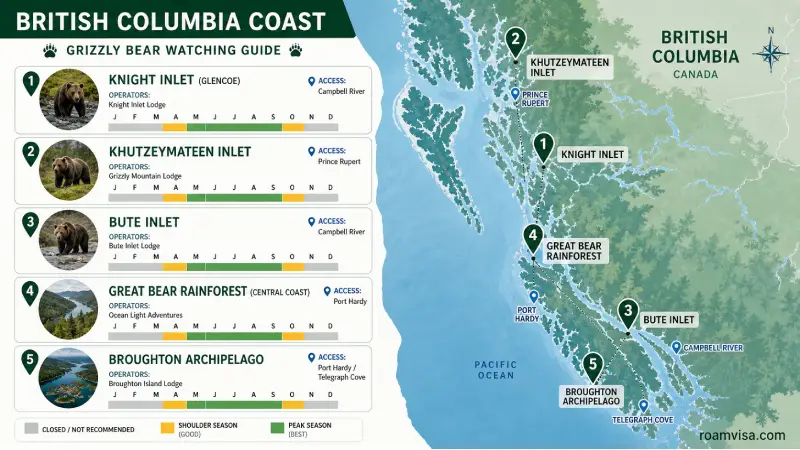
Canadian grizzly bear watching delivers a world-class wildlife experience that genuinely competes with African safari or Yellowstone winter for quality. British Columbia holds 15,000+ grizzly bears – more than any other region outside Alaska – and operators in Knight Inlet, Khutzeymateen, Great Bear Rainforest, Bute Inlet, and Broughton Archipelago have refined grizzly viewing into a structured, ethical, and reliably successful tourism experience.
Success rates of 95 percent at established operators during August-October peak season mean bear sightings are essentially guaranteed. The scale of the coastal ecosystem (1.5 million acres of Great Bear Rainforest), the cultural context (Indigenous-owned operators delivering authentic First Nations perspectives), and the photographic quality of the experience (bears fishing salmon in pristine rainforest rivers) combine to create one of the world’s best wildlife destinations. The honest recommendations for Indian travellers: for first-time Canadian grizzly watching with budget focus, book Tide Rip Grizzly Tours day trip from Telegraph Cove (540 CAD per person) combined with 2-3 nights Vancouver Island road trip covering whale watching and coastal scenery – total 3-5 lakh INR for two.
For dedicated wildlife enthusiasts with mid-to-premium budget, book Knight Inlet Lodge 3-4 night package (3,500-5,500 CAD per person) for the premium iconic Canadian grizzly experience – total 9-14 lakh for two. Book September dates 6-9 months ahead for premium operators. Apply for Canadian visa 4 months before travel. Pack proper waterproof outdoor gear and adequate photography equipment (400mm telephoto lens minimum). Combine with Vancouver Island whale watching (same Telegraph Cove or Campbell River base) for a complete Pacific Northwest wildlife trip. Done this way, Canadian grizzly bear watching joins the short list of truly world-class wildlife experiences – and delivers photographs and memories that justify every hour and rupee invested.
Frequently Asked Questions
Where is the best place to see grizzly bears in Canada?
Knight Inlet on the BC mainland coast is the single best grizzly bear watching location in Canada, home to densely populated coastal grizzlies with decades of habituation to ethical human observation. Khutzeymateen Grizzly Bear Sanctuary in northern BC is Canada’s only federally designated grizzly sanctuary. Bute Inlet and Broughton Archipelago round out the top locations. All are in British Columbia coastal regions, accessible through established tour operators like Knight Inlet Lodge, Tide Rip Grizzly Tours, Khutzeymateen Wilderness Lodge, Homalco Wildlife Tours, and Sea Wolf Adventures.
When is the best time to see grizzly bears in BC?
August through October during salmon runs is peak grizzly bear viewing – bears concentrate at rivers feeding on spawning salmon. September is arguably optimal with peak salmon, peak bear activity, reasonable weather, and fewer tourists than August. Secondary season May-June for spring bears feeding on sedges and engaging in breeding behaviours. July is transitional. November-April is closed season – bears enter hibernation in late October and remain in dens through spring.
How much does grizzly bear watching in Canada cost?
Day trips from Telegraph Cove (Tide Rip Grizzly Tours): 540 CAD per person (approximately 33,000 INR). Multi-night lodge packages range from 2,500-5,500 CAD per person for 3-4 nights at mid-range lodges, up to 4,500-8,000 CAD at premium properties like Khutzeymateen. Total 5-day Canadian trip from India for two travellers: 3-5 lakh INR for budget Tide Rip day-trip itineraries; 9-14 lakh INR mid-range with lodge stay; 15-25 lakh premium.
Is grizzly bear watching safe in Canada?
Yes when using established operators with professional bear-viewing protocols. Operators maintain minimum safety distances (50-100 metres), conduct guest safety briefings, use certified boats and viewing platforms, and employ guides with wildlife safety training. Bear attacks on structured viewing tours are essentially unknown in Canadian bear tourism industry. The greatest actual safety risk is slipping on wet rainforest trails or boat-related incidents – both managed by experienced guides and crew.
Do I need a Canadian visa for grizzly bear watching?
Yes, Indian passport holders require Canadian visitor visa (TRV) unless they hold valid US visa (in which case eTA may suffice). Apply 4-5 months before travel with tour booking confirmation, hotel reservations, bank statements, employment letter, and return tickets. Processing takes 8-12 weeks typically. Avoid booking non-refundable lodge packages until Canadian visa is approved – premium lodges like Knight Inlet have strict cancellation policies.
What should I bring for Canadian bear watching?
Essential gear: waterproof outer shell jacket and waterproof pants, waterproof hiking boots or wellington boots, warm layers for cool rainforest temperatures (10-16C typical September), binoculars (minimum 8×42), camera with telephoto lens (400mm minimum for decent bear photos), small daypack, water bottle, and bear-safe food storage if camping (provided at lodges). Do not bring scented toiletries to lodge environments – bears have extraordinary sense of smell.