
Tuscany Road Trip Itinerary (2026): Best Route, Hill Towns & How Many Days

Tuscany arrives in real life already heavily freighted with expectation. You have seen the photographs: the cypress-lined hill roads, the terracotta rooftops, the vineyards running to the horizon, and the medieval towers of San Gimignano at golden hour. The particular relief of Tuscany is that these photographs are essentially accurate. The landscape really does look like that. The food really is that good. And driving between the hill towns on small country roads with afternoon light on the olive groves is genuinely one of the great pleasures of European travel.
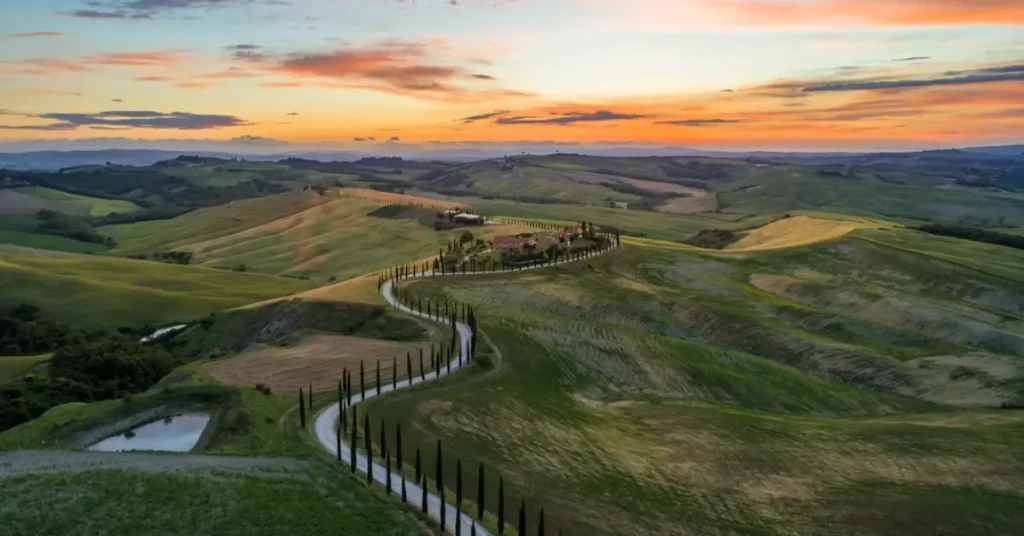
A car is essential. Public transport between the small hill towns exists in theory but in practice is so limited that visiting them properly requires driving. Renting a small car – a Fiat 500, VW Polo, or similar – makes sense on Tuscany’s narrow rural roads and solves the eternal parking puzzle at towns not designed for anything larger.
How Many Days Do You Need?
For just the hill towns without Florence – Siena, San Gimignano, Montepulciano, Pienza, and Val d’Orcia – four to five days works well. Base yourself in Siena and make day trips from there, spending evenings in the city for aperitivo and dinner.
Including Florence: add two days minimum. Florence deserves more, but two days covers the Uffizi, Duomo, and essential walking. Note that Florence’s ZTL zone covers the entire historic centre – do not drive into it even briefly. Park at park and ride on the outskirts and use trams. For a complete experience including Lucca, Pisa, Chianti, and the Maremma coast, ten or more days are needed. But for most first-timers, the southern Tuscany circuit of Siena, San Gimignano, Montepulciano, Pienza, and Val d’Orcia covers the essentials of Tuscany thoroughly.
Florence to Siena – 1.5 Hours
Take the Via Chiantigiana through Chianti rather than the direct superstrada. The wine road unfolds around you – vineyards, olive groves, stone farmhouses, and medieval hamlets on hilltops. Allow two hours with stops. Wine estates welcome drop-in tasting visitors throughout the Chianti region.
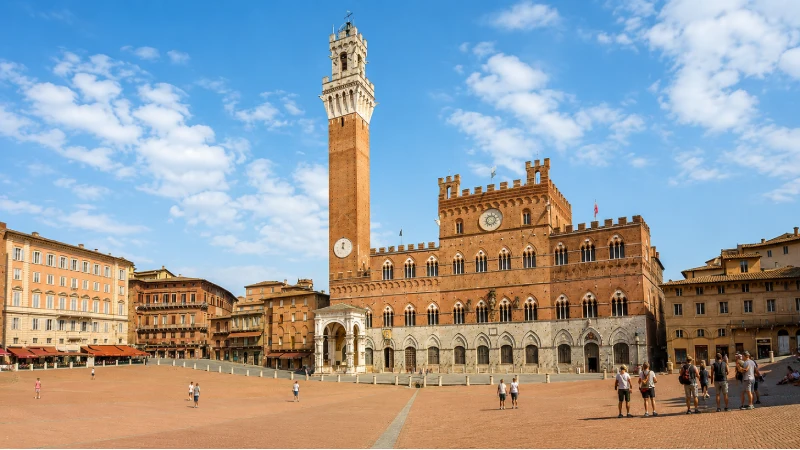
Siena requires significant time – it is not a quick stop. The Piazza del Campo is one of the great public spaces in Europe: a vast fan-shaped square sloping toward the Palazzo Pubblico, ringed by Gothic palaces. The Duomo is striped green and white and extraordinary. Climbing the Torre del Mangia – 400 steps, 289 feet – is non-negotiable on a clear day. Stay overnight in Siena if at all possible; the evening atmosphere when tourists thin out reveals a completely different, locals-out-for-aperitivo city.
San Gimignano – 50 Minutes from Siena
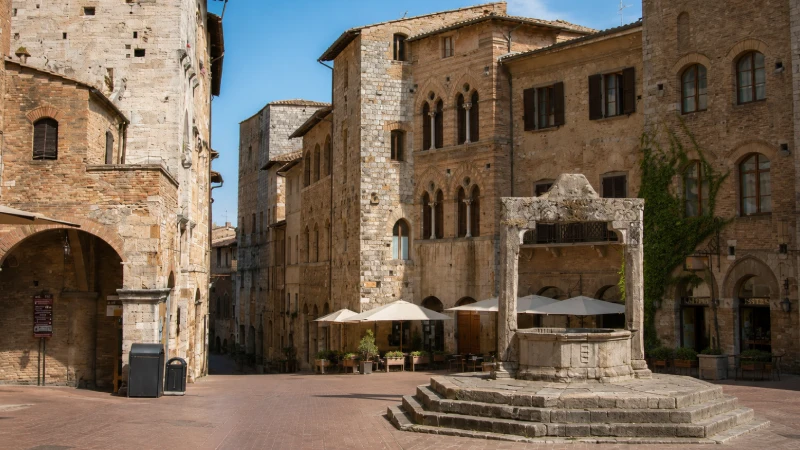
San Gimignano is famous for its towers – originally 72, now 14, built by wealthy families as status symbols in a direct medieval precursor to modern skyscraper competition. The silhouette from a distance is unlike anything else in Italy. Up close, the town is compact, beautiful, and genuinely interesting.
The gelato at the Gelateria Dondoli near Piazza della Cisterna has won the World Gelato Championship more than once – this is not marketing; it is a statement of documented fact. The Vernaccia di San Gimignano white wine, produced only here, is the other essential stop. Arrive early morning (before 8am) for the atmospheric experience before the tour groups arrive. San Gimignano crowds significantly in peak season.
Val d’Orcia – The UNESCO Cypress Road
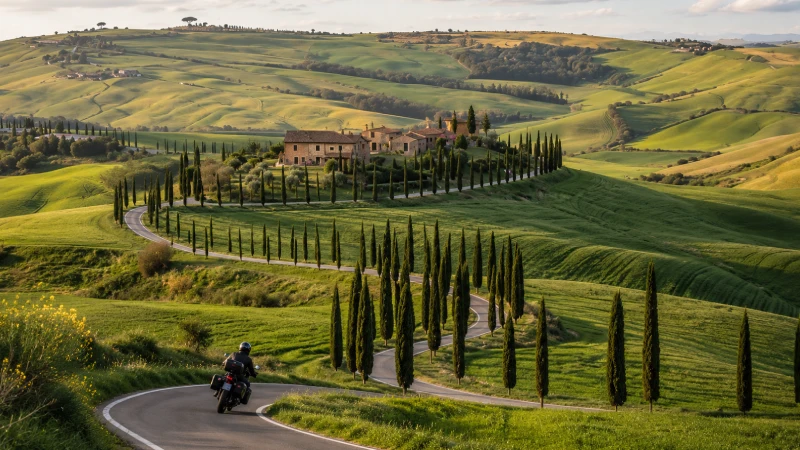
The Val d’Orcia is a UNESCO World Heritage Site valley in southern Tuscany, and its rolling hills dotted with cypress trees, medieval villages on every ridge, and that specific quality of light in late afternoon have defined the international image of Tuscany more than anywhere else. The famous cypress road near La Foce – accessible via the SP146 or SP88 between Pienza and Montepulciano – is real, driveable, and as beautiful in person as it appears in photographs when the light is right.
The magic hour runs from about 5 to 7pm, after harsh midday light but before darkness. In this window the landscape takes on a golden quality that makes every photograph look better than expected. Drive the SP146 between Pienza and Montepulciano in late afternoon light deliberately. This is the image most people came to Tuscany to see in person.
Montepulciano
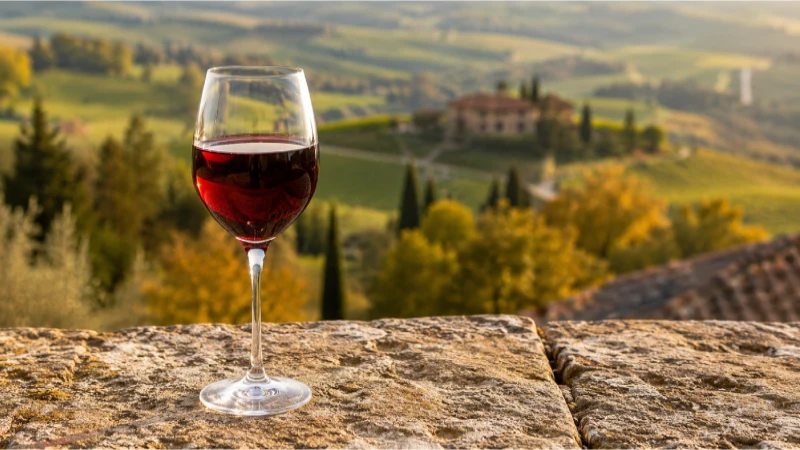
Montepulciano is a steep medieval hill town famous for Vino Nobile di Montepulciano – do not confuse this with Montepulciano d’Abruzzo, which is a completely different grape from a different region. The Cantina De’ Ricci underground wine cellar descends into Etruscan rock beneath the Renaissance palazzo above and is one of the finest wine-tasting environments in all of Italy. Walk steeply up to the Piazza Grande at the top of town, then walk down to the San Biagio Renaissance church isolated in the countryside below the walls – framed by cypress trees and exceptional at sunset.
Pienza
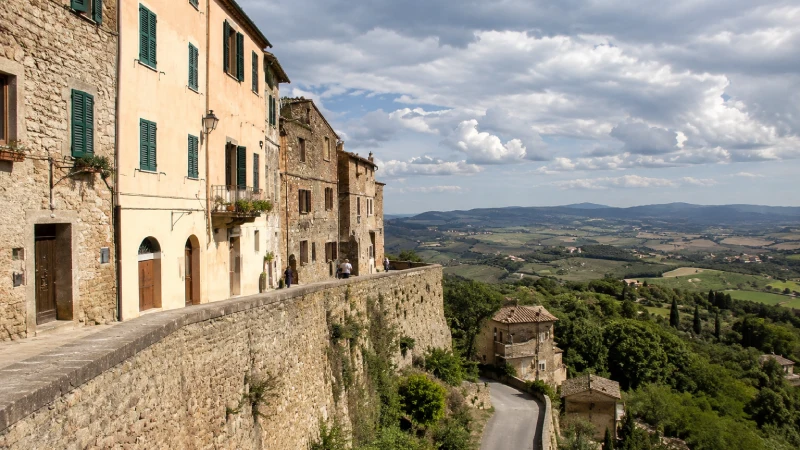
Pienza, seventeen minutes from Montepulciano, is called the Ideal City of the Renaissance – built by Pope Pius II as his vision of a perfect town, and the harmonious composition of the cathedral, papal palace, town hall, and central piazza still impresses 500 years later. The pecorino cheese produced in and around Pienza is exceptional. Buy some from one of the small shops on the main street along with a bottle of local Brunello and eat it at a viewpoint over the Val d’Orcia.
| Town | From Florence | Key Experience | Time Needed | Best Wine |
|---|---|---|---|---|
| Siena | 1h 30m direct | Piazza del Campo, Duomo, Torre del Mangia | Full day + overnight | Chianti Classico |
| San Gimignano | 1h 20m via Siena | Medieval towers, world’s best gelato | Half day | Vernaccia di San Gimignano |
| Volterra | 1h30m | Etruscan ruins, alabaster, and a moodier atmosphere | Half day | Vernaccia |
| Montepulciano | 1h45m via Siena | Vino Nobile, underground cellars, San Biagio | Half day | Vino Nobile di Montepulciano |
| Pienza | 1h55m | Renaissance ideal city, Pecorino cheese | 2–3 hours | Local Brunello nearby |
| Montalcino | 2 hours | Brunello wine, hilltop fortress, Val d’Orcia views | Half day | Brunello di Montalcino |
ZTL Zones – The Most Important Practical Point
ZTL stands for Zona a Traffico Limitato – Limited Traffic Zone. Signs and cameras appear at the entries to historic centers throughout Tuscany. If you drive into a ZTL zone without authorization (which as a tourist you almost never have), cameras photograph your vehicle, and a fine arrives weeks later through your rental company, often with a handling fee added.
The solution is straightforward: park outside the historic center at signposted car parks and walk in. Every Tuscan hill town has parking outside the walls with short walks to the center. This is also the right way to approach these towns – arriving by car into narrow medieval streets is stressful in a way that a five-minute walk from a car park simply is not.
Final Thoughts
Tuscany rewards the road trip format because the driving is part of the experience. The SP146 between Pienza and Montepulciano is not just a connecting road – it is one of the most beautiful roads in Europe. The approach to San Gimignano from the south with the towers silhouetted against the sky is something you remember for years.
The descent into Siena after an afternoon in the Chianti vineyards is exactly the mood a road trip should create. The ZTL system is the most important practical information for first-time drivers in Tuscany. Park outside and walk in – this is not a compromise; it is the right approach. Medieval streets were not designed for cars, and driving a Fiat 500 through Montepulciano’s narrow lanes is stressful in a way that a five-minute walk from the car park is not.
May and September are the best months – wildflowers in the Val d’Orcia in May, harvest season and truffle fairs in September, and extraordinary light in both. July and August are hot, crowded, and significantly more expensive at every level.
Frequently Asked Questions
Do you need a car for a Tuscany road trip?
Yes, essential. Small hill towns like Montepulciano, Pienza, and Volterra have one or two buses per day if you’re lucky. Rent a small car from Florence or Siena.
What is a ZTL zone?
Zona a Traffico Limitato – Limited Traffic Zone. Cameras at the entry photograph all vehicles. If you enter without authorization, a fine arrives weeks later. Park outside and walk in.
How many days in Tuscany?
Just hill towns: 4–5 days. Hill towns plus Florence: 7 days. Everything, including Lucca, Pisa, Chianti, and the coast: 10+ days.
Best time to visit Tuscany?
May and September. July–August is hot, expensive, and crowded. The Val d’Orcia golden light exists all year – just better in spring and autumn.
How do I find the famous Cypress Road?
Drive the SP146 between Pienza and Montepulciano in the late afternoon (5–7pm). Search for Podere Belvedere San Quirico d’Orcia on Google Maps for the most-photographed specific viewpoint.


