
Best Albanian Riviera Beaches: Hidden Gems You Need to Visit in 2026

Every year around this time, the same five names show up on every ‘best beaches’ list: Bali, the Maldives, Santorini, Phuket, and Zanzibar. They’re beautiful, sure. They’re also packed, priced for tourists who’ve never checked an exchange rate, and photographed to death. If you want a beach holiday that still feels like a discovery instead of a checklist item, there’s a stretch of coastline in Europe that most Indian travelers haven’t even considered yet – the Albanian Riviera.
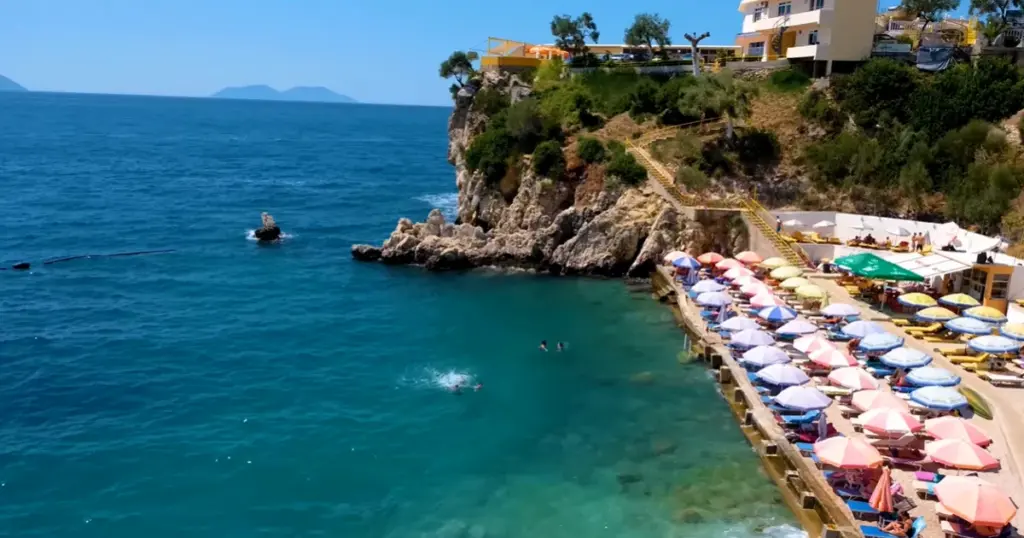
Albania sits quietly between Greece and Montenegro, along the Ionian and Adriatic seas, and for decades it stayed off the radar simply because it was closed to outside tourism for most of the 20th century. That’s changed fast. The water is the same turquoise you’d pay Santorini prices for, the towns are still mostly run by families rather than international hotel chains, and a week here costs a fraction of what you’d spend in Greece or Italy for the same view. This is the part of the story we want to get into – which beaches are actually worth your time, when to go, what it costs, and what an Indian passport holder needs to sort out before booking flights.
Why the Albanian Riviera Is Having a Moment Right Now
A few things came together at once. Flights into Tirana got cheaper and more frequent as European budget airlines added routes. Instagram did what Instagram does – a handful of photos of Ksamil’s little islands started circulating, and people realized this wasn’t Greece; it was Albania, and it cost a third as much. And Albania’s own tourism board leaned into the comparison, openly marketing towns like Ksamil as an answer to the Maldives for anyone who can’t justify a Maldives budget.
None of that would matter if the coastline itself weren’t good. It is. The Albanian Riviera runs roughly from Vlore down to Sarande, hugging cliffs and pine forest the whole way, with beaches tucked into coves you can only reach by boat or a fairly serious hike. It has the drama of the Amalfi Coast without the crowds, and the water clarity of the Greek islands without the markup on a plate of grilled fish.
There’s also a simpler reason Indian travelers are starting to notice: Albania isn’t in the Schengen zone, but it treats a valid Schengen, US, or UK visa as good enough to let you in visa-free. If you already have one of those visas sitting in your passport from a previous trip, Albania becomes one of the easiest ‘new country’ additions to a Europe itinerary you’ll find anywhere on the continent.
The Beaches Worth Planning a Trip Around
Ksamil
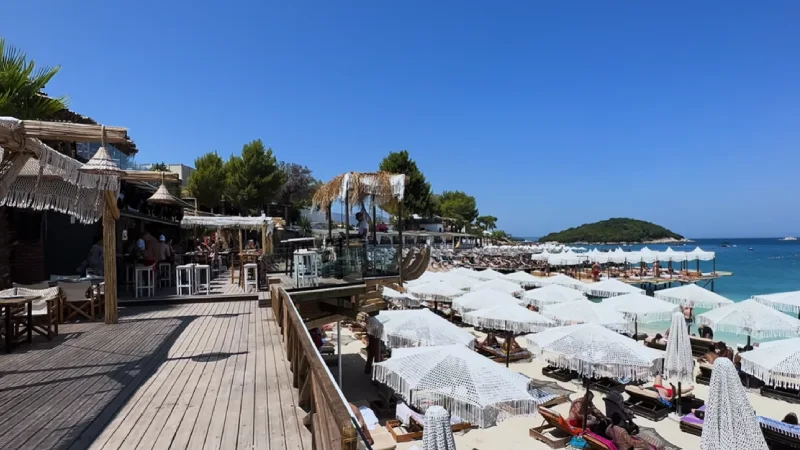
This is the one you’ve probably seen without knowing the name. Four tiny islands sit just off the coast, close enough to swim to on a calm day, and the water between them is shallow and startlingly clear. Sunbeds and small restaurants line the shore, so it’s set up for a full day out rather than a quick stop. Go early – by midday in July and August, Ksamil fills up with day-trippers from Sarande, and the loungers disappear fast.
Dhermi
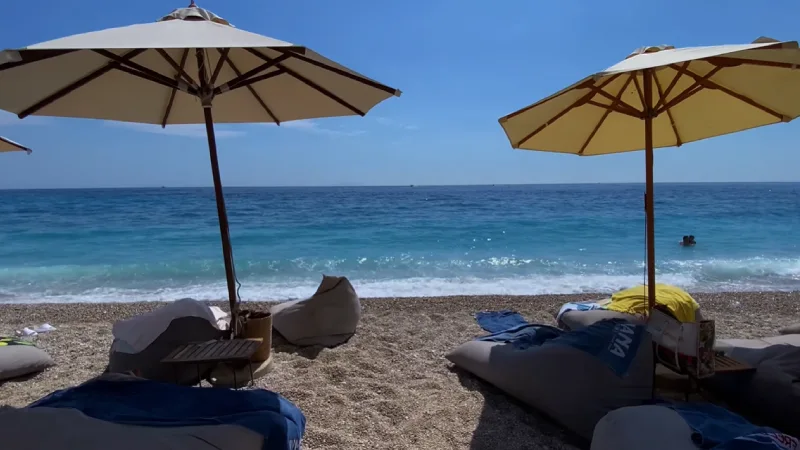
A longer stretch of sand backed by mountains, with a much younger, livelier crowd than Ksamil. Beach clubs here play music into the evening, and the town above the beach has grown into a proper nightlife spot over the last few summers. If you want a beach day that turns into a beach night, Dhermi is where people end up.
Himare
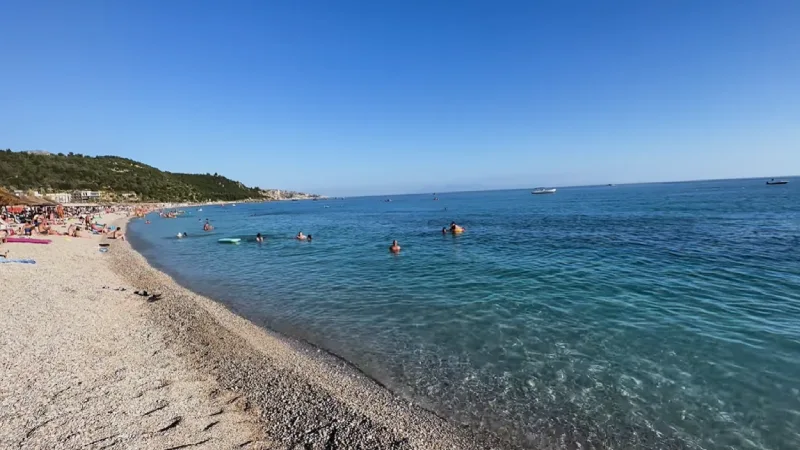
Quieter than both of the above, with a mix of pebble and sand beaches and a old town worth wandering through once the sun starts to drop. This is a good base if you’d rather split your days between swimming and just walking around somewhere that still feels lived-in rather than built for tourists.
Gjipe Beach
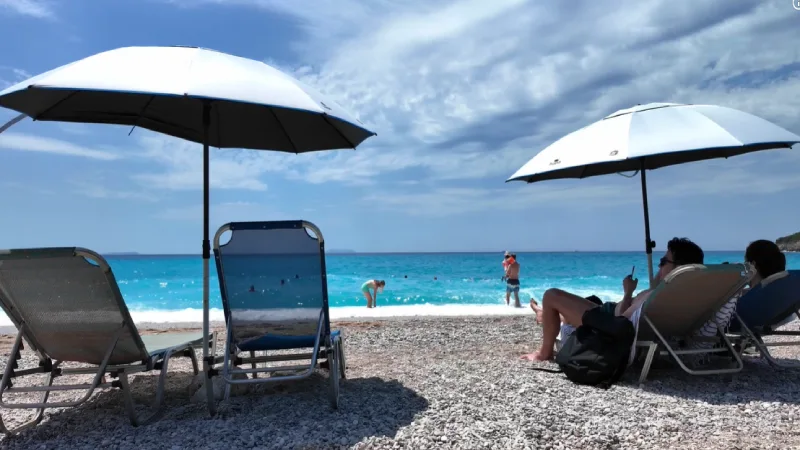
No road goes here. You either hike down through a canyon for about forty minutes or take a short boat ride from Dhermi. The reward is a beach with almost no development – a couple of small tented cafés, cliffs on either side, and none of the beach-club noise you’d find a few kilometers up the coast. Bring water and proper shoes for the walk down.
Sarande
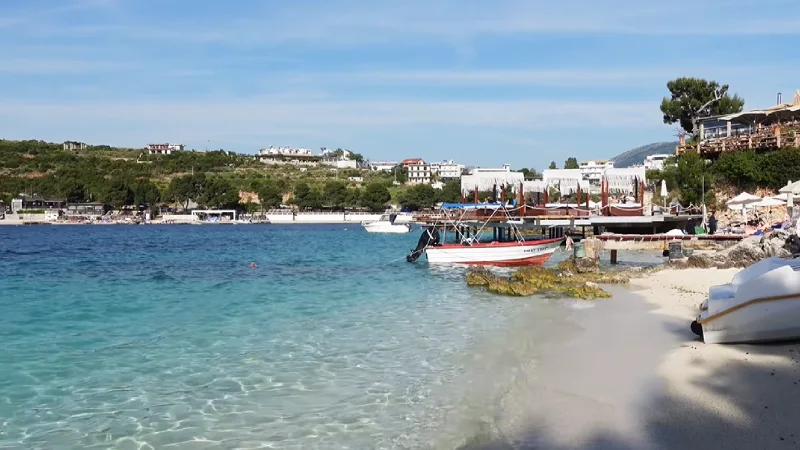
The biggest town on the Riviera and the most practical base if you want restaurants, an ATM, and a bit of nightlife alongside your beach days. It’s also the jumping-off point for a day trip across the water to Corfu, which more than a few travelers add on without realizing how close it is.
Getting There and Getting Around
Most international flights land in Tirana, Albania’s capital, which now has decent connections through hubs like Istanbul, Dubai, and several European cities – meaning Indian travelers rarely need more than one stopover. From Tirana, the Riviera is roughly a three- to four-hour drive south, and this is genuinely the one part of the trip we’d tell you to plan properly.
Public buses (furgons) run the route and are cheap, but they don’t run on a fixed timetable – they leave when they’re full, which is fine if you’re relaxed about time and frustrating if you’re not. Renting a car gives you far more control, and the coastal road itself is part of the experience, all switchbacks and sudden sea views. If driving in a country where you don’t know the roads makes you nervous, private transfers between towns are easy to arrange and not expensive by European standards. Once you’re on the Riviera itself, towns are close enough that taxis and short furgon hops between beaches work fine – you don’t need a car for every single day.
What a Trip Like This Actually Costs
This is where Albania quietly wins. A double room in a decent guesthouse along the Riviera runs somewhere between €30 and €70 a night in peak season, compared to two or three times that for an equivalent room in Santorini or the Amalfi Coast. A full seafood dinner with wine for two people rarely crosses €25. Sunbeds at most beaches cost a few euros for the day, and plenty of quieter spots don’t charge at all.
Budget roughly €700 to €1,600 per person for a week, including flights, depending on where you’re flying from and how far in advance you book. That range covers everything from a fairly basic backpacker setup to a comfortable mid-range trip with a rental car and a few nicer dinners thrown in. It’s the kind of number that makes a two-week Europe trip suddenly possible on a budget that would barely cover a week in Western Europe.
Visa and Paperwork for Indian Travellers
Here’s the part that actually matters before you start looking at flights. Indian passport holders do need a visa for Albania, but the process has moved almost entirely online, and there’s a shortcut worth knowing about.
If you already hold a valid multiple-entry Schengen, US, or UK visa, and you’ve used it at least once to enter that country or region, Albania will let you in visa-free for up to 90 days in any 180-day period. No separate Albanian visa application, no extra fee, no waiting on approval. For anyone who’s already travelled to Europe or the US recently, this alone can turn Albania into a same-trip add-on rather than a separate visa application.
READ MORE: Schengen Visa Cover Letter Template – What Every Embassy Wants
If you don’t hold one of those visas, you’ll need to apply for Albania’s own e-visa (the Type C short-stay category) through the official portal. It’s done entirely online – no embassy visit is required for most applicants – and typically asks for a scanned passport, a photograph, proof of your return flight and accommodation, and a bank statement showing you can cover the trip. Processing has been running around 10 to 15 working days, so it’s worth applying a few weeks before you fly rather than the week before.
One document trips people up more than any other: travel medical insurance. Albania requires proof of cover, generally with a minimum of €30,000 in medical coverage, valid for your full stay. This isn’t a box-ticking formality either – it’s genuinely useful to have real cover if you end up needing a doctor while hiking down to Gjipe or driving that coastal road for the first time. Sort your insurance before you start the visa application, since most portals ask you to upload the policy as part of the process.
When to Go and What to Expect Once You’re There
July and August are peak season, which means warm sea, long daylight, and every beach club fully open – but also the highest prices and the biggest crowds, especially in Ksamil. May, June, and September give you nearly the same weather with noticeably fewer people and lower room rates, and this is genuinely the sweet spot most repeat visitors point to.
Food here leans heavily on fresh seafood, olive oil, and grilled everything, with a strong Italian and Greek influence given the geography. English is spoken widely enough in tourist areas that you won’t struggle, though a few words of Albanian go a long way with guesthouse owners who still run things themselves. People are genuinely curious about Indian travellers here – this isn’t a place that’s grown tired of tourists yet, and it shows in how locals treat you.
Where to Base Yourself
If you only have a few days, Sarande makes the most practical base – restaurants, ATMs, and easy day trips to Ksamil and even Corfu. If you’d rather slow down and pick one or two spots properly, split your time between Himare for the quieter days and Dhermi if you want a night or two of actual nightlife. Most guesthouses along the coast are small, family-run, and book up fast in July and August, so if your travel dates are fixed, lock in accommodation a couple of months ahead rather than assuming you’ll find something on arrival.
A trip to the Albanian Riviera isn’t going to look like a typical Europe holiday, and that’s really the point. You get Mediterranean water, cliffside towns, and food that hasn’t been adjusted for tourist expectations, at a price that leaves room in your budget for the rest of your trip – or for coming back next year. Sort your visa route (or confirm you qualify for visa-free entry), get your travel insurance in place early, and the rest of the planning is genuinely the easy part.
Beyond the Beach: Things Worth Building a Day Around
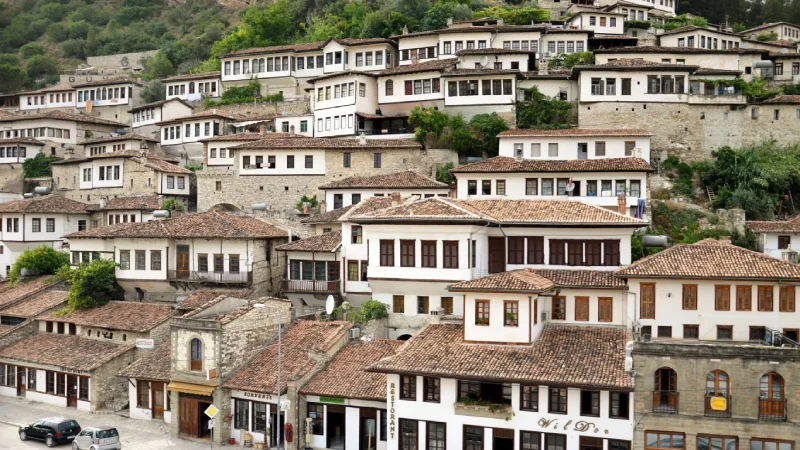
It’s easy to plan this whole trip around swimming and forget that the towns behind the coastline have their own reasons to slow down for. Berat, a couple of hours inland, is nicknamed the ‘City of a Thousand Windows’ for good reason – Ottoman-era houses stacked up a hillside, all facing the same direction, lit up gold in the evening. It’s a full day trip from the Riviera but a worthwhile one if you’re not purely a beach-and-nothing-else traveller.
Closer to the coast, Butrint sits inside a national park near Sarande and holds ruins going back to Greek, Roman, and Venetian occupation, layered on top of each other in a way that’s rare to see this well preserved. It takes an hour or two to walk through properly, and it’s a good option for a half-day break if you want something other than sand between your toes for a morning.
Gjirokaster, another UNESCO town, has the same stone-house character as Berat but with a hilltop castle looking over the valley. Both towns work as day trips from Sarande or Himare if you’re renting a car, and neither requires more than a few hours to feel like you’ve actually seen them rather than rushed through.
For anyone who wants to be in the water without just floating in it, the coastline has decent snorkeling around rocky coves near Himare and a few dive operators running trips out of Sarande. Boat trips along the coast – either a short hop to Ksamil’s islands or a longer day trip that swings past Gjipe and a few hidden coves – are widely available and cheap enough that it’s worth doing at least once even if you’re not usually a boat-trip person.
A Simple Way to Structure a Week
If you’re not sure how to divide your time, here’s roughly how a week plays out for most first-time visitors. Fly into Tirana and spend a night there before heading south – it’s a genuinely interesting city in its own right, with a fair bit of history mixed into a fast-changing skyline, and it’s a shame to treat it purely as an airport.
From there, head to Himare or Dhermi for two or three nights as your first coastal base, using it to reach Gjipe and the beaches immediately around it. Move down to Sarande for the back half of the week, using it as a base for Ksamil, Butrint, and possibly a day trip across to Corfu if your visa situation allows it. Save Berat or Gjirokaster for either the start or end of the trip, depending on your flight timings, rather than trying to squeeze an inland day into the middle of your beach week.
This isn’t the only way to do it, and if all you want is to plant yourself on one beach for seven days, Ksamil or Dhermi both handle that well. But if you’re coming from India and spending real money on flights to get here, splitting the week between two or three bases tends to feel like better value for the effort.
A Few Practical Things Nobody Mentions Upfront
Cash still matters more here than in Western Europe. Card payments are increasingly common in Sarande and the bigger beach clubs, but smaller guesthouses, local restaurants, and furgon drivers often expect Albanian lek in cash, and ATMs can be sparse the further you get from the main towns. Withdraw more than you think you’ll need before heading down the coast.
Sunbeds and umbrellas at organized beaches usually come with a minimum spend at the attached restaurant rather than a flat rental fee, which works out fine if you were planning to eat there anyway. Water bottles are worth carrying yourself, especially on hiking routes like the walk down to Gjipe, since shade and shops thin out fast once you’re off the main beach strips. And if you’re traveling in peak season, book your first night’s accommodation before you land – Tirana and the coastal towns both fill up faster than the relatively low profile of this destination would suggest.
Frequently Asked Questions
Do Indian citizens need a visa to visit Albania?
Yes, in most cases. But if you already hold a valid, previously-used multiple-entry Schengen, US, or UK visa, you can enter Albania visa-free for up to 90 days. Without one of those, you’ll need to apply for Albania’s Type C e-visa online before you travel.
Is the Albanian Riviera actually cheaper than Greece or Italy?
Generally, yes, often by half or more on accommodation and food. Rooms and meals along the Riviera run noticeably lower than equivalent spots in Santorini or the Amalfi Coast, especially outside the July-August peak.Generally, yes, often by half or more on accommodation and food. Rooms and meals along the Riviera run noticeably lower than equivalent spots in Santorini or the Amalfi Coast, especially outside the July-August peak.
What’s the best month to visit for good weather without huge crowds?
June and September tend to hit that balance – warm enough for swimming, with fewer crowds and lower prices than July and August.
Do I need a car to see the Riviera properly?
Not strictly, but it helps. Furgon buses connect the main towns cheaply, though without fixed schedules. A rental car gives you far more flexibility, especially for reaching quieter beaches like Gjipe.
Is travel insurance really required, or just recommended?
It’s a genuine requirement for the Albania visa application, with a minimum coverage amount specified. Even where it isn’t strictly checked at the border, it’s worth having in a country where you’ll likely be hiking, swimming, and driving unfamiliar roads.
Can I combine an Albania trip with Greece or Italy?
Yes, and many travellers do. Corfu is a short ferry ride from Sarande, and several budget airlines connect Tirana with Italian cities, making it easy to fold Albania into a longer Mediterranean itinerary rather than treating it as a standalone trip.
How many days are enough for the Albanian Riviera?
Five to seven days gives you enough time to properly see two or three beach towns plus one inland day trip, without feeling rushed. A shorter three-day trip works fine if you’re only adding it on to a longer Europe holiday.


