
Dubai Desert Safari – Complete Guide to What to Expect

Dubai desert safari complete guide This is the single experience that every visitor to Dubai puts on their list, and it consistently delivers more than people expect. The Arabian desert outside Dubai is vast, golden, and genuinely dramatic at sunset, and a well-organised desert safari packs dune bashing, camel riding, sandboarding, falconry, a Bedouin camp dinner, belly dancing, and a sky full of stars into a single unforgettable evening.
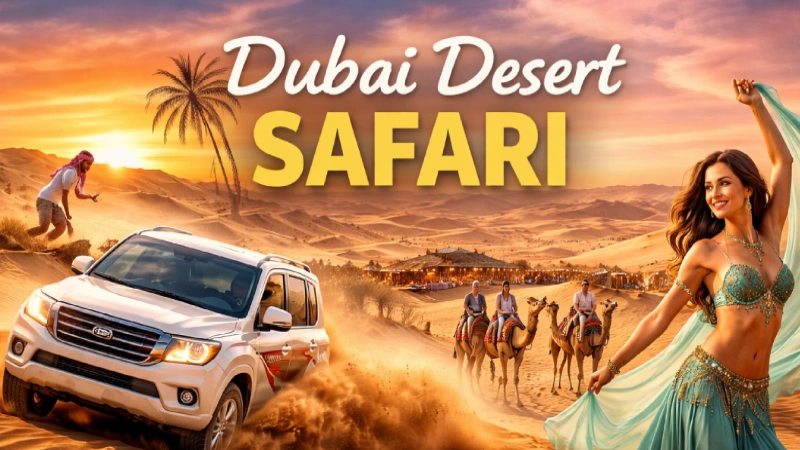
The Dubai desert is not a backdrop it is the destination. The Lahbab Desert, located about 45 kilometres south-east of central Dubai, covers hundreds of square kilometres of red-gold sand dunes that reach up to 100 metres in height. When a professional driver takes a 4×4 over those dunes at speed, tilting and sliding down near-vertical slopes, the experience is as close to a theme park thrill as anything in nature provides.
This guide explains every type of Dubai desert safari available, exactly what happens during each activity, what to wear, when to go, how to book and everything else you need to know before you step into a Land Cruiser and point it at the dunes.
Dubai Desert Safari Quick Facts
Most popular type: Evening safari dune bashing + Bedouin camp dinner
Desert location: Lahbab Desert (Al Maha), 45 km south-east of Dubai city
Duration: Morning safari 4–5 hrs | Evening safari 6–7 hrs | Overnight full experience
Best months: October–April cooler temperatures, comfortable for all activities
Not suitable in summer: June–August temperatures exceed 45°C limited operations
Price range: AED 150–350 per person (standard) | AED 500–1,500 (luxury private)
Best for: All ages, families, couples most operators accept children from age 3
Included typically: Transport, dune bashing, camel ride, sandboarding, BBQ dinner, shows
Dubai Desert Safari Types Which One to Choose
| Safari Type | Duration | Best For | Key Activities | Approx. Price |
|---|---|---|---|---|
| Morning Desert Safari | 4–5 hours | Active travellers, families with young children | Dune bashing (cooler), sandboarding, camel ride, breakfast | AED 150–250 p/p |
| Evening Desert Safari | 6–7 hours | Most visitors the classic Dubai safari experience | Dune bashing, sunset, camel ride, Bedouin camp, BBQ dinner, shows | AED 180–350 p/p |
| Overnight Safari | 14–16 hours | Couples, photographers, stargazers | Full evening + sleeping in desert under stars + sunrise | AED 500–900 p/p |
| Private Luxury Safari | 5–8 hours | Honeymoons, special occasions, small groups | Private vehicle, exclusive camp, fine dining, personal guide | AED 800–1,500 p/p |
| Quad Bike Safari | 3–4 hours | Thrill-seekers, teens and adults | ATV quad biking across dunes, no camp dinner included | AED 250–450 p/p |
| VIP Hot Air Balloon | 3–4 hours (dawn) | Couples, photographers, luxury experience | Pre-dawn drive, balloon flight over desert at sunrise | AED 1,000–1,800 p/p |
1. Dune Bashing What Actually Happens
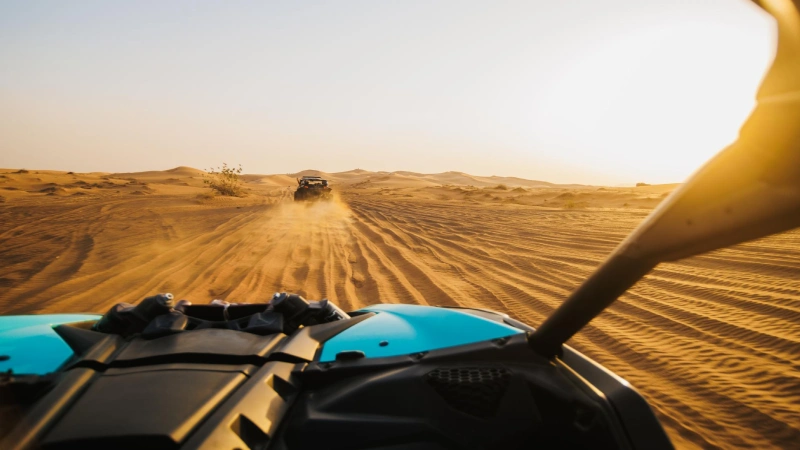
Dune bashing is the centrepiece of every Dubai desert safari a 45 to 60-minute session in a modified 4×4 Land Cruiser or Toyota Land Cruiser driven by a professional driver who has spent years learning the terrain. The driver deflates the vehicle’s tyres at the start of the session (to around 15 PSI) to spread the weight across the sand, then navigates a route across the Lahbab dunes that includes steep ascents, sudden drops, sharp corners and several moments where the vehicle is tilted at angles that feel entirely impossible.
The experience is designed to be thrilling rather than dangerous the drivers are licensed professionals and all vehicles are fitted with roll bars and safety equipment. Most passengers describe it as somewhere between a rollercoaster and off-road motorsport. Motion sickness is genuinely possible for some travellers: if you are susceptible, take a motion sickness tablet one hour before departure.
What to know about dune bashing:
- Tyre deflation: drivers reduce tyre pressure from 35 PSI to approximately 15 PSI before entering the dunes. This is essential standard tyre pressure causes vehicles to sink in soft sand. Tyres are re-inflated at the camp.
- Vehicle type: Toyota Land Cruiser 200 series is the standard dune bashing vehicle, modified with reinforced suspension, sand tyres and roll protection. Most operators run convoys of 5–10 vehicles.
- Duration: the bashing session itself runs 45–60 minutes. It begins at the edge of the dune field, winds through increasingly steep terrain and finishes at or near the Bedouin camp.
- Not suitable for: pregnant women, people with back or neck injuries, those with serious heart conditions and young children under 3. All reputable operators ask health questions at booking.
- Photography: the interior of a moving 4×4 on dunes is extremely challenging to photograph. Secure your phone between dune sections, or use burst mode and accept that many shots will be blurred the experience is better lived than filmed.
Dune Bashing Safety Tips:
- Always wear your seatbelt the driver will remind you, but check it yourself before each run
- Take motion sickness medication 1 hour before if you are susceptible the motion is significant
- Hold the handle above the door, not the door handle itself
- Keep feet flat on the floor not braced against the dashboard
- Tell the driver immediately if you feel seriously unwell stops are always possible
2. Camel Riding The Traditional Desert Experience
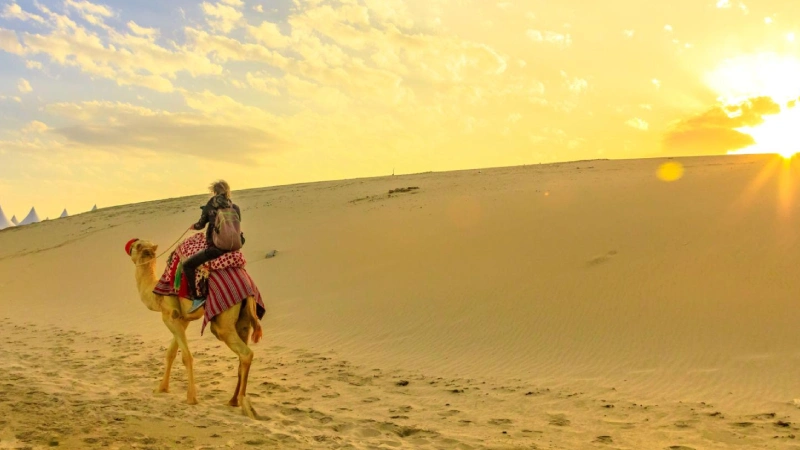
Camel riding is included in almost every Dubai desert safari package and takes place at the Bedouin camp during the pre-sunset period. The camels are domesticated, calm and handled by experienced mahouts. Most riders cover a 200–500 metre loop across the sand, which takes about 10 minutes long enough to appreciate the rocking gait and the remarkable height of sitting on an adult camel (roughly three metres from ground to rider).
Related Articles: Best Safari Parks in Europe – Drive-Through Wildlife Ranked
The moment a camel stands up from its resting position is the one that catches most first-time riders off guard camels rise back legs first, pitching the rider forward sharply, then level out. Hold the saddle handle and lean back slightly as the animal stands. The same sequence happens in reverse when it sits down. After that brief moment of surprise, the actual riding is smooth and surprisingly enjoyable.
Camel riding tips:
- Clothing: wear loose, comfortable clothing that covers your legs the saddle strap can press against bare skin over time. Closed shoes are better than sandals.
- Timing: camel rides at camp are usually available from arrival until around 30 minutes before sunset. The golden hour light makes this the best time for photographs.
- Children: most operators allow children from age 3 upward on camels, seated in front of an adult. Under-3s typically watch from the side. Confirm with your operator at booking.
- Additional Rides: most standard packages include one 10-minute loop. If you’d like more time on the camel, please ask the operator about extended rides, which are usually available for a small extra charge.
3. The Bedouin Camp Dinner, Entertainment and the Desert Night
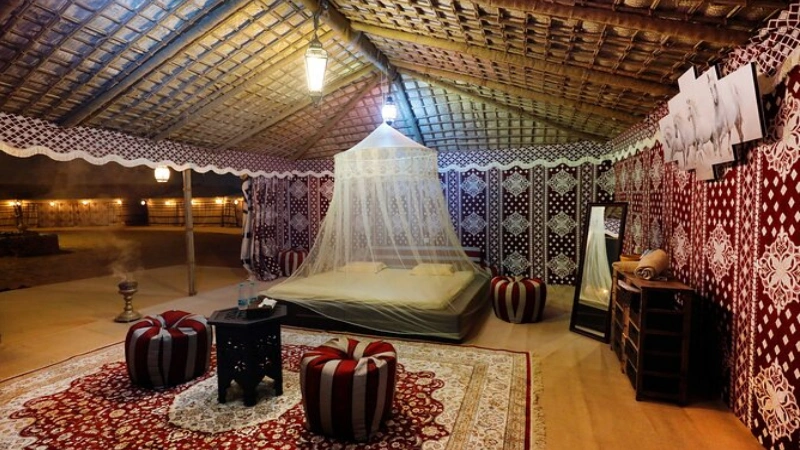
The Bedouin camp is where the Dubai desert safari transforms from an activity into an experience. After dune bashing and the camel ride, guests are welcomed into a large traditional Arabian camp set up in the desert, with carpeted seating, low tables, ornate fabric tents, hanging lanterns, a central campfire, and the scent of shisha (Arabic water pipe) and grilling meat drifting across the sand.
The camp typically operates from around 6pm to 9pm. Most of the evening is spent moving between the buffet dinner, the entertainment shows and the open sand or simply sitting by the fire watching the Milky Way become visible overhead as the last light fades from the western sky. On clear nights in the Lahbab Desert, far from city light pollution, the star visibility is genuinely spectacular.
What is included in a standard Bedouin camp:
- Welcome drinks: dates and traditional Arabic coffee (qahwa) on arrival the customary Emirati welcome. Arabic tea is available throughout the evening.
- BBQ buffet dinner: the standard camp dinner includes grilled chicken, lamb, beef kofta, rice, hummus, Arabic bread, salads and dessert. Vegetarian options are always available. Some luxury packages include live cooking stations and a wider menu.
- Live entertainment: belly dancing performance (typically 20–30 minutes), Tanoura spinning dervish dance (a mesmerising Sufi-tradition performance with a spinning skirt), and fire performance on most evenings.
- Henna painting: traditional Arabic henna designs applied to hands or arms included at most camps, with the design lasting 1–2 weeks.
- Falconry display: a trained falcon demonstration, one of the oldest traditions of Bedouin culture in Arabia. Most operators include a brief session where guests can hold the falcon.
- Shisha: Arabic water pipe available at most camps as an optional paid extra. Fruit-flavoured tobacco is the standard option.
- Sandboarding: most camps have a designated dune slope for sandboarding either standing on a board or seated. Equipment is provided and the activity is free-form with no instruction required.
Bedouin Camp Tip: Arrive at the camp at least 30 minutes before sunset. The light over the desert changes rapidly, and the 20-minute golden hour window before the sun touches the horizon is the best moment for photographs. Position yourself facing west from the camp edge, away from the tents and vehicles.
Best Time to Visit and What to Wear
| Month | Temperature | Safari Conditions | Recommendation |
|---|---|---|---|
| October | 30–38°C daytime / 22°C evening | Good temperatures dropping, pleasant evenings | Excellent one of the best months |
| November | 25–32°C / 17°C evening | Very good ideal conditions | Excellent highly recommended |
| December | 22–28°C / 14°C evening | Perfect cool evenings, comfortable all day | Best month coolest and most pleasant |
| January | 20–25°C / 12°C evening | Perfect slight chill after dark, bring a light jacket | Best month coolest of the year |
| February | 22–28°C / 14°C evening | Excellent still cool, good visibility | Excellent second best month |
| March | 25–34°C / 18°C evening | Very good slightly warmer afternoons | Very good fine for all activities |
| April | 30–40°C / 22°C evening | Good but warming morning safari preferable | Good morning safari better than evening |
| May–September | 40–50°C+ / 32°C+ evening | Very hot most companies run reduced operations | Avoid heat makes experience uncomfortable |
What to Wear on a Dubai Desert Safari
Clothing: Light, loose, breathable fabric, linen or cotton. Cover arms and legs for sun protection and warmth after dark in the winter months
Footwear: Closed shoes or trainers for dune bashing and sandboarding. Sandals are fine for the camp but uncomfortable on the sand dunes
Headwear: Lightweight hat or scarf for sun protection on the afternoon drive essential between October and April
Layer up: In December–February, desert temperatures drop to 12–15°C after dark. Bring a light jacket or cardigan for the camp
Avoid: Dark Colours in summer months, they absorb heat. Light beige, white, and khaki are ideal for desert conditions
Bags: Small cross-body bag or fanny pack. Keep your main luggage in the vehicle the camp has limited storage
How to Book a Dubai Desert Safari Practical Guide
Dubai Desert Safari Booking Guide
Book in advance: Popular evening safaris on weekends (Fri–Sat) sell out 1–3 days ahead in peak season (Nov–Feb). Book at least 2 days ahead.
Hotel desk vs direct: Many Dubai hotels offer desert safari packages via their concierge. Prices are typically 20–40% higher than booking directly with a safari operator.
Group size: Standard shared safaris put 6–8 passengers per 4×4 vehicle. Private safaris give you the whole vehicle recommended for families with young children or special requirements.
Pickup included: All reputable operators include hotel or accommodation pickup and drop-off from Dubai and Sharjah in the price. Confirm your pickup time when booking.
Dietary requirements: All camps accommodate vegetarian, vegan, and halal requirements. Notify your operator at booking, not on the night.
Cancellation Policy: Most operators offer free cancellation up to 24 hours before departure. Check the policy carefully same-day cancellations typically forfeit the full amount.
Frequently Asked Questions
What is included in a standard Dubai evening desert safari?
A standard evening desert safari includes hotel pickup, dune bashing (45–60 minutes), a short camel ride, sandboarding, henna painting, a falconry display, BBQ buffet dinner with soft drinks, belly dancing and Tanoura performances, and hotel drop-off. Alcohol, shisha and extended camel rides are typically paid extras. The full experience runs approximately 6–7 hours.
Is a Dubai desert safari suitable for children?
Yes most operators welcome children from age 3 upward. Children under 3 cannot participate in dune bashing (for safety reasons) but can attend the camp and enjoy the camel rides seated with an adult, the entertainment shows and the dinner.
What is the difference between a morning and evening safari?
Morning safaris (typically 6am–11am) focus on active dune experiences dune bashing, sandboarding and quad biking in cooler temperatures, finishing with a light breakfast at camp. There is no evening entertainment or dinner. Evening safaris run from approximately 3pm–9:30pm and include the full sunset, Bedouin camp dinner and entertainment programme
How far is the desert from Dubai city?
The Lahbab Desert, where most Dubai desert safaris operate, is approximately 45 kilometres south-east of central Dubai about 45–60 minutes by road. All reputable operators include pickup and drop-off from hotels in Dubai, Dubai Marina, JBR and Sharjah in the package price.
Final Thoughts
A Dubai desert safari is one of those travel experiences that earns its reputation entirely. The dunes are enormous, the driving is genuinely thrilling, the sunset over the Lahbab Desert is extraordinary, and the Bedouin camp under a clear desert sky fire burning, Tanoura dancer spinning, the smell of grilled meat and Arabic coffee delivers an evening that feels completely removed from the glass towers 45 kilometres away.
Book the evening safari for a first visit, choose October to February for the best conditions, take the motion sickness precaution seriously if you are susceptible, and bring a light jacket for December or January. Everything else the dates, the camel, the stars will take care of itself.


