
Most Beautiful Places In America

There’s a specific kind of surprise that hits you the first time you see certain beautiful places in America in person. You’ve seen the photos a hundred times: on a calendar, in someone’s Instagram feed, maybe in a screensaver you never bothered to change. And then you’re standing there, and the photo turns out to have undersold it. That happens more in this country than people expect, mostly because America’s beauty doesn’t sit in one tidy region. It’s scattered across deserts and coastlines and mountain ranges that don’t have much in common with each other except that they all make you stop talking for a second.
I pulled together the places that keep showing up again and again on the serious lists, the ones compiled by people who’ve actually traveled the country for a living rather than just guessing. What follows isn’t a ranking so much as a collection of the spots worth planning an actual trip around.
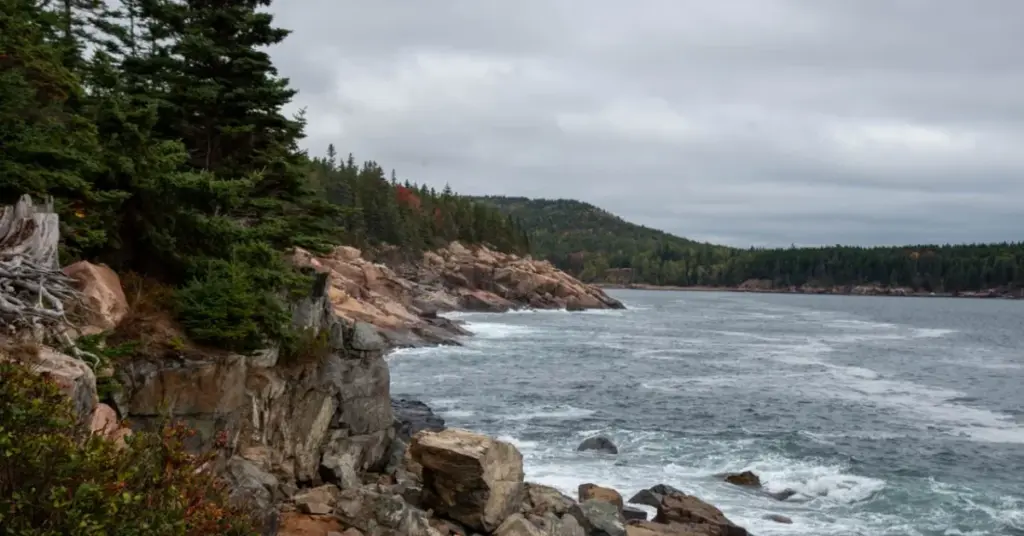
Acadia National Park, Maine
Acadia keeps landing at the top of these lists, and honestly, it deserves the spot. This is where the Appalachian Mountains finally give up and fall straight into the Atlantic, and the result is granite peaks rising right out of the ocean with almost no transition in between. Cadillac Mountain is famous for being one of the first places in the entire country to catch the sunrise, and standing up there before dawn with the light hitting the water below is the kind of thing that photographs badly no matter how good your camera is. You just have to be there.
The park’s carriage roads, built without a single motor vehicle allowed on them, wind through the forest and along the coast in a way that feels almost like the island was designed for slow walking rather than driving. Bar Harbor sits right next to the park and gives you somewhere to eat lobster afterward, which feels appropriate given where you are.
Crater Lake, Oregon
Crater Lake doesn’t get talked about nearly as much as it should, which is strange considering recent reviews have ranked it as the single most beautiful national park in the entire country. The lake formed when a volcano called Mount Mazama collapsed on itself thousands of years ago, and what’s left is a body of water so deep and so clear that the blue color looks almost fake in photos.
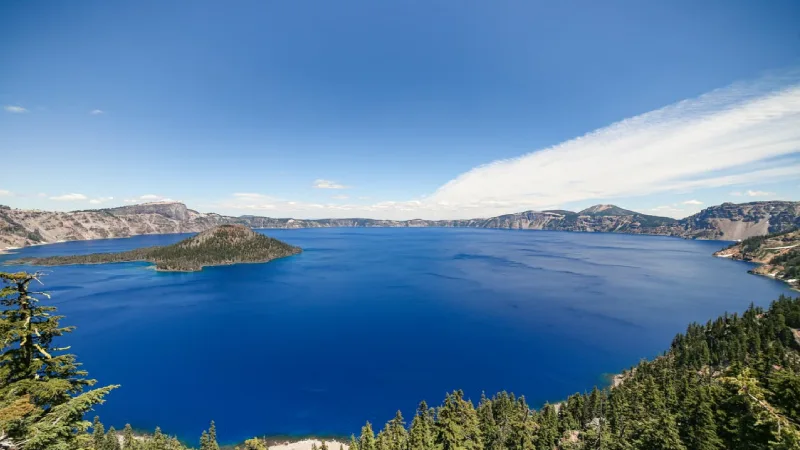
There’s no river feeding it and no river draining it either. The water is just rain and snowmelt that’s been collecting and evaporating in a slow balance for centuries, and that’s part of why it’s so clear. The rim drive around the lake takes you through viewpoint after viewpoint, and somehow the color never gets old no matter how many times you pull over to look at it again.
Glacier National Park, Montana
Montana calls this place the Crown of the Continent, and it isn’t exaggerating much. Glacier sits right up against the Canadian border, and the Going to the Sun Road that cuts through it is one of the most dramatic drives in the country, climbing through alpine passes with waterfalls dropping off the cliffs on either side of the car.
The park’s namesake glaciers are shrinking fast, which honestly adds a bit of urgency to a visit here rather than taking anything away from it. Turquoise lakes fed by glacial melt sit beneath jagged peaks that still hold snow well into summer, and the wildlife here, mountain goats, bighorn sheep, and the occasional grizzly at a safe distance, makes the whole park feel less like a managed attraction and more like something genuinely wild that tourism just happens to have access to.
Grand Teton, Wyoming
Grand Teton sits just south of Yellowstone and somehow gets overshadowed by its more famous neighbor, which never quite made sense to me. The Teton mountain range rises straight up from the valley floor with no foothills to soften the transition, snow-capped peaks reflecting in Jenny Lake and Jackson Lake below them in a way that looks staged even though it isn’t.
Wildflower fields spread out across the valley in early summer, and the Snake River winds through the whole scene in slow bends that make for some of the most photographed river views in the country. If you only have time for one Wyoming park on a trip through the region, a lot of experienced travelers will quietly tell you to pick this one over Yellowstone, or at least not to skip it in favor of Yellowstone alone.
Antelope Canyon, Arizona
Nothing quite prepares you for Antelope Canyon the first time you walk into it. This slot canyon on Navajo land near Page has been carved by flash floods over thousands of years into these smooth, flowing sandstone walls that curve and twist overhead like something out of a dream. When the sun hits the right angle, usually around midday in the warmer months, beams of light shoot down through narrow openings in the rock and hit the canyon floor in a way that looks almost engineered.
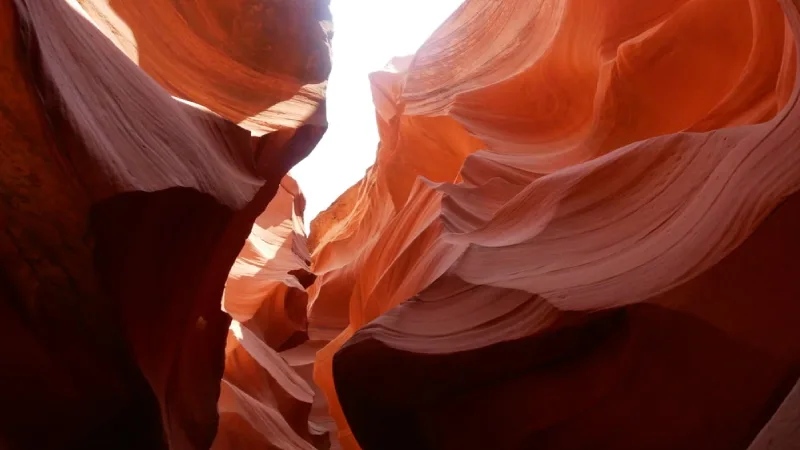
You can only visit with a guided tour run by Navajo operators, which is worth booking well ahead since spots fill up fast, especially during the midday light show hours. It’s a strange feeling being somewhere this photographed and still not quite believing your own eyes once you’re standing inside it.
Zion And Bryce Canyon, Utah
Southern Utah packs an unreasonable amount of beauty into a relatively small stretch of land, and Zion and Bryce Canyon are the two parks that usually anchor a trip through the area. Zion’s main draw is its canyon itself, sheer red and cream-colored cliffs rising thousands of feet on either side of the Virgin River, with hikes like Angels Landing and The Narrows giving you a genuinely up-close feel for the scale of the place.
Bryce Canyon, a couple hours away, works completely differently. Instead of one big canyon, it’s filled with thousands of thin rock spires called hoodoos, colored in shades of orange and pink that shift depending on the time of day. Standing at the rim at sunrise, watching the light hit thousands of these formations at once, is one of those moments that genuinely earns the word “breathtaking” rather than just borrowing it for a headline.
READ MORE: Best USA Family Vacation Destinations With Kids
Big Sur, California
Big Sur is where Highway 1 stops being a road and starts being an event. This stretch of California coastline between Carmel and San Simeon runs along cliffs that drop straight into the Pacific, with fog rolling through redwood groves one minute and clear ocean views the next. Bixby Bridge is probably the most photographed spot along the route, but honestly almost any pullout along this drive gives you a view worth stopping for.
McWay Falls, a waterfall that drops straight onto a beach rather than into a river, has become something of an icon for the whole area, and it’s a short enough walk from the road that you don’t need to plan an entire hike around seeing it.
Napa Valley, California
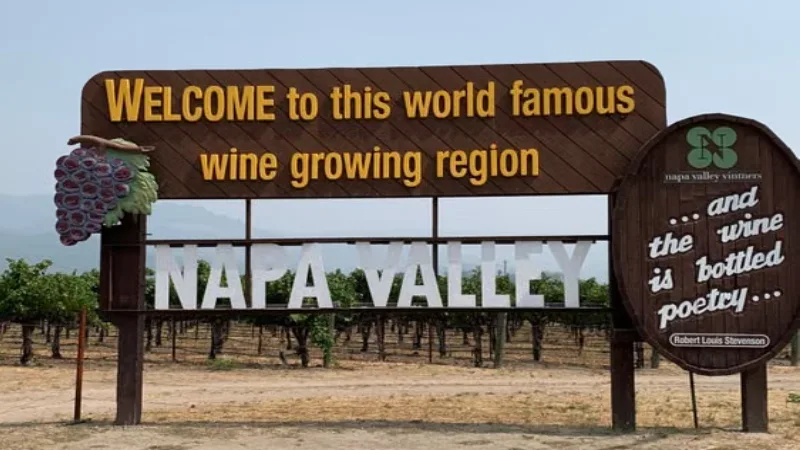
Not every beautiful place in America is wild and untouched, and Napa Valley proves that point well. Rolling hills covered in neat rows of grapevines stretch out in every direction, especially striking in fall when the leaves turn gold and deep red before harvest. It’s one of the rare entries on this list where the beauty comes from centuries of careful human cultivation working with the land rather than nature doing all the work alone.
Hot air balloon rides over the valley at sunrise have become something of a signature experience here, and seeing the vineyard patterns from above, laid out like a quilt across the hills, gives you a completely different sense of the place than driving through it at ground level ever could.
Shenandoah Valley And Great Smoky Mountains
Along the Appalachian range, two spots consistently show up on every serious list of America’s most beautiful places. Shenandoah Valley in Virginia is exactly what people picture when they think of rural Americana, a patchwork of farms and forests running between Shenandoah National Park on one side and George Washington National Forest on the other. Skyline Drive winds along the ridge for over a hundred miles, with overlook after overlook giving you sweeping views of the valley floor below.
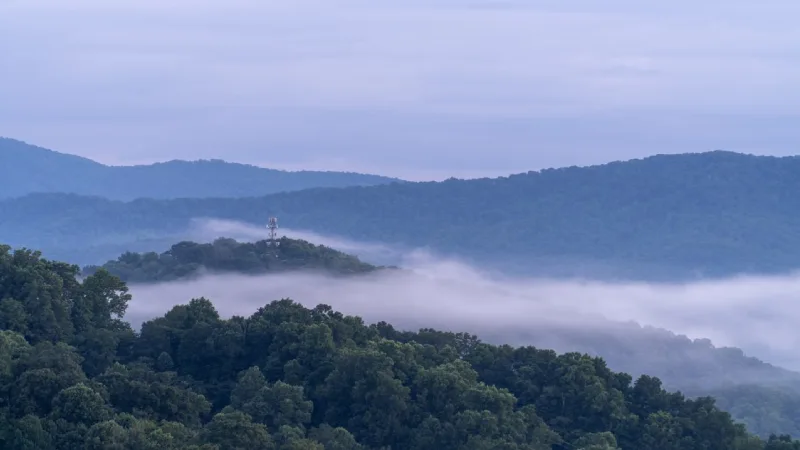
The Great Smoky Mountains, straddling the Tennessee and North Carolina border, earn their name honestly. A near constant blue haze hangs over the ridgelines, caused by natural vapors released from the dense forest, and it gives the whole range a soft, layered look that changes constantly depending on the light and the weather rolling through.
Monument Valley, Arizona And Utah
If you’ve ever seen an old Western film, you’ve seen Monument Valley whether you realized it or not. Those towering red sandstone buttes rising straight out of the flat desert floor have been the backdrop for decades of movies, and seeing them in person on Navajo land straddling the Arizona-Utah border still manages to feel cinematic even after all that exposure through film.
Sunrise and sunset here turn the whole landscape a deep, almost glowing red, and a lot of visitors say the light at those hours is when the place actually lives up to everything they’d built it up to be in their head beforehand.
Hawaii’s Nā Pali Coast
No list like this feels complete without at least one entry from Hawaii, and the Nā Pali Coast on Kauai is usually the one that gets the nod. Sheer green cliffs, cut through by deep valleys, drop straight into the Pacific along a stretch of coastline with no road access at all. You either hike the Kalalau Trail, take a boat along the coast, or see it from a helicopter, and each option shows you a slightly different version of just how dramatic this coastline actually is.
The cliffs turn a deeper, almost impossible shade of green after rain, and waterfalls appear seemingly out of nowhere along the ridgelines, feeding straight down into the ocean below.
Planning A Trip Around Places Like These
A few of these spots sit close enough together to combine into one trip. Zion, Bryce Canyon, Antelope Canyon, and Monument Valley all sit within a few hours of each other across southern Utah and northern Arizona, and a loop connecting them makes for one of the most visually rewarding road trips in the entire country. Glacier and Grand Teton require more separate planning given the distance between them, but both reward a slower trip built around actually spending time in the parks rather than rushing through for a photo and moving on.
Timing matters more than people expect for a lot of these places. Antelope Canyon’s famous light beams are strongest around midday in summer, Bryce Canyon’s hoodoos look their best at sunrise, and Napa Valley peaks visually in fall once the vineyards start turning color. Building a trip around the right season for the specific place you’re chasing makes a real difference in whether you get the version of it you saw in the photos or something considerably less impressive.
Travel insurance is worth having for any trip built around multiple national parks or remote areas, since weather delays, closed roads, and last-minute itinerary changes are genuinely common in places this dependent on natural conditions. A basic policy covering trip interruption and cancellation is a small cost against the kind of disruption that can otherwise derail a carefully planned route.
Frequently Asked Questions
What is considered the most beautiful place in America?
Rankings vary depending on the source, but Acadia National Park and Crater Lake both consistently top major lists, with Acadia praised for its coastal mountain scenery and Crater Lake for the striking clarity and color of its water.
When is the best time to visit these places?
It depends heavily on the location. Utah’s desert parks are best visited in spring or fall to avoid extreme summer heat, while places like Glacier and Grand Teton are most accessible from late spring through early fall.
Can I visit several of these places in one trip?
Yes, particularly across southern Utah and northern Arizona, where Zion, Bryce Canyon, Antelope Canyon, and Monument Valley sit close enough together to combine into a single road trip.
Do I need a guide to visit Antelope Canyon?
Yes, the canyon can only be visited with a licensed Navajo guide, and booking ahead is strongly recommended since popular time slots fill up quickly.
Is travel insurance necessary for a national park road trip?
It isn’t required, but it’s worth having given how often weather and road conditions affect travel plans in these areas. A basic policy covering interruption and cancellation offers real protection for a relatively small cost.
Final Thoughts
What struck me most while pulling this list together is how little these places actually have in common with each other. A slot canyon in the Arizona desert and a fog-covered mountain range in Tennessee aren’t really comparable, and neither should try to be. America’s beauty doesn’t come from one signature landscape repeated across the country. It comes from having nearly every kind of landscape somewhere within its borders and from how different each one feels once you’re actually standing in it rather than just scrolling past another photo of it online.



[…] hundred dollars for 2026, though that figure swings widely depending on destination and season. Hawaii and Napa Valley tend to sit at the higher end given resort pricing and peak season demand, while destinations like […]
[…] Valley works as a honeymoon destination on a completely different register than the Hawaiian islands, less about ocean views and more about […]