Travel Insurance for Pre-Existing Conditions UK – Best Plans Compared

If you take any regular medication, have ever had cancer, or live with something like asthma, high blood pressure or a heart condition, buying travel insurance is not the ten-minute job the comparison ads make it look like. You have to declare the condition, you might need a specialist policy, and the price can jump around depending on who’s asking the questions.
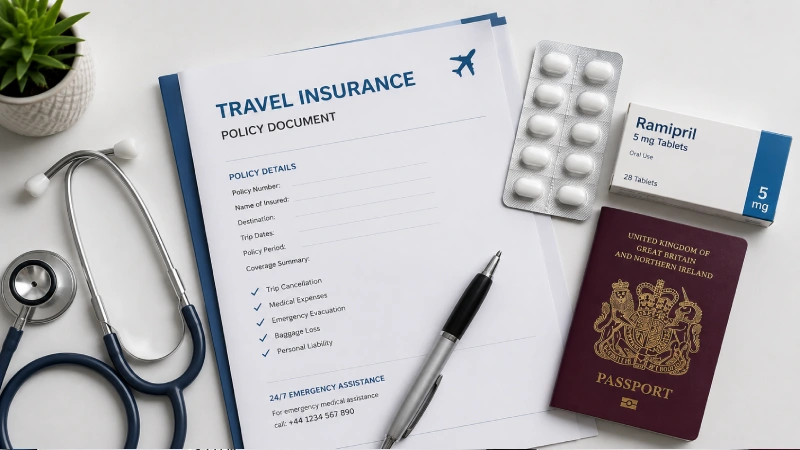
The good news is that being covered is very achievable. According to comparison site Medical Travel Compared, insurers on their panel can cover more than 2,000 different medical conditions (source). What matters is that you go through the right door and answer the questions properly.
Here’s what actually works in 2026, which providers are worth your time, and the one rule that ruins more claims than any other.
Why this matters – and where most people get it wrong
A survey cited by Which? and referenced by Medical Travel Compared found that only about 1 in 5 people understand they must disclose a pre-existing condition when they buy travel insurance (Which? via MTC). Everyone else is walking around with a policy that would refuse to pay if they needed it most.
MoneySavingExpert puts the rule bluntly:
“You must declare all conditions. If you don’t, your policy can be invalid and claims refused.” (moneysavingexpert.com)
This isn’t about grey areas. If the insurer asks whether you’ve been to a doctor in the past few years and you have, the answer is yes. Even if the reason was minor. Even if you’re now perfectly well.
What actually counts as a “pre-existing condition”?
Most insurers use a similar test. Medical Travel Compared publishes theirs plainly:
- Any cancer, respiratory, liver, heart or circulatory condition (including strokes, high blood pressure and cholesterol) that has been diagnosed or treated in the last 5 years
- Any psychological or psychiatric condition (stress, anxiety, depression, eating disorders) diagnosed or treated in the last 5 years
- Any condition that has needed medication or treatment in the last 2 years
- Any GP, hospital or clinic visit as an inpatient or outpatient in the last 2 years
(Source: Medical Travel Compared)
MoneySavingExpert adds another one worth knowing about. If you take a weight-loss injection such as Ozempic, Wegovy or Mounjaro, that counts as prescribed medication and needs to be declared, even if you feel fit and are only using it short-term (MSE).
If you’re still unsure, the safer instinct is to declare. Many minor or well-controlled issues won’t add anything to the price, but skipping them can void the whole policy.
Real prices – not marketing numbers
Two useful data points, both from named sources:
Medical Travel Compared currently quotes from £9.10 for a traveller aged 61 with declared high blood pressure going to France for 7 nights (correct as of July 2026) (MTC).
A real MSE Forum user (username noh) shared what he actually paid. His wife takes three medications for high blood pressure and thyroid – extra premium: £44 a year. He himself added high cholesterol and Type 2 diabetes (diet-controlled) on top of already-declared high blood pressure – extra premium: £60 a year (MSE Forum via MoneySavingExpert).
Another MoneySaver, Mari, aged 70, had been told by multiple insurers she couldn’t get cover after a breast cancer diagnosis. Nationwide’s FlexPlus packaged bank account quoted £85 for herself and her husband, and she’s already travelled to California with that cover (MSE).
These numbers are worth showing because the received wisdom – that pre-existing conditions make travel insurance “unaffordable” – is often wrong. Well-controlled conditions add small amounts. Serious conditions push prices up, sometimes into the hundreds, but rarely make you uninsurable.
The five providers most worth comparing
Below is the shortlist we recommend readers get quotes from. Every provider here specialises in pre-existing conditions or has independent recognition for handling them well. Cover limits, ratings and cancellation caps are the headline policy details from each provider’s Gold or top-tier product.
| Provider | Specialist Focus | Medical Cover | Independent Rating | Cancellation Cover | Best For |
|---|---|---|---|---|---|
| AllClear Gold PlusOur pick | All conditions, no upfront exclusions | £10,000,000 | Which? Best Buy 2025 | £7,500 | Complex or serious medical histories |
| Staysure | Over-50s with medical conditions | £10,000,000 | Defaqto 5★ | £6,000 | Older travellers and cruise holidays |
| Avanti | Annual multi-trip with conditions | £10,000,000 | Defaqto 5★ | £5,000 | People who travel 3+ times a year |
| Holidaysafe Platinum | Backpackers and long-stay | £10,000,000 | Which? Best Buy 2025 | £7,500 | Long trips and backpacking routes |
| Just Travel Cover | Broad range of conditions | £10,000,000 | Trustpilot rated | £5,000 | Budget-conscious buyers |
Cover limits shown are for each provider’s top-tier product at time of writing. Actual policy features, limits, and pricing depend on your age, condition, and destination. Always read the current policy wording before you buy.
Our pick: AllClear Gold Plus
If we had to name one provider for readers with any kind of declared medical history, it would be AllClear Gold Plus. Three reasons:
- It’s built for pre-existing conditions from the ground up. AllClear does not exclude conditions upfront. Everything goes through medical screening, and cover is then quoted around your actual situation. That matters most for people who’ve been turned away elsewhere (AllClear).
- It has independent recognition. Which? Best Buy status in 2025 is awarded by an independent consumer body, not paid for.
- It scales to serious conditions. People with recent cancer treatment, cardiac events or multiple simultaneous conditions tend to get workable quotes here when comparison-site defaults fall over.
Where it isn’t right: if you’re under 50, in good health with one small condition (say, mild controlled asthma), you can often get near-identical cover cheaper on a mainstream policy that accepts your declaration. Compare before you commit.
Who to pick if you’re not the “typical” AllClear customer:
- Over 65 and mostly worried about cruises or slower European trips → get a Staysure quote as well.
- Travelling three or more times a year → get Avanti’s annual multi-trip quote; often cheaper than several single-trip policies.
- Long trip, gap year, or backpacking route → Holidaysafe Platinum is built for trips beyond the usual two-week window.
- Price is the biggest constraint → Just Travel Cover and the Medical Travel Compared marketplace both surface cheaper specialist options, though read the excesses carefully.
Three ways to actually save money
1. Try a comparison marketplace before a single-provider quote. Medical Travel Compared runs quotes across 30+ specialist providers in one screening. MoneySavingExpert’s own Compare+ tool searches 40+ insurers including Medical Travel Compared and Staysure. Between them you’ll see almost every option on the market.
2. Check your packaged bank account first. Nationwide FlexPlus and Lloyds Bank Club, among others, include travel insurance as part of the monthly fee, and both accept declared conditions with modest add-on premiums (Lloyds charged one reader £30/year to add a brain aneurysm history, per MSE). If you already pay for one of these accounts, this may be your cheapest route.
3. Get quotes for a single-trip policy AND an annual policy. Received wisdom says “annual is better if you travel twice a year.” That’s often true, but with a serious pre-existing condition an annual policy can be surprisingly expensive. Get both and let the numbers decide, as MSE recommends.
What good cover actually includes
A specialist pre-existing conditions policy should include as standard:
- Emergency medical treatment abroad and repatriation home (major specialists offer limits of £10m, and some, like AllClear via Everywhen, go up to £15m (Everywhen))
- Cancellation cover if you can’t travel because your condition worsens
- Curtailment cover if you have to cut a trip short
- Cover for your declared condition specifically, not just “general” travel medical
- A 24-hour emergency assistance line based in the UK
Things that vary a lot between policies: baggage limits, cruise cover, winter sports, and personal money cover. If any of these matter, check them individually.
The screening process – what to have ready
Every specialist insurer will ask you a set of medical questions before quoting. It usually takes 5 to 10 minutes online. Have this to hand:
- The name of each condition, when it was diagnosed, and whether it’s currently stable
- Any medication you’re on, including dose
- Any hospital admissions in the last 12 months
- Any surgery in the last 12 months
- Any tests or investigations you’re currently waiting on
One useful thing to know: if you’re waiting for a diagnosis or investigation, most insurers won’t quote until you have your results. This is a common blocker and worth planning around.
If you have a serious condition, MoneySavingExpert also recommends getting a fit-to-travel certificate from your GP or consultant confirming your condition is stable. Some insurers require it. Most claim decisions go more smoothly when you have one (MSE).
What happens if you don’t declare
This is the section that matters most, so read it even if you skim the rest.
Non-disclosure has one consistent outcome: the insurer voids the policy and refuses the claim. Not just the claim connected to your undisclosed condition – the whole policy. MoneySavingExpert makes the point:
“If your insurer doesn’t know about your medical history, any pre-existing conditions – however minor – will likely be excluded and you could face a massive bill if you become unwell.” (MSE)
An asthmatic who develops a chest infection abroad but never mentioned the asthma when buying the policy would find the whole claim rejected, because a chest infection is medically linked to asthma. That’s a five- or six-figure bill for a trip that felt totally unrelated to the original condition.
One more thing: your health can change during the policy. If you’re diagnosed with something new after you buy, or referred for tests, tell your insurer. The Financial Conduct Authority has said it wouldn’t normally consider it fair for insurers to cancel or change cover due to “a minor or short-term condition” (FCA via MSE), but you still need to make the update.
If you get turned down
Try, in this order:
- A specialist comparison site – Medical Travel Compared or MoneySavingExpert’s Compare+ tool.
- A specialist broker. The British Insurance Brokers’ Association (BIBA) runs a free directory of brokers who handle non-standard medical cases. This is the route MSE recommends for cancer, complex cardiac, and post-transplant cases.
- Your bank’s packaged account. As above – often cheaper than expected.
- MoneyHelper’s travel insurance directory. Both MTC and Everywhen point readers here as a last resort (MoneyHelper).
If a claim is later declined and you think it was unfair, the free Financial Ombudsman Service handles insurance complaints. You can also use free tool Resolver to structure the complaint.
FAQs
Can I get travel insurance if I have cancer?
Yes, in almost every case. AllClear covers cancer at active-treatment stage, recent completion, and remission after medical screening. If you’re mid-treatment or recently diagnosed, a specialist broker via BIBA will usually find you cover when comparison sites won’t.
Is pre-existing condition travel insurance always more expensive?
Not always. Well-controlled, minor conditions often add £5–£15 to a policy, sometimes nothing. Multiple or serious conditions can add £40–£150 or more for a single trip. Compare providers before assuming you’ll pay a penalty.
Do I need to declare something my GP mentioned years ago?
Most insurers ask about anything treated or diagnosed in the last 3–5 years, and any medication, test or GP visit in the last 2 years. When in doubt, declare.
Do I need to declare weight-loss injections?
Yes. Ozempic, Wegovy and Mounjaro count as prescribed medication and must be declared, per MoneySavingExpert.
Can I exclude the condition to get a cheaper policy?
Some insurers allow it, but you then carry the entire cost yourself if that condition causes any medical issue on the trip. Not recommended unless you fully understand what you’re giving up.
What’s a fit-to-travel certificate and do I need one?
It’s a short letter from your GP or consultant confirming your condition is stable and you’re safe to fly. Some insurers require it for serious conditions; it also makes claims smoother.
Sources
- Medical Travel Compared – Pre-Existing Medical Condition Travel Insurance
- MoneySavingExpert – Travel insurance for pre-existing medical conditions
- AllClear – Travel Insurance With Pre-Existing Medical Conditions
- Everywhen – Travel Insurance for Pre-Existing Medical Conditions
- Which? – Medical Condition Travel Insurance reviews (cited by MTC)
- British Insurance Brokers’ Association – Find a broker
- Financial Ombudsman Service –complaints process
Affiliate disclosure: some outbound links in this article may be affiliate links. If you click through and purchase a policy, we may earn a small commission at no extra cost to you. Our recommendations are based on independent research and do not depend on commission rates. See our full Affiliate Disclosure.
This article is for general information only and is not financial or medical advice. Always read the full policy wording before you buy and consult a licensed insurance broker or your doctor for personal advice.