
UK train travel rail tickets

UK train travel Rail tickets the difference between knowing how the system works and not knowing it can mean paying £25 instead of £200 for exactly the same seat on exactly the same train. That is not an exaggeration. The UK rail pricing system is complex, but it rewards passengers who understand three things: Advance tickets, railcards and split ticketing.

Britain has one of Europe’s most extensive rail networks over 2,500 stations, 20,000 miles of track, and fast intercity services connecting London to Edinburgh in under 4.5 hours, London to Manchester in just over 2 hours and London to Bristol in 1 hour 45 minutes. Getting around by train is genuinely excellent. The challenge is simply paying a fair price for the ticket.
This guide explains every fare type in plain language, shows which railcard saves you the most, explains split ticketing step by step and covers the most scenic rail journeys in Britain worth taking for the experience alone.
UK Train Travel At a Glance
Cheapest ticket: Advance book up to 12 weeks ahead, saves up to 80% vs walk-up
Best saving tool: Railcard £30/year gives 33% off most fares
Secret weapon: Split ticketing legal, saves 30–50% on longer routes
Booking window: Advance fares release exactly 12 weeks (84 days) before travel
Children 5–15: Half price on almost every UK train service
Under-5s: Travel completely free on all UK rail services
Peak hours: Mon–Fri before 09:30 and 16:00–19:00 most expensive period
UK Train Ticket Types Explained Simply
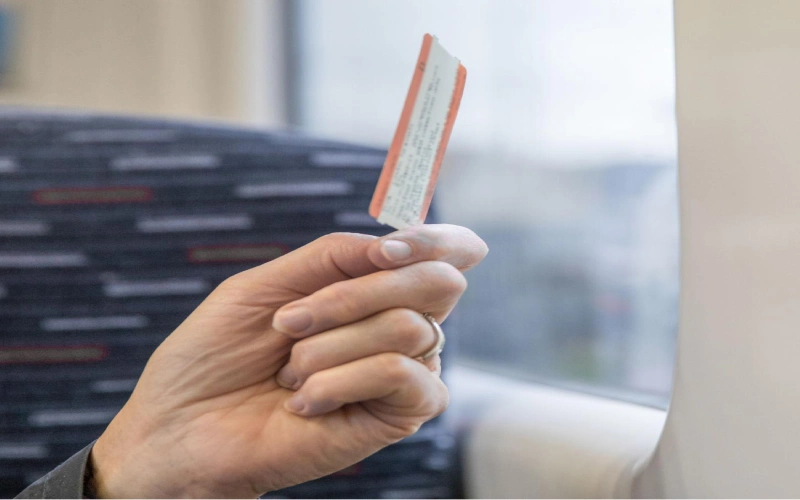
Every UK rail fare belongs to one of three categories Advance, Off-Peak or Anytime. Once you understand how each one works, the entire pricing system becomes logical. The goal is always to book the cheapest category that fits your travel plans.
| Ticket | How It Works | Flexibility | Refundable | Saving vs Anytime |
|---|---|---|---|---|
| Advance | Fixed to one specific train and date | That train only | No | Up to 80% less |
| Off-Peak Single | Any Off-Peak train on that route | Any qualifying Off-Peak service | Yes, with fee | 20–40% less |
| Off-Peak Return | Off-Peak travel both ways | Any Off-Peak train each way | Yes, with fee | 25–45% less |
| Super Off-Peak | Quietest times only varies by route | Very limited time windows | Yes, with fee | Up to 50% less |
| Anytime Single | Any train, no restrictions | Fully open | Fully refundable | Baseline price |
| Anytime Return | Any train, open return date | Fully open | Fully refundable | Baseline price |
| Season Ticket | Unlimited trips on one route | All trains on that route | Partial refund | Best for commuters 3+ days/week |
Why Advance tickets are the most important fare to understand
Advance tickets go on sale exactly 12 weeks before the date of travel. They are released in pricing tiers the first allocation is cheapest, and the price rises as more seats sell. This means booking at 12 weeks almost always gets you the lowest price. Waiting costs money.
The trade-off: an Advance ticket is valid only on the specific train booked. If you miss that service, the ticket has no value unless you paid to change it before departure. For leisure travel where your schedule is fixed, this is rarely a problem. For business travel or time-sensitive journeys, Off-Peak or Anytime gives you the flexibility to switch trains.
Real example: London to Edinburgh. An Advance ticket booked 10 weeks ahead from £25 to £45. The same journey bought on the morning of travel £180 to £240. Same seat, same train, difference of up to £200 based purely on when you booked.
Off-Peak tickets the right choice for flexible travel
Off-Peak tickets allow travel on any service that falls outside peak hours. On most routes, peak hours are Monday to Friday before 09:30 and between 16:00 and 19:00. All trains on weekends and bank holidays are generally Off-Peak. If your travel plans are flexible and you are not in a hurry, Off-Peak offers a good balance of price and freedom significantly cheaper than Anytime, with no fixed-train restriction.
UK Railcards 33% Off Every Journey for £30 a Year
A railcard is the single most cost-effective travel tool available to UK rail passengers. Every railcard costs £30 per year and delivers a minimum 33% discount on most fares. For anyone travelling by train more than two or three times a year, a railcard pays for itself immediately.
| Railcard | Who Can Buy | Cost | Adults Save | Children Save | Key Restriction |
|---|---|---|---|---|---|
| 16-25 Railcard | Ages 16–25, or full-time student any age | £30/yr | 33% | 60% | Min £12 fare, not peak before 10am |
| 26-30 Railcard | Ages 26–30 | £30/yr | 33% | 60% | Min £12 fare, not peak before 10am |
| Two Together | Any 2 named adults must travel together | £30/yr | 33% each | 60% | Both cardholders must travel every time |
| Family & Friends | Up to 4 adults + 4 children | £30/yr | 33% | 60% | At least 1 adult + 1 child per journey |
| Senior Railcard | Ages 60 and above | £30/yr | 33% | 60% | Min £12 fare, not peak before 10am |
| Network Railcard | South East England zone only | £30/yr | 33% | 60% | Peak restriction Mon–Fri before 10am |
| Disabled Persons | Qualifying disability condition | £20/yr | 33% | 33% | No minimum fare broadest eligibility |
Railcard Rules You Must Know
Railcard discount does NOT apply to Anytime peak fares before 10am Mon–Fri on most routes
You must carry your railcard every journey a conductor can charge you the full fare without it
Digital railcards are valid add to your phone, no physical card needed
3-year railcard options exist for 16-25 and Senior costs £70 instead of £90 (save £20)
Family & Friends gives 60% off child fares the largest child discount available on UK trains
Two Together requires BOTH named cardholders to travel together on every single journey
Split Ticketing Save 30–50% on Longer Journeys
Split ticketing is one of the most powerful money-saving techniques available on UK trains and it is completely legal. The concept is simple: instead of buying one through ticket from start to finish, you buy two separate tickets that cover different sections of the same journey. You sit on the same train throughout. You do not get off at the split point. You simply have two tickets in your pocket instead of one.
Related Articles: UK Train Travel Guide – How to Book Cheap Rail Tickets
The saving arises because of the way UK fares are structured. Different pricing rules apply to different route sections, and combining two cheaper sectional fares is often dramatically less expensive than the single through fare that covers the same distance. Train operators are aware of this practice and it is explicitly permitted under National Rail conditions of carriage.
Split ticketing savings real route examples
| Route | Anytime Through Fare | Split Ticket (same train) | Saving |
|---|---|---|---|
| London → Edinburgh | £185 | London–Grantham £42 + Grantham–Edinburgh £52 | £91 saved 49% |
| London → Manchester | £154 | London–Stoke £36 + Stoke–Manchester £22 | £96 saved 62% |
| London → Glasgow | £195 | London–Carlisle £54 + Carlisle–Glasgow £40 | £101 saved 52% |
| Birmingham → London | £118 | Birmingham–Milton Keynes £26 + MK–London £18 | £74 saved 63% |
| Leeds → London | £138 | Leeds–Grantham £30 + Grantham–London £36 | £72 saved 52% |
| Bristol → Edinburgh | £220 | Bristol–Birmingham £28 + Birmingham–Edinburgh £65 | £127 saved 58% |
Note: figures above are indicative examples using typical Anytime vs combined Off-Peak fares. Actual savings vary by date, time and seat availability. Always verify both options before purchasing.
Split Ticketing 3 Rules to Follow
Rule 1: Both tickets must be valid for the same train you travel on one service throughout
Rule 2: You do NOT need to get off at the split point stay in your seat the whole journey
Rule 3: If your train is delayed and you miss a connection, show both tickets to the conductor you are protected
How to Book UK Train Tickets Step by Step
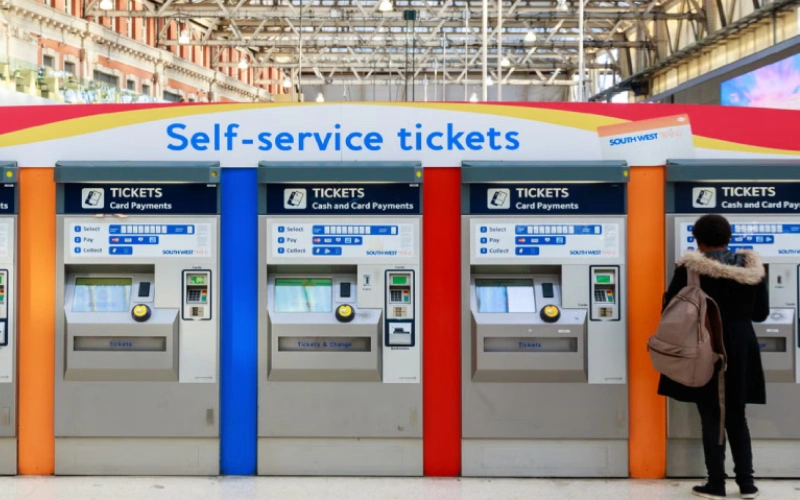
Follow this sequence every time you Book a UK train journey and you will consistently pay the lowest available fare.
- Check the flexible date view first look at prices for 2–3 days either side of your planned travel date. Shifting by one day sometimes saves £30–50 on long routes.
- Search directly on the train operator’s own website LNER for east coast routes to Edinburgh/Leeds, Avanti West Coast for Manchester/Liverpool/Glasgow, GWR for Bristol/Cornwall/Wales, ScotRail for Scottish routes. No booking fee applies when you book direct.
- Run the same journey through a split ticket calculator enter your origin and destination and compare the split ticket result against the direct fare. On journeys over 100 miles, this step almost always finds a meaningful saving.
- Apply your railcard before comparing prices always tick the railcard option during the search. The combination of an Advance fare plus a 33% railcard discount is almost always the cheapest possible result.
- Check child and group pricing children aged 5–15 pay half price on all standard fares. Groups of 3 or more adults often qualify for a Group Save discount of up to 34%.
- Book at the 12-week mark for popular routes London to Edinburgh, London to Manchester and London to Bristol all release Advance tickets at exactly 84 days before travel. The cheapest tier sells quickly. Set a calendar reminder.
- Compare two singles against a return on some routes, two one-way Advance tickets cost less than a single return. Always check both combinations.
- Never buy on board the train conductors charge the full Anytime walk-up fare, which is always the most expensive option.
London Train Stations Which One for Your Route
London has eight mainline railway termini, each serving a different part of the country. Arriving at the wrong station is one of the most common and avoidable mistakes for first-time visitors to Britain.
| Station | Main Destinations | Operator | Key Routes |
|---|---|---|---|
| King’s Cross | Edinburgh, Leeds, York, Newcastle, Cambridge | LNER, Thameslink | East Coast Main Line fastest to Scotland |
| Euston | Manchester, Liverpool, Birmingham, Glasgow | Avanti West Coast | West Coast Main Line fastest to North West |
| Paddington | Bristol, Bath, Cardiff, Penzance, Oxford | GWR, Elizabeth line | Great Western Main Line + Heathrow Express |
| Victoria | Brighton, Gatwick Airport, Dover, Folkestone | Southern, Thameslink | South East routes, Gatwick Express |
| Waterloo | Southampton, Bournemouth, Salisbury, Exeter | South Western Railway | South West routes busiest UK station by footfall |
| Liverpool Street | Cambridge, Norwich, Stansted Airport | Greater Anglia | East Anglia + Stansted Express |
| St Pancras Intl | Paris, Brussels, Amsterdam, Leicester, Sheffield | Eurostar, EMR | International Eurostar + East Midlands routes |
| Marylebone | Oxford (alt), Birmingham (alt), Warwick | Chiltern Railways | Often quieter and cheaper for some Midlands routes |
Most Scenic UK Train Routes Worth the Journey
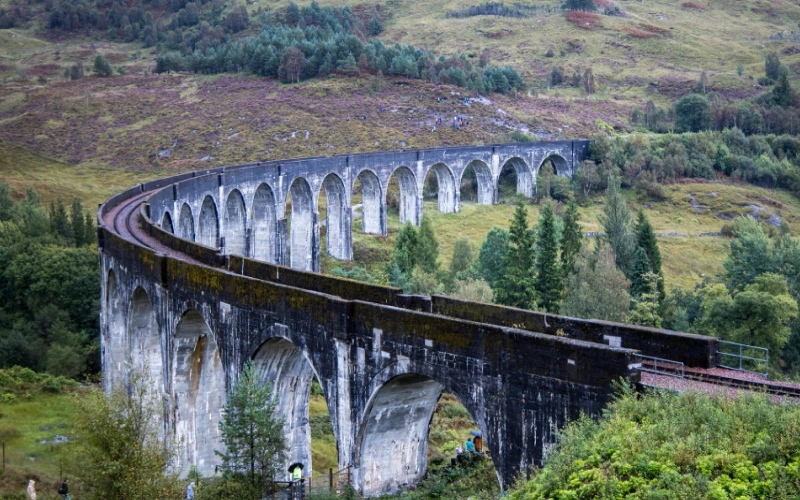
Not every UK train journey is purely functional. These routes are worth booking specifically for the experience of travelling landscapes seen only from the railway, viaducts that took generations to build, and coastlines inaccessible by road.
| Route | Journey Time | Why It Is Special |
|---|---|---|
| West Highland Line Glasgow to Mallaig | 5 hrs 20 min | Loch Lomond, Rannoch Moor wilderness, Glenfinnan Viaduct (Harry Potter), Loch Eilt, views to Isle of Skye widely listed as one of the world’s great rail journeys |
| Settle to Carlisle Leeds to Carlisle | 1 hr 30 min | 23 viaducts including Ribblehead (82 metres high), Yorkshire Dales National Park, Pennine moorland extraordinary Victorian engineering |
| Cambrian Coast Machynlleth to Pwllheli | 1 hr 40 min | Cardigan Bay sea views, Barmouth Bridge timber viaduct over the Mawddach Estuary, clifftop sections above the Welsh coast |
| Cornish Riviera London to Penzance | 5 hrs 5 min | Dawlish sea wall where the track runs yards from breaking waves, Dartmoor views, St Ives branch line, Cornish coastline |
| East Coast Main Line London to Edinburgh | 4 hrs 20 min | Durham Cathedral viewed from the viaduct, Berwick-upon-Tweed castle, Northumberland coast, Holy Island visible offshore |
| Kyle of Lochalsh Inverness to Kyle | 2 hrs 30 min | Remote Highland glens, Achnasheen, Loch Carron, arriving at the gateway to the Isle of Skye one of Britain’s most remote rail journeys |
| Heart of Wales Shrewsbury to Swansea | 3 hrs 45 min | 57 stations through remote mid-Wales hills, the Sugar Loaf summit halt at 820 feet, single-track through empty countryside |
12 Proven Ways to Pay Less for UK Train Travel
Complete Cheap UK Rail Checklist
1. Book Advance tickets up to 12 weeks ahead. The earlier, the cheaper.
2. Get a railcard £30/year saves 33% per journey. Pays back in 1–2 trips.
3. Use split ticketing two tickets for the same train saves 30–50% on longer routes.
4. Travel Off-Peak avoid Mon–Fri before 09:30 and 16:00–19:00.
5. Book directly with the operator no booking fee (vs third-party platforms).
6. Travel mid-week Tuesday and Wednesday departures are typically cheapest.
7. Check two singles vs a return sometimes cheaper than buying a return ticket.
8. Use the flexible dates calendar one day’s difference can save £20–50.
9. Children 5–15 travel half price always add child passengers when booking.
10. Groups of 3+ qualify for Group Save up to 34% off for groups.
11. Flexi-Season for irregular commuters 10 trips in 28 days, cheaper than 10 singles.
12. Never buy on the train conductor fare is always the full Anytime walk-up price.
Frequently Asked Questions
What is the cheapest way to book UK train tickets?
Book an Advance ticket as far ahead as possible ideally at the 12-week mark when fares first release. Apply a railcard discount on top if you have one. On any journey over 100 miles, also check whether split ticketing reduces the price further. Booking directly on the train operator’s website avoids the booking fee charged by comparison platforms.
How far ahead can I book UK train tickets?
Advance tickets open exactly 12 weeks 84 days before the travel date. On the most popular routes such as London to Edinburgh and London to Manchester, the cheapest Advance seats can sell out within 24–48 hours of release. Set a calendar alert for 84 days before your planned journey date and book on that day for the widest choice of prices.
Which railcard gives the best discount?
For families, the Family and Friends Railcard delivers the highest total saving 33% off adult fares and 60% off child fares per journey. For two adults who always travel together, the Two Together Railcard covers both people for one £30 annual fee. For individual travellers aged 16–25, the 16-25 Railcard is the best single-person value on the market.
Is split ticketing legal on UK trains?
Yes. Split ticketing is entirely legal and is explicitly permitted under National Rail conditions of carriage. Millions of passengers use it every year. You buy two or more tickets that cover different sections of the same journey. You stay on the same train and do not need to get off at the split point. Train operators are fully aware of the practice.
What happens if my train is delayed and I have an Advance ticket?
If your train is delayed or cancelled, your Advance ticket automatically becomes valid on the next available service on the same route. You do not need to buy a new ticket. Keep your original ticket and boarding pass and show them to the conductor. For delays over 15 or 30 minutes (depending on the operator), you are also entitled to claim Delay Repay compensation after travel.
Final Thoughts
UK train travel is genuinely fast, comfortable and well-connected the challenge has always been paying a fair price. Once you understand Advance tickets, railcards and split ticketing, that challenge disappears. Book early, apply your railcard every time, check split fares on longer routes, and travel Off-Peak whenever your schedule allows.
Do those four things consistently and you will pay a fraction of what the uninformed passenger pays for the same journey and occasionally, on routes like the West Highland Line through the Scottish Highlands or the Settle to Carlisle crossing the Yorkshire Dales, the journey itself will be one of the finest things about travelling in Britain.


