
Yellowstone in Winter – Wildlife Safari and What to Realistically Expect

Yellowstone National Park in winter is a fundamentally different experience than the summer Yellowstone that most tourists know. The interior is snowed in from November through April; only over-snow vehicles access most geysers and attractions, and 50 miles out of 300 miles of park roads remain open to regular vehicles. What this creates is something genuinely special – the world’s most famous national park transformed into an extreme wildlife-watching destination with 99 percent fewer visitors than peak summer. For serious wildlife enthusiasts, particularly those interested in wolves, bison, and large predator-prey dynamics, Yellowstone winter delivers an experience that arguably beats Africa for North American species.
Yellowstone winter wildlife safari expectations are very different from a typical national park vacation. Yellowstone in winter requires commitment—proper cold-weather gear, tolerance for temperatures as low as -30°C, travel by snowcoach instead of a personal vehicle, and genuine interest in wildlife rather than landscape photography alone. If you’re searching for what to expect on a Yellowstone winter wildlife safari, this guide provides realistic insights instead of marketing promises. For Indian travelers planning an unconventional USA adventure or nature photographers chasing a bucket-list experience, you’ll discover the best safari operators, limited winter accessibility, the wildlife you are most likely to see, and whether the cost and effort are truly worthwhile. The information has been cross-referenced using Yellowstone Safari Co., Yellowstone Wild Tours, NANPA, Teton Science Schools, Adventure Tours Yellowstone, Wildlife Expeditions, Van Os Photo Safaris, and verified traveler reviews on Tripadvisor.
Quick Facts – Yellowstone Winter Safari
✓ Only 50 miles of Yellowstone’s 300 miles of road open to regular vehicles November to April
✓ Lamar Valley is called ‘America’s Serengeti’ c best wolf-watching location in North America
✓ Winter season December 15 to March 15 – over-snow vehicles are the only way into park interior
✓ Snowcoach tour costs USD 300-600 per person per day from West Yellowstone or Mammoth
✓ Private wildlife safari with operator like Yellowstone Safari Co. costs USD 800-1,500 per day
✓ Wapiti Wolf Pack has 22+ members – largest pack in Yellowstone ecosystem
✓ Winter temperatures drop to -30 degrees Celsius – proper cold-weather gear is essential
Why Winter Is Actually the Best Time for Yellowstone Wildlife
Winter delivers wildlife viewing that summer simply cannot match, despite the access limitations. Three fundamental reasons make this true. First, snow forces wildlife into the lower valleys where they are genuinely viewable – elk, bison, moose, bighorn sheep, and deer that scatter into the higher backcountry during summer concentrate in the valleys during winter. The Lamar Valley and Hayden Valley in particular become wildlife gathering grounds because they remain relatively snow-free due to microclimate conditions.
Second, wolves are dramatically more visible in winter. Their dark coats stand out against the snow; they are more active during daylight hours (hunting weakened elk and bison), and there are fewer visitors to disturb their natural behaviors. Yellowstone’s Wapiti Wolf Pack currently has 22 members – one of the largest wolf packs in North America. Professional guides like Yellowstone Safari Co. and Wildlife Expeditions track wolf pack locations daily and have over 90 percent success rates putting guests on wolves through spotting scopes during winter expeditions. Compare that to 20-30 percent summer success rates.
Third, the overall experience is dramatically less crowded. Summer Yellowstone sees 4 to 5 million visitors annually. Winter sees about 150,000 – a 97 percent reduction. Lamar Valley, which feels like a traffic jam in July, is almost empty in February. Geothermal features that have hundreds of photographers in summer have 5-10 photographers in winter, and the steam rising from hot springs against snow creates dramatic photography conditions summer simply cannot produce.
The Reality of Winter Access – What Is Open and Closed
Open Year-Round to Regular Vehicles
Only one road remains open to regular (non-snow) vehicles through winter – the 52-mile stretch from the North Entrance at Gardiner, Montana, through Mammoth Hot Springs and Lamar Valley, and ending at Cooke City, Montana. This is the road that serves the Northern Range wildlife safari – legitimately the best wildlife-watching road in North America during winter. You can drive your own vehicle (or rental) on this road with a national park entrance pass. Roads are plowed daily.
This is the budget wildlife-watching option – self-drive your vehicle through Lamar Valley with binoculars and spotting scopes.
Accessible Only Via Over-Snow Vehicles
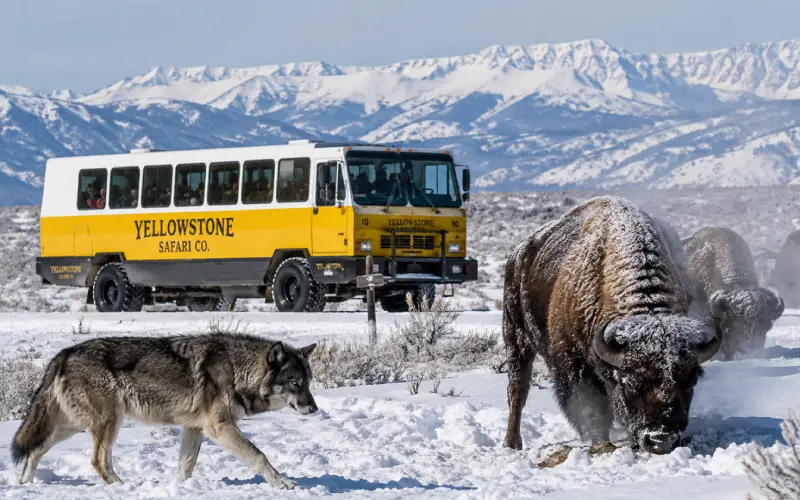
The rest of Yellowstone’s 300 miles of roads are closed to regular vehicles from December 15 through March 15. Access is only via snowcoaches (heated tracked or wheeled vehicles that carry 10-13 passengers) or snowmobiles (require a guided tour; cannot self-tour). Old Faithful geyser, Grand Prismatic Spring, Norris Geyser Basin, Hayden Valley, and most iconic Yellowstone features are in this access zone. Snowcoach access operates from West Yellowstone (west entrance), Mammoth (north), or Jackson Hole (via the South Entrance).
Operators: Yellowstone Vacation Tours, Yellowstone Wild Tours, and several others run daily snowcoach trips during the season.
Completely Closed in Winter
Some sections close entirely from December through April – South Entrance road beyond the initial corridor, the East Entrance road, the connecting roads within the park interior, and all backcountry trails not maintained specifically for winter use. Trails around Old Faithful, Norris, and Mammoth that are open are limited compared to summer. Cross-country skiing and snowshoeing are the primary backcountry access methods. Plan itineraries around the genuinely accessible zones rather than assuming any Yellowstone location is reachable.
The Wildlife You Will Actually See
Wolves – The Star of Winter Yellowstone
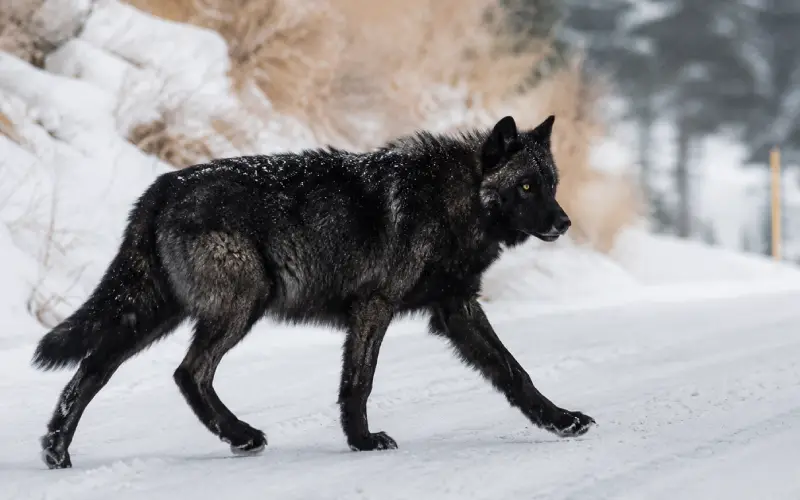
Yellowstone has 8-10 resident wolf packs at any given time, with around 100-130 total wolves park-wide. Winter is peak wolf-watching season. The Wapiti Pack (22 members) is the largest and most frequently observed from the Lamar Valley Road. Other notable packs include the Junction Butte Pack and Lamar Canyon Pack. Wolf sightings happen through spotting scopes at distances of 400 to 1,500 yards typically – the scopes (20-60x magnification) of professional operators are critical. You will not see wolves with your naked eye or typical camera lenses in most cases.
What you actually see: wolves traveling in packs across snow, wolves howling (audibly from the road when conditions are right), wolves feeding on bison or elk kills, wolves playing and bonding, and occasionally wolves hunting. The Van Os Photo Safari reports from February 2025 describe a 4-day workshop where guests witnessed the Wapiti Pack hunt a bison herd within camera range – the type of apex predator experience few places on earth deliver.
Success Rate: guided tours report 85-95 percent wolf sighting rates in winter versus 25-40 percent in summer.
Bison, Elk, and Moose – The Reliable Herds
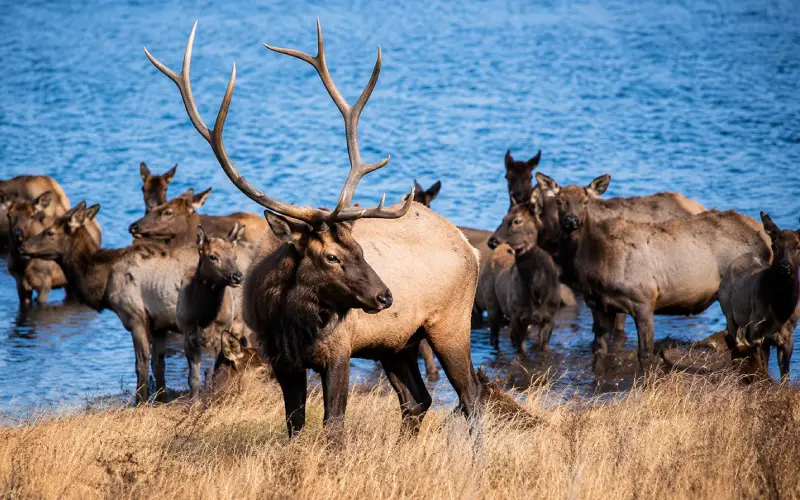
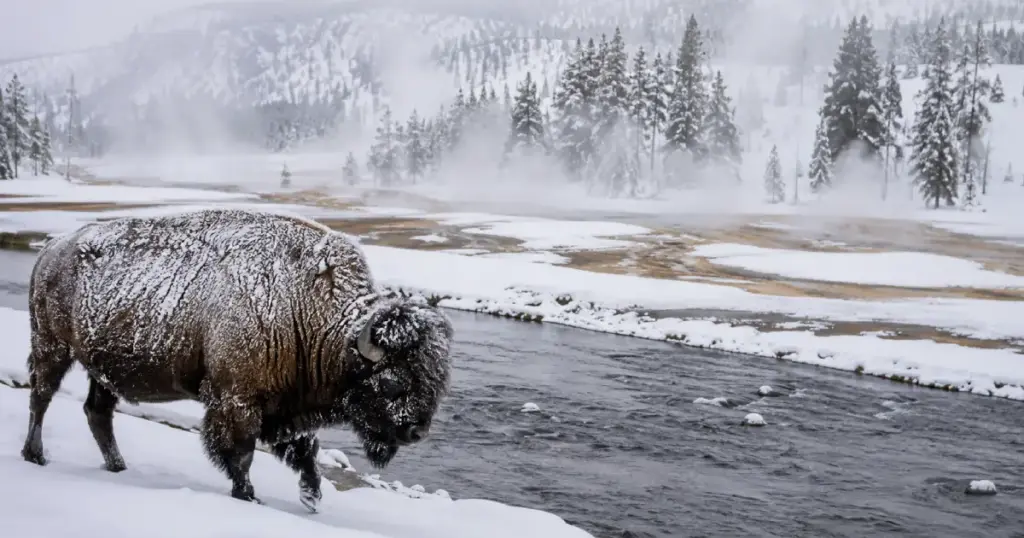
Bison are guaranteed sightings. Yellowstone’s 5,000+ bison concentrate in Lamar Valley and Hayden Valley during winter. They look extraordinary covered in frost, their breath visible in the cold air, breaking through snow to graze. The winter bison photography opportunities are legitimately world-class. Elk herds numbering hundreds congregate in the lower elevations. Moose are rarer but reliable in specific areas like Round Prairie and along the Lamar River. Bighorn sheep, pronghorn antelope, mule deer, and white-tailed deer round out the ungulate viewing.
Predators and Rarer Wildlife
Red foxes (especially against snow), coyotes (more numerous than you expect), bobcats (rare but possible), mountain lions (extremely rare, but guides track recent sightings), river otters playing in thermal-warmed water, bald and golden eagles feeding on carcasses, and trumpeter swans in thermal-warmed rivers. Grizzly and black bears are hibernating during the main winter season but occasionally emerge for brief activity periods. Mountain goats are visible on the cliffs and ridges of the Northern Range.
The Tour Operators – Top 5 Ranked
1. Yellowstone Safari Co. (Bozeman, MT)
The gold standard for private wildlife safaris. Full-day winter wildlife tours from Bozeman covering the Northern Range with expert naturalist guides, spotting scopes, and vehicle-based tracking. Typical cost is USD 800-1,500 per day for a private vehicle (up to 6 guests). Known for wolf-focused expertise, naturalist quality, and exceptional guest reviews. The best choice for serious wildlife enthusiasts willing to pay premium for expert guidance. Book 6-9 months ahead for peak dates.
2. Yellowstone Wild Tours (Gardiner, MT)
Specialized in private single-day custom winter tours and multi-day wolf packages. Operates from the North Entrance, Gardiner. Strong wolf-tracking expertise. Full-day private tours USD 700-1,200. All-inclusive multi-day wolf packages, including lodging and meals, are from USD 3,500 to 5,500 per person. Excellent alternative to Yellowstone Safari Co. with similar quality at slightly lower prices.
3. Wildlife Expeditions (Jackson Hole, WY)
Access Yellowstone from the Jackson Hole side via snowcoach. Strong naturalist team with wolf biology expertise. Group snowcoach tours USD 325-425 per person per day; private tours USD 2,500-4,000. The best operator if you are basing yourself in Jackson Hole for a broader Grand Teton plus Yellowstone winter trip. Multi-day packages combine both parks effectively.
4. Yellowstone Vacation Tours (West Yellowstone, MT)
The primary operator running snowcoach tours from West Yellowstone is the most common winter entry point. Daily Old Faithful snowcoach tours, Canyon tours, and combined wildlife-plus-geyser tours. Costs USD 325-450 per person per day. Shared snowcoach format with 10-12 passengers. Best value option for travelers wanting to experience Yellowstone’s interior rather than just Northern Range wildlife.
5. Adventure Tours of Yellowstone (Bozeman, MT)
Multi-day all-inclusive package specialists. 5-day/5-night winter adventure packages covering Lamar Valley wildlife and Mammoth Hot Springs. Uses 4×4 Suburbans and Mercedes Sprinter vans with studded snow tires. All-inclusive USD 3,000-4,500 per person for multi-day packages covering accommodation, meals, guides, and park access. It’s best for travelers wanting everything arranged in one booking rather than coordinating separately.
Planning Your Winter Yellowstone Itinerary
Where to Base Yourself
West Yellowstone, Montana, is the classic winter base – the snowcoach tour hub, town infrastructure is winter-ready, and the West Yellowstone Snowmobile Expo is here. Multiple hotels including the Yellowstone Park Hotel and Kelly Inn, cater specifically to winter visitors. Gardiner, Montana (North Entrance), is an alternative—a smaller town, but it puts you 5 minutes from the Northern Range road for self-drive wildlife watching plus access to snowcoach tours from Mammoth. Jackson Hole, Wyoming, is a premium base – combines Yellowstone winter access with Grand Teton National Park, Jackson Hole Ski Resort, and proper mountain town dining. Bozeman, Montana, is the urban base – larger city with flights, car rentals, and restaurants; it’s a 90-minute drive to the park entrance.
How Many Days to Plan
Minimum 3 days for a legitimate winter Yellowstone safari.
Day 1: Travel and acclimatization.
Day 2: Full-day Northern Range wildlife safari with wolves.
Day 3: Snowcoach tour to Old Faithful or Canyon to see geysers in winter.
4-5 days allow adding a second wildlife day (maximizing wolf sightings), dedicated photography days, or combining with Grand Teton. Most guided multi-day packages run 4-7 days.
When Within Winter to Visit
Late December through early March is the operational window. January and February are peak wolf-watching months: coldest temperatures but most wildlife activity and best snowcoach access. Mid-December is a transition (not all operations are running). Late March is shoulder season (some snowcoach tours ending, warmer but still cold). The Christmas to New Year week is very busy (book 9+ months ahead). Mid-January to mid-February delivers the best combination of wildlife activity, winter conditions, and reasonable bookability.
Cost Realistic for Indian Travellers
Winter Yellowstone is not a cheap trip. Realistic budget for a 5-day Yellowstone winter safari for two Indian travelers, including flights from India:
| Cost Category | Budget (INR) | Mid-Range (INR) | Premium (INR) |
| Return flights for 2 (IN-Bozeman/Jackson) | 160,000-220,000 | 200,000-280,000 | 300,000-450,000 |
| Hotel 4 nights | 50,000-80,000 | 90,000-160,000 | 200,000-400,000 |
| Guided wildlife tours (2-3 days) | 80,000-120,000 | 140,000-220,000 | 300,000-500,000 |
| Snowcoach tours (1-2 days) | 30,000-50,000 | 50,000-80,000 | 100,000-150,000 |
| Food meals for 2 | 15,000-25,000 | 30,000-50,000 | 50,000-90,000 |
| Winter gear rental or purchase | 20,000-40,000 | 30,000-60,000 | 60,000-100,000 |
| Rental car and fuel | 25,000-35,000 | 30,000-50,000 | 40,000-70,000 |
| US visa and travel insurance | 20,000-25,000 | 20,000-25,000 | 20,000-25,000 |
| TOTAL for 2 (5 days) | 400,000-595,000 | 590,000-925,000 | 1,070,000-1,785,000 |
The honest reality: Yellowstone winter is premium-priced travel. Expect 5 to 9 lakh INR minimum for a mid-range 5-day trip for two. The alternative – visiting in summer – costs 40-50 percent less (accessible by regular rental car, no snowcoach tours needed, cheaper accommodations) but delivers significantly less quality wildlife viewing experience. Winter Yellowstone is for travelers who prioritize wildlife photography and wolf-watching as the primary trip purpose rather than general national park tourism.
Essential Winter Gear for Indian Tourists
Yellowstone winter temperatures average -10 to -20 degrees Celsius daily, with extremes to -30 or -35. Indian ‘winter jackets’ from Delhi or Kolkata markets are genuinely insufficient. Proper gear is essential.
- Base layer: Merino wool or synthetic thermal underwear (top and bottom). Cotton is dangerous when it gets damp – never wear cotton as a base layer in sub-zero conditions.
- Mid layer: Fleece jacket or pullover for insulation between base and outer.
- Outer layer: Down-filled parka rated to -20 degrees Celsius minimum. Look for brands like The North Face, Columbia, Arc’teryx, or Canadian Goose. Budget USD 200-500 for a proper parka if purchasing in the USA.
- Insulated waterproof winter boots rated to -20 degrees minimum (Sorel, Baffin, and Columbia work well). Indian trekking boots are NOT adequate.
- Thermal gloves (wool or synthetic insulation) plus outer waterproof mittens. Glove liners help with camera operation.
- Warm beanie or balaclava covering ears. A balaclava protects the face from wind chill.
- Hand and toe warmers (chemical heat packets) for emergency backup. Widely available at REI or similar US outdoor stores.
Gear rental alternative: Several operators (Yellowstone Safari Co., Wildlife Expeditions) offer gear rental packages including parkas, boots, and accessories for USD 50-100 per day. This avoids the luggage weight and purchase cost of bringing your own. Bozeman and Jackson have REI stores that rent individual pieces.
Mistakes Indian Tourists Make on Yellowstone Winter Safari
- Booking a winter Yellowstone trip with Indian-market winter gear – Delhi ‘jackets’ fail within 30 minutes in Yellowstone winter. Budget for proper parka rental or purchase in the USA before park entry.
- Assuming Yellowstone is accessible by regular car in winter – most of the park requires a snowcoach. Self-driving is limited to the 52-mile Northern Range road. Plan accordingly.
- Booking only 2 days for winter Yellowstone – Snowcoach tours take a full day each, plus wildlife tours take a full day. 3 days is the absolute minimum; 5 days is better.
- Trying to compare Yellowstone in winter to an African safari – the experiences are genuinely different. Yellowstone has wolves, bison, elk, and eagles but no elephants, lions, rhinos, or giraffes. Adjust expectations.
- Visiting without a guided wildlife tour for the wolf-watching portion – self-drive tourists typically miss wolves entirely. The spotting scopes and tracking knowledge of professional guides are essential for legitimate wolf sightings.
- Underestimating altitude – Yellowstone averages 8,000 feet in elevation. Combined with cold, altitude increases fatigue, dehydration, and sleep disruption. Drink more water than normal and allow 1-2 days for altitude adjustment.
- Applying for a US visa too late – Indian B1/B2 visa wait times vary from 6 months to 12+ months for regular appointments. Apply 1 year before planned travel if possible.
Plan the Bigger USA Trip
A Yellowstone winter safari works best as part of a longer USA trip that spreads the international flight cost across more days and experiences. Our Best UK Safari Parks – Where to See Wildlife in Britain covers Yellowstone alongside other US wildlife experiences – Lion Country Safari in Florida, Wild Animal Safari Georgia, and multiple others – so you can compare winter Yellowstone against alternative US safari-style trips that may better fit your budget or weather preferences.
US flights from India are the biggest single cost factor in a Yellowstone trip. Our cheapest connecting flights to the USA from India with the best hub airports show which hub routings (via Frankfurt, Istanbul, Doha, and Dubai) deliver 30 to 40 percent savings versus direct routes and which US arrival airports (Bozeman, Salt Lake City, and Jackson) work best for Yellowstone itineraries. Saving 50,000-80,000 INR on flights easily funds the winter gear and guided tour premium that make the trip meaningful.
Final Thoughts
Yellowstone in winter delivers a wildlife experience that fundamentally transforms the national park from a summer tourism destination to extreme wilderness. Only 50 miles of 300 miles of roads are open to regular vehicles; access to interior Yellowstone requires snowcoach tours or snowmobiles, and temperatures drop to -30 degrees Celsius routinely. What this creates is a park with 97 percent fewer visitors than summer, wildlife concentrated in the Northern Range valleys (Lamar and Hayden), and wolf-watching success rates of 85-95 percent versus 25-40 percent in summer. For serious wildlife enthusiasts and nature photographers, this is legitimately one of the world’s best wildlife-viewing experiences alongside the African Serengeti. The honest recommendation for
Indian travelers: Yellowstone in winter is a premium-priced committed experience that rewards proper planning.
Minimum commitment: 5 lakh INR for a 5-day trip for two, a 5-day minimum duration, proper winter gear investment or rental, a US B1/B2 visa applied for well in advance, and guided wildlife tours for at least the wolf-watching days. The best window is mid-January to mid-February when wildlife activity peaks and operations are fully running. Base yourself in Gardiner or West Yellowstone for the Northern Range and interior access; Jackson Hole is for combined Grand Teton-Yellowstone itineraries. Use top operators like Yellowstone Safari Co., Yellowstone Wild Tours, or Wildlife Expeditions for guided portions – their expertise and equipment (spotting scopes, tracking knowledge, and vehicle access) are what actually deliver the wolves and wildlife encounters that make the trip memorable. Done this way, Yellowstone winter delivers a once-in-a-lifetime wildlife experience that most Indian travelers never consider but genuinely rate as their most memorable trip when they do. The cost is substantial and the conditions are demanding, but the reward – wolf packs hunting bison on fresh snow, geysers erupting against the winter landscape, and a 22-member wolf pack howling across Lamar Valley – is unforgettable.
Frequently Asked Questions
Q. Is Yellowstone open in winter?
Yes, Yellowstone is open year-round but with significant winter access restrictions. From December 15 to March 15, only one 52-mile stretch of road (Gardiner to Cooke City through Lamar Valley) is open to regular vehicles. The rest of the park’s 300 miles of roads are accessible only via snowcoach (heated tracked vehicles) or guided snowmobile tours. All major geysers (Old Faithful and Grand Prismatic) are snowcoach-access only.
When is the best time for a Yellowstone winter wildlife safari?
Mid-January to mid-February is the optimal window – coldest temperatures but best wildlife activity and wolf visibility. December and early January are good but include holiday crowds. Late March transitions out of peak winter season. Wolf packs are most active during daylight in January and February due to cold forcing daytime hunting. Budget a minimum of 5 days for the trip to maximize wolf-watching opportunities.
How much does a Yellowstone winter safari cost?
A 5-day Yellowstone winter trip for two Indian travelers costs 5-9 lakh INR mid-range, including flights, 4-star hotels, guided wildlife tours (USD 800-1,500 per day for a private wildlife safari), snowcoach tours (USD 325-450 per person per day), meals, a rental car, and winter gear. Premium versions with luxury lodges reach 12-18 lakh INR. Budget versions starting from 4 lakh are possible with shared snowcoach tours and mid-range hotels.
Can you see wolves in Yellowstone in winter?
Yes – winter is peak wolf-watching season in Yellowstone. Professional wildlife guides report 85-95 percent success rates putting guests on wolves through spotting scopes during winter expeditions. The Wapiti Wolf Pack (22 members, largest in the park), Junction Butte Pack, and Lamar Canyon Pack are frequently observed. Wolves appear dark against snow, are active during daylight hunting weakened prey, and are tracked daily by professional guides
What wildlife will I see in Yellowstone winter?
Guaranteed sightings: bison (5,000+ in park, concentrated in valleys), elk (hundreds in Northern Range), bald and golden eagles. Highly likely: wolves (with guided tour and spotting scope), pronghorn antelope, mule deer, coyotes. Likely: red fox, bighorn sheep, trumpeter swans, river otters, moose. Rare but possible: mountain lion, bobcat, lynx. Hibernating (not seen): grizzly bears and black bears. The wildlife variety is genuinely excellent for a single destination.
Is a winter Yellowstone safari suitable for Indian families?
Best suited for adults and teenagers rather than young children. The -20 to -30 degree temperatures are genuinely uncomfortable for children under 10, despite proper gear. Snowcoach tours (6-8 hours outdoors) require cold tolerance that most young Indian children will not have. Guided wildlife tours involve extensive stops outside the vehicle using spotting scopes—children often get cold and bored. Families with teenagers 13+ who are genuinely interested in wildlife do well; families with children under 10 should consider summer in Yellowstone instead.


