
Whitby On A Budget: The Best Cheap Seaside Escape In The UK (2026)

There’s a moment every summer when flight prices to the usual holiday spots climb past what feels reasonable, and the same tired conversation starts again about whether a proper beach trip is even worth the stress this year. Somewhere in that conversation, most people forget that Britain has its own coastline, and a genuinely good one at that, sitting a few hours away by train rather than a few hours away by plane with a departure lounge attached.

Whitby is where that realization tends to land hardest. A working fishing harbour, a ruined clifftop abbey with a genuinely eerie backstory, cobbled streets that smell like fish and chips from every direction, and a beach that doesn’t charge a penny for access all sit within walking distance of each other on the North Yorkshire coast. It has been turning up on nearly every list of the UK’s best seaside towns this year, and unlike a lot of destinations that get that kind of attention, prices here still haven’t caught up with the reputation. This guide runs through exactly what a Whitby trip costs, when to go, how to fill your days, and the small mistakes that quietly turn a budget break into a full-price one.
A Working Harbour Town That Never Bothered Getting Expensive
Whitby’s appeal has never really been about looking polished. It’s a working harbour town first, with fishing boats still coming in most mornings, and that authenticity is exactly what keeps prices grounded compared to more manicured southern resorts. You’re not paying a premium for a curated experience here; you’re paying local prices for a genuinely lived in seaside town that happens to have one of the most photogenic harbours in the country.
The beach itself costs nothing to enjoy, and neither does the clifftop walk up to Whitby Abbey, one of the most atmospheric ruins on the entire English coast and reportedly the inspiration behind Bram Stoker’s Dracula. Independent fish and chip shops line nearly every street near the harbour, and the competition between them keeps prices honest rather than inflated the way seaside towns closer to London tend to be. Add in coastal walks toward Robin Hood’s Bay and Sandsend that cost absolutely nothing beyond the effort of walking them, and you end up with a trip that feels rich in experience even when the budget stays modest.
None of this means Whitby is undiscovered. It’s genuinely one of the more visited seaside towns in the country and appears consistently on best-of-lists published every year. But its popularity hasn’t dragged prices up the way it has in Brighton or Cornwall, and that gap between reputation and actual cost is precisely what makes it worth a proper look.
Breaking Down The Numbers: What You’ll Actually Spend
Here’s a realistic cost breakdown for a couple or small group spending four or five days in Whitby, based on current 2026 pricing.
A Bed For The Night
Budget guesthouses and B&Bs in Whitby typically run between forty-five and seventy pounds a night for a double room, and that price usually includes a proper cooked breakfast, which quietly saves money on the first meal of every day. Self-catering cottages and apartments, which make sense for groups of three or more, bring the per-person cost down significantly and often run between eighty and one hundred twenty pounds a night for the whole property, split across however many people are staying.

Holiday parks slightly outside the town center, similar to the ones found across the wider Yorkshire coast, can bring nightly costs down even further, sometimes under twenty pounds per person when booked as part of a multi-night stay.
Chip Shops, Cafes And Everything In Between
Fish and chips is the obvious local staple, and a proper portion from one of the well-known harborside shops runs eight to eleven pounds, which is genuinely good value for a filling sit-down or takeaway meal by the water. A full cooked breakfast at a local cafe, for anyone not staying somewhere that includes one, costs around seven to nine pounds and tends to set you up for most of the day.

Evening meals at a proper restaurant, rather than a chip shop, run fifteen to twenty-two pounds per person for a main course, and there’s enough competition among Whitby’s restaurants that quality stays high even at the lower end of that range. Self-catering travellers can bring daily food costs down substantially by picking up fresh bread, local cheese, and seafood from the harbour-side market stalls rather than eating out for every meal.
Getting Around Without Needing A Car
Whitby itself is entirely walkable, and most visitors get through their whole stay without needing a car at all once they’ve arrived, since the harbour, abbey, beach and town centre all sit within a comfortable walk of each other.

For those coming from further afield, the train journey from York takes around ninety minutes and typically costs fifteen to twenty five pounds each way depending on how far ahead it’s booked. A day trip bus connecting Whitby to nearby Robin Hood’s Bay or Scarborough costs a few pounds each way and is a cheap way to see more of the coast without renting a car for the whole trip.
The Abbey, the Steps, and Everything Else Worth Paying For
Beach access costs nothing, and that single fact does most of the heavy lifting for the overall budget here. Whitby Abbey has an entry fee of around twelve pounds for adults, which is genuinely worth paying given the site’s history and the view from the clifftop grounds alone.

The 199 steps leading up to the abbey and St. Mary’s Church are free to climb and are as much a part of the Whitby experience as the abbey itself. Whitby Museum, a slightly old fashioned but genuinely charming local museum, costs a few pounds to enter, and a boat trip around the harbour or a short whale watching excursion in season runs fifteen to twenty five pounds depending on the operator and length of trip.
Adding It All Up Per Day
A couple staying in a budget guesthouse and eating a mix of chip shop meals and one proper restaurant dinner can comfortably manage the trip on roughly forty five to sixty pounds a day per person, covering accommodation, food and a couple of paid activities. Groups splitting a self catering cottage across three or four people often bring that per person figure down closer to thirty to forty pounds a day, which is genuinely hard to match at most other coastal towns in England with a comparable amount of character.
What A Full Trip Actually Costs
For a four-night stay, a couple travelling on a modest budget should plan for somewhere between two hundred and eighty and three hundred eighty pounds total, not including the train or drive to get there. A group of four sharing a self-catering cottage can often keep the total trip cost, accommodation, food, and activities combined, under six hundred pounds for the same stay, which stacks up favorably against nearly any other seaside town of comparable character in the country.
Timing Your Trip: When The Coast Actually Delivers
Whitby has a longer usable season than most people assume, and the right window changes both the cost and the crowd size considerably.
The Quiet Stretch Before Summer
Spring brings mild temperatures, blooming gorse along the clifftops, and noticeably thinner crowds than the summer months bring. This is genuinely one of the best windows for exploring the abbey and coastal walks without competing for space, and accommodation prices tend to sit at some of their lowest points of the year outside deep winter.
Peak Season And Its Trade-offs
Summer is peak season, and Whitby gets genuinely busy, particularly during the town’s Goth Weekend events and school holiday weeks. Prices for accommodation climb noticeably during these stretches, so booking well ahead and considering a midweek stay rather than a weekend can meaningfully soften the cost.
The Window Most Visitors Overlook
Autumn might be Whitby’s best-kept secret. The weather stays comfortable enough for coastal walks well into October, crowds thin out considerably after the school summer holidays end, and accommodation prices drop noticeably while the town retains its full character. Many repeat visitors consider this the strongest overall window for a trip here.
Cold, Quiet And Genuinely Atmospheric
Winter is properly cold and often windswept, but this is when Whitby becomes cheapest to visit by a wide margin, and there’s something genuinely atmospheric about the abbey ruins against a grey winter sky that summer simply doesn’t offer. It’s less about beach time and more about cosy pubs, fresh fish and chips, and quiet clifftop walks without another soul in sight.
For most travellers trying to balance decent weather against a reasonable budget, late April through May or September through mid-October come out as the strongest choices.
Four Days On The North Yorkshire Coast
Settling In By The Water
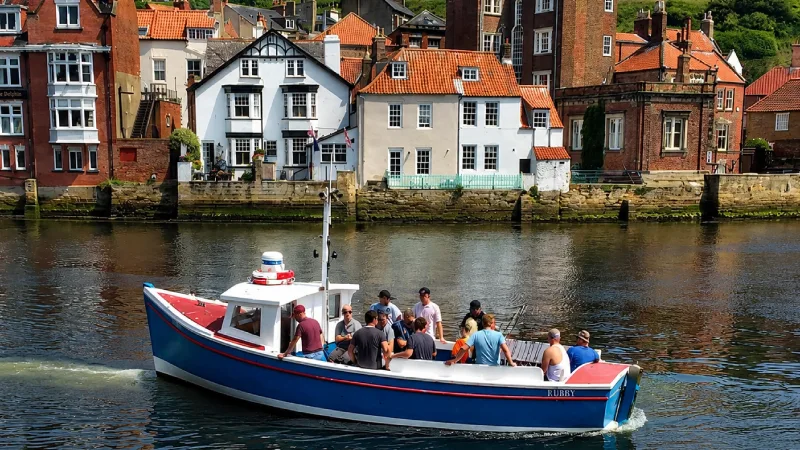
Most trains and drives land you in Whitby sometime in the afternoon, so there’s little point rushing straight into sightseeing. Check into your guesthouse or cottage, then head down to the harbour for a slow walk along the water while the light is still good. Watch the fishing boats coming in if the timing lines up, and let the smell of the chip shops pull you toward an early dinner rather than fighting it. As evening sets in, cross over to the East Side of the harbour and walk up toward the base of the 199 steps, saving the full climb for tomorrow when you’ll have proper daylight and energy for the view at the top.
Earning The View

This is the day to properly earn the view. Climb the 199 steps in the morning, while the light is soft and the crowds are thinner, and take your time at St. Mary’s Church before continuing on to Whitby Abbey itself. The ruins are genuinely worth the entry fee, and the clifftop grounds offer one of the best views on this entire stretch of coast, looking straight back down over the harbour and rooftops below. Spend the afternoon wandering the old town’s narrow streets and independent shops, then treat yourself to a proper sit-down fish and chips dinner at one of the well-known harbourside spots as a reward for the morning’s climb.
Sand, Cliffs And A Smaller Village

Dedicate today to the coastline itself. Spend the morning on Whitby’s own beach, which is perfectly pleasant, before catching the coastal bus or walking the cliff path toward Robin Hood’s Bay, a smaller and quieter village a few miles south that’s well worth the trip for its own beach and tangle of narrow lanes. The walk between the two, if you’re up for it, is one of the best free activities on this entire itinerary, with genuinely dramatic cliff views the whole way. Head back to Whitby in the evening for a quieter dinner, maybe skipping the busiest harbourside spots in favour of a smaller local pub instead.
One Last Look Before Heading Home
Use your last morning for Whitby Museum, a slightly old fashioned but genuinely charming stop that covers everything from local shipwrecks to jet jewellery, the polished black stone Whitby has been known for since Victorian times. If the weather is decent, a final short walk along the harbour or a last coffee overlooking the water is a better use of remaining time than trying to squeeze in one more attraction before checking out and heading home.
This pacing works well for couples and small groups alike, and it can easily stretch to a full week by adding a day trip to Scarborough or a slower second day around Robin Hood’s Bay without needing to change the overall structure.
How Whitby Stacks Up Against The Postcard Towns
Places like Padstow or parts of the Cotswolds coastline deliver a certain kind of polish, no argument there, but Whitby offers something that’s becoming genuinely harder to find at a UK seaside destination: a trip that doesn’t require constant financial vigilance. You can order the proper fish and chips instead of the smaller portion, add an extra museum visit without recalculating the day’s budget, and stay an extra night without the maths becoming uncomfortable.
Whitby also avoids the manufactured exclusivity that drives prices up elsewhere along the English coast. It’s a working town first and a tourist destination second, and that order of priorities is exactly what keeps prices honest for visitors rather than inflated for them.
Packing For Cliffs, Cobbles And Changeable Weather
A proper waterproof jacket is worth packing regardless of season, since coastal weather here can shift from sunny to windswept within the same afternoon, and no amount of forward planning changes that fact. Sturdy walking shoes matter more than stylish ones, particularly if the 199 steps or the coastal path toward Robin Hood’s Bay are on your itinerary, since cobbles and cliff paths both punish the wrong footwear.
A reusable water bottle is worth bringing along on the longer coastal walks, since there are fewer shops once you’re past the edge of town. It’s also worth carrying a bit of cash, since some of the smaller independent shops and market stalls near the harbour still prefer it over cards, even if the larger restaurants and chip shops all take cards without issue.
The Small Errors That Quietly Inflate A Whitby Trip
Booking a summer weekend without checking for Goth Weekend or school holiday dates is one of the most common ways travellers accidentally overspend here. Accommodation prices spike noticeably during these specific windows, and a shift of even a week either way can bring costs down substantially.
Skipping travel insurance because it’s a domestic trip is another mistake worth avoiding. Weather related disruptions along this stretch of coast are common enough, particularly in autumn and winter, that a basic policy covering trip interruption and cancellation earns its cost more often than people expect, even on a short UK break.
Assuming every fish and chip shop by the harbour is the same is a mistake that leads a lot of visitors to just queue at the first one they see rather than asking a local or checking recent reviews, when the difference in quality between shops here can be genuinely noticeable.
Underestimating how tiring the 199 steps are is another one worth planning around. It’s not a difficult climb, but doing it on a full stomach right after a big lunch, or rushing it in the middle of the day’s heat, takes the enjoyment out of what should be one of the highlights of the trip.
Finally, a lot of first time visitors assume Whitby is purely a summer destination, when in fact the shoulder seasons and even winter often deliver a more atmospheric, less crowded experience for meaningfully less money.
Is Travel Insurance Really Necessary For A Trip This Close To Home
It’s easy to assume that a domestic holiday doesn’t need the same preparation as an international one, but coastal breaks carry their own specific set of risks worth covering. Train cancellations, unpredictable coastal weather, and last minute changes to accommodation availability are all more common on the North Yorkshire coast than people expect, and trip interruption coverage can be the difference between absorbing a disrupted journey gracefully versus losing the cost of a prepaid stay entirely.
A basic travel insurance plan covering trip cancellation, interruption and delay for a domestic seaside trip typically costs a small amount relative to the total trip cost, often just a handful of pounds for a short break depending on the total amount insured. Comparing a few options before booking accommodation is worth the few minutes it takes, particularly for anyone travelling during the less predictable autumn or winter months.
Before You Leave: A Short Packing And Planning List
- Waterproof jacket regardless of season
- Sturdy walking shoes for cobbles and cliff paths
- Reusable water bottle for coastal walks
- Travel insurance covering trip interruption and cancellation
- Some cash for smaller harbor-side stalls and shops
- A light day bag for the walk to Robin Hood’s Bay
- Camera or phone charged for the abbey cliff-top view
FAQ
How many days are enough for a Whitby trip?
Four days is a comfortable amount of time to cover the abbey, the harbour, the beach, and a walk toward Robin Hood’s Bay without rushing. A full week gives room for a day trip to Scarborough or a slower pace throughout.
What is the cheapest time to visit Whitby?
Winter months, from November through March, offer the lowest accommodation prices of the year, though spring and autumn deliver noticeably better weather for coastal walks at only a modest increase in cost, which is why most experienced visitors lean toward those windows instead.
Is Whitby a good budget option compared to other UK seaside towns?
Yes, its working harbour town character has kept accommodation and food prices more grounded than more polished southern resorts, making it one of the better-value seaside destinations in the country for both couples and small groups.
Do I need travel insurance for a UK staycation like this?
It isn’t required, but it’s worth having, particularly given how unpredictable coastal weather and train schedules can be on this stretch of coast. A basic trip cancellation and interruption policy costs relatively little compared to the protection it provides.
Is Whitby good for families with young children?
Yes, the traditional seaside beach, gentle harbor-side walks, and family-friendly attractions like the museum and boat trips make it a genuinely practical choice for families, though the 199 steps are worth pacing carefully with younger children.
Can I visit Whitby without a car?
Yes, the train from York connects directly, and the town itself is entirely walkable once you arrive. A car becomes more useful only if you want to explore further along the coast beyond what the local bus routes cover.
One Last Thing Before You Book
Whitby has earned its place on nearly every UK seaside list without needing to inflate its prices to match that attention, and that combination is genuinely rare along the English coast. A trip here doesn’t ask you to choose between a real character and a reasonable budget, and that’s exactly why it keeps pulling visitors back long after the harbour photos have faded from everyone’s camera roll. If a proper seaside break has been sitting on your list without a plan attached to it, this is a genuinely easy one to finally book.


