
10-Day UK Road Trip Itinerary: Best Route Through England, Scotland & Wales (2026 Guide)

This is the kind of trip where no two consecutive days look the same: you might start the morning in a honey-stone Cotswolds village, spend the afternoon in a Welsh castle that has stood since the 13th century, wake up two days later next to a Scottish loch, and end the week walking the medieval walls of York. The variety is the point, and the car is what makes it possible. A 10-day UK road trip itinerary through England, Scotland, and Wales covers three countries in one journey and covers them well.
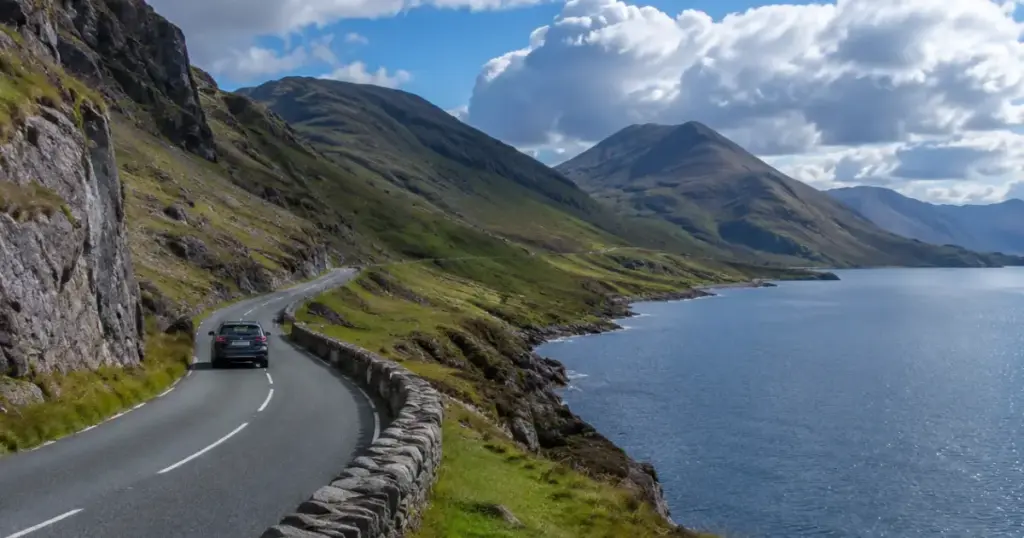
The United Kingdom is a remarkably compact place given the sheer diversity of what it contains. London to the northernmost tip of Scotland is roughly 700 miles – less than the distance from New York to Chicago. In ten days of driving, covering around 1,100–1,200 miles in total on a well-planned loop, you can take in Roman ruins, Norman castles, Tudor market towns, Georgian cities, Victorian industrial heritage, and Highland landscapes that look genuinely untouched. Almost all of it is within a few hours of everywhere else.
This guide is built on the best route data from experienced UK road trippers and locals, structured into a practical loop that starts and ends in London. It covers every driving day in detail, highlights what to prioritize in each region, explains the realities of driving in the UK for international visitors, and gives you an honest budget so there are no surprises when you pick up the car keys.
Quick Facts: 10-Day UK Road Trip
Total Distance: 1,100–1,200 miles (London loop through Wales, Lake District, Scotland, York)
Best Months: May–June (long days, bluebells, mild) or September–October (autumn colour, fewer crowds)
Daily Budget: £60–£90 (budget) · £110–£170 (mid-range) · £200–£320 (comfortable)
Drive on the LEFT – UK uses left-hand traffic; roundabouts give way to traffic from the right
Car Hire: Book 6+ weeks ahead; automatic cars slightly more expensive but easier for visitors
Fuel: Petrol and diesel widely available; fill up before entering the Scottish Highlands
Sat-Nav: Essential – UK country lanes can be extremely narrow with minimal signage
Pre-book: Edinburgh Castle (9:30am opening), Conwy Castle, Roman Baths Bath – timed entry recommended
The 10-Day Route: Overview and Logic
The route follows a counter-clockwise loop from London, heading west and north through Wales, up to the Lake District, across into Scotland, and then back down the east side through the Scottish Borders, Hadrian’s Wall, York, and the Midlands. This direction minimizes backtracking, keeps driving days reasonable, and allows the scenery to escalate – saving the Scottish Highlands for the middle of the trip when energy is still high.
| Day | From → To | Drive | Key Stops | Overnight |
|---|---|---|---|---|
| Day 1 | Arrive London | – | Hyde Park, Tower Bridge, South Bank | London |
| Day 2 | London → Bath/Cotswolds | 115 mi | Roman Baths Bath · Bourton-on-the-Water | Cotswolds |
| Day 3 | Cotswolds → Snowdonia | 130 mi | Conwy Castle · Snowdonia National Park | Snowdonia/Beddgelert |
| Day 4 | Wales → Liverpool | 120 mi | Caernarfon Castle · Beatles Liverpool | Liverpool |
| Day 5 | Liverpool → Lake District | 60 mi | Windermere · Grasmere · Wordsworth | Lake District |
| Day 6 | Lake District → Edinburgh | 160 mi | Gretna Green · Stirling Castle · Edinburgh | Edinburgh |
| Day 7 | Edinburgh (full day) | – | Castle · Royal Mile · Arthur’s Seat | Edinburgh |
| Day 8 | Edinburgh → Highlands | 150 mi | Loch Ness · Glencoe · return to Edinburgh | Edinburgh |
| Day 9 | Edinburgh → York | 200 mi | Hadrian’s Wall · The Shambles · York Minster | York |
| Day 10 | York → London | 205 mi | Stratford-upon-Avon · Return London | Depart |
Day-by-Day Route Guide
Day 1: London: Arrival and Orientation
Most international visitors fly into Heathrow (LHR) or Gatwick (LGW). Do not pick up the rental car on arrival day – driving in central London is genuinely difficult and unnecessary. The Tube and Elizabeth line cover everything you need for your first day. Pick the car up on the morning of Day 2 before heading west.
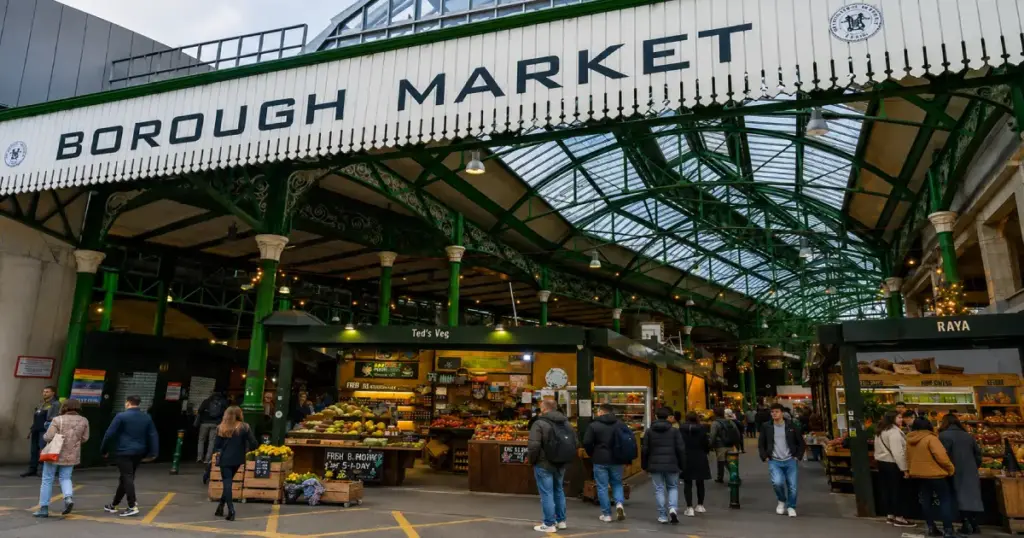
London deserves more than one day, but for a 10-day UK road trip, it serves as the launch point rather than the centerpiece. Focus on what is accessible and walkable from wherever you are staying: the South Bank walk from Westminster Bridge to Tower Bridge is an excellent three-hour introduction to the city, free, and endlessly interesting. The View from The Shard, Borough Market, and a walk through Southwark Cathedral are all within the same riverside corridor.
Day 1 Highlights
- Tower Bridge and Tower of London exterior (free views from the south bank)
- South Bank walk: Tate Modern, Shakespeare’s Globe, Borough Market
- Westminster Bridge for the Houses of Parliament and Big Ben view
- Evening: Covent Garden street performers and dinner
Day 2: Bath and the Cotswolds
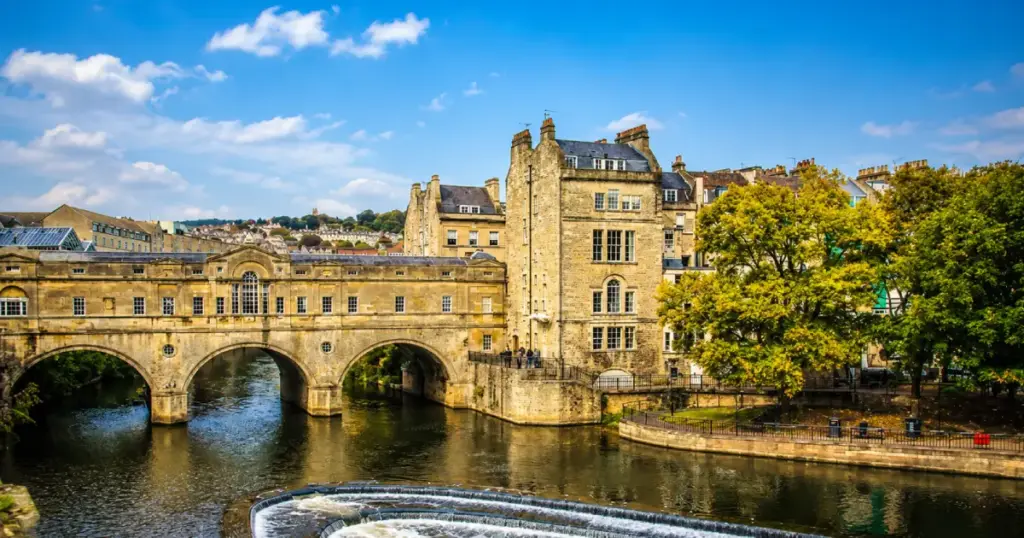
Pick up the rental car early from a central London depot and head west on the M4. Bath is 115 miles from London – about two hours in normal traffic. The Roman Baths are one of the best-preserved Roman sites in the world: the original hypocaust heating system, the sacred spring, and the remarkably complete bath complex give an authentic sense of daily life in Roman Britain that no other UK site quite matches. Book timed entry online.
From Bath, the Cotswolds are a 30-minute drive east. The Cotswold villages – built entirely from the same warm golden limestone quarried from the local hills – look like a Hollywood set designer’s idea of English rural life, except they are completely real and have looked roughly this way for 400 years. Bourton-on-the-Water, Bibury (with its famously photographed Arlington Row), and the market town of Burford are the most accessible and photogenic. Arrive early morning or late afternoon to avoid the worst of the summer crowds.
Day 2 Highlights
- Roman Baths Bath – book timed entry; allow 2 hours (from £22 adults)
- Bath Royal Crescent and Pulteney Bridge – free, beautiful Georgian architecture
- Bourton-on-the-Water – the ‘Venice of the Cotswolds’; very busy in summer, go early morning
- Bibury – Arlington Row is the most photographed Cotswolds scene; 15 min from Bourton
- Overnight in a Cotswolds village B&B – the experience is worth every extra pound
Cotswolds Driving Tip:
Cotswolds lanes are narrow, often single-track with passing places – drive slowly and pull over confidently
Bourton-on-the-Water has limited parking and a one-way system – arrive before 9:30am or after 5pm
The village of Snowshill and Broadway are excellent less-crowded alternatives to Bourton
Download Google Maps offline for this area – mobile signal is patchy in the deepest Cotswold valleys
Day 3: Into Wales: Conwy and Snowdonia
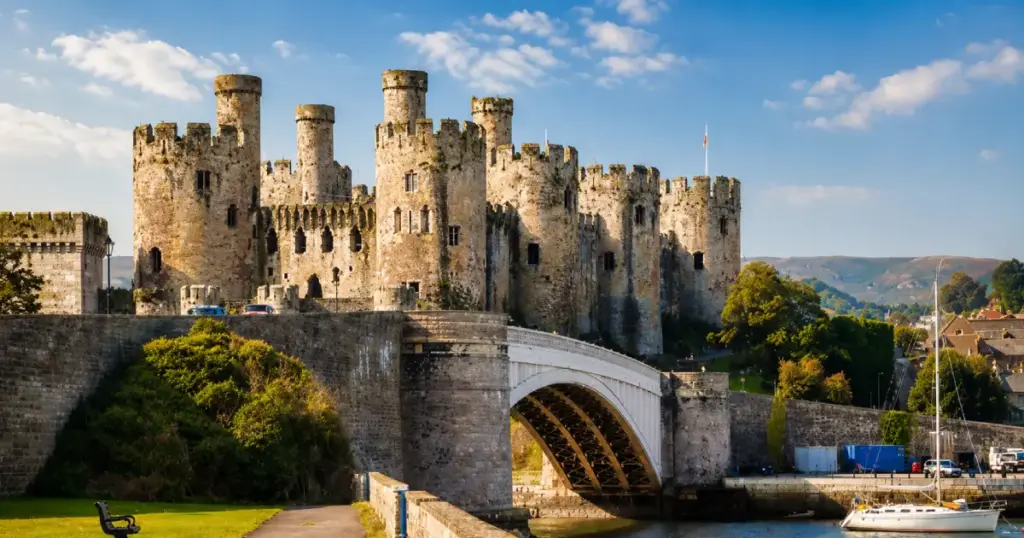
The drive from the Cotswolds into Wales (approximately 130 miles) takes you through the English Midlands and across the Welsh border into a landscape that changes dramatically within a few miles. Wales has more castles per square mile than any other country in Europe – a legacy of English medieval conquest and Welsh resistance – and Conwy is among the finest. The 13th-century Conwy Castle and its complete circuit of town walls are a UNESCO World Heritage Site and one of the best-preserved medieval fortifications in the world.
From Conwy, the road south into Snowdonia National Park (now officially called Eryri) enters some of the most dramatic mountain scenery in Britain. Mount Snowdon (1,085m) is the highest peak in Wales and England; the Snowdon Mountain Railway runs from Llanberis to the summit if you prefer not to hike. Beddgelert – a tiny village in a wooded river valley at the heart of the national park – is the ideal overnight base and one of the most genuinely beautiful small settlements in Wales.
Day 3 Highlights
- Conwy Castle and town walls (CADW managed; book online, £12) – arrive at opening for the best experience
- Drive the A5 through the Ogwen Valley – one of Wales’s most dramatic mountain roads
- Llanberis and the base of Snowdon – optional railway or hike to the summit
- Beddgelert village – the legend of Gelert the dog is told at a nearby grave marker; gentle riverside walk
Day 4: Caernarfon Castle and Liverpool
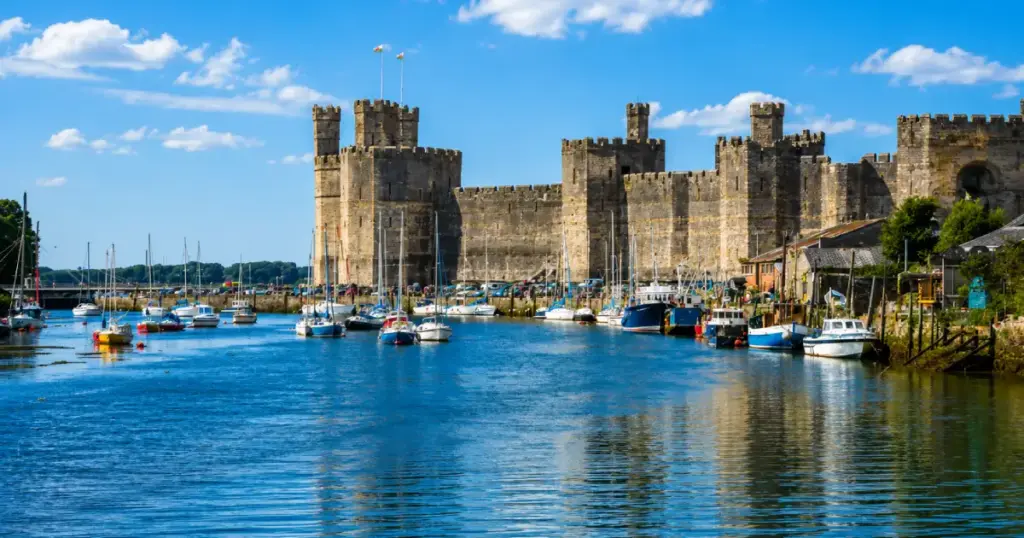
Caernarfon Castle – 12 miles from Beddgelert, is arguably the most impressive castle in Wales and was built by Edward I as the administrative center of his conquest. The Eagle Tower, the narrowness of the town walls, and the views over the Menai Strait are spectacular. Budget two hours for the castle before driving north to the A55 expressway and east towards Liverpool.
Liverpool is one of Britain’s most underrated city destinations. The waterfront Pier Head, with its Three Graces buildings, is arguably the finest example of Edwardian civic architecture in England. The Beatles Story museum at the Albert Dock covers the Fab Four’s extraordinary rise from the Cavern Club to global phenomenon in compelling detail. The Cavern Club itself – a replica of the original on the same street – still hosts live music nightly. Liverpool’s two cathedrals (Anglican and Catholic, both extraordinary, at opposite ends of the same street) are free to enter and architecturally remarkable.
Day 4 Highlights
- Caernarfon Castle (CADW; £12; book ahead in summer) – 2 hours minimum
- Drive north on A55 to Liverpool (2 hours from Caernarfon)
- Liverpool Pier Head and the Three Graces waterfront buildings (free)
- The Beatles Story at Albert Dock (£17) – excellent even for non-fans
- Mathew Street and the Cavern Club evening – live music most nights, free or minimal cover
Day 5: The Lake District
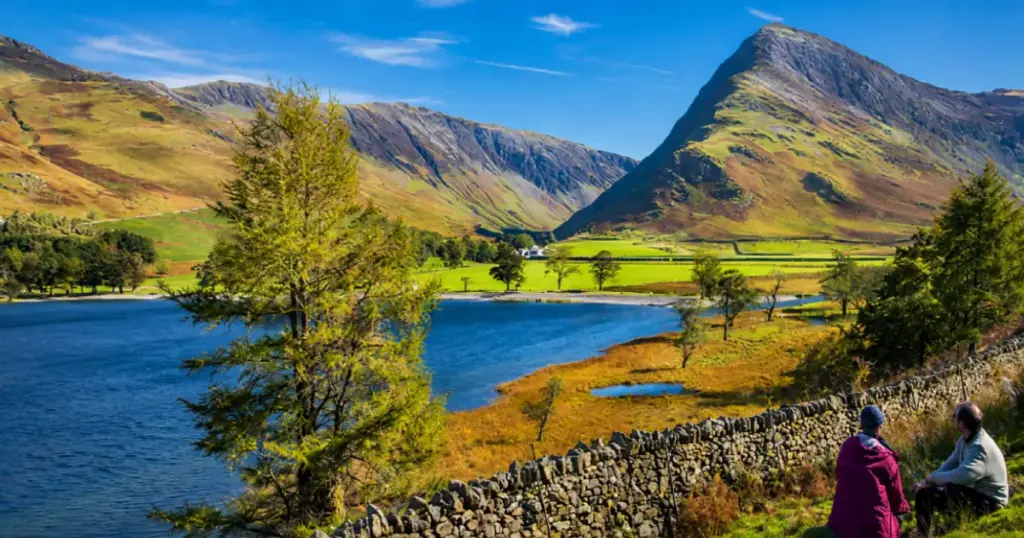
The Lake District is England’s mountain country and its most celebrated landscape – the inspiration for Wordsworth’s poetry, Beatrix Potter’s illustrations, and the walking culture that has defined British outdoor recreation for two centuries. Windermere is the largest natural lake in England, Grasmere the most literary village, and the fells and passes between them some of the finest walking in the country.
The drive from Liverpool to the Lake District is only 60 miles – one of the shortest driving days of the trip. This is intentional: you want time to actually be in the Lake District rather than just passing through it. A boat trip on Windermere (£18 for a return cruise from Bowness Pier) gives a completely different perspective on the landscape – the fells reflected in the water, with white-painted boathouses dotting the shoreline. If you walk, even a 90-minute ascent of Cat Bells (a modest but rewarding fell above Derwentwater) delivers views that justify the whole detour north.
Day 5 Highlights
- Windermere lake cruise from Bowness Pier (£18 return) – mountains reflect beautifully on clear days
- Grasmere village – Wordsworth’s Dove Cottage and grave at St Oswald’s Church; original Grasmere gingerbread from the tiny shop by the church gate
- Cat Bells walk above Derwentwater – moderate 90-minute fell walk, panoramic views
- Ambleside and Rydal Water afternoon walk if time allows
READ MORE: London for Couples: Best Romantic Places & Date Ideas
Day 6: Lake District to Edinburgh via Gretna Green and Stirling
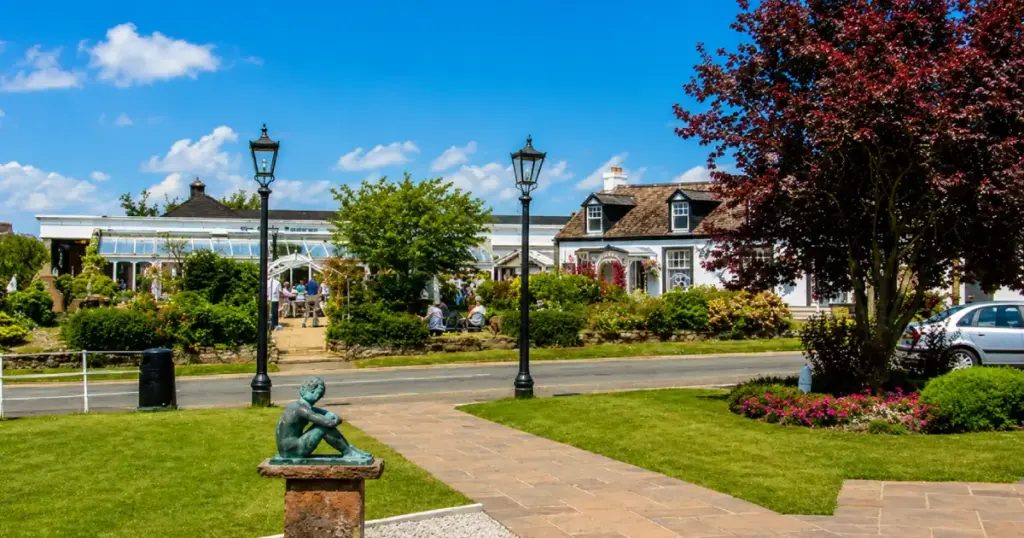
Today is a scenic drive north into Scotland – one of the most satisfying days of the entire trip as the landscape shifts from the soft, green English Lake District through the bare limestone hills of Cumbria, across the Scottish border at Gretna Green, and northward past Stirling to Edinburgh.
Gretna Green is the famous Scottish border village that became a destination for eloping English couples for centuries – Scottish law permitted marriages without parental consent from 1754 onwards, and the Old Blacksmith’s Shop became the symbolic venue. It takes only 20–30 minutes to stop, look around, and absorb the peculiar romance of the place before continuing north. Stirling Castle is a more substantial stop: positioned on a volcanic crag like Edinburgh Castle but with arguably better views over the Forth Valley, it is Scotland’s most historically significant fortress and takes two hours to explore properly.
Day 6 Highlights
- Gretna Green border village – 30 minutes; photo stop at the Old Blacksmith’s Shop
- Stirling Castle (£18; book online) – Grand Hall, royal apartments, panoramic views over the Forth
- Arrive Edinburgh by early evening – check in to Old Town accommodation
- Evening walk on the Royal Mile – the approach from Waverley Station uphill towards the Castle is one of the great urban arrivals
Day 7: Edinburgh Full Day
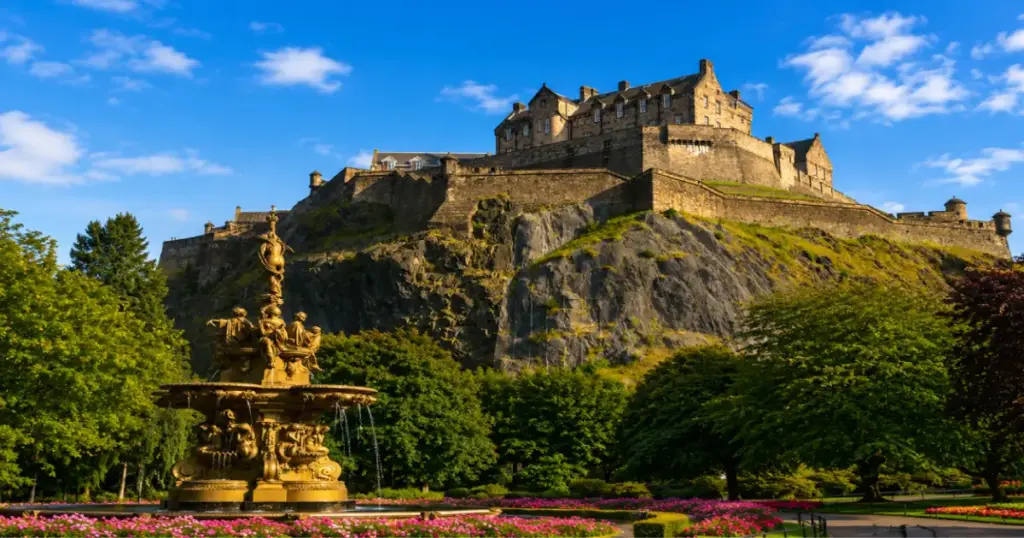
Edinburgh Castle should anchor the morning. Visit at opening time (9:30am) – the One O’Clock Gun, the Scottish Crown Jewels, and the Great Hall are all inside, and early arrival means you experience the castle without the tour groups that build from 11am onwards. Book tickets online in advance; same-day tickets are available, but queue time increases significantly in summer.
The afternoon belongs to the Royal Mile, and the Old Town closes. Edinburgh’s Old Town is a medieval masterpiece – the main street descends from the castle esplanade to the Palace of Holyroodhouse along a ridge, with narrow alleyways called closes branching off on both sides. White Horse Close and Riddle’s Court are among the most atmospheric. The Scottish National Museum on Chambers Street is free and excellent – the rooftop terrace café has one of Edinburgh’s best views.
For the fit and motivated, Arthur’s Seat – the ancient volcano in Holyrood Park at the base of the Royal Mile – can be climbed in 45 minutes from the park entrance. The 360-degree view from the summit (251m) stretches across the whole city, the Firth of Forth, and north into Fife.
Day 7 Highlights
- Edinburgh Castle (9:30am opening – arrive before 9am queue forms; £18 online)
- Royal Mile walk and closes exploration – White Horse Close, Riddle’s Court, Mary King’s Close
- Scottish National Museum (free) – history of Scotland from prehistory to the present
- Arthur’s Seat hike – 45 minutes up, extraordinary panoramic reward at the top
- Grassmarket evening – lively square below the castle, excellent pub and restaurant selection
Day 8: Scottish Highlands Day Trip (Loch Ness and Glencoe)

The Highlands day trip from Edinburgh is one of the most anticipated days of the entire UK road trip – and it consistently delivers. The drive north from Edinburgh takes you through Perthshire (stunning), into the Cairngorms landscape, and eventually to Loch Ness before looping back south via Glencoe.
Loch Ness is 23 miles long and up to 230 metres deep – the largest body of water in Britain by volume. Urquhart Castle, a ruined 13th-century fortress on the western shore, gives the most photogenic views across the loch. The inevitable Nessie mythology is handled well at the visitor centre nearby, which is entertaining without being too credulous. Glencoe – on the return route south – is the Highlands at their most dramatic: a U-shaped glacial valley flanked by 1,000-metre ridges, with a history including the 1692 Massacre of Glencoe that casts a particular atmosphere over the whole place.
Without a hire car, the best option is a guided minibus tour from Edinburgh. Rabbie’s Trail Burners and Haggis Adventures both run excellent small-group (maximum 16) day tours on this circuit, departing Edinburgh early in the morning and returning by 9–10pm.
Day 8 Highlights
- Depart Edinburgh 7–8am (self-drive) or join Rabbie’s / Haggis Adventures guided tour
- Loch Ness and Urquhart Castle ruins (£10 entry) – atmospheric, spectacular views
- Glencoe valley – stop at the Glencoe Visitor Centre (NTS) and walk the valley floor
- Rannoch Moor viewpoint – one of the most isolated, elemental landscapes in Britain
- Return Edinburgh by 9pm
Highlands Day Trip Tips:
Book guided tours 3–5 days ahead in summer – Rabbie’s and Haggis Adventures sell out fast
Fill the fuel tank in Edinburgh before heading north – petrol stations become sparse in the Highlands
Bring waterproofs and layers – Highland weather changes within minutes, regardless of forecast
Single-track Highland roads require patience – use passing places confidently and wave to oncoming drivers
The Glencoe visitor centre has excellent context on the Massacre of 1692 – worth 30 minutes
Day 9: Hadrian’s Wall and York
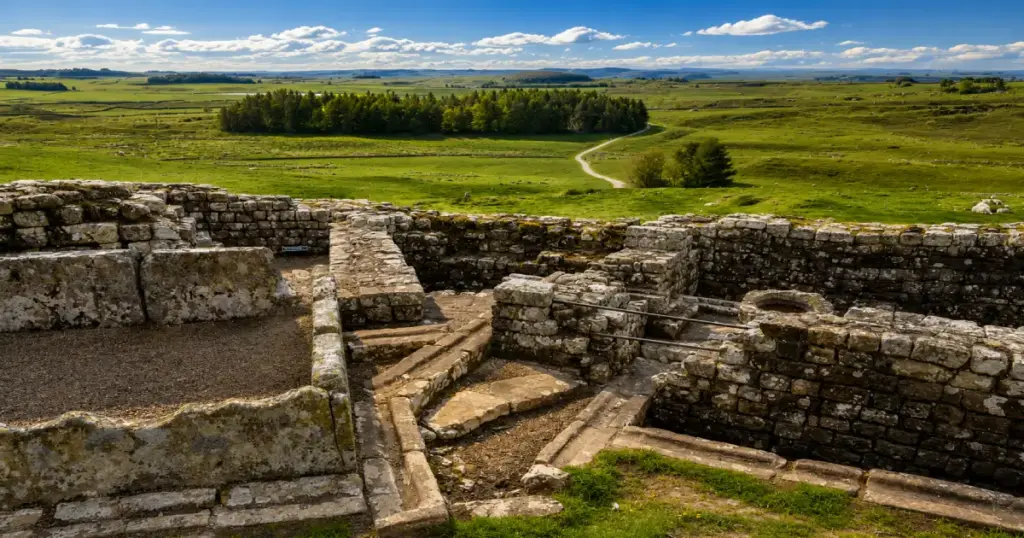
Leaving Edinburgh southward on the A68, the road passes through the Scottish Borders – rolling hills, ruined abbeys, and the landscape that inspired the ballads and novels of Sir Walter Scott. Crossing back into England, Hadrian’s Wall appears roughly 60 miles south of Edinburgh.
Hadrian’s Wall was built on the orders of Emperor Hadrian between AD 122 and 128 to mark the northern limit of Roman Britain – stretching 73 miles from the Solway Firth to the Tyne estuary. The most dramatic and best-preserved sections are in Northumberland, near Housesteads Roman Fort and the section known as Sycamore Gap. The drive to York from here is 90 miles on the A1 – arriving mid-afternoon leaves a full afternoon and evening for the city.
York is England’s finest medieval city: its circuit of 13th-century walls is largely intact and walkable in around 90 minutes; The Shambles – a narrow medieval street of overhanging timber-framed buildings – is the most photographed street in England, and York Minster is the largest Gothic cathedral in Northern Europe. The Shambles is most atmospheric and least crowded before 10am or after 5pm, when the day-tripper coaches have left.
Day 9 Highlights
- Hadrian’s Wall – Sycamore Gap (the iconic lone sycamore tree scene) or Housesteads Fort (£10)
- Drive A1 South to York (90 min from the wall section)
- The Shambles – go before 10am or after 5pm for manageable crowds
- York Minster – free to enter the nave; tower climb and undercroft charge separately (£13)
- York city walls walk – the full circuit is 3.4 miles; the sections near Bootham Bar and Micklegate are finest
Day 10: Stratford-upon-Avon and Return to London
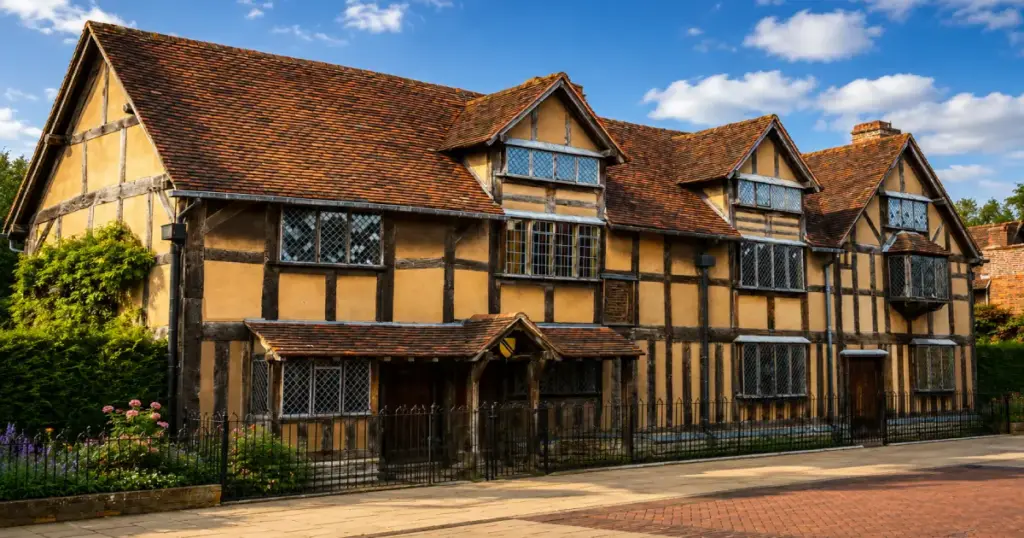
The final driving day takes you from York south on the A1 and M1, with a worthwhile detour into Stratford-upon-Avon – William Shakespeare’s birthplace – before the final run south to London. Stratford is about 200 miles from York, three hours without stops. The town gets busy at midday with tour coaches, so either arrive early (before 10am) to walk Shakespeare’s Birthplace on Henley Street and Anne Hathaway’s Cottage in quiet, or stop briefly in the late afternoon when the day-trippers have cleared.
The drive from Stratford to London is 90 miles on the M40 – under two hours in normal traffic, considerably longer during Friday rush hour. Return the rental car to your pre-arranged London drop-off depot, and the road trip is complete.
Day 10 Highlights
- Shakespeare’s Birthplace, Henley Street (Shakespeare’s England; £20) – the house where Shakespeare was born in 1564
- Holy Trinity Church, Stratford – Shakespeare’s grave is here; free to visit
- Anne Hathaway’s Cottage in Shottery (2 miles from town centre)
- M40 south to London – allow extra time on Friday afternoons
Driving in the UK – Essential Guide for International Visitors
Left-Hand Traffic – The Big Adjustment
The UK drives on the left. For visitors from North America, Continental Europe, and most of the rest of the world, this is the single biggest adjustment. The good news is that most people find they adapt within the first hour of driving. The most common mistakes happen at junctions, roundabouts, and when pulling out of car parks – moments when your instinct to default to the right temporarily overrides the learned behavior. A useful technique: every time you get back into the car after a stop, say aloud before pulling away: ‘Left side, left side.’ It sounds basic, but it works.
Speed Limits
| Road Type | Speed Limit | Notes |
|---|---|---|
| Built-up areas (towns, villages) | 20–30 mph | Many areas now 20mph always check signs |
| Single carriageway (A-roads) | 60 mph | National speed limit unless otherwise signed |
| Dual carriageway | 70 mph | Unless otherwise signed |
| Motorways (M-roads) | 70 mph | Variable speed limit on some smart motorways |
| Scotland’s drink-drive limit | 50mg/100ml | Stricter than England/Wales (80 mg/100 ml) |
Roundabouts
Roundabouts are ubiquitous in the UK and represent the most common point of confusion for visiting drivers. The rule is simple: give way to traffic already on the roundabout, which comes from your right. Signal left when taking your exit. Multi-lane roundabouts in city centers can be more complex – use the left lane for left or straight-ahead exits and the right lane for turning right or going more than halfway around.
Single-Track Roads in Wales and Scotland
Many rural roads in Snowdonia and the Scottish Highlands are single-track with passing places – essentially one lane wide, with designated lay-bys every 100–200 meters where vehicles can pull over to allow oncoming traffic to pass. If you reach a passing place and there is oncoming traffic, pull into the lay-by on your left. If the lay-by is on the right, stop opposite it and let the oncoming vehicle use it. Never park in a passing place. Drive slowly, and accept that progress on these roads is measured in miles per hour rather than tens of miles per hour.
Budget Breakdown for the Full 10-Day Trip
| Category | Budget | Mid-Range | Comfortable |
|---|---|---|---|
| Car rental (10 days) | £300–£500 | £500–£700 | £700–£1,200 |
| Fuel (1,200 miles) | £100–£130 | £100–£130 | £100–£130 |
| Accommodation (10 nights) | £20–£40/night (hostel/camping) | £65–£130/night (B&B/hotel) | £130–£300/night |
| Meals (per day) | £20–£35 | £40–£70 | £80–£140 |
| Attraction entry (per day) | £10–£20 | £20–£40 | £40–£80 |
| TOTAL 10-day estimate | £900–£1,400 | £2,000–£3,500 | £4,000–£7,000+ |
Things to Avoid on This Road Trip:
Driving in central London – park outside the Congestion Charge zone or use a depot in West London
Not booking Edinburgh Castle and Bath Roman Baths in advance – queues without pre-booking can be 45+ minutes in summer
Driving after drinking in Scotland – the Scottish limit (50mg/100ml) is significantly stricter than English law; one drink can exceed it
Assuming sat-nav always works in remote Wales and Highlands – download offline maps before leaving mobile signal areas
Parking on double yellow lines anywhere – UK parking enforcement is efficient and fines are immediate
Best Time to Do This Road Trip
| Season | Months | Conditions | Crowds | Verdict |
|---|---|---|---|---|
| Late Spring | May–June | Mild, long daylight hours, wildflowers, bluebells | Medium | Best overall – excellent conditions, manageable crowds |
| Summer | July–Aug | Warmest but busiest; popular spots very crowded | Very High | Good weather, highest prices, book everything ahead |
| Early Autumn | Sept–Oct | Beautiful colours, cooler, fewer tourists | Low–Medium | Excellent value – autumn colors in Highlands and Cotswolds |
| Winter | Nov–Feb | Cold, short days; some Highland roads close in ice | Very Low | Cheapest, dramatic, moody scenery but limited daylight |
Frequently Asked Questions
Q1. How many miles is the full 10-day UK road trip loop?
The London loop through Wales, the Lake District, Scotland, and back via York is approximately 1,100–1,200 miles. This averages out to around 120 miles of driving per day – perfectly manageable given that UK roads are well-maintained and distances between stops are short.
Q2. Is it hard to drive on the left side of the road?
Most visitors adapt within the first hour. The key moments to be careful are junctions, roundabouts, and when pulling out of car parks after a stop. Saying ‘left side’ to yourself before every pull-away helps reset the instinct. Book an automatic car if possible – one less thing to think about.
Q3. Do I need a visa or ETA to enter the UK?
Nationals of many countries now require a UK Electronic Travel Authorisation (ETA) before arriving. This applies to citizens of the US, Canada, Australia, EU countries, and others from 2025. The ETA costs £10, takes a few minutes to apply for online, and can take up to three days to process – apply before booking flights. Check the UK government’s official visa checker for your specific nationality.
Q4. Can I do this trip without a car?
A modified version is possible using trains and coaches between major cities, but the Cotswolds, Snowdonia, the Lake District, and the Highlands become significantly harder to explore properly without a car. National Express and Megabus connect most cities cheaply. A hybrid approach – train between cities, local car hire or guided day tours for the countryside – works well for those uncomfortable driving on the left.
Q5. What is the single best stop on this route?
Travellers consistently name Glencoe and the Scottish Highlands as the most memorable experience – the landscape has a raw, elemental scale that surprises even those who think they know what to expect. Edinburgh Castle and the Cotswolds villages are close seconds. Every traveller ends up with their own personal highlight; that is part of the appeal of this trip.
Conclusion
Ten days is exactly the right amount of time for this route – long enough to stop rushing and short enough to feel like a genuine adventure rather than a logistics exercise. The UK has a way of surprising visitors who expect quaintness and delivering something far more varied: the industrial grandeur of Liverpool, the Celtic wildness of Snowdonia, the geological drama of Glencoe, the intellectual weight of Edinburgh, and the Roman ambition visible in Hadrian’s Wall. None of it fits neatly into a single idea of what ‘the UK’ is, and that is what makes the drive so endlessly interesting.
Fill the tank in Edinburgh before heading north, remember to stay left at every junction, and allow yourself to stop when something looks beautiful from the road window. The best moments on any UK road trip are usually unscheduled.



[…] ➤ 10-Day UK Road Trip – England, Scotland and Wales Best Route […]