
Banff and Jasper Road Trip Guide: 7-Day Canadian Rockies Itinerary

Planning a trip to the Canadian Rockies? This 7-day Canadian Rockies itinerary covers Banff, Lake Louise, Moraine Lake, Icefields Parkway, and Jasper National Park. From stunning mountain views and turquoise lakes to scenic drives and wildlife spotting, this guide helps you plan the perfect Banff and Jasper road trip in one week.
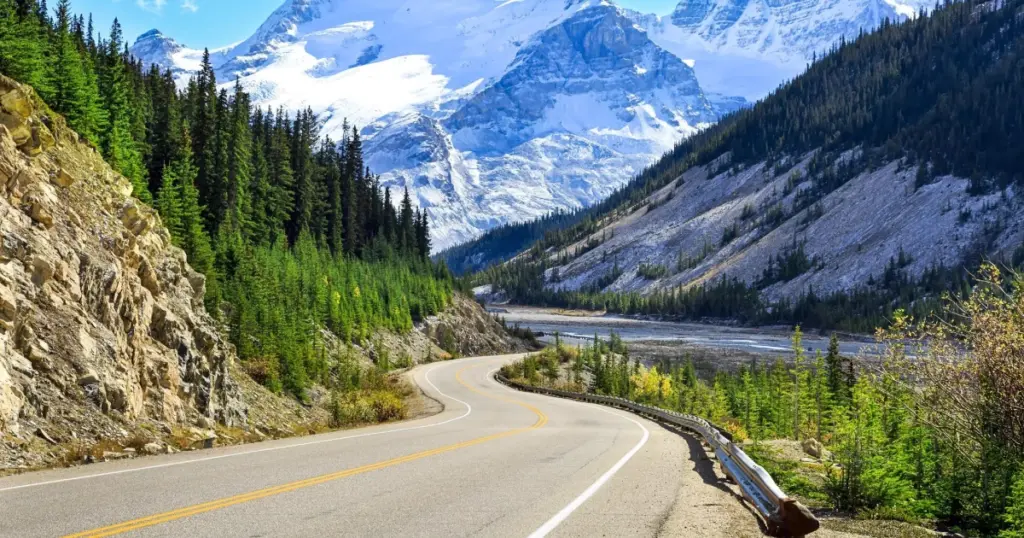
Seven days is the recommended minimum for this region. The distances between Banff, Lake Louise, and Jasper are real; the Icefields Parkway alone is 232 km and deserves a full day, and trying to compress the trip further means missing the smaller lakes, the wildlife-watching hours, and the kind of unhurried morning at a trailhead that makes the whole experience genuinely restorative rather than just visually impressive.
This guide is structured around the classic Calgary → Banff → Lake Louise → Icefields Parkway → Jasper loop, which is the route most experienced Canadian Rockies travelers recommend. It uses research from multiple sources, incorporates the 2024 Jasper wildfire recovery situation, and gives you the advance-booking information particularly for Moraine Lake, which now requires a shuttle that determines whether your most anticipated days actually happen as planned.
Quick Facts – 7 Day Canadian Rockies Trip:
Nearest Airport: Calgary International (YYC), 1.5 hrs to Banff · 4.5 hrs to Jasper
Parks Canada Pass: Buy the Discovery Pass (CAD $75.25/adult) covers all national parks; essential for 7+ days
Car Rental: Essential rent in Calgary; automatic strongly recommended
Best Season: June–September (all lakes accessible) · January–March for skiing and aurora
Moraine Lake: No private vehicle access May–October. Book Parks Canada shuttle weeks ahead
Daily Budget: CAD $80–$130 (camping) · $180–$280 (mid) · $320–$500 (luxury)
Wildlife: Bear spray required on all trails bears, elk, bighorn sheep are regularly seen
Jasper 2025: Town and park recovering from 2024 wildfire; most attractions open; check Parks Canada for updates
The 7-Day Route – Overview and Structure
The most logical structure for a 7-day Canadian Rockies trip is to fly into Calgary, drive to Banff (Day 1), explore Banff National Park (Day 2), spend a day at Lake Louise and Moraine Lake (Day 3), drive the Icefields Parkway north to Jasper (Day 4), explore Jasper National Park (Days 5–6), and return to Calgary via the same route or through Edmonton (Day 7). This direction is preferred because it builds in intensity. Banff and Canmore ease you in before the more remote grandeur of Jasper.
| Day | Location | Key Activities | Drive | Overnight |
|---|---|---|---|---|
| Day 1 | Calgary → Banff | Johnston Canyon · Banff town · Vermilion Lakes | 1.5 hours | Banff or Canmore |
| Day 2 | Banff NP | Sulphur Mountain Gondola · Banff Hot Springs · Lake Minnewanka | Local | Banff |
| Day 3 | Lake Louise & Moraine | Moraine Lake (shuttle) · Lake Louise · Agnes Tea House hike | 45 min | Lake Louise |
| Day 4 | Icefields Parkway | Peyto Lake · Athabasca Glacier · Columbia Icefield Skywalk | Full-day drive | Jasper |
| Day 5 | Jasper NP | Athabasca Falls · Maligne Canyon · Pyramid Lake | Local | Jasper |
| Day 6 | Jasper area | Spirit Island · Jasper SkyTram · Miette Hot Springs | Local | Jasper |
| Day 7 | Return to Calgary | Bow Valley Parkway · Castle Mountain · Canmore | 3.5–4.5 hrs | Depart YYC |
Day-by-Day Itinerary
Day 1 – Calgary to Banff: Johnston Canyon and First Impressions
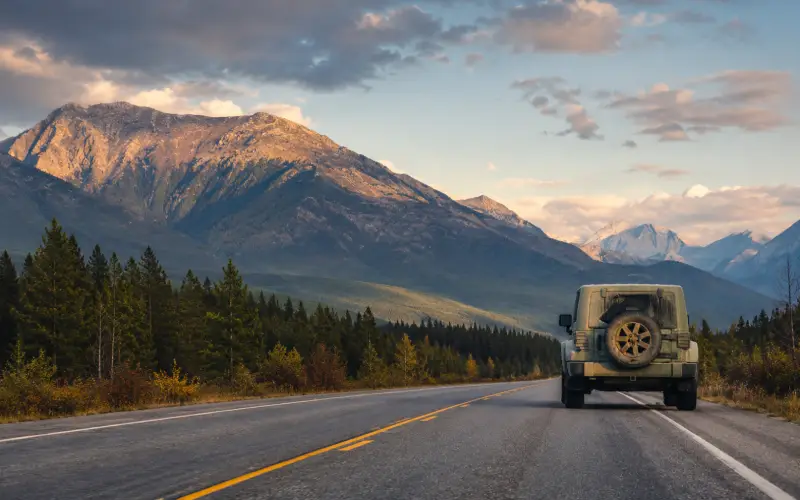
The drive from Calgary Airport to Banff takes about 90 minutes on the Trans-Canada Highway (Highway 1). The Rockies appear on the horizon within 30 minutes of leaving the city, a jagged white wall rising from the flat Alberta prairie that gives no hint of being as close as it is. Pick up your rental car immediately at the airport and head west.
Johnston Canyon is located 26 km west of Banff town and is one of the most beautiful short hikes in the national park, a paved, boardwalk-lined trail following a narrow limestone canyon carved by Johnston Creek. The lower falls (1.1 km return from the trailhead) and upper falls (2.6 km return) are both spectacular. The boardwalks are fixed into the canyon walls and pass directly through tunnels of rock behind waterfalls. It is very popular in summer. Arrive before 8am or after 4pm to avoid the worst crowds. If time allows, continue to the Ink Pots (5.8 km return from the start), a series of bubbling mineral springs in a high mountain meadow.
Banff town itself, a mountain resort community of around 10,000 full-time residents, is the only incorporated municipality inside a Canadian national park. Banff Avenue is the main street; the Fairmont Banff Springs Hotel on the hill above town is one of the most photographed buildings in Canada. Drive up to the hotel even if you are not staying; the view from the terrace over the Bow River Valley is exceptional. Vermilion Lakes, a short drive west of town, offers the classic Banff reflection view at sunset: Mt. Rundle rising above still water, lined with beaver ponds and frequented by elk and coyotes.
Day 1 Plan:
- Pick up rental car at Calgary Airport (YYC) · buy Parks Canada Discovery Pass at park gate
- Johnston Canyon hike lower falls (1.1 km) or upper falls (2.6 km); arrive early or late to avoid crowds
- Check into Banff or Canmore accommodation
- Walk Banff Avenue and the area around Central Park
- Vermilion Lakes at sunset golden hour reflections of Mt. Rundle are exceptional
Banff Arrival Tips:
Buy the Parks Canada Discovery Pass at the park gate (CAD $75.25 adult, $151.25 family); it pays for itself on a 7-day trip
Canmore (15 min east of Banff) has more affordable accommodation and a better food scene worth considering as a base
The Johnston Canyon car park fills completely by 8am in summer. Arrive at 7am or take the Banff-Lake Louise transit shuttle
Download the Parks Canada app; it has offline maps, trail guides, and wildlife alerts for the entire region
Wildlife on the road is common; slow to a stop if you see animals and turn on your hazard lights
Day 2 – Banff National Park: Gondola, Hot Springs and Lake Minnewanka
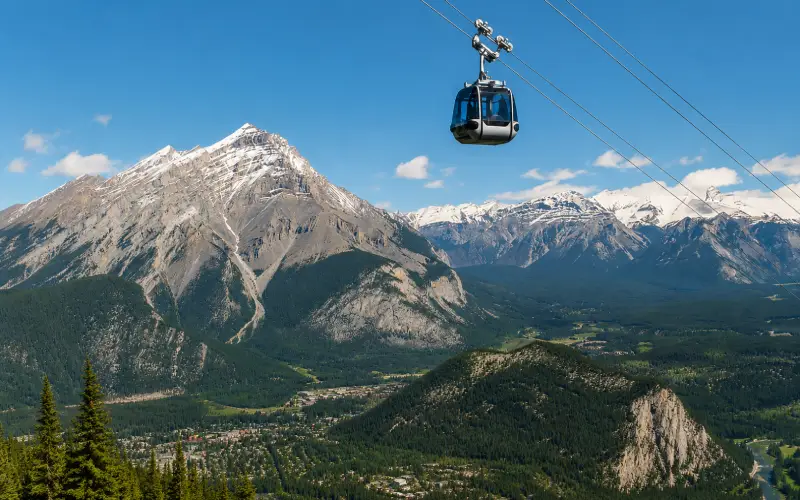
Day 2 is the day to go vertical in Banff. The Banff Gondola on Sulphur Mountain carries passengers to a ridge at 2,281 meters’ elevation in eight minutes, depositing them on a boardwalk that connects the summit station to the weather observatory and the highest point accessible without hiking. The panoramic view over Banff town, the Bow River Valley, and the surrounding peaks in every direction is the definitive Banff overview. Experienced travelers consistently recommend the Banff Gondola over the Jasper SkyTram if you can only do one, simply because the setting above Banff is so visually complete.
The Banff Upper Hot Springs, a short drive from the gondola base, is a natural hot spring pool at 1,583 meters’ elevation, open year-round and genuinely restorative after a hiking day. The springs reach up to 47°C; the outdoor pool looks directly at the mountain slopes above town. Entry is CAD $16 for adults. Lake Minnewanka, a 15-minute drive northeast of Banff town, is the largest lake in Banff National Park and offers boat cruises, kayaking, and a shoreline trail with excellent wildlife-watching possibilities. Bighorn sheep are commonly seen on the road to the lake.
Day 2 Plan:
- 9:00am: Banff Gondola on Sulphur Mountain (CAD $70 adults; Book online), boardwalk summit walk, 360° views
- Noon: Lunch in Banff town (Elk & Oarsman, Farm & Fire, or Tooloulou’s are local favourites)
- 2:00pm: Banff Upper Hot Springs (CAD $16; towel rental available) 45 minutes minimum
- 4:00pm: Lake Minnewanka shoreline walk or book a boat cruise (CAD $50–$60; runs June–September)
- Evening: Bow Falls short walk (free, 10 minutes from town) at golden hour
Day 3 – Lake Louise and Moraine Lake
Day 3 is the day most first-time Canadian Rockies visitors have anticipated most, and it consistently delivers, though only if the logistics are handled correctly in advance. Both Moraine Lake and Lake Louise are world-famous for good reason: the turquoise color of the water, fed by glacial meltwater carrying rock flour that refracts light in the blue-green spectrum, is genuinely unlike anything most visitors have seen before. The Valley of the Ten Peaks backdrop at Moraine Lake is so iconic that it appeared on the Canadian $20 bill.
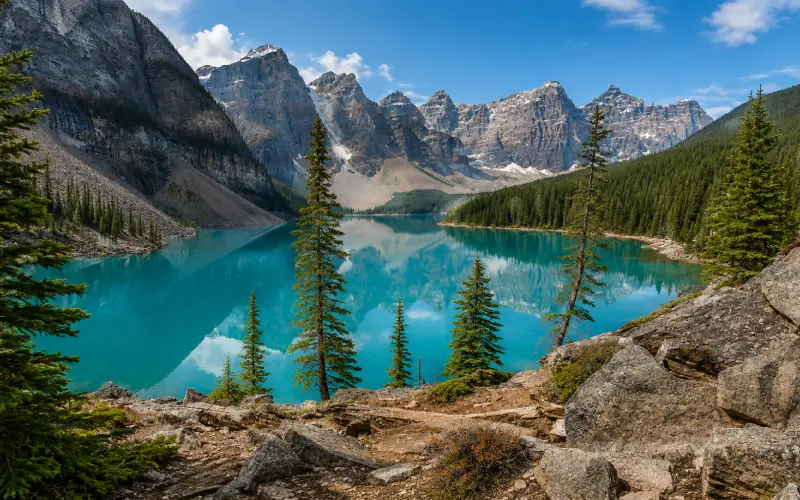
Since 2022, private vehicles have not been permitted on Moraine Lake Road between May and October. Access requires a Parks Canada shuttle, which must be booked online well in advance. In peak summer, shuttles sell out days to weeks ahead. The shuttle departs from the Lake Louise Park and Ride and takes about 15 minutes. Book at reservation.pc.gc.ca under ‘Day Use.’ If the shuttle is sold out, the bike route from Lake Louise is an option for fit cyclists (an 11 km ride on a closed-to-cars road). Arrive at the lake as early as possible; sunrise conditions are extraordinary, and the crowds build from 9am onwards.
Lake Louise itself is 4 km from the hamlet of Lake Louise. You can walk the trail from the campground (4 km each way), take the Parks Canada shuttle from the Park and Ride, or drive to the limited parking at the Fairmont Château Lake Louise (very competitive in summer). The hike up to the Plain of Six Glaciers tea house (10.7 km return) or the Lake Agnes tea house (7.4 km return) are two of the best day hikes in Banff National Park. The Lake Agnes route in particular winds above the treeline to a small lake with a historic tea house serving soups and hot drinks, built in 1901.
Day 3 Plan:
- 5:30am: Moraine Lake shuttle (PRE-BOOK weeks ahead at reservation.pc.gc.ca); sunrise at Moraine Lake is unmissable
- 8:30am: Walk the Rockpile trail above Moraine Lake for the famous Valley of the Ten Peaks view
- 10:30am: Red canoe rental on Moraine Lake (CAD $115 per 30 min steep, but uniquely Canadian Rockies)
- Noon: Shuttle to Lake Louise · walk the lakeshore · lunch at the Fairmont Château café
- 2:00pm: Lake Agnes Tea House hike (7.4 km return; moderate; the tea house serves soup, scones, and tea; no card payments)
- Evening: Sunset on the Lake Louise shoreline. The Château lights up beautifully as the sun sets behind the mountains
Moraine Lake Booking – Critical Information:
You CANNOT drive to Moraine Lake May–October; private vehicles are banned on Moraine Lake Road
Parks Canada shuttle: book at reservation.pc.gc.ca under ‘Day Use’ as soon as dates are known.
In peak season (July–August) shuttles sell out days ahead; book the moment reservations open (usually April)
The shuttle departs Lake Louise Park and Ride; allow 15 minutes travel time
The sunrise is the best light of the day. Book the earliest available shuttle
Agnes Tea House accepts cash only; bring CAD bills if you plan to hike there
Day 4 – The Icefields Parkway: One of the World’s Greatest Drives
National Geographic named the Icefields Parkway one of the top ten scenic drives in the world, and the description is not hyperbole. The 232 km highway between Lake Louise and Jasper passes more than 100 glaciers, dozens of waterfalls, emerald and turquoise lakes, and dramatic canyon viewpoints all within a few meters of the road. Plan a full day for this drive: without stops, it takes under three hours, but with the stops it deserves, it fills 8–10 hours easily.
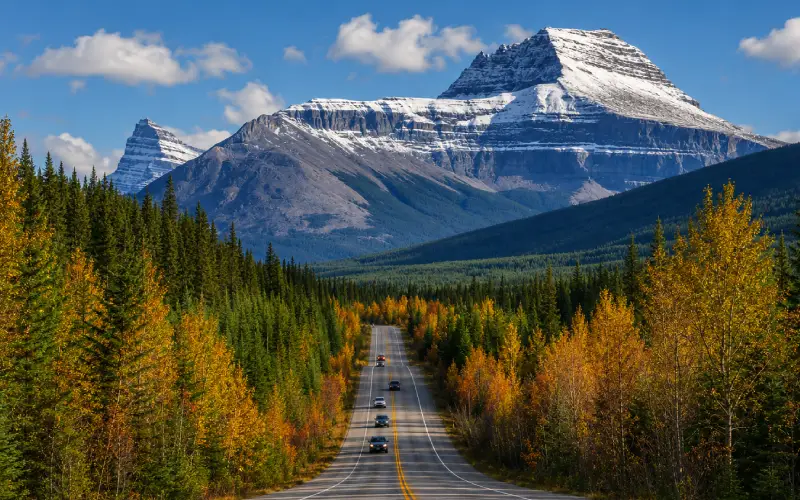
Peyto Lake is the first major unmissable stop heading north from Lake Louise. A short uphill walk from the parking area leads to an overlook where the lake’s wolf-head shape and vivid blue-green color stop most visitors in their tracks. The Columbia Icefield is the centerpiece of the parkway: a 325 km² remnant of the ice age that sits at the hydrological apex of North America, draining into three oceans. The Athabasca Glacier, its most accessible tongue, can be walked to from the visitor center car park to the terminus. The Ice Explorer tour (CAD $59) takes a modified bus out onto the glacier surface itself. The Glacier Skywalk, a glass-floored platform cantilevered 918 meters above the Sunwapta Valley, is included with some Columbia Icefield packages and delivers a vertigo-inducing perspective.
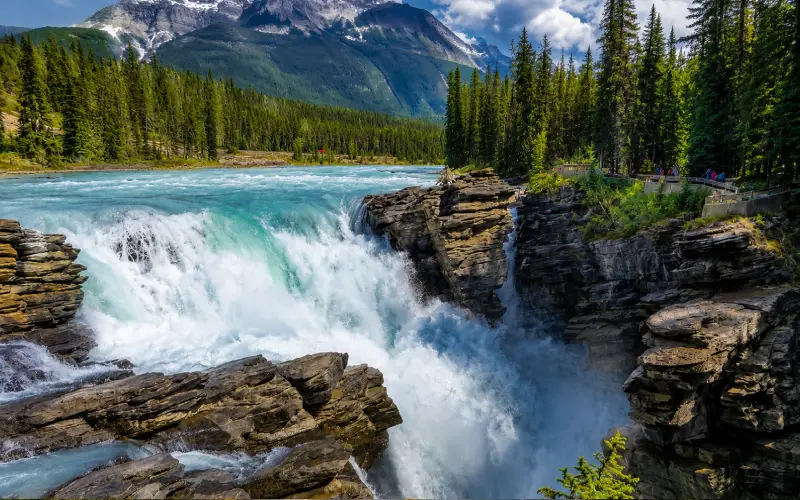
Athabasca Falls, roughly 30 km south of Jasper town, is the most powerful waterfall in the Canadian Rockies. The combined force of the Athabasca River through a narrow quartzite canyon creates a roaring, mist-filled spectacle that is genuinely impressive even after a day of extraordinary scenery. Arrive in Jasper town by early evening and decompress at the Jasper Brewing Company, the first national park brewery in Canada, where the Halloumi Bowl and the locally brewed Rockhopper IPA are the recommended orders.
Day 4 Plan Start Early:
- Fill fuel tank in Lake Louise before departing; the next station is Saskatchewan River Crossing (expensive); fill up properly in Lake Louise
- Peyto Lake viewpoint: short uphill walk; most dramatic turquoise lake viewpoint on the parkway
- Bow Lake quiet pull-off with perfect mountain reflections; 5–10 minutes
- Sunwapta Falls, a powerful double waterfall, is an easy 5-minute walk from parking
- Columbia Icefield Visitor Centre Athabasca Glacier walk to the terminus (free) + Ice Explorer tour (CAD $59, book online)
- Glacier Skywalk (CAD $35 standalone or included in Icefield bundle)
- Athabasca Falls: 30 min stop; the most powerful falls in the Rockies
- Arrive Jasper town in the evening · Jasper Brewing Company for dinner
Day 5 – Jasper: Athabasca Falls, Maligne Canyon and Pyramid Lake
Jasper is a different character from Banff: smaller, quieter, less commercial, and for many visitors, more genuinely likeable as a result. The town itself is surrounded by mountains on every side and has an end-of-the-road quality that Banff, with its designer shops and crowded Banff Avenue, sometimes lacks. Wildlife is abundant and frequently visible right in town: elk graze on residential streets in the evenings, and the road to Pyramid Lake is a reliable spot for moose sightings.
Maligne Canyon is one of the deepest accessible canyons in the Canadian Rockies. At its narrowest, the walls are only a meter apart at the surface while the canyon is 55 meters deep. In 2024, the canyon was affected by the Jasper wildfire; as of early 2025, check Parks Canada for current access status. The Maligne Valley road, running past Medicine Lake (a lake that drains underground each autumn through the world’s largest system of ice caves) to Maligne Lake, is one of the most wildlife-rich drives in the Rockies. Bears, elk, moose, and bighorn sheep are all regularly spotted here. Drive slowly and stop only in designated pull-outs.
Day 5 Plan:
- 9:00am: Athabasca Falls (10 min from town): walk all platforms for the full power of the falls
- 10:30am: Maligne Canyon (check current status at Parks Canada website for 2025 fire recovery)
- Noon: Maligne Valley drive Medicine Lake and the approach to Maligne Lake; scan for wildlife
- Afternoon: Valley of the Five Lakes hike (4.7 km easy loop; five lakes of varying turquoise colours)
- Evening: Pyramid Lake 7 km north of Jasper town; canoe rental (CAD $25/hr); elk frequently graze the shoreline
READ MORE: Icefields Parkway Road Trip: Every Stop from Banff to Jasper
Day 6 – Spirit Island, Jasper SkyTram and Miette Hot Springs
Spirit Island on Maligne Lake is considered one of the most photographed and most beautiful spots in Canada. The small pine-covered island sits at the far end of Maligne Lake, ringed by mountain peaks and reflected in the still water of an almost supernatural blue-green color. The island is accessible only by boat; the Maligne Lake cruise (CAD $79; approximately 90 minutes return) runs from the Maligne Lake boathouse. Book well in advance, as the cruise is enormously popular, particularly in July and August.
September is widely considered the finest month for the cruise: the water level is lower, Spirit Island’s dock is closer to the island, and autumn colors are beginning to turn the surrounding slopes gold.
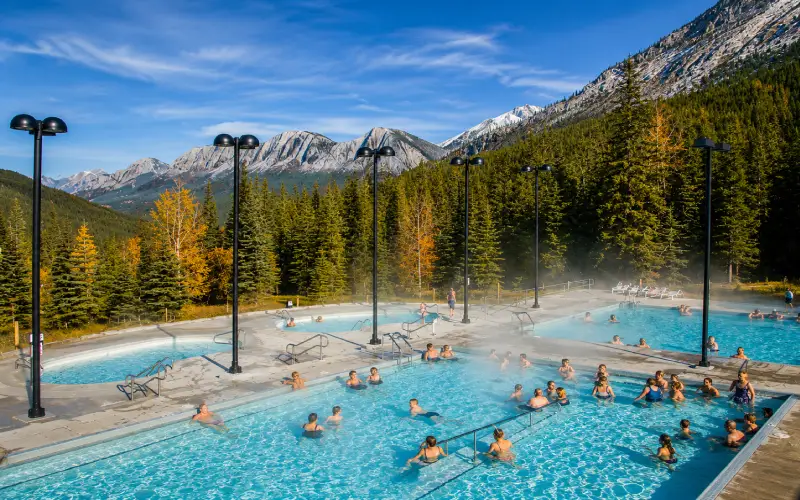
The Jasper SkyTram takes passengers to the ridge of Whistlers Mountain at 2,277 meters, the highest point accessible by gondola in the Canadian Rockies. A further 30-minute hike from the upper station reaches the 2,463-meter summit, with views extending into British Columbia and Banff National Park. The tram runs year-round and is particularly dramatic when clouds are moving through the mountains. Miette Hot Springs, 60 km northeast of Jasper, are the hottest naturally occurring hot springs in the Canadian Rockies; the water reaches 54°C at the source and is cooled to a comfortable 40°C in the outdoor pools. The drive is scenic, and the springs are significantly less crowded than Banff’s.
Day 6 Plan:
- Morning: Maligne Lake cruise to Spirit Island (CAD $79; PRE-BOOK at malignelake.com)
- 1:00pm: Jasper SkyTram (CAD $60 adults; book online to guarantee a time slot) hike to Whistlers’ summit if fit
- 4:00pm: Drive to Miette Hot Springs (60 km; allow 1 hour drive each way) soak in Canada’s hottest springs
- Evening: Return to Jasper town; dinner at Evil Dave’s Grill or Bear’s Paw Bakery (the most famous cinnamon rolls in the Rockies)
Day 7 – Return to Calgary: Bow Valley Parkway and Canmore
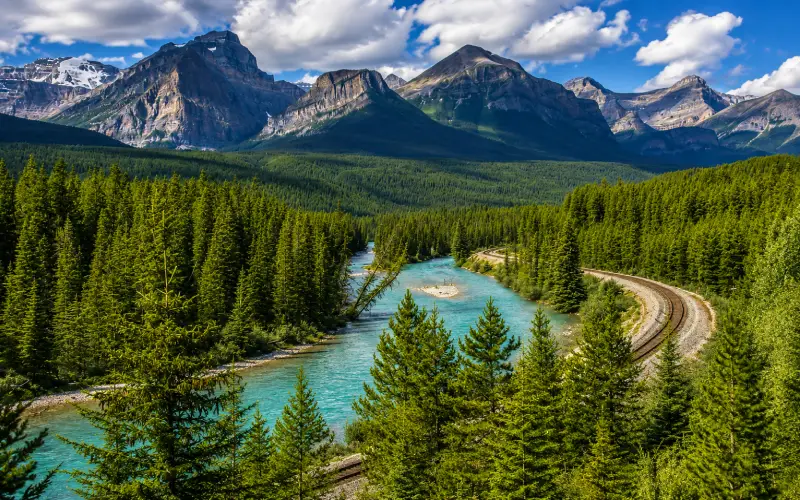
The return drive from Jasper to Calgary is 410 km and takes approximately 4–4.5 hours on the Trans-Canada route, or longer if you choose to drive the more scenic Bow Valley Parkway for the Banff–Calgary section. The Bow Valley Parkway (Highway 1A) is the original road connecting Banff and Lake Louise, now a quiet wildlife corridor where the speed limit is lower and early morning drives regularly produce moose, bear, and elk sightings. Castle Mountain, visible from the road with its distinctive flat-topped profile, is one of the most photographed mountains in Banff National Park. Morant’s Curve, a bend in the Bow River where, if timed correctly, Canadian Pacific freight trains pass against a backdrop of mountains, is one of the most iconic railway photographs in Canada.
Canmore, 20 km east of Banff and outside the national park boundary, is the recommended final lunch stop before Calgary. The town has evolved from a coal-mining settlement into a mountain lifestyle hub with genuinely excellent restaurants, craft breweries, and mountain views from every table. Communitea Café, The Iron Goat Pub and Market Bistro are among the local favorites. From Canmore, it is 80 km on the Trans-Canada back to Calgary Airport.
Day 7 Plan:
- Depart Jasper 7–8am on Highway 16 East, then south on Highway 93
- Take Bow Valley Parkway (Hwy 1A) from Lake Louise to Banff: slower, scenic, wildlife-rich
- Castle Mountain viewpoint pull-off: 15 minutes
- Morant’s Curve pull-off check train schedule online for best photography timing
- Canmore for lunch: Communitea Café or Iron Goat Pub
- Calgary Airport return: allow 2.5+ hours before international departure, including US customs pre-clearance at YYC
Practical Information
Parks Canada Discovery Pass – Is It Worth It?
The Parks Canada Discovery Pass (CAD $75.25 per adult or CAD $151.25 for a family/group) provides unlimited entry to all Canadian national parks, marine conservation areas, and historic sites for 12 months. On a 7-day Canadian Rockies trip, the pass pays for itself within a day or two; the park entry fee alone at Banff and Jasper National Parks is CAD $21.50 per adult per day. If you are entering and exiting the park multiple times (which most road trippers do), the pass is strongly recommended over paying daily fees. Buy it online at ParksCanada.gc.ca before you arrive or at any park gate.
Wildlife Safety – Non-Negotiable Rules
- Carry bear spray on every hike; it is available at all outdoor shops in Banff and Jasper; practice deploying it before you go
- Make noise on trails: talk, clap your hands, call out ‘hey bear’ around corners and in dense bush
- Never approach wildlife; the legal minimum distance is 30 metres for elk and bighorn sheep and 100 metres for bears and wolves
- Store all food in approved bear canisters or in your locked car, never in your tent or outside overnight
- Drive slowly on park roads, especially at dawn and dusk. Wildlife-vehicle collisions are the leading cause of animal deaths in both parks
Budget Summary
| Cost Category | Budget (CAD) | Mid-Range (CAD) | Comfortable (CAD) |
|---|---|---|---|
| Parks Canada Pass (per adult) | $75.25 one-time | $75.25 one-time | $75.25 one-time |
| Accommodation (per night) | $35–$65 (camping/hostel) | $180–$280 (hotel) | $350–$650 (Fairmont) |
| Car rental (7 days) | $280–$400 | $400–$600 | $600–$1,000 |
| Gas (total loop) | $80–$110 | $80–$110 | $80–$110 |
| Meals (per day) | $25–$40 (self-catered) | $50–$90 | $100–$180 |
| Activities (per day) | $20–$40 | $60–$100 | $120–$200 |
| TOTAL 7-day estimate | $1,200–$1,800 | $2,800–$4,500 | $5,000–$9,000+ |
Related Articles:
Best Time to Visit the Canadian Rockies
| Season | Months | Conditions | Moraine Lake | Wildlife |
|---|---|---|---|---|
| Late Spring | May–June | Lakes thawing; wildflowers; fewer crowds | Shuttle req. from mid-May | Very active; calving season |
| Summer Peak | July–Aug | Best weather; warmest; very busy | Shuttle req.; book weeks ahead | Bears, elk, deer active |
| Early Autumn | Sept–Oct | Golden larches; fewer people; stunning | Shuttle req. to mid-Oct | Bears eating before denning |
| Winter | Nov–April | Frozen lakes; skiing; aurora season | Road closed to Moraine Lake | Fewer visible tracks in snow |
Common Mistakes to Avoid in the Canadian Rockies:
- Not booking Moraine Lake shuttle in advance: you cannot drive there and if the shuttle is sold out, you cannot go
- Underestimating gas fill-ups completely in Lake Louise before the Icefields Parkway is a mistake; options to the north are scarce and expensive
- Hiking without bear spray is not optional; bears are common and encounters happen even on popular trails
- Planning tight timing in poor weather: the Rockies create their own weather; build flexibility into each day
- Visiting Jasper without checking 2025 fire recovery status: some trails and areas remain affected by 2024 wildfires
- Skipping the Parks Pass and paying daily: the pass is cheaper for stays of 3+ days
- Arriving for sunrise at Moraine Lake on the last shuttle? Book the first available departure for the best light
Frequently Asked Questions
Q1. Do I need to book Moraine Lake in advance?
Yes, absolutely. Private vehicles are banned from Moraine Lake Road from May to October. Access requires a Parks Canada shuttle, which must be reserved online at reservations. pc.gc.ca. In peak summer, shuttles sell out within days of booking opening (usually April). This is the single most important advance booking of the entire Canadian Rockies trip.
Q2. Is Jasper National Park open after the 2024 wildfire?
Yes. The town of Jasper and most of the national park are open. Some specific trails and areas affected by the 2024 wildfire may still have restrictions in 2025. Always check the official Parks Canada website for current conditions before visiting. Maligne Canyon access should be verified, particularly.
Q3. Do I need bear spray in the Canadian Rockies?
Yes. Bear spray is strongly recommended and widely considered essential for hiking in both Banff and Jasper National Parks. Grizzly and black bears are regularly encountered on trails and roadsides. Carry the spray within quick reach, not buried in your pack, and watch YouTube videos on deployment before you go.
Q4. Is the Parks Canada Discovery Pass worth buying?
Yes, for any trip longer than 3 days. The daily park entry fee is CAD $21.50 per adult. The Discovery Pass costs CAD $75.25 per adult and covers unlimited entry to all Canadian national parks for 12 months. On a 7-day trip moving between multiple parks, it saves money from Day 3 onwards.
Q5. What is the best time of year to visit Banff and Jasper?
September is widely considered the finest month; the golden larch trees are turning, crowds are reduced compared to July–August, the weather is still pleasant, and Spirit Island on Maligne Lake is at its most dramatic with lower water levels. July and August have the best guaranteed weather but the heaviest crowds, particularly at Moraine Lake and Lake Louise.
Q6. Can I do this trip without a car?
In Banff, limited bus services exist. The Icefields Parkway has no public transport and is inaccessible without a car or tour. Guided tours departing from Banff cover the Icefields Parkway and Jasper, but these restrict flexibility significantly. For the 7-day itinerary as described, a rental car is essential.
Conclusion
The Canadian Rockies routinely top global lists of the world’s most beautiful places, and having spent time there, it is not difficult to understand why. The combination of scale, color, and accessibility is unique; you can drive to within a few hundred meters of glaciers that have existed for 10,000 years, watch grizzly bears in the wild from a safe distance, and then have dinner at a Michelin-recognized restaurant in a mountain town an hour later.
Seven days is enough to understand what makes this place special. It is not enough to explore the trails alone, which could fill months, and experienced visitors return every year to see the larches turn, or the ice caves at Medicine Lake, or the aurora above Pyramid Lake on a clear winter night. The first trip is to fall in love. The subsequent ones are to go deeper.
Book Moraine Lake first. Buy the Discovery Pass at the gate. Carry the bear spray. And wake up for at least one sunrise either over Moraine Lake or Lake Louise because it is the kind of light that does not exist anywhere else on the planet.


