
Best Beaches in Dubai: Beach Escape Guide

Dubai doesn’t usually come up first when people plan a beach trip. It gets filed under shopping, skyscrapers, and desert safaris, and the coastline gets treated as a side note. That’s a mistake. Dubai has one of the more comfortable beach setups anywhere in the world.
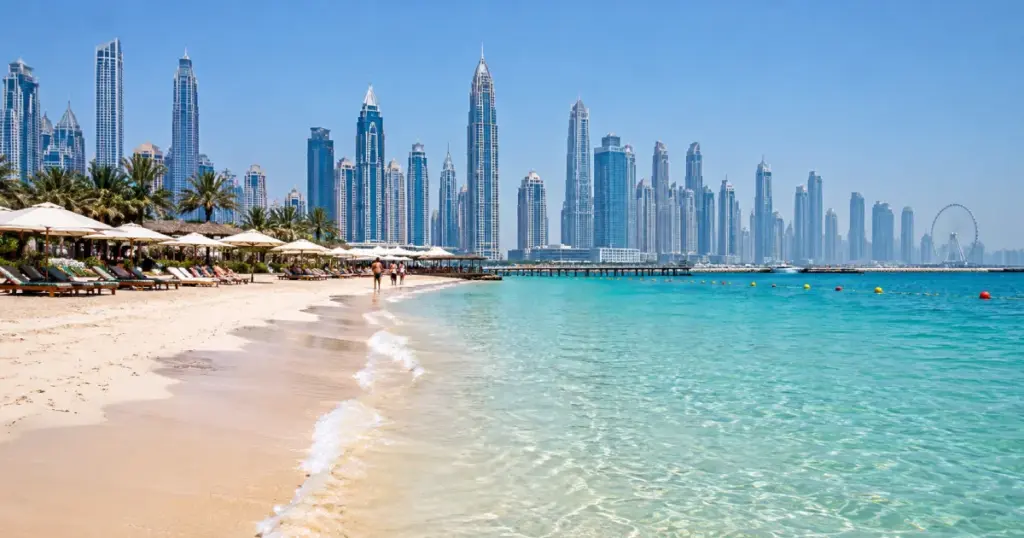
Warm water almost all year, clean sand, proper facilities, and a skyline behind you that no other beach on earth can match. Add in one of the easiest entry processes for travelers from Europe, the US, the UK, Australia, and dozens of other countries, and it starts to make sense as a real beach destination rather than a stopover.
This guide runs through the beaches actually worth your time, how to plan around the weather, what a trip realistically costs, and what to sort out on the visa and insurance side before you fly.
The Beaches Worth Your Time
Dubai has more than a dozen beaches worth knowing about, but not all of them deserve equal attention on a first trip. These five are the ones people actually keep coming back to, the ones that show up again and again in conversations with anyone who’s spent real time in the city. A few quieter, lesser-known stretches of coastline exist too, and they’re worth their own story another time. For now, here’s where to actually spend your beach days.
Jumeirah Beach
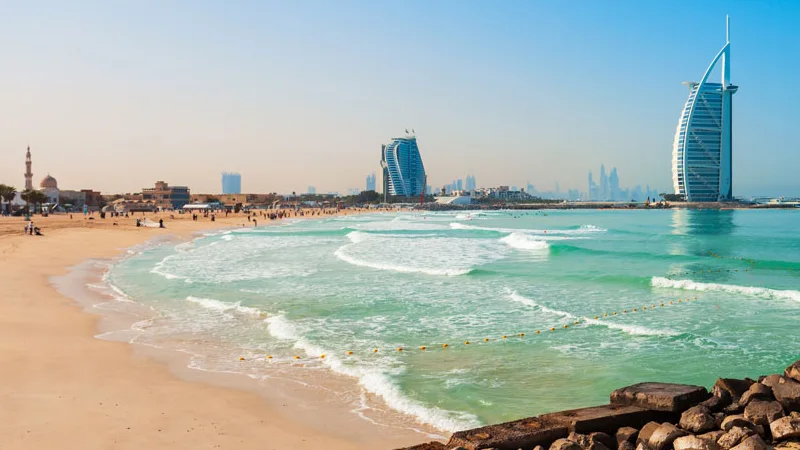
This is the postcard version of Dubai. You walk down from the promenade, sand gives way underfoot, and there’s the Burj Al Arab sitting out on its own little island exactly where every photo you’ve seen puts it. What the photos don’t tell you is how well run the whole stretch is. Lifeguard towers every few hundred meters, showers that actually work, changing rooms that are kept clean, and a wide paved track behind the sand where joggers and cyclists move past all day.
Arrive around seven in the morning and you’ll have long sections of beach almost to yourself, with the sand still cool underfoot and the water calm enough to swim without fighting any current. By eleven the heat and the crowds both build, so this is one of the few beaches where showing up early genuinely changes the experience rather than just avoiding a queue. Families tend to cluster near the lifeguard stations, couples walk the far ends where it’s quieter, and the whole thing is free, which is rare for a beach with a view this good.
Kite Beach
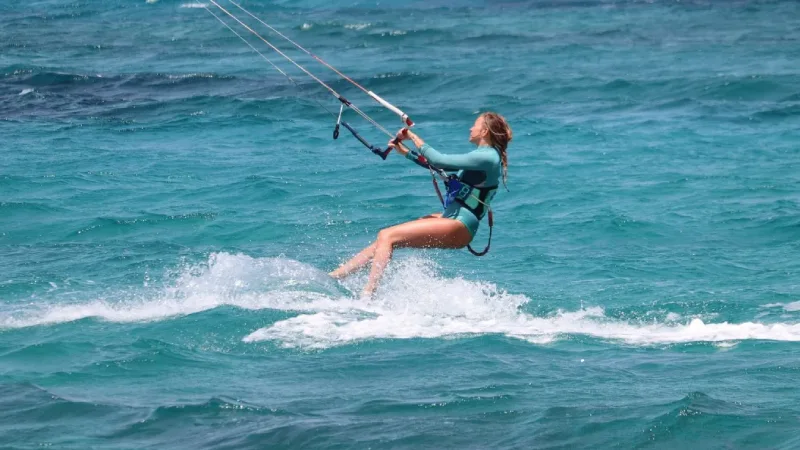
Kite Beach is loud in the best way. Before you even see the water, you’ll hear it, dozens of kites cutting patterns against the sky, and once you’re on the sand, it turns into one long stretch of movement. Kitesurfers ride the wind close to shore, paddle boarders drift further out, and the beachside path fills with runners, cyclists, and rollerbladers from early morning until well after dark. What makes it worth a full afternoon rather than a quick stop is everything packed along the sand itself.
A proper food scene with actual restaurants rather than just kiosks; a skate park for anyone traveling with teenagers; and enough rental stands so you can try kitesurfing lessons on a whim if the mood strikes. Sunset here has its own following, since the light catches the sails of the kites still out on the water and turns the whole scene golden for twenty minutes or so. Weekends bring serious crowds, especially Friday and Saturday afternoons, so if you want space to actually spread out a towel, a weekday visit works far better.
JBR Beach
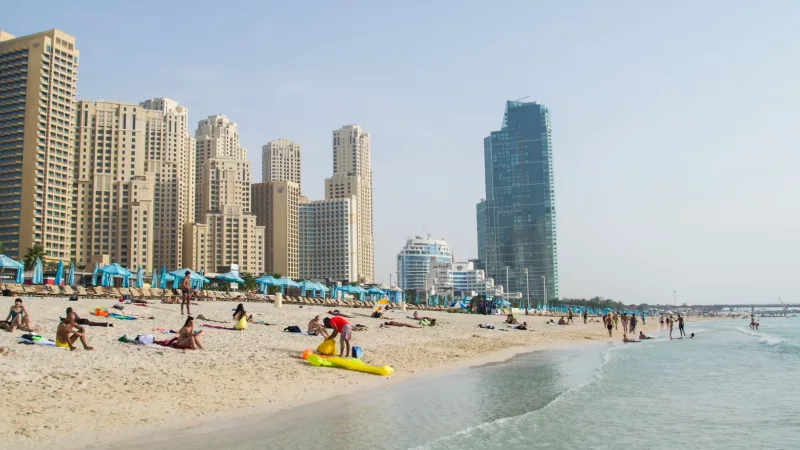
JBR is the beach for people who don’t want to choose between a swim and an evening out. The sand sits directly behind The Walk, a long promenade lined with restaurants, ice cream shops, and small boutiques, and Ain Dubai, one of the largest observation wheels anywhere, looms just off the coast in full view from your towel. It has a genuine holiday feel to it, busy without tipping into chaotic, and it works equally well as a morning swim spot or an evening hangout once the heat drops and the promenade lights come on.
Beach volleyball courts stay busy most afternoons, and it’s one of the easier beaches to combine with an actual day out, since you can move from sand to lunch to shopping without getting in a car. The trade off is that it rarely feels wild or quiet. This is Dubai’s most social beach, and it’s worth choosing for exactly that reason rather than in spite of it.
Sunset Beach (Umm Suqeim)
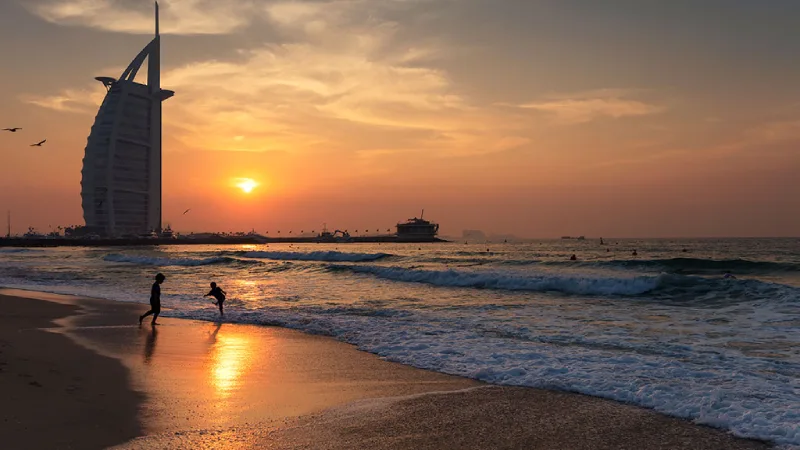
Ask anyone who actually lives in Dubai where to get the best view of the Burj Al Arab, and most of them will send you here rather than to Jumeirah Beach itself. The angle is simply better, close enough that the hotel fills the frame without a zoom lens, and far enough that you get the whole building rather than a cropped edge. The beach itself stays quieter than its more famous neighbors, with fewer facilities and a slightly rougher, more natural stretch of coastline that surfers have claimed as their own whenever there’s a decent swell running. Locals treat it as a genuine sunset spot rather than a tourist stop, arriving with folding chairs and coffee flasks around five in the evening and staying until the sky fully changes color If you only have time for one sunset during your trip, this is the beach people mean when they say, Don’t miss it.
La Mer
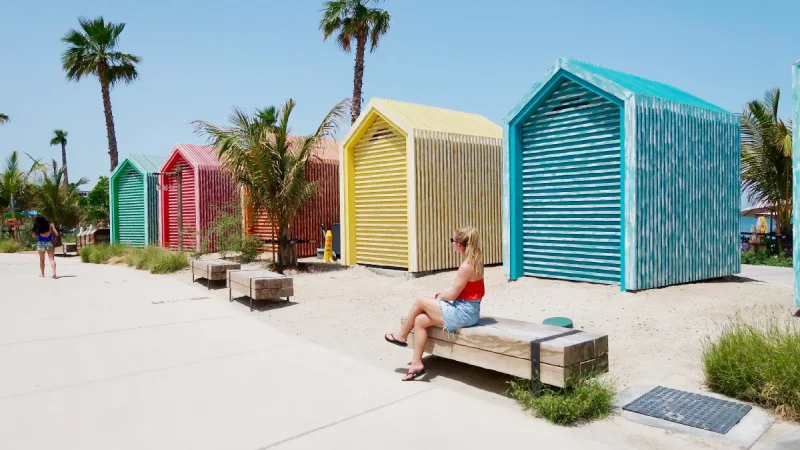
La Mer trades quiet sand for an actual day out. It’s built more like a beachfront neighborhood than a beach, with street art covering the walls behind the promenade, small amusement rides for kids, a water park that opens seasonally, and a dense strip of restaurants and cafés that stays busy well into the night. The beach itself is decent rather than spectacular, and that’s fine, because most people aren’t coming here purely to swim. Families gravitate here for the mix of activities in one place, and it’s one of the few spots in Dubai where you genuinely need a half day rather than a couple of hours to see everything on offer. Go on a weekday evening if you want to enjoy the atmosphere without fighting weekend crowds for a table at dinner.
A handful of other beaches, tucked further along the coast and closer to Sharjah, get far less attention and stay noticeably calmer because of it. They didn’t make the cut here simply because this guide is about where most travelers should actually spend their time on a first or second trip. They’re worth their own write-up down the line for anyone who’s already covered the five above and wants somewhere quieter next time around.
Planning the Trip: Visa, Cost, and Timing
Entry into the UAE is simpler than most people expect. Citizens of the European Union get a 90-day visa on arrival, issued free at the airport with no paperwork filed in advance. Travelers from the United States, the United Kingdom, Australia, Canada, Japan, and several other countries receive a 30-day visa on arrival, also free, stamped straight into the passport at immigration. GCC nationals enter with no visa requirement at all. If your passport doesn’t fall into one of these categories, a UAE tourist visa can be arranged online before travel, and the process is fully digital from start to finish.
Whichever route applies to you, carry a passport valid for at least six months from your entry date, a return or onward flight ticket, and proof of accommodation. Travel insurance isn’t always checked at the border, but it’s worth arranging regardless. Dubai’s private healthcare system is excellent and not cheap, and a policy that covers medical treatment and emergency evacuation is the kind of thing you’re glad to have if anything goes wrong, even on a short beach trip.
On cost, Dubai has a reputation for being expensive, and parts of it genuinely are, but the beach side of a trip doesn’t have to be. Public beaches like Jumeirah, Kite Beach, and Al Mamzar are free or close to it; sunbeds and umbrellas rent for a modest daily fee; and plenty of good food along the coast doesn’t require a beach club membership to access. Where the budget stretches further is accommodation and the private beach clubs attached to five-star hotels, which can run several hundred dirhams for day access alone. A mid-range trip covering flights, a decent hotel – food, and a few beach days comfortably sits in a moderate budget range if you stick to public beaches and avoid the most exclusive clubs.
Timing matters more in Dubai than in most beach destinations. Between November and March, daytime temperatures sit in a comfortable range, the water is warm without being uncomfortably hot, and evenings on the beach are genuinely pleasant. April and October are workable with warmer days. June through September brings serious heat, often well above 40 degrees Celsius during the day, which pushes most beach activity to early morning or after sunset. If a beach holiday is the main goal, winter is the season to book around.
Here are a few practical things to know before you travel:
Alcohol is available at hotels, licensed restaurants, and beach clubs, but not at public beaches themselves. Swimwear is fine on the beach itself, though modest dress is expected once you step away from the sand into surrounding streets or malls. Friday mornings tend to be quieter at most beaches, since it’s the start of the weekend locally and many residents sleep in before heading out later in the day.
Getting between beaches is straightforward. Dubai’s metro runs close to several coastal areas, and ride-hailing apps work well throughout the city at fares that are reasonable compared to most Western capitals. If you’re planning to hit three or four different beaches over a week, a rental car gives you more flexibility, though parking near the busier beaches can take a bit of patience during peak hours. Public buses also connect most beach areas, though they take longer and run on a fixed schedule rather than on demand.
On currency, the UAE dirham is pegged to the US dollar, which keeps prices fairly predictable if you’re budgeting from a dollar-based currency. Card payments are accepted almost everywhere, including small beach kiosks and rental stands, so carrying large amounts of cash isn’t necessary the way it might be in some other beach destinations. A modest amount of cash is still useful for small tips and the odd stall that prefers it.
Packing for a Dubai beach trip is simple but worth getting right. Reef-safe sunscreen matters here since the sun is intense even in reef-safe areas, and a proper hat or cap makes a real difference during midday hours. A light cover-up or shirt is worth having for the walk between the beach and nearby restaurants or shops, since swimwear alone isn’t appropriate once you step off the sand. If you’re visiting between June and September, plan around the heat rather than against it. Early starts, indoor breaks during the hottest hours, and evening beach time work far better than trying to push through a full day outdoors.
One thing that surprises first-time visitors is how different the beach clubs feel from the public beaches. A day pass at a five-star hotel’s beach club typically includes a sunbed, towel service, pool access alongside the beach, and sometimes a food and drink credit built into the price. It’s a genuinely comfortable way to spend a day if the budget allows for it, and several hotels open their beach clubs to non-guests for a fee even if you’re not staying there. For most travellers, though, a mix of a couple of public beach days and one splurge day at a beach club hits the right balance between cost and comfort.
Safety at Dubai’s beaches
Safety rarely comes up as a concern here, and for good reason. Dubai’s beaches are patrolled by lifeguards during daylight hours; the water is generally calm along most of the coast; and crime rates across the city are low by international standards. The bigger practical risks are heat-related rather than anything else. Sunburn, dehydration, and simply underestimating how strong the midday sun is catch out more visitors than anything to do with safety in the usual sense. Drink more water than feels necessary, and don’t assume a slight breeze off the water means the sun is any weaker.
A Dubai beach trip works well on its own or as part of a longer route through the Gulf. Combining it with a few days in Abu Dhabi is easy given the short drive between the two, and travelers continuing on to Oman or the wider region often use Dubai as the beach-focused leg of the trip before heading somewhere with more mountains and less coastline. Either way, the low-friction entry process for most Western passport holders makes Dubai one of the easier additions to a longer itinerary rather than a destination that requires its own dedicated visa run.
None of this requires much advance planning beyond booking flights and a hotel near the coast. Check which visa on arrival category applies to your passport, sort travel insurance before you go, and pick a season that matches how much heat you’re comfortable with. The beaches themselves do the rest.
Frequently Asked Questions
Do UK, US, or EU citizens need a visa for Dubai?
No advance visa is needed for most of these travelers. EU passport holders get a free 90-day visa on arrival. UK, US, Australian, and Canadian citizens get a free 30-day visa on arrival, stamped at the airport with no prior application.
What’s the best time of year to visit Dubai beaches?
November through March offers the most comfortable weather for beach days. Summer months bring extreme heat, so beach time shifts to early morning or evening if you travel between June and September.
Are Dubai’s beaches free to use?
Many are. Jumeirah Beach, Kite Beach, and Al Mamzar Beach Park are public and free or charge only a small entry fee. Private beach clubs attached to hotels charge a day access fee, sometimes a significant one.
Is travel insurance necessary for a Dubai beach trip?
It isn’t always checked at immigration, but it’s strongly recommended. Private healthcare in the UAE is high quality and expensive, and a policy covering medical treatment and evacuation is worth having even for a short trip.
Which beach is best for families?
Kite Beach and Al Mamzar Beach Park both work well for families, with calm water, facilities close by, and enough space to spread out without feeling crowded.
Can I drink alcohol on Dubai’s public beaches?
No. Alcohol is limited to licensed venues such as hotels, restaurants, and private beach clubs. Public beaches themselves are alcohol-free.


