
Dubai Metro Blue Line Guide – New Stations and Tourist Tips

When the Dubai Metro Blue Line Guide opens on 9 September 2029, it becomes the most significant expansion of the Dubai rapid transit network since the Green Line debuted in 2011. The project was approved by Sheikh Mohammed bin Rashid Al Maktoum on 24 November 2023 with a headline budget of AED 18 billion, and construction started in 2024. The 30-kilometer line will add 14 new stations to the existing 55-station network, push Dubai’s total rail coverage past 119 kilometers, and plug multiple previously underserved residential and commercial zones into the Metro system. For Indian tourists visiting Dubai today, the Blue Line is important to understand for two reasons: planning future trips that will coincide with the opening and understanding how the ongoing construction affects current travel in specific Dubai neighborhoods.
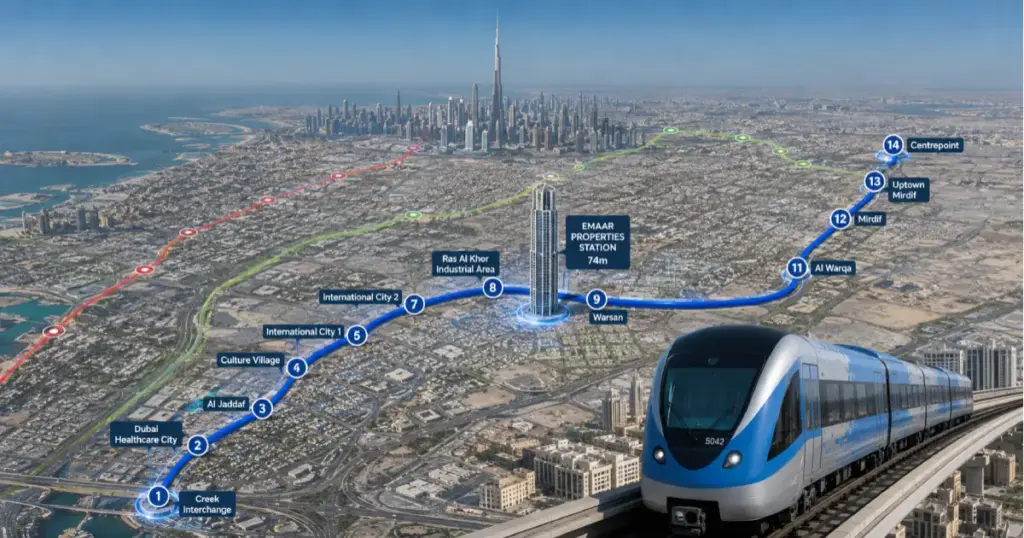
This guide walks through the complete Blue Line story as it stands today – route, station list, which Dubai tourist attractions become reachable, the world’s tallest metro station at Emaar Properties, fare integration with the existing Nol card system, and practical tips for travelers whose Dubai visits fall before, during, or after the opening. We have cross-referenced information from RTA announcements, Property Finder, Time Out Dubai, Dubai Media Office, and the Wikipedia Blue Line reference to produce a single honest overview of what is coming, what is built, and what you can actually use right now.
Quick Facts – Dubai Metro Blue Line
✓ 30-kilometer third Metro line with 14 new stations – 9 elevated and 5 underground
✓ AED 18 billion investment – scheduled to open 9 September 2029 (20th anniversary of Dubai Metro)
✓ Connects 9 key areas, including Dubai Creek Harbour, International City, Mirdif, Al Warqa, Silicon Oasis and Academic City
✓ World’s tallest metro station: Emaar Properties Station at 74 metres – designed by SOM (the Burj Khalifa architects)
✓ Direct link from DXB airport to Dubai Creek Harbour in just 20 minutes
✓ Interchange stations: Creek (Green Line) and Centrepoint (Red Line) – integrates with existing network
✓ Expected 320,000 daily passengers by 2040 – will reduce Dubai road traffic by around 20 percent
The Route – Two Branches, One Y-Junction
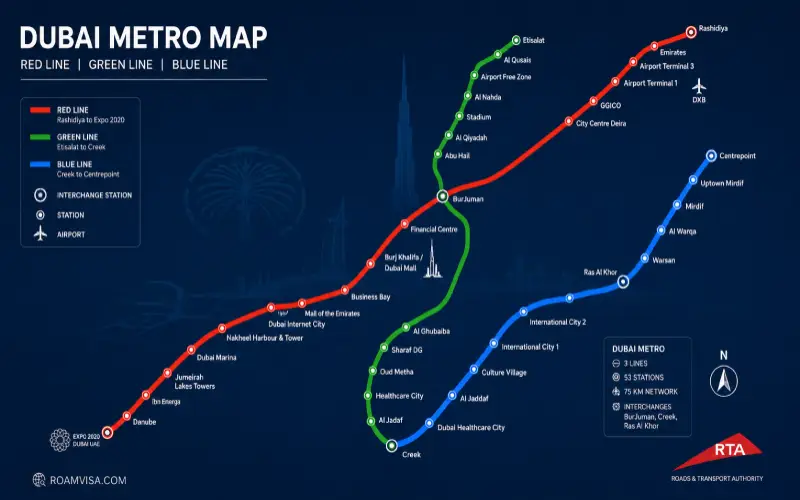
The Blue Line is not a simple straight line. It is designed as a Y-shaped network with two branches meeting at an interchange station in International City 1. The longer 21-kilometer branch runs from Dubai Creek Harbour (Emaar Properties Station) through Dubai Festival City, Ras Al Khor, and into International City, where it hits the Y-junction. The shorter 9-kilometer branch runs from Centrepoint Station (the northern terminus of the existing Red Line in Rashidiya) south through Mirdif and Al Warqa to the same Y-junction. From the junction, a single combined line continues through the three International City stations, Dubai Silicon Oasis, and ends at Academic City with a depot at Al Ruwayyah 3.
The Y-junction design means passengers traveling from Academic City can reach either Creek or Centrepoint without changing trains – the RTA splits trains at the junction based on a dual-path routing system. This is unique among Dubai Metro lines and reflects the dense residential geography the Blue Line is designed to serve. The two interchange stations allow passengers to connect to existing Red and Green Lines -Creek station is already on the Green Line, and Centrepoint is already on the Red Line – meaning the Blue Line stitches directly into the full Dubai rail network rather than operating as a standalone third line.
The 14 Stations – What Each One Serves
Emaar Properties Station (Dubai Creek Harbour)
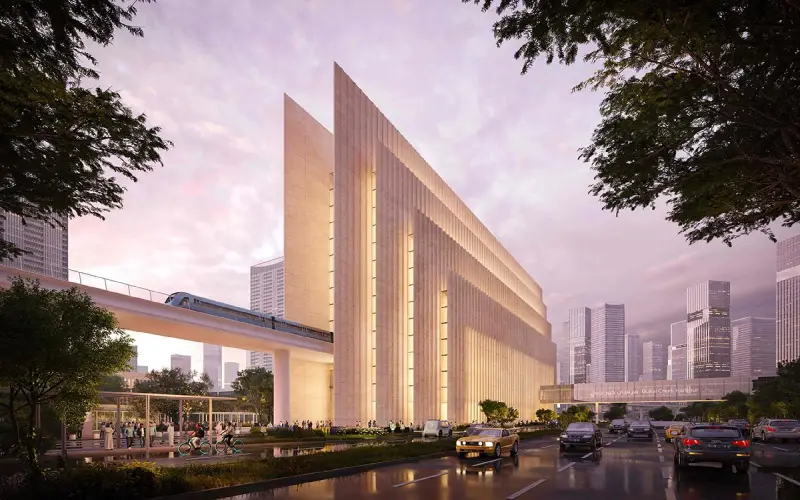
The headline station of the entire Blue Line project and the world’s tallest metro station at 74 meters. Designed by Skidmore, Owings, and Merrill – the same firm that designed the Burj Khalifa – the 11,000 square meter station will include five floors of public space, retail, and observation areas. Designed to accommodate up to 160,000 passengers per day with an expected daily usage of more than 70,000. It will serve the rapidly growing Dubai Creek Harbour residential district, the future Dubai Creek Tower, and tourist attractions including Ras Al Khor Wildlife Sanctuary (famous for flamingos).
Dubai Festival City Station
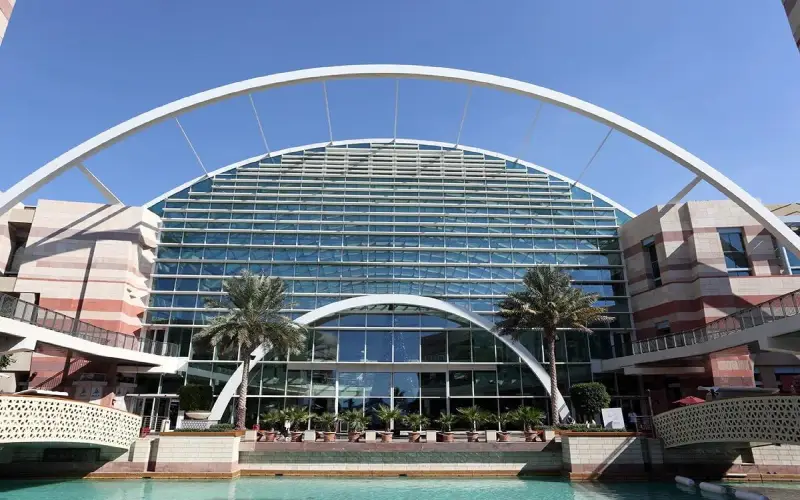
On the longer 21-kilometer route. Serves Dubai Festival City Mall – one of Dubai’s larger shopping and entertainment complexes featuring the IMAGINE water and light show, outlet shopping, and several hotels, including the InterContinental. Also serves the approximately 77,000 residents of the surrounding Festival City residential community. For tourists, this station provides direct Metro access to what is currently a car-dependent or taxi-only destination.
Ras Al Khor Station
Sits between Emaar Properties Station and the International City stations on the 21km route. Serves the Ras Al Khor Industrial Area but, more importantly for tourists, provides closer access to the Ras Al Khor Wildlife Sanctuary – the free-to-visit nature reserve famous for its resident flamingo population and visiting migratory birds. Strengthens transport links within a zone currently underserved by Metro.
International City Stations (3 stations)
Three stations serve International City, a large residential community home to around 200,000 residents and visitors, plus Dragon Mart – the enormous Chinese-goods trading center popular with bargain shoppers. One of the three International City stations is the underground Y-junction interchange where Blue Line branches meet. For tourists, Dragon Mart becomes a simple metro day trip from anywhere in Dubai connected to the Red or Green Lines.
Al Warqa Station
On the shorter 9-kilometer branch. Home to approximately 60,000 residents in the Al Warqa residential area and, importantly for visitors, Dubai Safari Park. Currently reaching Dubai Safari Park requires a car or a long bus ride; the Al Warqa Metro station will put the park within walking distance or a short local bus ride of the metro gate.
Related Articles: NYC Subway Guide for Tourists – How Not to Get Lost in New York
Mirdif Station
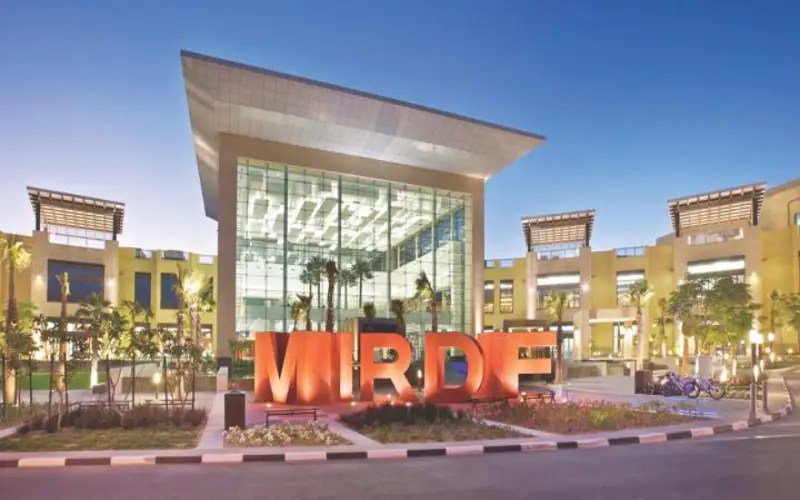
Another station on the shorter branch serving the popular Mirdif residential neighborhood. Home to Mirdif City Centre mall (one of Dubai’s largest malls with 450 stores, VOX Cinemas, indoor skydiving, and the trampoline park), Al Mushrif Park, and multiple residential communities. Direct Metro access to Mirdif City Centre is one of the most anticipated benefits of the Blue Line for shoppers and families currently relying on taxis.
Centrepoint Interchange Station
The northern terminus of the shorter Blue Line branch and the interchange with the existing Red Line (Red Line’s northern end). Allows passengers on the Red Line to easily connect onto the Blue Line for destinations in Mirdif, Al Warqa, or onward to International City and Silicon Oasis. Currently serves the Al Rashidya community and is one of three Metro stations with a free car park.
Dubai Silicon Oasis Station
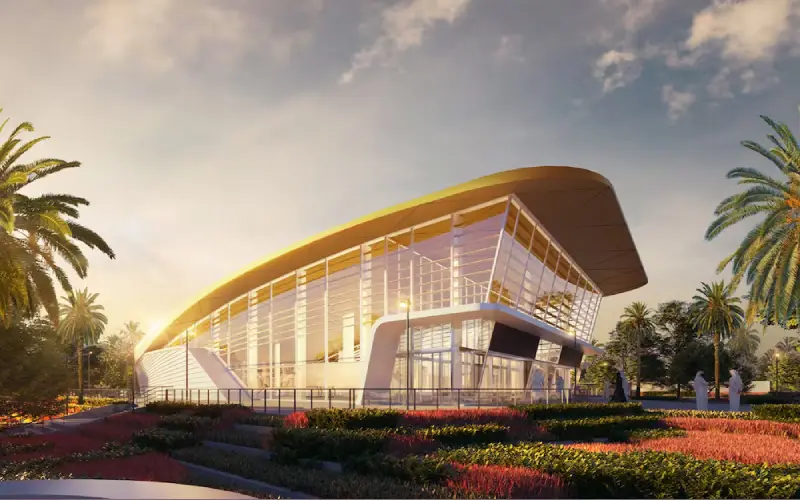
On the combined line past the Y-junction. Serves Dubai Silicon Oasis – the city’s fifth urban center and a hub for technology and innovation companies. Major residential community for tech workers and university students. The Metro connection will reduce reliance on taxis for the Silicon Oasis workforce and improve access for external visitors, tourists, and academic conference attendees.
Academic City Station
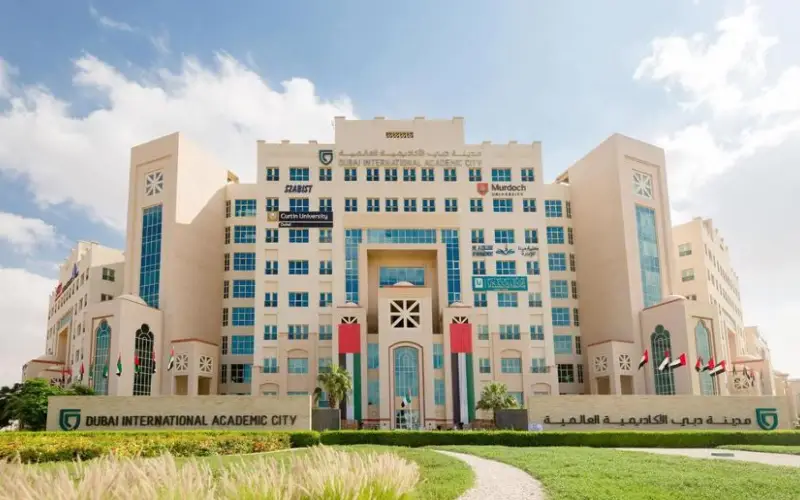
The eastern terminus of the combined line. Serves Dubai International Academic City – home to branch campuses of over 20 international universities, including Murdoch, Heriot-Watt, BITS Pilani, Manipal Academy of Higher Education, and Middlesex. Significant commuter population of around 27,000 students. Also serves as the location for the Blue Line depot at Al Ruwayyah 3.
Creek Interchange Station (Al Jaddaf)
The existing Creek station at Al Jaddaf is currently the southern terminus of the Green Line. The Blue Line will make this an interchange by connecting the Green Line directly to the long, 21-kilometer Blue Line branch. Opens up the waterfront neighborhoods around Al Jaddaf and Dubai Design District to the Blue Line network.
Emaar Properties Station – The World’s Tallest Metro Station
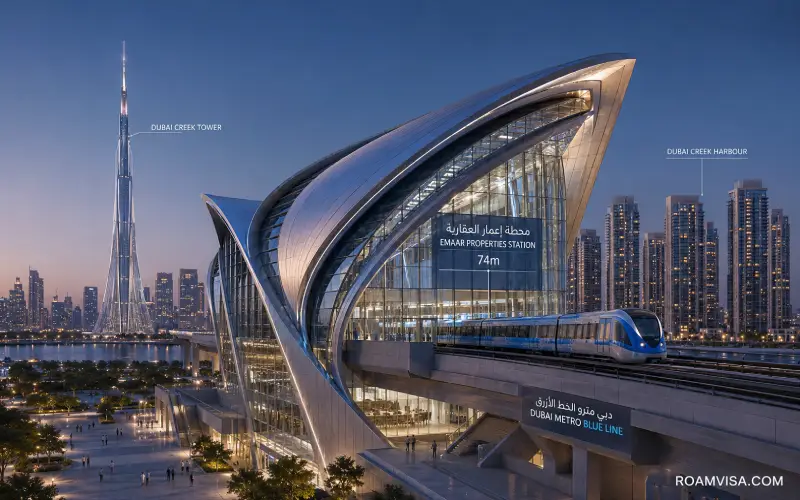
The Emaar Properties Station at Dubai Creek Harbour warrants its own section because it is designed not just as a functional station but as a tourist destination in its own right. At 74 meters tall, it exceeds any other metro station globally in elevation. The design by Skidmore, Owings, and Merrill features an exterior inspired by seashell motifs, with the interior following the Dubai Metro tradition of seven themed design languages (Heritage, Earth, Air, Fire, and Water).
The station’s 11,000 square meters of floor space across five levels includes retail outlets, cafes, observation decks, and event spaces—more akin to an airport terminal than a conventional Metro stop. The design accommodates up to 160,000 passengers per day at full capacity and is expected to handle around 70,000 daily on opening. For tourists, the station itself becomes a photo-worthy destination comparable to visiting the Burj Khalifa observation deck, with the added advantage that entry to the station is free for any Nol card holder. The RTA has committed to naming the station Emaar Properties Station for the first 10 years of operation under a naming-rights sponsorship agreement.
Fare Integration with the Existing Nol Card System
The RTA has confirmed the Blue Line will adopt the same fare structure, operating hours, and Nol Card system as the existing Red and Green Lines. Your Silver, Gold, Blue, or Red Ticket Nol cards will work unchanged on the Blue Line from day one – no new card, no separate top-up, and no special registration. The zone-based fare system extends across the
Blue Line: 1-zone journeys remain AED 3 on Silver Nol, 2 zones AED 5, and 3 or more zones AED 7.5. The AED 14 daily fare cap continues to apply across the entire three-line network rather than separately per line.
Operating hours will match the existing Metro schedule – approximately 5:00 AM to midnight Monday through Thursday, 5:00 AM to 1:00 AM Friday, 5:00 AM to midnight Saturday, and 8:00 AM to midnight Sunday. Blue Line trains will operate on the same frequency pattern, with 3- to 5-minute headways at peak and 7- to 10-minute headways off-peak. Gold Class cabins will be available on Blue Line trains with the same double-fare structure as Red and Green Lines.
Tourist Attractions Directly Connected by the Blue Line
The Blue Line transforms several previously hard-to-reach Dubai destinations into easy metro day trips. Here are the major tourist attractions that will become directly accessible via Blue Line stations.
| Tourist Attraction | Blue Line Station | Current Access | Future Blue Line Access |
| Ras Al Khor Wildlife Sanctuary | Ras Al Khor / Emaar Properties | Taxi only | Walk from station |
| Dragon Mart | International City | Taxi or long bus | Station at mall |
| Dubai Safari Park | Al Warqa | Taxi or bus | Short walk or local bus |
| Mirdif City Centre mall | Mirdif | Taxi or bus | Walk from station |
| Dubai Festival City Mall | Dubai Festival City | Taxi only | Walk from station |
| Dubai Creek Tower area | Emaar Properties (Tallest) | Under development | Direct Metro access |
| Dubai International Academic City | Academic City | Taxi or commuter bus | End-of-line station |
| Ras Al Khor Industrial Area | Ras Al Khor | Car or taxi | Metro to doorstep |
Property and Economic Impact – Why This Matters for Real Estate
The Blue Line announcement in November 2023 had immediate property-market impact across the 9 areas it will serve. Rents in the affected communities rose by approximately 23 percent in the 18 months following the announcement, and industry forecasts predict a further 30 percent increase by the 2029 opening. Properties within a 5-to-10-minute walk of planned stations have seen 14 percent rent increases, while properties 10 to 15 minutes away have risen 8 percent.
Overall, by 2040, every dirham invested in the Blue Line is projected to generate AED 2.60 in returns, with total economic benefits exceeding AED 56.5 billion. These come from reduced travel time, lower fuel consumption, fewer road accidents, and decreased carbon emissions. Road traffic on Dubai’s major arteries – especially Sheikh Mohammed bin Zayed Road (E311), which the line runs alongside – is expected to reduce by up to 20 percent. The Blue Line is also the first transport project in Dubai to comply fully with green building standards, earning platinum sustainability certification.
What the Blue Line Means for Tourists Visiting Before 2029
If your Dubai trip is before the September 2029 opening, the Blue Line primarily affects you through construction activity rather than operational access. Several intersections along the E311 corridor have construction lane closures and temporary detours. Hotels in affected zones – particularly Dubai Festival City, Al Jaddaf, and parts of International City – have reported intermittent road noise and access complications, though the major Metro station construction sites are well-hoarded and do not disrupt hotel operations themselves.
For planning Dubai visits between now and 2029, the Blue Line does not yet provide transport options, so continue to rely on the Red Line, Green Line, buses, taxis, and water transport using the existing Nol card system. However, if you are considering booking a longer Dubai stay in 2029 or 2030, aligning with the September 2029 opening could give access to newly reachable attractions, including Dubai Safari Park, Mirdif City Centre, Dubai Festival City, and Dragon Mart, without taxi costs. Hotel rates in these areas also often drop in the month after a transport-infrastructure debut before catching up to the new demand.
Mistakes Travellers Make About Dubai Metro Lines
- Assuming the Blue Line is already operational – opening is 9 September 2029, and until then none of the 14 new stations are usable. Some recent guides conflate the announcement with operation.
- Planning hotel stays in Mirdif or International City expecting current Metro access – these areas remain taxi-dependent until 2029. Confirm the current transport situation before booking.
- Mixing up the Blue Line with the Red Line Route 2020 extension – Route 2020 (to Expo 2020 and UAE Exchange/Jebel Ali) is already operational; the Blue Line is the separate third-line project.
- Expecting a separate Blue Line Nol card – the existing Silver, Gold, Blue, and Red Ticket Nol cards will all work on the Blue Line when it opens, with the same fare structure and daily caps as existing lines.
- Missing that the Blue Line creates two new interchange stations – Creek (Green Line) and Centrepoint (Red Line) – which significantly reduces connection times for cross-network journeys once operational.
- Planning future trips around the wrong opening year – the Blue Line officially opens September 2029, timed to match the 20th anniversary of Dubai Metro. Earlier dates suggested by some blogs are not current RTA guidance.
- Thinking the tallest-metro-station accolade means the Emaar Properties Station will be like the Burj Khalifa observation deck – it is a functional transit hub with viewing areas, not a standalone attraction. Expect a regular Metro station experience at scale, not a tourist-ticketed destination.
Before You Visit – Make the Metro Work for Your Trip
To actually use the Dubai Metro today (Red and Green Lines, plus Blue Line when it opens), you need a Nol card. Our detailed Nol Card Dubai complete buying and top up guide covers the four card types, where to buy each, how to top up, and which card fits which type of Dubai trip. Most tourists should buy the Silver Nol at DXB on arrival (AED 25); including AED 19 credit, gets you going immediately.
Pair the Metro-based budget sightseeing approach with a cheap flight from India. Our best day to book Dubai flights with a data-driven timing guide identifies the specific Tuesday morning booking window and midweek departure patterns that reliably deliver the lowest fares to DXB from Delhi, Mumbai, and Bengaluru. Combined with efficient Nol-based transport in Dubai, a typical 4-day Dubai trip can keep total transport costs (international flight plus all local transit) under 25,000 rupees per person.
Final Thoughts
The Dubai Metro Blue Line is the biggest rail infrastructure project in the Gulf region this decade, and its September 2029 opening will reshape how tourists move around Dubai. Fourteen new stations, two interchange points with the existing network, the world’s tallest metro station as a centerpiece, and direct metro access to currently taxi-dependent tourist destinations like Dubai Safari Park, Mirdif City Centre, Dragon Mart, and Dubai Festival City. The full network post-2029 will cover 131 kilometers with 78 stations, cementing Dubai’s position as one of the most rail-accessible tourist cities in the world. For Indian travelers, the practical takeaways are simple. If you are visiting Dubai before September 2029, continue using the Silver Nol card on the existing Red and Green Lines and plan around taxi or bus access to Blue Line areas.
If you are planning a trip for late 2029 or 2030 onward, the newly operational Blue Line will let you cheaply reach attractions that currently require expensive taxi rides. Nothing about your Nol card changes – the same AED 25 Silver card you buy today will work seamlessly on the Blue Line in 2029 with no upgrade required. The RTA has built the Blue Line as a natural extension of the existing system, and the fare, hours, and card system remain identical. Watch for construction updates if your accommodation falls along the E311 corridor, and otherwise enjoy the knowledge that Dubai’s transit network is about to become significantly more capable for tourist itineraries.
Frequently Asked Questions
When does the Dubai Metro Blue Line open?
The official opening date is 9 September 2029, chosen to coincide with the 20th anniversary of the original Dubai Metro Red Line, which opened on 9 September 2009. Construction began in 2024 and is proceeding on schedule per RTA public updates. Earlier opening projections from some pre-2024 sources are outdated.
Which Dubai tourist attractions become directly reachable via the Blue Line?
Ras Al Khor Wildlife Sanctuary (flamingo reserve), Dragon Mart (Chinese goods market in International City), Dubai Safari Park (via Al Warqa), Mirdif City Centre mall, Dubai Festival City mall, and Dubai International Academic City all gain direct Metro access. Plus, the Emaar Properties Station itself becomes a tourist stop as the world’s tallest metro station at 74 meters.
Do I need a new Nol card for the Blue Line?
No. Your existing Silver, Gold, Blue/Personal, or Red Ticket Nol card will work on the Blue Line from opening day with no changes. The Blue Line adopts the same zone-based fare structure, same daily fare cap, and same operating hours as the existing Red and Green Lines.
Is the Blue Line a direct airport connection for DXB?
Yes. The Blue Line creates a direct metro route from DXB to Dubai Creek Harbour with an estimated 20-minute journey time via the Red Line to Centrepoint and then the Blue Line onward. This is useful for travelers staying at Dubai Festival City, Al Jaddaf, or Dubai Creek Harbor area hotels where currently a taxi from DXB is the main option.
Will the Blue Line be more expensive than the Red or Green Lines?
No. Fares are identical across all three lines under the RTA’s unified zone-based system. A 1-zone journey on the Blue Line costs AED 3 on Silver Nol, same as a 1-zone Red Line journey. The daily AED 14 fare cap applies across all three lines together, not separately.
How is the Emaar Properties Station different from a normal metro station?
Size, height, and amenities. At 74 meters tall and 11,000 square meters of floor space across five levels, it is the world’s tallest metro station by a significant margin. Designed by SOM (Burj Khalifa’s architects), it includes retail, cafes, observation decks, and event spaces in addition to standard Metro functions. Treat it as a functional transit hub with notable architecture rather than a ticketed tourist attraction – entry is free with any Nol card tap.


