
Best Road Trips in Europe – Top Routes for First-Time Drivers

The best road trips in Europe offer something that no other form of travel quite replicates: the freedom to stop when you want to, go where you feel like going, and experience the texture of a place the small towns between the famous ones, the roadside cafés, and the viewpoints that are not on any map but appear around a bend and make you pull over involuntarily. Europe is, by any measure, one of the finest road-tripping continents in the world. The distances between extraordinary places are compact, the road infrastructure is generally excellent, and the variation in landscape, architecture, food, and culture per kilometer driven is unlike anywhere else on earth.
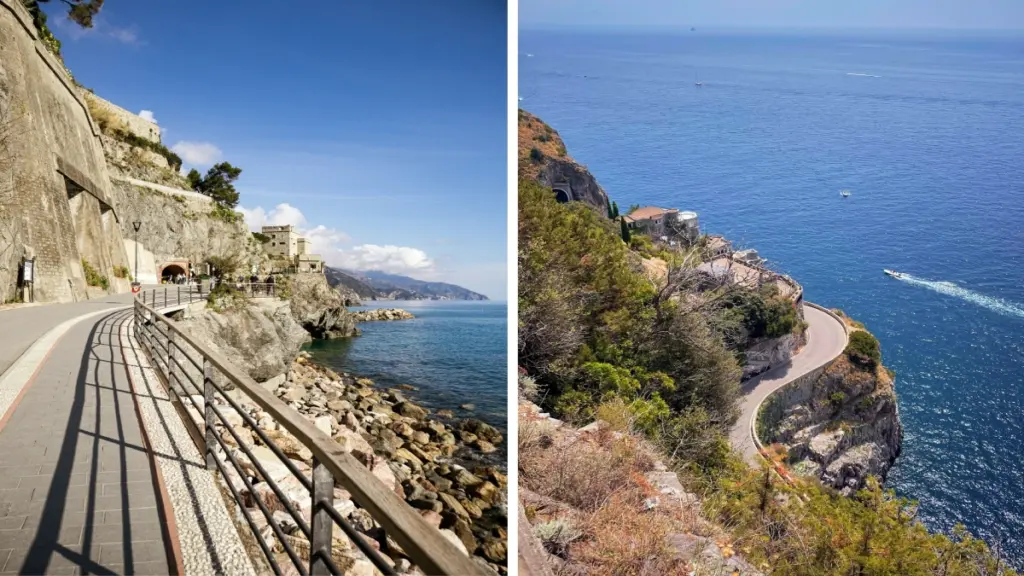
For first-time drivers in Europe, the choice of route matters more than the quality of the car. Some of Europe’s most famous drives, the Amalfi Coast, the Swiss Alpine passes, and the mountain roads of Montene, are genuinely challenging: narrow, steep, busy in season, and unforgiving of errors. Others are wide, well-signed, gentle on a first-time European driver, and breathtakingly beautiful. Getting the right match between your driving confidence and your chosen route is the single most important planning decision you will make.
This guide gives you the eight best European road trips across the full range of difficulty levels from routes any confident driver can handle on their first day in Europe to routes that reward experience with some of the most dramatic driving scenery in the world. Each route includes a difficulty rating, distance, recommended days, and the honest practical information that travel guides frequently omit.
Quick Facts – European Road Trips for First-Timers
- Driving license: EU licenses valid across all EU countries · non-EU drivers need an IDP (International Driving Permit)
- Right-Hand Traffic: Almost all of Europe drives on the right; exceptions are UK, Ireland, Malta, and Cyprus
- Tolls: France, Spain, Italy, Portugal have toll roads · Austria, Switzerland, and the Czech Republic require a vignette (windscreen sticker)
- Fuel: Petrol is expensive vs global average; diesel is standard in most European rentals for long drives
- Apps: Google Maps works well throughout · Waze excellent for local alerts · download offline maps before entering rural areas
- Best Season: May–September for most routes · June–August for Alpine passes (closed in winter) · September–October for lighter crowds
- Rental Tip: Book in advance, especially for summer · check if rental covers countries you plan to enter
- Speed Cameras: Common throughout Europe · check local limits; motorways typically 120–130 km/h, towns 50 km/h
Overview: 8 Best European Road Trips
| Route | Countries | Distance | Days | Difficulty | Best For |
|---|---|---|---|---|---|
| German Romantic Road | Germany | 460 km | 3–4 | ⭐ Easy | First-time Europe drivers and families |
| Scottish North Coast 500 | Scotland (UK) | 830 km | 7–10 | ⭐⭐ Moderate | Dramatic scenery; wildlife lovers |
| Nice to Florence, Coastal | France, Italy | 450 km | 4–5 | ⭐⭐ Moderate | Culture, food, coastal glamour |
| Munich to Lake Como | Germany, Austria, Switzerland, Italy | 600 km | 4–6 | ⭐⭐ Moderate | Alpine scenery; multiple countries |
| Balkans: Dubrovnik to Mostar | Croatia, Montenegro, Albania, Bosnia | 700 km | 6–8 | ⭐⭐ Moderate | Off-the-beaten-path budget travel |
| Norway: Bergen to Geiranger | Norway | 400 km | 4–5 | ⭐⭐⭐ Challenge | Fjords: most dramatic European drive |
| Amalfi Coast, Italy | Italy | 50 km | 2–3 | ⭐⭐⭐ Challenge | Iconic beauty; experienced drivers |
| Baltic Loop: Tallinn–Vilnius | Estonia, Latvia, Lithuania | 600 km | 4–5 | ⭐ Easy | Hidden gem; relaxed driving |
1. The German Romantic Road – Best for First-Time Drivers
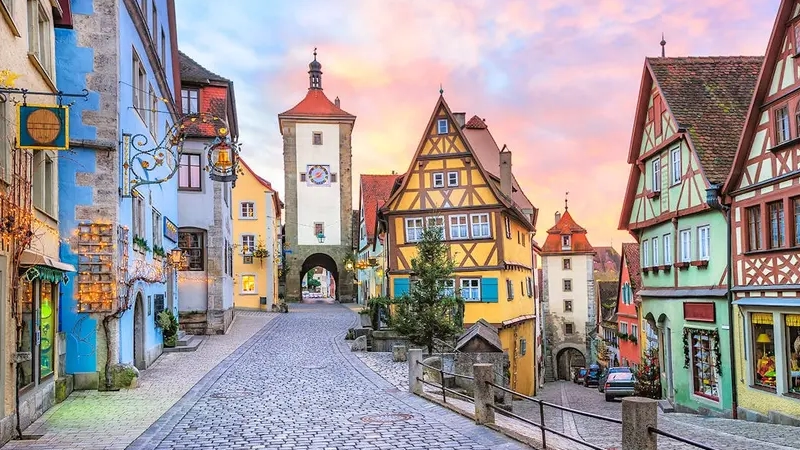
The Romantic Road (Romantische Straße) is Germany’s most famous scenic driving route and the ideal first European road trip for any driver who wants drama without difficulty. The 460 km route runs from Würzburg in the north to Füssen in the south, connecting a sequence of medieval walled towns, Baroque churches, and hill-top castles along a well-signed, smooth, and almost entirely flat-to-gently-rolling road.
The road is easy to drive on, clearly marked, has no significant mountain passes, and has comfortable speed limits throughout. The towns themselves are the attraction: Rothenburg ob der Tauber is the most famous and most photographed completely intact medieval walled town with cobblestone streets, half-timbered houses, and a town wall you can walk around the full circuit of in about an hour. Dinkelsbühl and Nördlingen are equally beautiful and significantly less crowded, making them better choices for lunch stops or overnight stays. The route ends at Füssen and the fairy-tale Neuschwanstein Castle, the 19th-century palace that inspired Disney’s Sleeping Beauty castle and is one of the most visited attractions in Germany.
Plan three days minimum: one day from Würzburg south to Rothenburg, one day from Rothenburg to Augsburg, and the third day to Füssen and Neuschwanstein. The castle viewpoint from the Marienbrücke bridge above it is the famous location; arrive early in the morning or late in the afternoon to avoid the summer crowds.
Route Essentials
- Start: Würzburg · Und: Füssen · Distance: 460 km · Recommended: 3–4 days
- Best time: May–October · Christmas market season (late November) is magical but busy
- Neuschwanstein: Buy timed tickets online well in advance; day-of entry often sold out by 9am in summer
- Road difficulty: Easy, flat, wide, well-signed throughout Germany
- Vignette: Germany does not require a motorway vignette for foreign cars
2. Scotland’s North Coast 500 – Best for Wild Scenery
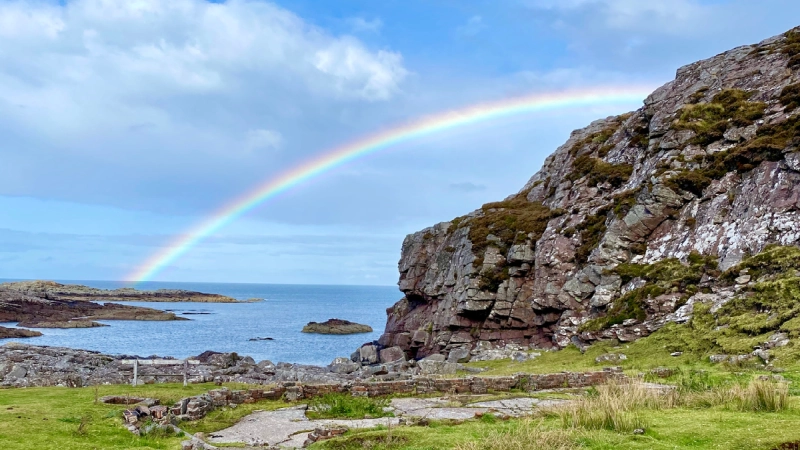
The North Coast 500 is an 830 km loop starting and ending at Inverness Castle, circling the northernmost tip of Scotland through the Scottish Highlands. Launched as a tourism initiative in 2015, it has become one of the most talked-about road trips in Europe with remarkable speed and the reputation it has earned. This is genuinely one of the most beautiful drives in the world: rugged sea cliffs, white sand beaches with Caribbean-blue water in the north, ancient castles in various states of romantic ruin, and a landscape so sparsely populated and so raw that it resets something in most people who drive through it.
Driving itself requires confidence rather than experience. Many sections of the NC500 involve single-track roads with passing places where two vehicles cannot pass each other without one reversing to a wide point. This is the normal way roads work in the Highlands, and locals are patient with tourists, but it demands attention and the willingness to reverse. The route is not technically difficult in the way of steep Alpine passes, but it is long, involves a great deal of concentration, and should not be rushed. Seven to ten days is the recommended minimum to stop properly at the highlights and not treat it as a race.
The highlights that stop people most often: Bealach na Bàa single-track mountain pass near Applecross with hairpin bends and views across to the Isle of Skye that are among the finest in Britain. Dunrobin Castle near Golspie is a fairy-tale turreted palace on a cliff above the sea. The beaches near Durness in the far north, which genuinely look Caribbean on a sunny day despite being at the latitude of Oslo. Book accommodation in advance; the Highlands have limited options in the most scenic areas, and they fill months ahead in July and August.
Route Essentials
- Start/End: Inverness · Loop: 830 km · Recommended: 7–10 days
- Drive on the LEFT: The UK drives on the left; allow adjustment time on day one
- Single-track roads throughout the northwest Highlands use passing places; patience essential
- Best time: Late May to August for long daylight hours; September for fewer people
- Book all accommodation at least 3 months ahead for summer travel
3. Nice to Florence via Cinque Terre – Best Coastal Drive
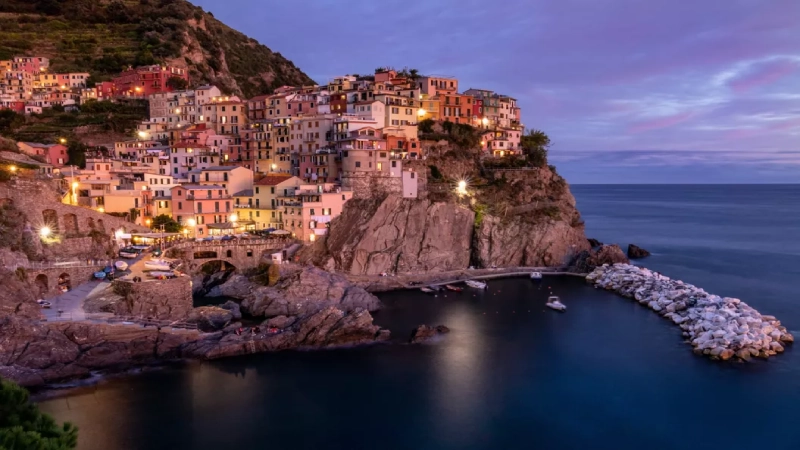
This 450 km route along the French and Italian Riviera is the most glamorous road trip in Europe and one of the best for drivers who want scenery, food, and culture in equal measure. Starting in Nice, the most beautiful city on the Côte d’Azur, you follow the coastal road through Monaco, Menton, and across the border into Italy. The Ligurian coast between the Italian border and Genoa is less famous than its French counterpart but arguably more beautiful: smaller resorts, wilder cliff roads, and a sequence of pastel-colored fishing villages that gradually give way to the internationally famous Cinque Terre.
The Cinque Terre’s five cliff-hanging villages (Monterosso, Vernazza, Corniglia, Manarola, and Riomaggiore), connected by hiking trails and a coastal railway, are the jewel of this route. Driving between the villages is often not possible; park outside and walk or take the local train. The views from the road above the villages are extraordinary even for those who do not hike. From Cinque Terre, the route continues south past the Lucca Renaissance walled town with a perfectly intact ring of walls you can walk or cycle on before finishing in Florence, one of the greatest cities in the world for art and food.
The coastal sections around Monaco and the Cinque Terre can be narrow and busy in summer. The roads are manageable for confident drivers but require focus, particularly the corniche roads that hug the cliff above Monaco. This is not a beginner’s route on the most challenging sections, but neither is it technically demanding in the way of the Amalfi Coast. Driving the Cinque Terre section from Genoa to La Spezia on the A7 motorway is simpler if the coastal alternative feels too narrow.
Route Essentials
- Start: Nice, France · End: Florence, Italy · Distance: 450 km · Recommended: 4–5 days
- Cross-border rental: Check rental agreement covers both France and Italy
- Cinque Terre: Park at La Spezia and take the train to visit the five villages; driving between them is mostly impossible and unnecessary
- Monaco: Worth a half-day stop even if you are not staying; Casino Square and the harbour are walking distance from any parking
- ZTL zones (Italy): Many Italian city centres have restricted driving zones with cameras. Follow GPS carefully and research parking before entering any Italian city
4. Munich to Lake Como – Best Alpine Route
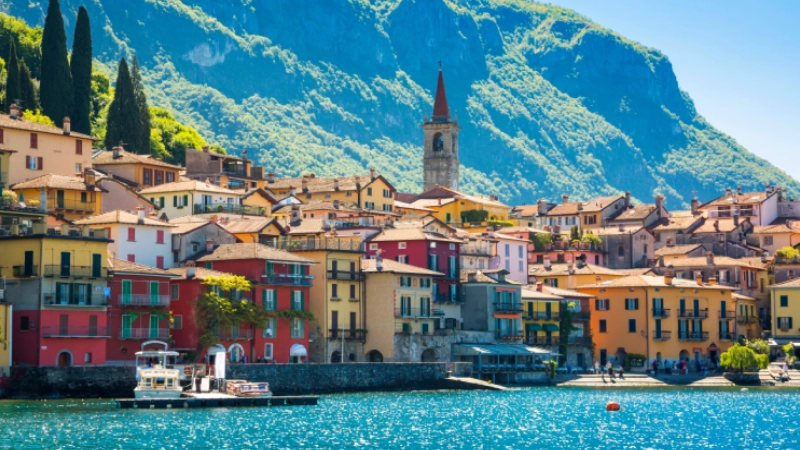
This 600 km route through four countries in four to six days is the most efficient way to see why people become genuinely emotional about the Alps. Starting in Munich, Bavaria’s confident, beer-loving, beautifully laid-out capital, you head south past Neuschwanstein Castle to the Austrian border, then through the Tyrolean Alps via Innsbruck and Zell am See, cross into Switzerland via the Lauterbrunnen Valley (the most photographed valley in Switzerland, with waterfalls pouring down vertical rock faces all around you), and descend into Italy via Lugano to finish at Lake Como.
Lauterbrunnen deserves at least a full day. The village sits in a flat-bottomed valley surrounded by sheer rock faces 400 meters high, with 72 waterfalls visible from the valley floor, including the famous Staubbach Falls that drop 297 meters almost vertically. Driving into the valley for the first time has stopped more than one driver in the middle of the road from sheer shock at the scenery. From Lauterbrunnen, continue east to Lucerne, then south through the Gotthard Tunnel (a 17-km road tunnel under the Alps) into Italian-speaking Ticino and down to Lugano and Lake Como.
Lake Como, at the end of the route, is the reward: a 50 km long glacial lake surrounded by mountains, with the towns of Como, Bellagio, and Varenna on its shores. The lake roads are narrow and can be very busy in peak summer, but the scenery is worth the patience required. The drive from Menaggio to Bellagio on the western shore is particularly beautiful: a tight corniche road, the lake constantly visible below, and gardens spilling over the road edges from the lakeside villas.
Route Essentials
- Start: Munich, Germany · End: Lake Como, Italy · Distance: ~600 km · Recommended: 4–6 days
- Vignettes required: Austria (motorway vignette, buy at petrol station or online) · Switzerland (annual sticker, ~CHF 40) · both required before entering motorways
- Swiss speed limits: 120 km/h motorway · 80 km/h outside towns · 50 km/h in towns strictly enforced
- Neuschwanstein detour: Add 2 hours from Munich before crossing into Austria
- Gotthard Tunnel vs Pass: The road pass (open summer only) is spectacular but slow; the tunnel is faster and open year-round
5. Balkans: Dubrovnik to Mostar – Best Off-the-Beaten-Path Route
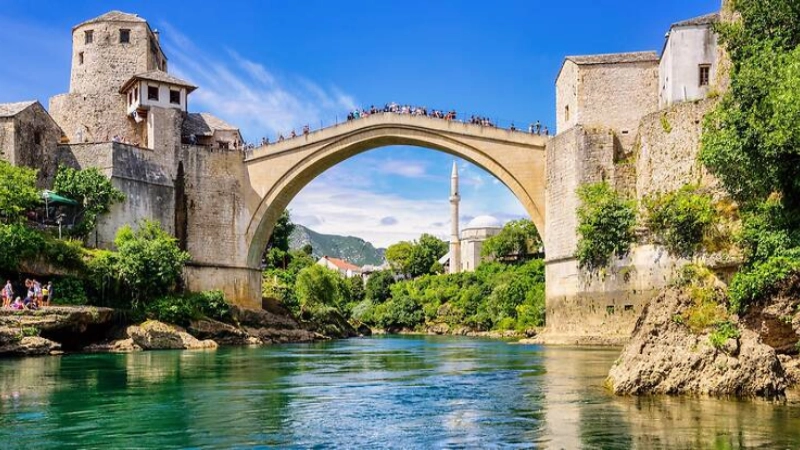
The western Balkans road trip from Dubrovnik to Mostar is the most exciting and arguably the most beautiful under-the-radar European road trip of 2025. The route from Dubrovnik (Croatia) south into Montenegro, down through Albania’s Riviera, across into North Macedonia and Kosovo, and back north through Bosnia to Mostar combines a level of landscape drama, historical depth, and value for money that more famous European routes cannot match.
Montenegro’s Bay of Kotor, often described as Europe’s southernmost fjord, is the first major highlight: a completely enclosed inland bay surrounded by limestone mountains 1,700 meters high, with the medieval walled town of Kotor at its head. The drive around the bay on the single coastal road is one of the most visually memorable in the Balkans. Albania’s Riviera further south has turquoise Ionian water, a mountain backdrop, and a series of beach towns that are still genuinely undiscovered by mainstream European tourism. Prices for food and accommodation are startlingly low compared to Croatia or Montenegro.
The route ends in Mostar, Bosnia-Herzegovina, one of the most emotionally complex and visually arresting towns in Europe. The old town rebuilt around the Stari Most bridge, destroyed in the 1993 war and reconstructed in 2004, mixes Ottoman-era architecture, the sound of the call to prayer, and the sight of divers jumping from the bridge into the Neretva River 20 meters below into an experience unlike anywhere else on the continent.
Important practical notes for the Balkans: check your rental car agreement very carefully before crossing any borders. Many rental companies based in the Schengen area restrict cars from entering Kosovo, North Macedonia, Albania, or Bosnia. Read the fine print and either confirm with the rental company or choose a local company in Croatia that explicitly allows regional travel. The new Pelješac Bridge (completed 2022) means you can now drive from northern Croatia all the way to Dubrovnik without leaving Croatia; previously drivers had to cross a short section of Bosnia, which created rental car complications.
Route Essentials
- Start: Dubrovnik, Croatia · End: Mostar, Bosnia-Herzegovina · Distance: ~700 km core route · Recommended: 6–8 days
- Rental car: Confirm cross-border permission for EVERY country on your route before booking
- Currency: Croatia uses the euro · Montenegro uses euros · Albania uses lekë · Bosnia uses BAM · North Macedonia uses denar; carry some local cash
- Roads: Generally good in Croatia and Montenegro · rougher in parts of Albania and North Macedonia · allow extra time
- Best season: June and September. July–August in Dubrovnik is extremely crowded and hot
6. Norway: Bergen to Geiranger – Best for Fjords
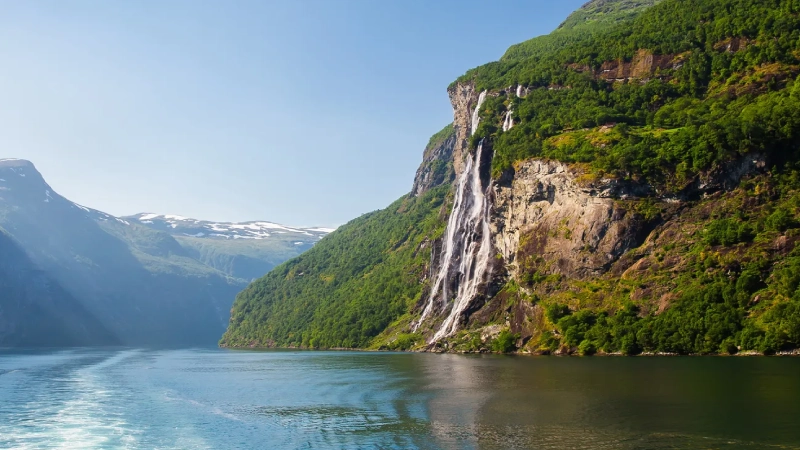
Norway’s fjord country between Bergen and the Geirangerfjord is one of the most dramatic landscapes on earth and one of the most awe-inspiring drives in Europe. The route is not technically difficult in the sense of narrow cliff roads or sharp Alpine passes; the main challenges are Norway’s road infrastructure of frequent ferry crossings (which are efficient, scenic, and integral to the experience); fjord-side roads that require unhurried driving; and weather that can change from blazing sunshine to horizontal rain within an hour.
Bergen is the gateway: a UNESCO World Heritage harbor city with the famous Bryggen wharf of colorful wooden merchants’ houses and the most reliable rain record of any city in Western Europe. The Hardangerfjord, the Nærøyfjord (a UNESCO site), and finally the Geirangerfjord, regularly voted the most beautiful fjord in the world, are the main destinations. The Trollstigen (Troll’s Ladder) road to the east of Geiranger is the most dramatic road section: 11 hairpin bends ascending an 858-meter mountain face with a waterfall visible from every stage of the climb. It is the kind of road that makes passengers grip the door handle and drivers grin.
Plan at least four to five days for this route, but take longer if you can. Norway rewards the traveler who stops, sits on a ferry deck watching the fjord walls pass overhead, walks to a waterfall, and eats at a small quayside café in a village where nothing has changed for thirty years. The cost of visiting Norway is among the highest in Europe. Fuel, accommodation, and food are expensive by any European standard, but the reward for the investment is scenery that is simply impossible to overstate.
Route Essentials
- Start: Bergen · End: Geiranger (or loop back) · Distance: ~400 km · Recommended: 4–5 days
- Ferry crossings: Multiple on this route; check timetables in advance; some run hourly, others are infrequent
- Trollstigen: Open approximately June–October only; check current status online
- Cost: Norway is expensive; budget €150–€250/day per person for accommodation, food and fuel combined
- Best time: June–August for all roads and fjords open; September for fewer crowds
7. Amalfi Coast, Italy – Most Iconic (Experienced Drivers)
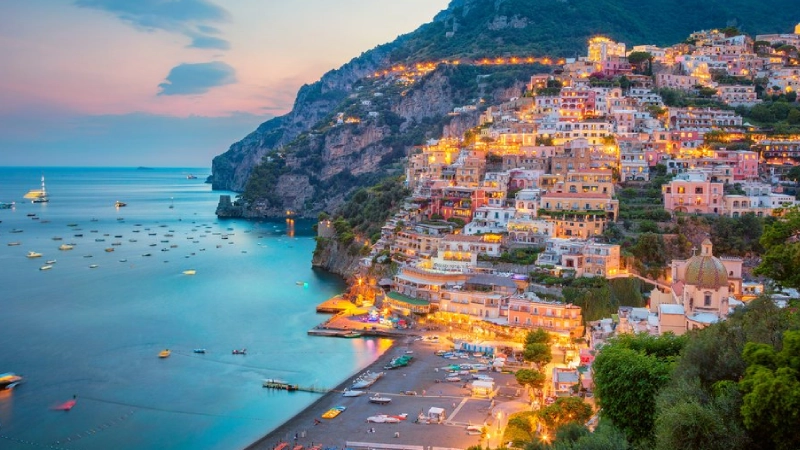
The Amalfi Coast road, the SS163 from Sorrento to Salerno, 50 km of cliff-hugging, single-lane-effectively, bus-dodging, vertigo-inducing coastal road, is the most famous and most challenging drive on this list. It is not a road trip destination for first-time European drivers, and that is not a gentle warning but a firm one: every summer multiple vehicles end up in difficulty on the Amalfi Coast road, and the combination of tourist rental cars, local buses, and scooters on a road that was not designed for this volume of traffic requires genuine confidence and nerve.
For experienced drivers who arrive at the right time, however, the Amalfi Coast is simply extraordinary. The towns of Positano, Amalfi, and Ravello are among the most beautiful anywhere in Italy: pastel buildings cascading down cliff faces to the Tyrrhenian Sea, lemon trees growing out of every vertical surface, and the light in the late afternoon that explains why this stretch of coast has been painted, photographed, and written about continuously for centuries.
The practical tips for the Amalfi Coast drive are specific and important. Come May or October. July and August are so busy that the road frequently gridlocks and the experience is significantly worse. Drive the route east to west (Salerno to Sorrento, heading west) so that your side of the car is the mountain side rather than the cliff edge. Check ferry options. The boat between the main towns is often faster than driving and eliminates the road stress entirely for at least part of the journey. Park at the edge of any town and walk; attempting to drive into the centers of Positano or Amalfi itself is not advisable.
Route Essentials
- Route: Sorrento to Salerno (or reverse) · Distance: 50 km · Recommended: 2–3 days in the area
- Drive west to east (Sorrento to Positano to Amalfi): your side faces the cliff, not the drop
- Drive west to east OR take the ferry between towns; highly recommended in peak season
- Avoid July–August: the road is genuinely extremely congested; May and October are far better
- Park outside town centres and walk in; many coastal towns have restricted access for non-residents
8. Baltic Loop: Tallinn to Vilnius – Best Hidden Gem
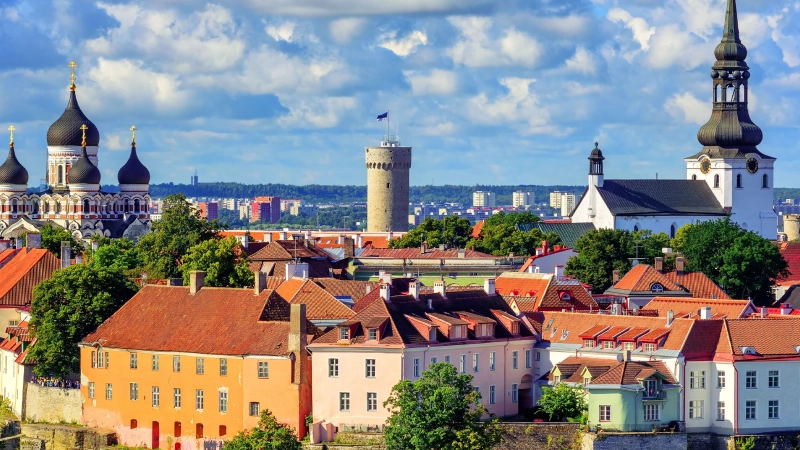
The Baltic States road trip from Tallinn (Estonia) through Riga (Latvia) to Vilnius (Lithuania) is the most underrated European road trip on this list and is increasingly among the most recommended by travelers who have discovered it. The 600 km route through three small, historically fascinating countries along the eastern edge of the Baltic Sea combines the most beautifully preserved medieval old towns in Northern Europe (all three capitals are UNESCO World Heritage Sites), excellent food and cafe culture at prices that feel impossibly low by Western European standards, and roads that are wide, well-maintained, and almost entirely free of the tourist traffic that clogs the routes described above.
Tallinn is the highlight of the three capitals for most visitors: its medieval old town is the best-preserved in the region, compact enough to walk in a few hours but dense enough to absorb a full day. Riga is the largest city and has the finest Art Nouveau architecture in Europe; over a third of the city center is Art Nouveau, a higher concentration than anywhere else in the world. Vilnius, the southernmost capital, has a Baroque old town of extraordinary quality and a quirky, self-declared republic (Uzupis) that is one of the most unusual neighborhoods in Europe.
The route includes scenic detours: Gauja National Park between Tallinn and Riga for forest and river valley hiking; the Hill of Crosses near Šiauliai in Lithuania, a pilgrimage site covered in hundreds of thousands of crosses, a profoundly strange and moving place; and beaches along the Baltic Coast, including the Lithuanian resort town of Palanga. Budget travelers will find this route one of the best values in Europe. Accommodation, restaurants, and fuel in all three countries cost a fraction of Western European equivalents.
Route Essentials
- Start: Tallinn, Estonia · End: Vilnius, Lithuania · Distance: 600 km · Recommended: 4–5 days
- All three countries are EU members and Schengen; no border formalities for EU/Schengen passport holders
- Currency: Estonia and Latvia use the euro · Lithuania uses euros. All three countries use the euro; no currency exchange needed
- Roads: Generally good throughout; some rural sections in Latvia and Lithuania have older surfaces
- Best season: May–September · the Baltic is genuinely warm enough for swimming in July–August
Essential Driving Tips for First-Time European Road Trippers
License and Documentation
- EU driver’s licenses are valid in all EU and EEA countries; no additional document required
- Non-EU license holders (USA, Australia, India, etc.) need an International Driving Permit (IDP) alongside their national license. Obtain this from your national motoring authority before travel
- UK license holders: valid throughout Europe post-Brexit; an IDP may be required in some countries; check per country
- Carry your actual driver’s license, rental agreement, insurance documents, and passport or ID at all times
Vignettes and Tolls
- Austria: vignette required for all motorways (10-day: €9.90; 2-month: €29; or annual options; buy at petrol stations near the border or online
- Switzerland: annual motorway vignette, CHF 40, covers all motorways for the calendar year; buy before entering Switzerland
- Czech Republic, Slovakia, Hungary, Slovenia: motorway vignettes required; check current prices before entry
- France, Spain, Italy, Portugal: toll roads charged per journey have cards (credit card widely accepted) or cash available
- Germany: no motorway vignette or toll required for foreign private cars
Driving Rules Worth Knowing
- Speed in towns: 50 km/h throughout Europe vigorously enforced by cameras
- Alcohol limit: 0.5 mg/ml blood alcohol in most European countries (lower than the UK’s 0.8); some countries are stricter
- Mobile phones: Hands-free only across the EU; fines are steep and immediate
- Headlights: Daytime running lights compulsory in most of Northern and Central Europe; modern rental cars have these automatically
- ZTL zones (Italy): Restricted Traffic Zones in Italian historic centres have cameras/rentals driving into them receive fines by post weeks later; research parking before entering any Italian city center.
Practical Tips for Every European Road Trip:
✔ Book accommodation for the first and last nights before you depart; leave middle nights flexible for spontaneity
✔ Download Google Maps and Waze offline before entering rural areas; signal is unreliable in Highland Scotland, Alpine valleys, and rural Balkans
✔ Petrol stations in rural Norway, Scottish Highlands, and parts of the Balkans can be 100+ km apart. Never let fuel drop below half in these areas
✔ Book the NC500 and major Norwegian accommodation 3+ months ahead for summer travel, it genuinely sells out
✔ Italian driving culture: expect assertive city driving; outside cities, Italian roads are excellent and drivers generally courteous
✔ Rental car extras: always photograph the car all around before driving off document every scratch to protect your deposit
✔ Mountain pass closures: Alpine passes typically close October–May and reopen in June. Check exact dates for the pass you plan to use
✔ Travel insurance: includes breakdown cover and legal assistance, invaluable if something goes wrong in a foreign country
Conclusion
Europe’s road trip routes span an extraordinary range from the gentle, well-signed comfort of the German Romantic Road to the raw drama of Scotland’s North Coast 500, from the Riviera glamour of Nice to Florence to the profound, emotionally layered western Balkans. The continent is compact enough that four to seven days in a car can cover distances that take weeks in larger continental road-trip destinations, and diverse enough that each day can feel like entering an entirely different world.
Start with a route that matches your driving confidence, not just your travel ambitions. The Scottish Highlands and the German Romantic Road are excellent first-time European drives that will build the experience and appetite for the more challenging routes. Save the Amalfi Coast for when you have driven a few European roads and understand how European traffic flows, how narrow roads behave, and how to stay calm when a coach coming the other way leaves approximately 15 centimeters between your wing mirror and the limestone cliff. When you are ready for it, it is magnificent.
Frequently Asked Questions
Q1. What is the easiest road trip in Europe for first-time drivers?
The German Romantic Road is the easiest with wide roads, flat to gently rolling terrain, excellent signage, and no mountain passes or narrow coastal sections. The Baltic Loop (Tallinn to Vilnius) is also very accessible and significantly cheaper.
Q2. Do I need an International Driving Permit (IDP) to drive in Europe?
EU license holders do not need an IDP anywhere in Europe. Non-EU license holders (from the USA, Australia, India, etc.) need an IDP alongside their national license for most European countries. Obtain it from your national motoring authority before you travel; it cannot be issued abroad.
Q3. Which European countries require a vignette?
Austria, Switzerland, Czech Republic, Slovakia, Hungary, and Slovenia all require a motorway vignette sticker. Buy these at petrol stations near border crossings or online before entry. France, Spain, Italy, and Portugal charge tolls per journey rather than using a vignette.
Q4. Is the Amalfi Coast drive suitable for beginners?
The North Amalfi Coast road is narrow, extremely busy in summer, and requires confident driving. First-time European drivers should avoid it. It is magnificent for experienced drivers who come in May or October and take the ferry between some towns rather than driving the entire route.
Q5. When is the best time of year for European road trips?
May–June and September–October are the best months for most European road trips, with better weather than winter, fewer crowds than July–August, and lower prices. Alpine passes are open from approximately June. July and August are peak seasons with maximum crowds and maximum prices.
Q6. Can I drive a rental car across multiple European countries?
It depends on the rental agreement. Most major companies permit driving across EU countries freely. Entering non-Schengen countries (UK, Switzerland) and non-EU Balkan countries (Albania, Kosovo, North Macedonia, Bosnia) often requires explicit written permission and may carry additional fees. Always read and confirm the rental agreement before crossing any border.



[…] READ MORE: Best Road Trips in Europe – Top Routes for First-Time Drivers […]