
Dubai Desert Safari Guide – Types, Best Time, Costs and What to Expect

A city of glass towers and record-breaking skyscrapers is not where most people expect to find a proper safari. Yet just forty-five minutes from Dubai’s downtown, the buildings give way to an ocean of red and gold dunes, and one of the most popular experiences in the entire region begins: the Dubai desert safari.
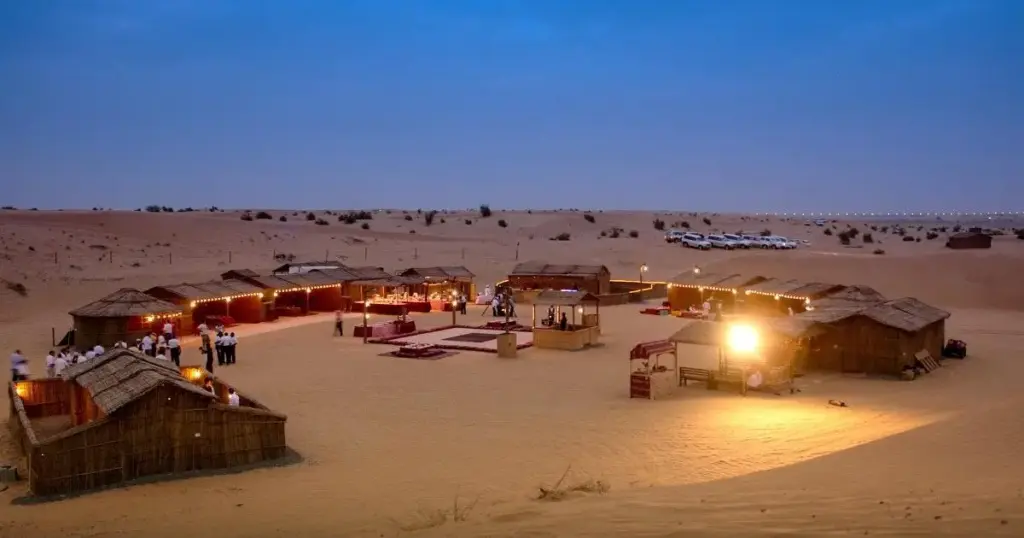
It is the single most recommended activity for first-time visitors, and for good reason. In one afternoon and evening you can bounce over towering dunes in a four-wheel-drive, ride a camel across the sand, watch the sun sink behind the dunes, and eat a barbecue dinner under the stars while traditional performers dance around a fire. It packs adventure, culture, scenery, and food into one unforgettable outing.
But the desert safari world can feel confusing when you first look into it. There are morning safaris, evening safaris, and overnight stays. There are budget group tours and private VIP experiences. There are questions about heat, safety, what to wear, and whether it is worth the money. This guide answers all of it, so you can book the right safari for you and enjoy the desert without any surprises.
What Is a Dubai Desert Safari?
A desert safari is a guided excursion into the sand dunes outside the city, combining thrill-based activities, cultural experiences, and dining. Most safaris head into the Lahbab area, known for its dramatic red dunes, roughly a 45-minute to one-hour drive from central Dubai. Hotel pickup and drop-off are almost always included.
A typical safari bundles together several experiences into one package. The exact mix depends on which type you book, but the core ingredients are the same across nearly every operator: an off-road dune drive, cultural activities at a desert camp, and, for evening and overnight versions, a meal with live entertainment.
The beauty of the format is that it works for almost everyone. Adrenaline seekers get their thrills from dune bashing and quad bikes. Couples get sunset views and candlelit dinners. Families get camel rides and gentle desert exploration. It is genuinely one of the most flexible experiences in Dubai.
The Main Types of Desert Safari
Choosing the right type of safari makes an enormous difference to your comfort and your day. Here is how the main options compare.
Morning Desert Safari
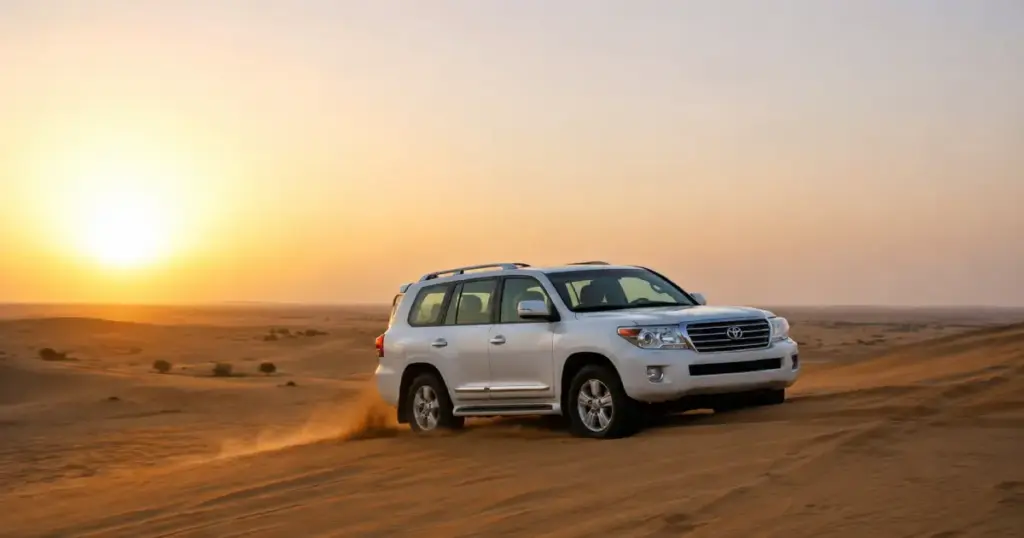
The morning safari is the shorter, more active option, typically running around three to four hours. It suits early risers, photographers, and adventure seekers who want the thrills without giving up their whole evening.
Because you set off early, the air is cooler and the light is soft and beautiful for photography. Crowds are thinner, and the dunes feel more like your own. Morning safaris tend to focus on the adrenaline activities dune bashing, quad biking, and sandboarding – with firmer sand and higher visibility. You are usually dropped back at your hotel by mid-morning, leaving the rest of your day free.
Best for: early birds, photographers, thrill-seekers, and anyone on a tight schedule.
Evening Desert Safari
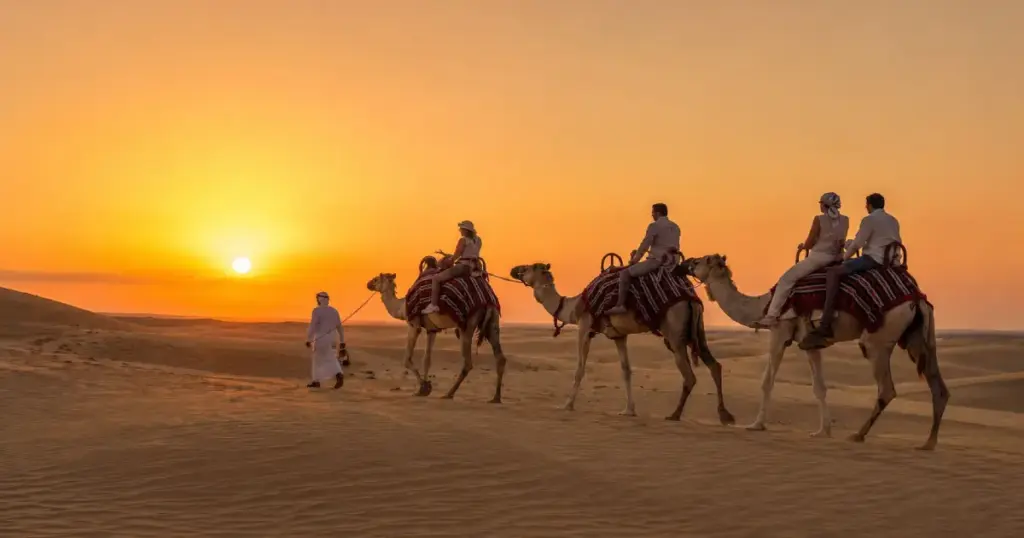
The evening safari is the classic and, by far, the most popular. It is a longer experience, usually around six to seven hours, with pickup in the mid-afternoon and drop-off later in the night.
This is the full package: dune bashing as the afternoon cools, a camel ride, sandboarding, and then arrival at a desert camp for the main event. As the sun sets and the dunes glow gold and orange, you settle in for a barbecue dinner with vegetarian and non-vegetarian options, accompanied by live entertainment such as traditional dance and cultural performances. Extras like henna, Arabic coffee, and shisha are often included. The magic of the sunset and the cooler evening air make this the safari most people picture when they imagine the experience.
Best for: first-timers, couples, families, and anyone who wants the complete experience.
Overnight Desert Safari
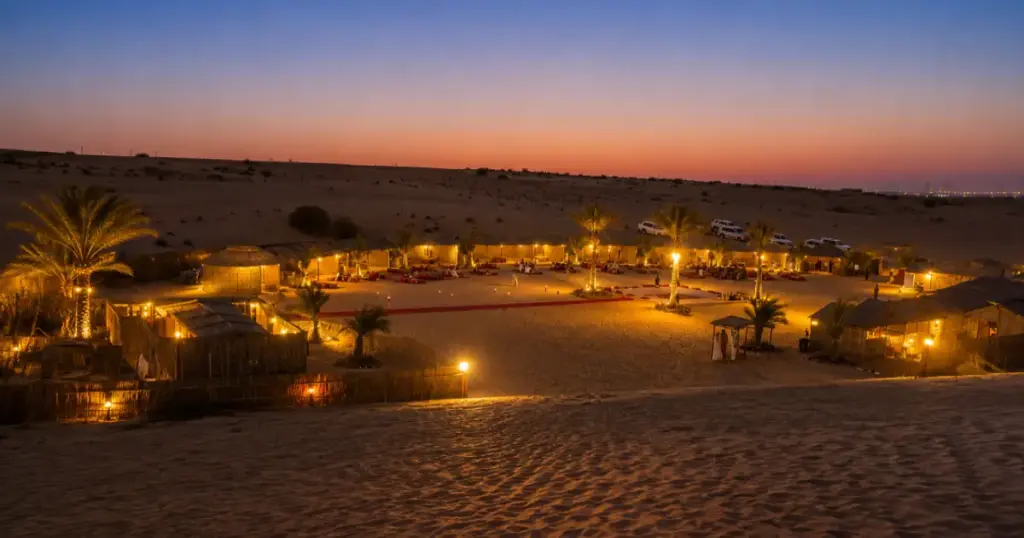
For travelers who want to go deeper, the overnight safari includes everything in the evening version plus a stay in the desert. You sleep in a traditional Bedouin-style tent under the stars, wake to the quiet of the dunes, and often enjoy breakfast before heading back.
It is the most immersive option and delivers the closest thing to how the desert has been experienced for centuries. The silence and the star-filled sky are the real highlights.
Best for: travelers seeking immersion, romance, or a genuinely memorable one-off experience.
Private and VIP Safaris
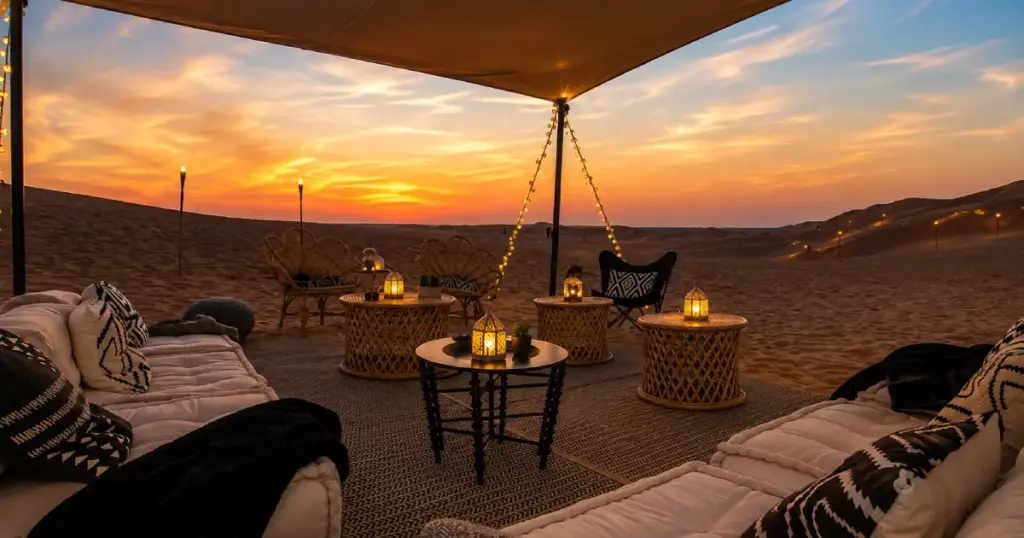
Almost every type above can be upgraded to a private experience. Instead of sharing a vehicle and camp with a large group, you get a private 4×4, VIP seating, a more personalized itinerary, and, in the premium versions, gourmet dining and exclusive settings.
Private safaris cost more but suit couples wanting privacy, families who prefer their own vehicle, and anyone who values a quieter, more comfortable experience away from the crowds.
Best for: couples, families, special occasions, and comfort-focused travelers.
The Best Time for a Desert Safari in Dubai
Timing matters more for a desert safari than for almost any other Dubai activity, because most of it happens outdoors in the open desert.
The Best Months: November to March
The ideal window for a desert safari is November through March. During these cooler months, daytime temperatures typically sit between 20°C and 30°C, making dune bashing, camel rides, and outdoor dining genuinely comfortable and enjoyable. The skies are clear, the sunsets are vibrant, and the evenings are cool enough that sitting outside for a barbecue dinner feels pleasant rather than sweaty.
The trade-off is that this is peak tourist season. Safaris are in high demand, so booking in advance – ideally at least several days ahead and a week or more for weekends – is strongly recommended to secure your slot and get the best price.
READ MORE: Dubai Hotels with Private Beach – Best Resorts for Families Compared
Shoulder Season: April and October
April and October are underrated. Temperatures sit around 30°C to 35°C – warm but manageable, especially once the sun starts dropping after 4 PM. The big advantages are fewer tourists, shorter waits, and better availability. If you are booking an evening safari, which most people do, you will barely notice the difference from peak season once the sun begins to set.
Summer: June to September
Summer brings brutal heat, with daytime temperatures regularly climbing above 40°C. Midday desert activity is genuinely uncomfortable and best avoided. However, summer safaris still operate – the key is to book an evening safari that departs later in the afternoon, around 3:30 PM or after, so that by the time you reach the dunes, the worst of the heat has broken.
Summer has two upsides: prices drop, and quad biking can actually be pleasant because the open-air ride creates its own breeze. Just stick to morning or evening slots and expect a shorter, more heat-conscious experience.
Morning vs Evening Timing
Beyond the season, the time of day shapes your experience. Morning safaris (roughly 6 AM to 10 AM) offer cooler air, softer light, smaller groups, and firmer sand – ideal for photography and adrenaline activities. Evening safaris (roughly 3 PM to 9 PM) deliver the golden-hour sunset, cooler temperatures, and the full camp experience with dinner and entertainment. For most travellers, the evening safari is the one to book.
What Happens on a Desert Safari
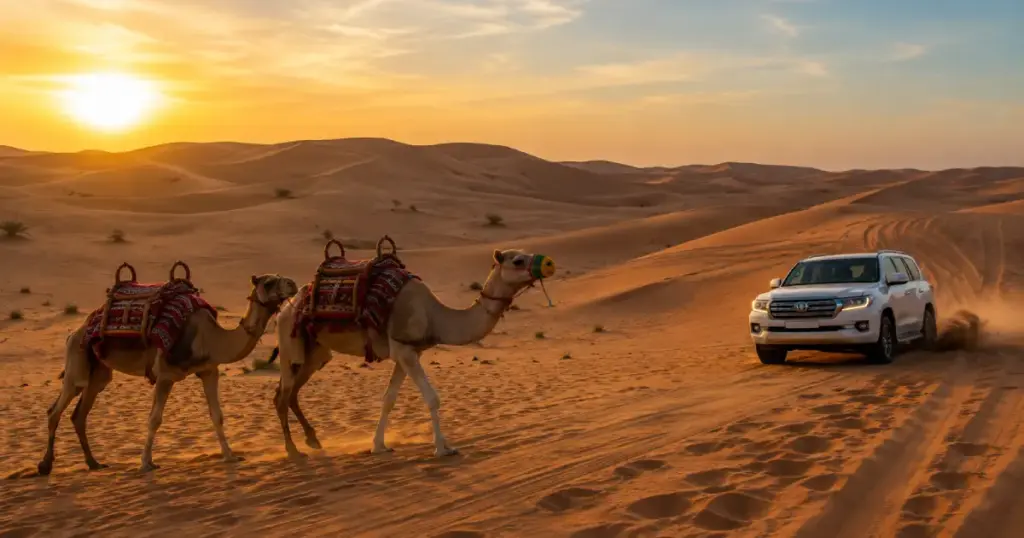
Understanding the flow of a typical evening safari helps you know what to expect.
Dune bashing is usually the opening act. A trained driver takes you across the dunes in a powerful 4×4, riding up and down the steep sand in a thrilling, roller-coaster-style adventure. It is the highlight for adrenaline lovers – though you can always request a gentler drive or skip it entirely if it is not for you.
Camel rides offer the opposite pace: a calm, traditional way to experience the desert and one of the most iconic desert photo opportunities.
Sandboarding lets you slide down the dunes on a board, a fun and photogenic activity suited to all ages.
Quad biking and dune buggies are often available as add-ons for those who want to drive across the sand themselves. Two-seater buggies suit couples; four-seaters fit a family.
The desert camp is where the evening settles into culture and food. Expect a barbecue dinner with a spread of Arabic and international dishes; live entertainment such as traditional dance; and extras like henna painting, Arabic coffee, falconry displays, and shisha. As the light fades and the stars appear, this is where the desert reveals its quieter, more magical side.
What to Wear and What to Bring
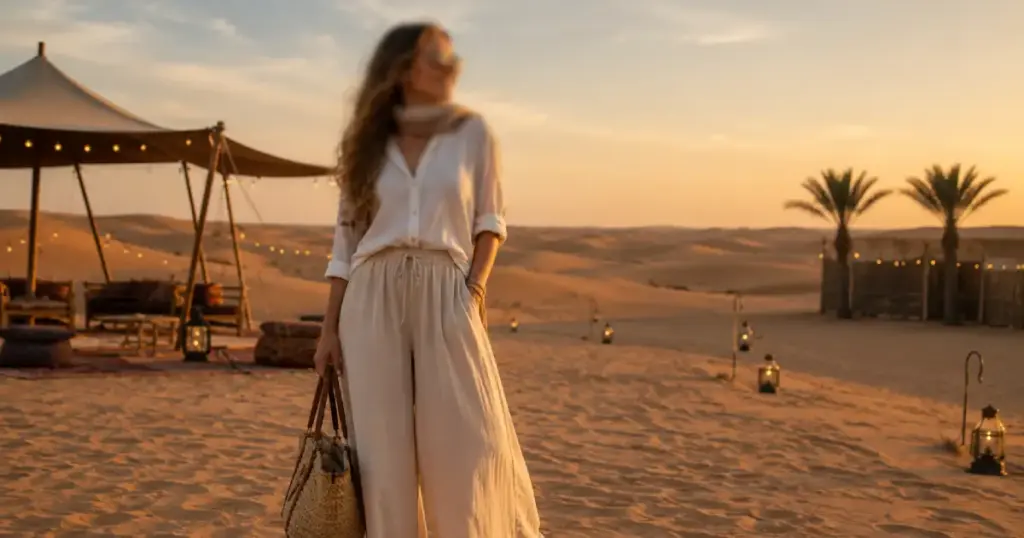
Comfort in the desert comes down to preparation. The environment is harsh – strong sun by day, cooler air in the evening, and sand everywhere.
For clothing, choose light, breathable fabrics. Long, loose cotton trousers or a long skirt protect you from the sun and sand while keeping you cool, and they align with local cultural expectations at the camp, where modest dress is appreciated during dinner and performances. In the cooler months, bring a light jacket or sweater for the evening, as desert temperatures drop noticeably after sunset.
READ MORE: Dubai with a Baby or Toddler – Complete Travel Guide
Closed, comfortable shoes are better than sandals for walking on sand and for activities. Bring sunglasses, a hat, and sunscreen for daytime protection. If you wear contact lenses, be aware that blowing sand can be irritating. And of course, bring your camera or phone – the sunset and dune landscapes are among the most photogenic in the region.
Is a Desert Safari Safe?
Yes, when booked with a licensed, reputable operator. Dune bashing is performed by trained professional drivers in maintained, insured vehicles, and the intensity can be adjusted to your comfort level. If you have concerns, you can request a gentle drive or skip dune bashing altogether.
That said, dune bashing is not suitable for everyone. Pregnant women, people with back or heart conditions, and very young infants are generally advised to avoid the more intense driving. If this applies to you, choose a safari that lets you sit out the dune bashing, or opt for a calmer camel-focused or camp-only experience.
The single most important safety tip is to book with a properly licensed operator. Always confirm what is included, the timings, and the vehicle and driver standards before you pay.
How to Avoid Common Mistakes
A few simple habits will save you frustration.
Book in advance during peak season. From November to March, slots fill quickly, especially on weekends. Same-day booking is sometimes possible but risky in high season.
Confirm exactly what is included. Packages vary. Some include camel rides, henna, and specific meals; others charge extra. Check the inclusions and the pickup and drop-off times before booking.
Match the safari to the weather. In summer, insist on a later-departing evening safari. In winter, either morning or evening works beautifully.
Choose the right type for your group. A large group tour is fine for solo travelers and the budget-conscious, but couples and families often prefer the comfort and privacy of a private safari.
Respect local customs at the camp. Modest dress and respectful behavior are appreciated, particularly during Ramadan, when schedules and dining arrangements may be adjusted.
Common Questions About the Dubai Desert Safari
How long does a desert safari take? Morning safaris typically last three to four hours. Evening safaris run around six to seven hours, including transfers. Overnight safaris span the evening through to the next morning.
What is the best time of year for a desert safari? November to March offers the most comfortable weather. Summer safaris are possible but should be booked as later-departing evening tours to avoid the peak heat.
Is dune bashing compulsory? No. You can request a gentle drive or skip it entirely and still enjoy the camel ride, camp, dinner, and entertainment.
Can I book a private safari? Yes. Private 4×4 vehicles are widely available and are popular with couples and families who want more comfort and privacy.
What should I wear? Light, breathable, modest clothing; closed, comfortable shoes; and a light jacket for winter evenings. Add sunglasses, a hat, and sunscreen for daytime.
Are vegetarian meals available? Yes. Most evening and overnight safari dinners include both vegetarian and non-vegetarian options.
The Bottom Line
A Dubai desert safari is the rare experience that lives up to the hype. In the space of a single evening, you get adventure, culture, spectacular scenery, and a proper meal under the stars – all just a short drive from one of the most modern cities on earth. That contrast, between the glass towers behind you and the timeless dunes in front of you, is exactly what makes it so memorable.
To get the best out of it, book between November and March for the finest weather, choose the evening safari if you want the complete experience, dress light and modest, and always book with a licensed operator. Do that, and the desert will give you one of the standout memories of your entire trip.
FAQ
1. Is a Dubai Desert Safari suitable for all travelers?
Yes, most travelers can enjoy a desert safari, but adventure activities like dune bashing may not be suitable for pregnant women or people with certain medical conditions.
2. Which Dubai Desert Safari is best for first-time visitors?
An evening desert safari is the most popular choice because it combines adventure, cultural performances, and a traditional dinner.
3. How much should I budget for a Dubai desert safari?
A standard desert safari usually costs between AED 100 and AED 300, while luxury and private experiences are priced higher.
4. What should I bring for a desert safari?
Carry sunglasses, sunscreen, comfortable shoes, a hat, and a fully charged phone or camera for photos.
5. Can I book a Dubai Desert Safari on the same day?
Yes, many tour operators accept same-day bookings, but reserving in advance gives you more tour options and better prices.


