Dubai Visa Rejected? Top Reasons, Common Mistakes & How to Reapply Successfully (2026)

“Dubai visa rejected” is one of the most stressful words a traveler can read on an immigration portal – but it is not the end of the road. The great majority of Dubai tourist and visitor visa rejections are caused by fixable, often minor issues: a name mismatch between the application and the passport, a blurry scan, a weak bank statement, or an old UAE visa that was never properly cancelled. Understand the exact trigger, correct it, and most applicants get approved on their next submission.
Dubai receives over 17 million international visitors annually and processes millions of e-visa applications every year. Rejection rates have risen in recent years as UAE immigration authorities apply stricter data-matching and document verification systems. That means small errors that once passed unnoticed are now regularly flagged – which is actually good news for applicants who know what to look for.
This complete guide covers every common reason for Dubai visa rejection, exactly what each one means, and a clear step-by-step process to fix your application and reapply successfully. It also explains the critical difference between a rejection you can fix immediately and a situation – like an active UAE file or an overstay record – that requires resolution before reapplying.
Dubai Visa Rejection – Quick Facts
Most rejections are fixable: Document errors, data mismatches and photo issues are the top causes – all correctable
Rejected banned: A rejection does not automatically mean you are banned from the UAE
Can you reapply immediately? Yes, in most tourist/visitor cases – after fixing the root cause first
When you cannot reapply immediately: Active old UAE file, overstay record, unpaid fines, security flags
Most common reason: Passport data mismatch (name, DOB, number) and poor-quality scans
Bank balance required: Minimum AED 3,000 for 30-day visa | AED 5,000 for 60-day visa
Passport validity needed: At least 6 months from date of travel + minimum 2 blank pages
Photo spec: recent, white background, no glasses, no shadows, correct size and format
Do not submit duplicates: Multiple simultaneous applications cause automatic conflict and delay
Rejected, Refused, Returned – What Each Status Means
Not all negative visa statuses mean the same thing, and knowing the difference changes what you should do next. Many applicants make the mistake of immediately resubmitting after seeing any non-approval status – this can make the situation worse, particularly if an application is only returned for additional documents rather than fully refused.
| Status | What It Means | What To Do Next |
|---|---|---|
| REJECTED / REFUSED | Application did not meet requirements or failed verification. A new, corrected application is required. | Identify the rejection trigger, fix it completely, then submit a fresh application. |
| RETURNED / MORE DOCS NEEDED | The application is incomplete. Immigration has asked for additional or clearer documents. | Upload the requested documents without starting a new application. Do NOT submit a duplicate. |
| PENDING / UNDER PROCESS | Verification is still ongoing. Normal processing time has not expired. | Wait. Do not submit a new application during this phase – duplicates cause conflicts. |
| CANCELLED | A previously issued visa was cancelled (by the sponsor, PRO, or immigration authority). | Confirm cancellation is properly recorded before applying for a new visa. |
| REJECTED AFTER PAYMENT | Data mismatch or duplicate detected after fee payment. | Contact the processing agent. Fees may be reusable for a corrected resubmission. |
Top 10 Reasons Dubai Visa Applications Get Rejected
1. Passport Data Mismatch – Name, Date of Birth, Passport Number
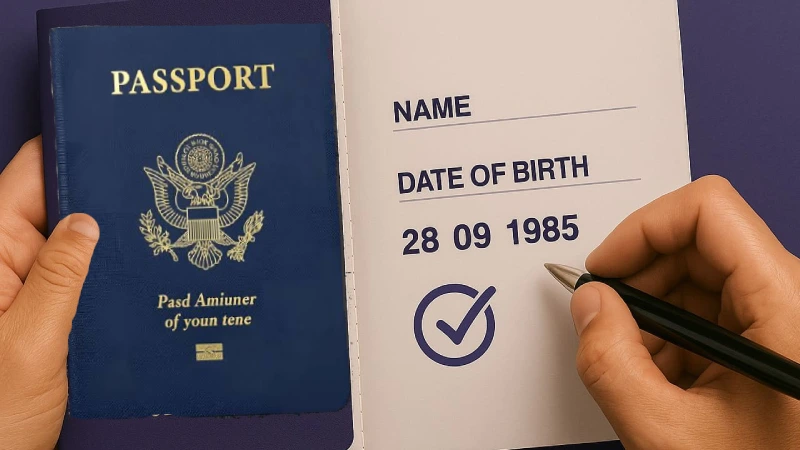
This is the single most common and most easily avoidable rejection trigger. Even a tiny difference – a hyphen in a name, a middle name in a different order, a single transposed digit in the passport number, or a date of birth entered in the wrong format – can cause the immigration system to fail identity verification. The UAE uses automated data-matching software, and it is unforgiving of inconsistency.
- Enter your name exactly as it appears on your passport biodata page – including any middle names, hyphens, spacing, and punctuation.
- Cross-check your passport number, nationality, date of birth, date of issue, and expiry date against the physical passport before submitting.
- If your name appears differently on different documents (e.g., ticket vs. passport), make sure the visa application matches the passport exactly.
2. Poor Quality Passport Scan or Unclear Photo

UAE immigration systems verify identity through the passport scan’s machine-readable zone (MRZ) – the two lines of text at the bottom of the biodata page. If the scan is blurry, has glare; is cropped too tightly, or if the MRZ is partially obscured, automated verification fails. Similarly, a photograph that does not meet specifications – wrong background color, shadows on the face, glasses, old image – is a straightforward technical rejection.
- Scan the full passport biodata page – no cropping. The entire page from edge to edge, including all printed borders.
- Use a flatbed scanner or a well-lit phone camera. Avoid angling the camera – the scan should be flat, not trapezoidal.
- Photo specifications for Dubai e-visa: recent (within 6 months), plain white background, neutral expression, no glasses, no headwear (except for religious reasons), face centered and fully visible, file size within the portal’s maximum.
3. Passport Validity Below 6 Months or Damaged Passport
UAE immigration requires that your passport has at least six months’ validity from the intended date of travel. Applications with less remaining validity are routinely rejected. Additionally, damaged passports – torn pages, water damage, heavy staining, or handwritten entries – are regularly flagged and refused. This includes passports where the MRZ is worn or partially illegible.
- Renew your passport before applying if it has less than six months remaining. This is non-negotiable.
- Ensure at least two blank pages are available for entry and exit stamps.
- If your passport is damaged in any way, renew it before applying for any visa – a fresh, clean passport eliminates this category of rejection entirely.
4. Active Old UAE Visa, Residency File or Uncancelled Visa
This is one of the most common hidden rejection triggers – and the one that catches the most experienced travelers off guard. If you previously held a UAE residence visa, employment visa, or student visa, and that visa was not formally cancelled by your sponsor or employer when you left the UAE, the system may still show it as active. A new tourist or visitor visa application submitted while any previous UAE file is still open will almost always be refused.
- Check your UAE status before applying: if you ever worked or studied in the UAE, contact your previous employer or sponsor and confirm your residency or employment file was properly cancelled through the GDRFA (General Directorate of Residency and Foreigners Affairs).
- If there is an old unused tourist visa showing as active (approved but never used), this must also be cancelled before reapplying.
- In serious cases of file discrepancy, a PRO (Public Relations Officer) or UAE-based immigration consultant may be needed to clear the file through immigration authorities directly.
5. Insufficient Financial Proof or Weak Bank Statements
UAE immigration needs assurance that every visitor can financially support themselves during their stay without recourse to public funds. Bank statements that show irregular transactions, a low or fluctuating balance, no clear income pattern, or a balance that drops significantly just before the statement date raise red flags. The minimum bank balance requirements are published and specific.
- Minimum required balance: AED 3,000 (~USD 820) for a 30-day visa. AED 5,000 (~USD 1,360) for a 60-day visa. These are the stated minimums – a comfortable margin above them strengthens the application significantly.
- Provide bank statements covering the last 3 to 6 months, not just the most recent month. A consistent income pattern over time is more convincing than a single large deposit.
- Supporting documents: salary slips, an employer letter confirming employment and monthly salary, or – for self-employed applicants – business registration documents and trading statements.
6. Missing Hotel Booking or Return Flight
Under updated UAE immigration rules, confirmed hotel reservations and return flight tickets are now expected to be submitted directly through the immigration portal at the time of application. Previously, these were only checked at the airport if requested. Not providing these documents, or providing tentative or unverifiable bookings, is now a standard rejection trigger for tourist visa applications.
- Hotel booking: confirmed, with dates matching your visa duration, in your name, with a valid confirmation number. Many travel agencies offer flexible bookings that can be modified if visa approval is delayed.
- Return flight: a confirmed return or onward ticket with your name, dates, and booking reference. A one-way ticket without clear onward travel is a red flag for potential overstay.
- If you are staying with family or friends: provide a host letter, copy of host’s UAE visa or residence, and host’s contact details as sponsor documentation.
7. Previous Overstay, Fines or Immigration Violations
Any previous overstay in the UAE – even a short one from years ago – may be recorded against your name in the GDRFA system. Unpaid fines (AED 50 per day for overstay, capped at a maximum depending on visa type), exit bans, or previous deportation records trigger automatic refusal until the underlying issue is formally resolved. This is not something that reapplying can bypass – it must be addressed first.
- If you overstayed a previous UAE visit: the fine must be paid (typically through an authorized payment channel or at the airport on departure). Confirm the fine is cleared before reapplying.
- If you were deported or subject to an entry ban: consult a UAE immigration legal advisor. These cases typically require formal resolution and cannot be self-resolved through a new application.
- If you are unsure of your UAE status: check via the ICA Smart Services portal (Federal Authority for Identity and Citizenship) before submitting any new application.
8. Wrong Visa Type for Travel Purpose
Applying for a tourist visa when your primary purpose is business meetings, conferences, or commercial activity – or applying for a transit visa when your stay exceeds the transit window – is a silent rejection trigger. The documents you provide (invitation letters, company correspondence, conference registrations) need to match the visa type you have applied for. Inconsistency between purpose and visa type is flagged.
- Tourist visa: leisure, sightseeing, visiting family. No commercial or business activity.
- Business visa (14-day): attending meetings, conferences, or business events. Requires invitation letter and agenda where possible.
- Transit visa (48-hour / 96-hour): for passengers transiting through Dubai airports. Not valid for leaving the transit zone unless specifically issued for that purpose.
9. Incorrect Photo Specifications or File Format Errors
Technical rejection due to photo or document format issues is more common than many applicants expect. UAE visa portals have specific file size limits, accepted formats (usually JPEG and PDF), and resolution requirements. Password-protected PDFs, files over the size limit, heavily compressed images with visible artifacts, or photos taken against a colored background are all rejection triggers.
- Photo format: JPEG, recent (within 6 months), plain white background, 35 mm x 45 mm or as specified, minimum 300 DPI, and file size typically 50 KB–500 KB depending on the portal.
- Document files: clear, uncompressed PDF or high-resolution JPEG. Remove passwords from PDF files before upload. Maximum file size varies by portal – typically 2MB–5MB per document.
Related Articles: Cheapest Month to Fly to Dubai – Complete Fare Comparison
10. Duplicate Applications and Submission Conflicts
Submitting the same application through multiple agents, portals, or channels simultaneously creates a conflict in the immigration system. Both applications may be flagged and delayed – or both rejected. Never submit more than one application at a time for the same person and same travel dates. If your application is showing as pending or under review, wait for a resolution before taking any further action.
How to Reapply After Dubai Visa Rejection – 5-Step Process
Following a structured process after rejection is significantly more effective than simply resubmitting the same application or rushing a new one. Most repeat rejections happen because the original trigger was not properly identified or not fully corrected before reapplication.
5-Step Dubai Visa Reapplication Process
STEP 1 – Identify the exact rejection trigger. Check your rejection email and portal status message carefully. Look for any reason code or explanation. If none is given, systematically review every element of your previous application: data accuracy, scan quality, document completeness, financial proof, and UAE file status.
STEP 2 – Fix data errors and rebuild document quality. Re-enter all passport details letter by letter against the physical passport. Replace any blurry scan, glare, or crop. Retake your passport photo if needed. Correct any date, name, or number inconsistency in every field.
STEP 3 – Clear any existing UAE file or status issue. If you have ever worked, studied, or lived in the UAE, confirm your residency file has been cancelled. Confirm that any previous visa has been cancelled or expired. Check for and pay any outstanding fines. This step must be completed before submitting any new application if a file issue is the trigger.
STEP 4 – Strengthen your supporting documents. Add all missing documents: confirmed hotel booking, return flight ticket, bank statements for 3–6 months above the minimum balance requirement, employer letter or income proof, and travel insurance. For family visits: host letter, copy of the host’s UAE residence, proof of relationship.
STEP 5 – Resubmit one clean application. Submit a single application through one channel only. If using an agent, use only one. Do not submit directly and through an agent simultaneously. Respond promptly to any queries; delayed responses significantly extend processing time.
Complete Documents Checklist for Dubai Visa Reapplication
| Document | Requirement | Common Mistake to Avoid |
|---|---|---|
| Passport scan | Full biodata page, colour, high resolution, MRZ fully visible | Cropping too tight – full page must show including all printed borders |
| Passport validity | Minimum 6 months from travel date + 2 blank pages | Checking only total validity, not from travel date specifically |
| Passport photo | Recent (6 months), white background, no glasses, face centred | Coloured background, selfie lighting with shadows, or image too old |
| Bank statement | Last 3–6 months, shows consistent balance, AED 3K–5K minimum | Submitting only 1 month, or statement with sudden large deposit |
| Salary slip / income proof | Last 1–3 months matching bank statement | Missing if bank statement alone does not clearly show regular income |
| Hotel booking | Confirmed: dates matching visa duration, your name, valid booking ref | Tentative or wishlist bookings – must be confirmed reservations |
| Return flight ticket | Confirmed onward ticket with name, dates, booking reference | One-way ticket only – UAE immigration flags potential overstay intent |
| Travel insurance | Coverage for full trip duration (recommended; some portals require) | Missing altogether – small cost, significant application strengthener |
| Host letter (if staying with family) | Signed letter, host’s UAE ID/residence copy, contact details | Generic letter without host’s UAE status documentation attached |
| Purpose of visit note | 4–8 line clear statement of purpose, activity and trip plan | Vague ‘tourism’ with no further detail – adds credibility when specific |
When NOT to Reapply Immediately – Resolve First
These situations require resolution BEFORE reapplying
Active UAE residency or employment file from previous stay – must be cancelled by previous sponsor or PRO
Unpaid overstay fines – must be paid and cleared in the GDRFA system before reapplication
Previous deportation or entry ban – requires formal legal resolution; cannot be bypassed by reapplication
The application is currently showing as PENDING – wait for conclusion before submitting anything new
Application showing RETURNED / MORE DOCS – upload requested documents without creating a new application
Security or criminal record flag – consult a UAE immigration lawyer; reapplication without resolution will fail
You CAN reapply relatively quickly if
Rejection was for document errors, scan quality, photo specs or data mismatch – fix and resubmit
Rejection was for missing hotel or flight booking – add confirmed bookings and resubmit
Rejection was for insufficient funds – improve documentation and resubmit
Special Cases – Women Travellers, Minors and Unskilled Occupations
Certain categories of applicant face additional scrutiny or specific documentation requirements that are not always clearly communicated in standard visa guidance. Being aware of these prevents avoidable rejections.
| Applicant Type | Additional Requirement | Why It Matters |
|---|---|---|
| Women under 22 travelling alone | Strong financial proof, confirmed return ticket, purpose clarity | UAE immigration applies additional scrutiny to solo young female travellers |
| Minors travelling with one parent | Birth certificate, NOC letter from absent parent, copy of absent parent’s ID | Joint custody or single parent situations require documented consent |
| Minors travelling with guardians (not parents) | Legal guardianship documents, notarised NOC from both parents | Guardian status must be formally documented – school letters alone insufficient |
| Applicants listing unskilled occupation | Additional financial proof, strong bank statements, employment letter | ‘Labourer’, ‘farmer’, ‘domestic worker’ occupations face higher scrutiny |
| Applicants with previous UAE rejection | Disclose honestly in the application | Non-disclosure is treated as misrepresentation and increases refusal risk |
| Applicants with criminal record in any country | Seek legal advice before applying | Background checks are thorough – undisclosed records increase risk significantly |
Frequently Asked Questions
Can I reapply for a Dubai visa immediately after rejection?
Yes, in most tourist and visitor visa cases – but only after fixing the root cause of rejection first. Reapplying without correcting the trigger almost always results in a second refusal. If the rejection involves an active UAE file, overstay record, or fines, resolve those first.
Does a Dubai visa rejection mean I am banned from the UAE?
No. A standard rejection due to document issues, data mismatches, or missing proof does not create a ban. A ban is a separate, formal action applied in cases of serious violations, overstay, deportation, or security concerns. Most tourist visa rejections are simply administrative – fix the issue and reapply.
How long should I wait before reapplying after rejection?
There is no mandatory waiting period for standard tourist visa rejections. You can reapply as soon as you have fully corrected the problem. Rushing a reapplication without addressing the trigger is the mistake – not the speed of reapplication itself.
What is the minimum bank balance for a Dubai tourist visa?
AED 3,000 (approximately USD 820) for a 30-day visa. AED 5,000 (approximately USD 1,360) for a 60-day visa. These are stated minimums – a comfortable margin above them, backed by 3–6 months of consistent statements, makes a significantly stronger application.
Can my visa fee be refunded after rejection?
Standard Dubai visa fees are generally non-refundable once an application has been processed. However, if your application was rejected after payment due to a system or data error, many authorized agents will allow the fee to be applied to a corrected resubmission. Check with your agent or processing platform at the time of rejection.
Should I use a visa agent or apply directly after rejection?
For straightforward rejections caused by document errors or photo issues, a corrected self-application is usually sufficient. For complex cases – active UAE files, overstay history, previous employment residency, or unexplained rejections with no clear reason given – using a GDRFA-authorized visa processing agent or immigration consultant reduces the risk of a second rejection significantly.
Final Thoughts
A Dubai visa rejection is a setback, not a full stop. The overwhelming majority of rejections happen for administrative, correctable reasons – passport data that does not exactly match, a scan that failed automated verification, a bank statement that did not clearly demonstrate adequate funds, or a hotel booking that was tentative rather than confirmed. These are problems with clear solutions.
The key discipline is to identify the exact trigger before reapplying, correct it completely, and submit one clean, well-documented application. Do not rush; do not submit duplicates; and do not ignore the possibility of an old UAE file or overstay fine that needs to be cleared first. Follow the five steps in this guide, check every document against the checklist, and most applicants will find their Dubai visa approved on their next submission.