
Greece with Kids – Best Islands for Families and What to Expect

Greece has a cultural attitude toward children that visitors consistently note as one of the most warmly welcoming in the world. Greeks adore children in a genuine, unselfconscious way – restaurant staff will fuss over your toddler, elderly locals will pat children on the head in the street, and nobody raises an eyebrow at children being present in a taverna at any hour. Traveling with children in Greece is not something to manage around – it is something the country actively facilitates.
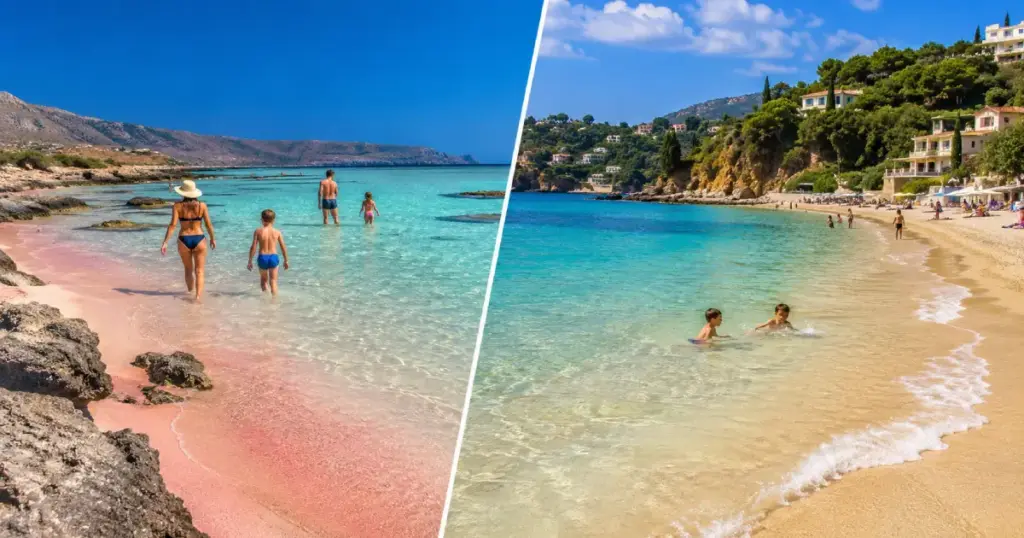
The challenge for families visiting Greece is not the culture but the choice. With 227 inhabited islands, each with its own character, beach quality, resort infrastructure, and nightlife level, choosing the right island for your family requires specific guidance. Santorini – one of the most photogenic places on earth – is actually a poor choice for families with young children: the island is volcanic with minimal sandy beaches, the iconic village paths involve constant steep stairways difficult to navigate with pushchairs, and the atmosphere skews toward romantic tourism. Naxos, just a ferry away, is a vastly better family choice.
This guide ranks the major family islands honestly – by beach quality, resort infrastructure, nightlife avoidance zones, and the specific age groups that each island suits best – so you can make the right choice for your family’s specific needs.
Quick Facts – Greece with Kids
Naxos: top family pick overall – longest sandy beaches, relaxed feel, best beach-to-village balance
Crete: biggest island, longest season, most all-inclusive resort choice, Europe’s oldest seaside resorts
Rhodes: medieval Old Town feels like a movie set, Faliraki water park, good family resort infrastructure
Corfu: greenest island, 57 beaches, 2 major water parks (Aqualand is enormous), good family resorts
Kos: flat island, bike-friendly, calm shallow beaches, best for cycling families
Avoid for young families: Santorini (lots of stairs, pebble beaches, nightlife focus) and Mykonos
Best time: June and September – warm sea, manageable heat, fewer crowds than peak July–August
Greek cultural attitude: Children are warmly welcomed everywhere – one of the most family-friendly cultures in Europe
Naxos – The Best Overall Family Island
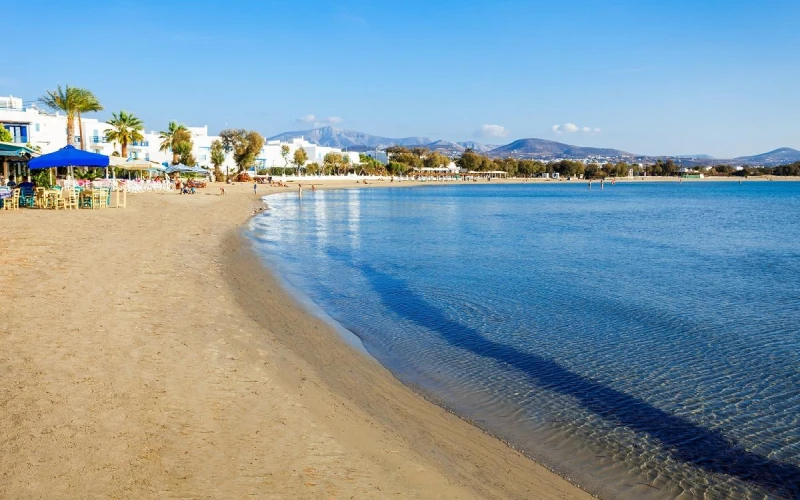
Naxos is consistently recommended by experienced Greek family travelers as the best all-round choice for families – and the reasoning holds up on examination. It is the largest of the Cyclades islands with the best sandy beaches (St. George Beach in Naxos Town is long, shallow, and almost entirely safe for children); a relaxed village atmosphere in the main town that is walkable with children; and a strong restaurant scene of family tavernas that serve genuinely good food at reasonable prices.
The practical family advantages: Naxos has its own airport (Athens connection) and good ferry connections, so getting there is not complicated. The Cyclades geography means the island has some protection from the north-facing winds that affect more exposed islands. Naxos Town’s castle area and waterfront are genuinely interesting for older children who respond to history and architecture. The island’s cheese (graviera and arseniko) and local produce make it a food-rich destination for parents who care about eating beyond the tourist menu.
Crete – Best for Resort Infrastructure and All-Inclusive
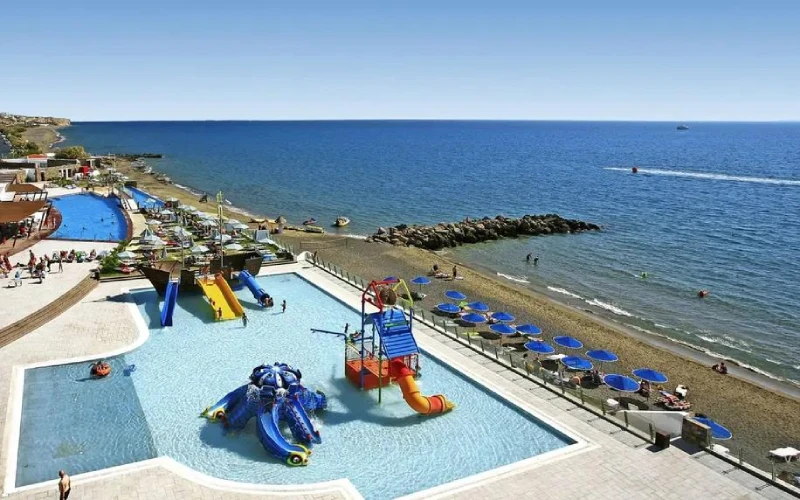
Crete is the obvious choice for families who want the most complete resort infrastructure – the widest range of family hotels; the most all-inclusive options with water parks, kids’ clubs, and evening entertainment; and the broadest activity range across an island large enough that different parts of it serve different purposes within one trip. The northern coast from Chania to Agios Nikolaos has the highest concentration of family resorts; Elounda and Rethymno are the most family-oriented resort towns.
Crete’s beaches vary significantly across the island. Elafonissi in the west, famous for its pink-tinged sand and extraordinarily shallow lagoon, is one of the most visually extraordinary beaches in Europe and genuinely excellent for young children, though it gets very busy in July and August. The beaches of northern Crete near major resorts tend to be more organized with sunbeds and facilities. For families who want a waterpark element, Stella Palace Resort and Lyttos Beach both have substantial on-site waterparks. The ancient Minoan palace of Knossos near Heraklion is one of the most engaging historical sites in the Mediterranean for children with any mythology knowledge.
- Crete: most all-inclusive family resort choice – Hersonissos, Rethymno, Elounda areas
- Elafonisi beach: pink sand, shallow lagoon – visit early in the morning to avoid July/August crowds
- Kids’ clubs: most large Crete resorts offer clubs for toddlers through teens
- Knossos Palace: genuinely engaging for children familiar with Greek myths – adults from €15
- Aqualand Waterpark in Corfu and Crete waterparks: multiple slides and safe family-friendly zones
Corfu – Best for Water Parks and Green Scenery
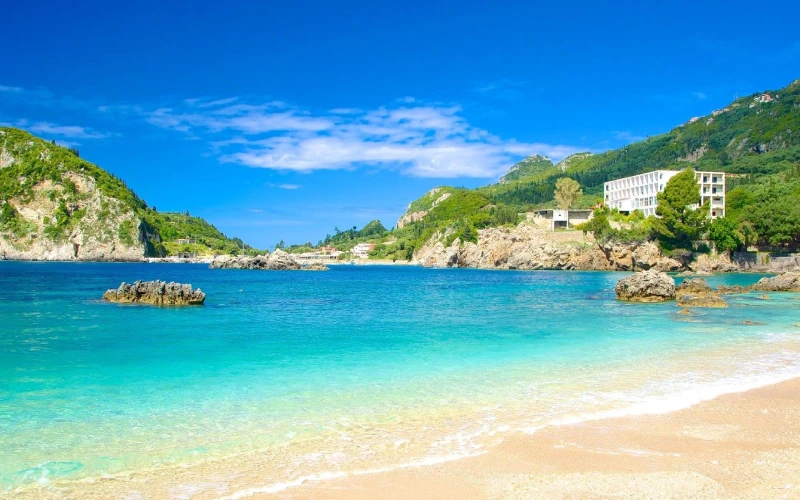
Corfu is the Ionian island closest in character to a Mediterranean resort destination – green, lush hills; an extraordinary UNESCO-listed Old Town with obvious Venetian architectural influence; and 57 beaches spread around the island. For families, Corfu’s biggest selling point is Aqualand in Agios Ioannis, one of the largest water parks in Greece with over 50 different slides, including Double Twisters, Kamikaze, and the Black Hole. A water park day built into a Corfu week is a near-universal family hit.
The north of the island (Kassiopi, Roda, Sidari) is significantly quieter and more suitable for families with young children than the south (Kavos), which has a strong youth nightlife scene. Glyfada Beach in the west is particularly child-friendly with calm water, organized facilities, and good access from major resorts. The Corfu Trail offers walking through the island’s interior for families with older, more active children.
Rhodes – History Meets Family Resort
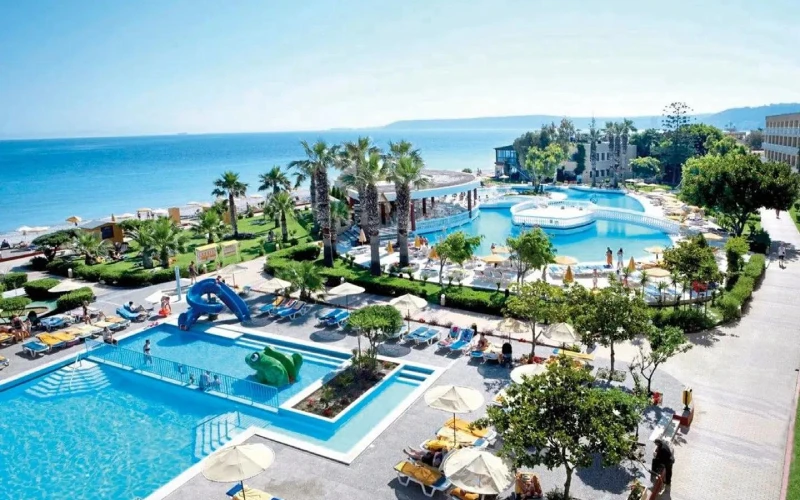
Rhodes has a unique family proposition: one of the best-preserved medieval city centers in Europe (the Old Town of Rhodes, a UNESCO site, genuinely feels like a movie set) combined with established family beach resorts on the eastern coast (Faliraki, Kolymbia, and Lindos). The Valley of the Butterflies nature reserve and the Bee Museum offer educational activities for children beyond beach days. Faliraki Water Park is a good half-day activity for older children.
Rhodes is particularly well-suited to families with school-age children (7–14) who enjoy combining beach days with some cultural and historical exploration. The medieval Old Town is accessible on foot, largely flat in the main areas, and the palace of the Grand Masters provides the kind of dramatic medieval spectacle that ignites children’s imaginations. Beaches around Lindos – particularly St Paul’s Bay below the Acropolis – are among the most beautiful in Greece.
- Naxos: best family pick overall – St George Beach, relaxed village, excellent food
- Crete: best resort infrastructure – most all-inclusive, kids’ clubs, water parks on island
- Corfu: best water parks, greenest island, quieter north vs party south – choose resort location carefully
- Rhodes: best history plus beach – medieval Old Town extraordinary for school-age children
- Kos: flattest island, best for cycling families with children, calm shallow east coast beaches
| Island | Best Age | Best Beach | Nightlife Concern | Best Served By | Value Rating |
|---|---|---|---|---|---|
| Naxos | All ages | St George Beach (sandy) | Very low, relaxed | Ferry from Athens/Santorini | Excellent |
| Crete | All ages | Elafonisi (pink sand) | Low in family resorts | Direct flights Europe | Good |
| Corfu | All ages | Glyfada, Issos Beach | Low (north) / High (Kavos) | Direct flights from the UK/Europe | Good |
| Rhodes | 7–14 years | St Paul’s Bay, Pefki | Low in family resorts | Direct flights Europe | Good |
| Kos | 6+ years | Tigaki, Mastihari | Moderate – stay away from Kardamena | Direct flights Europe | Good |
| Naxos | Best overall | Best sandy beaches | Minimal | Athens ferry: 5 hrs | Excellent |
Also Read on Roam Visa
➤ Schengen Visa Cover Letter Template – What Every Embassy Wants
Final Thoughts
The most consistent advice from families who have traveled the Greek islands is to avoid the most famous islands Santorini and Mykonos as your primary family destination unless your children are teenagers who appreciate the aesthetic and are not primarily interested in beach swimming. Both islands have volcanic beaches with dark pebbles and rough terrain, nightlife that dominates the atmosphere, and prices significantly above the average Greek island. Naxos, Crete, Corfu, and Rhodes deliver superior family experiences at lower prices. Timing the Greek island holiday well matters enormously for families. June and September are genuinely the best months: the sea is warm (26-27°C in September), the temperatures are manageable at 28-32°C rather than 35-40°C in July, beaches are less crowded, and prices drop significantly from the July-August peak.
For families with school constraints that force peak summer travel, early July in the Ionian Islands tends to be cooler than the same period in the Dodecanese. One practical note about Greek island accommodation and payment: many independent Greek hotels and apartment complexes offer 10% discounts for cash payment. Greece still has a cash culture outside major resort hotels. Having euros available (withdraw from ATMs on arrival – airport rates are poor) gives you flexibility and occasionally saves money in smaller establishments. Greek hospitality toward families who take this approach—choosing a family-run taverna over a resort restaurant, for example – is often extraordinary.
Frequently Asked Questions
Which Greek island is best for families?
Naxos is the best overall Greek island for families – it has the best sandy beaches in the Cyclades (St. George Beach is long, shallow, and safe for children), a relaxed family-friendly atmosphere, excellent local food, and good accessibility from Athens by ferry. Crete is the best choice for families who want all-inclusive resort infrastructure with kids’ clubs and on-site waterparks. Corfu has the best water parks and greenest scenery.
Is Greece family-friendly?
Extremely so. Greek culture genuinely embraces children in all settings – restaurants, public spaces, beaches, and historical sites. Children are welcomed warmly by locals across all ages, and the country has invested in family resort infrastructure, particularly on the major islands (Crete, Rhodes, and Corfu). Free or discounted transport for children is available in many Greek cities. Greece consistently ranks among the most family-friendly destinations in Europe.
When is the best time to visit Greece with children?
June and September are optimal for families. June offers warm sea temperatures, manageable heat (28–30°C rather than 38°C), and fewer crowds. September has sea temperatures at their warmest (27°C in the Aegean) and the end-of-season atmosphere that suits a more relaxed family pace. July and August have the warmest weather but also peak prices, maximum crowds, and temperatures that can exhaust young children.
Which Greek islands should families avoid?
Santorini is not recommended as a primary family destination – the island’s volcanic black sand beaches are not ideal for young children, the iconic steep pathways between villages are difficult with pushchairs, and the atmosphere is strongly oriented toward romantic tourism. Mykonos has a strong nightlife reputation, though family resorts in the north (Agios Stefanos, Ornos) exist. Ios is primarily a youth destination.
How do you get between Greek islands with children?
The most practical approach for families is to fly directly to your chosen island rather than using ferries – most major islands (Crete, Rhodes, Corfu, Kos, Santorini, and Mykonos) have airports with direct seasonal flights from UK, European, and Indian cities. Ferry travel between islands is scenic and memorable but takes significantly longer (Athens to Naxos by fast ferry is 3.5–4 hours). Keep ferry trips short and choose the morning or cooler parts of the day when traveling with young children.


