
Nara Deer Park 2026: The Real Guide To Feeding, Bowing, And Staying Safe

Everyone shows up to Nara Deer Park with the same mental image, a polite deer bowing before it takes a cracker from your hand, the kind of clip that’s been circulating on travel accounts for years. And that moment genuinely happens. It’s not staged, and it’s not exaggerated. But the version of Nara most people picture leaves out a few things: how to actually get a deer to bow instead of just nudging you for food, where 1,200 deer and several thousand tourists tend to collide badly, and the fact that deer-related injuries here have actually been climbing, not dropping, in the last couple of years.
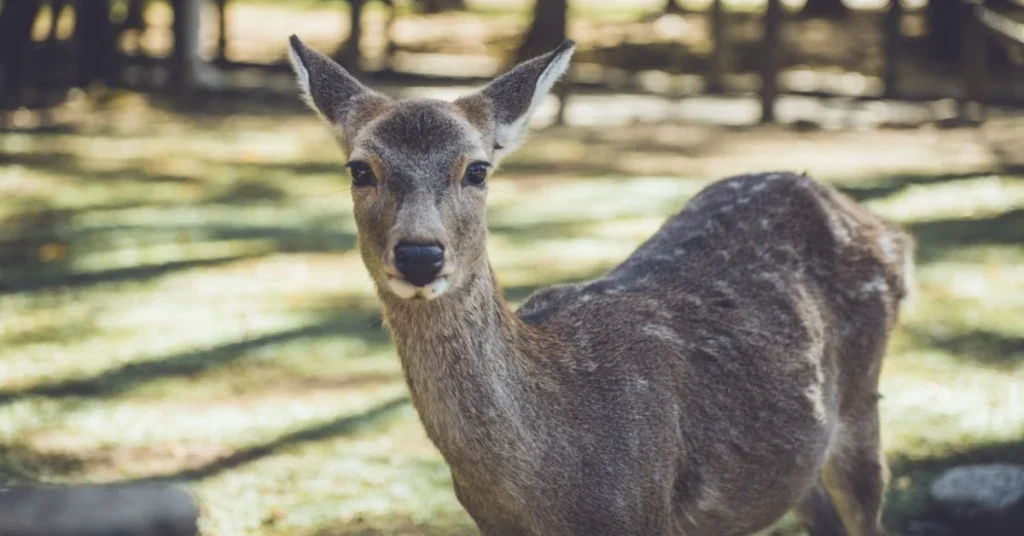
This guide covers the whole thing properly. Not just the cute part.
What You’re Actually Walking Into
Nara Park sits on roughly 500 hectares at the edge of Nara City, and it’s been open, free, and unticketed since 1880. The deer, sika deer specifically, have lived here for far longer than that. Local Shinto legend has it that a god named Takemikazuchi rode into Nara on the back of a sacred white deer to protect the new capital, and ever since, the deer have been treated as divine messengers rather than wildlife. Since 1957 they’ve held official status as a National Natural Treasure, which is why harming one, even by accident through carelessness, is taken seriously and can carry real fines.
There are close to 1,200 of them, and they don’t live in an enclosure. They wander through the park, along the approach paths to the temples, and honestly, right into the middle of the street if traffic allows it. You don’t need to search for deer here. Within a few minutes of leaving the station, they’ll have found you.
Getting To Nara From Kyoto Or Osaka
Nara works as a straightforward day trip from either city, and it doesn’t need advance booking or tickets of any kind for the park itself.
From Osaka, the Kintetsu Nara Line runs from Namba Station and takes about 40 minutes, with a fare around ¥680. The JR Yamatoji Line from Osaka or Tennoji Station takes closer to 45 minutes and costs a bit more, but it’s the route covered by the Japan Rail Pass, so if you’re already holding one, that’s the free option.
From Kyoto, the Kintetsu Limited Express takes about 35 minutes, and JR’s Nara Line runs a slightly slower Rapid Service in around 45 minutes. Either way, Kintetsu Nara Station drops you closer to the park entrance than JR Nara Station does, close enough to walk straight in. From JR Nara Station, it’s a longer walk or a short local bus ride.
Buying The Crackers, And Where
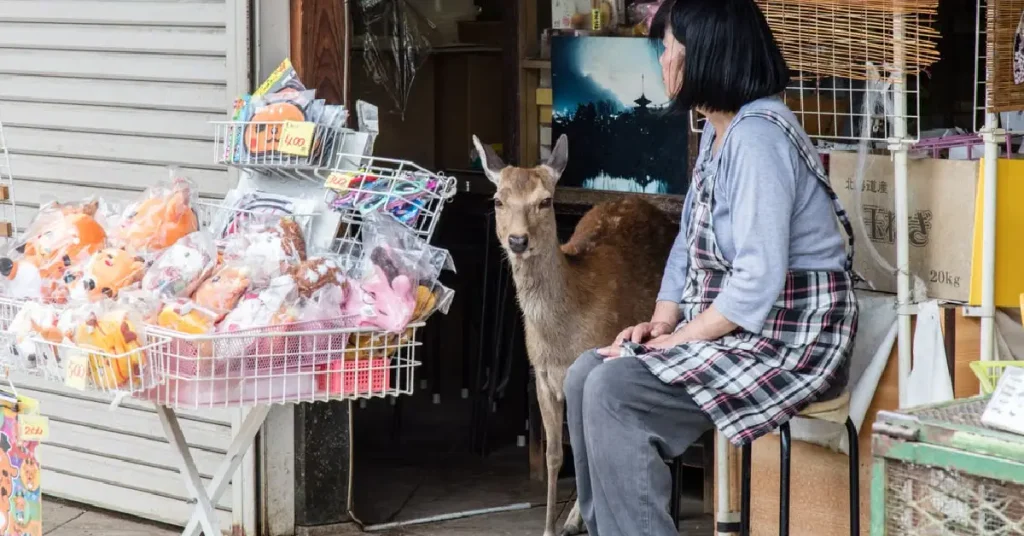
The only food you should ever hand a Nara deer is the official cracker, shika senbei, made from wheat flour and rice bran with nothing else added. A bundle runs for ¥200 for roughly ten crackers, sold from small wooden stalls scattered through the park, clustered most heavily near Todaiji’s gate, along the path to Kasuga Taisha, and around the main entrance near Kintetsu Nara Station. Cash only; most stalls don’t take cards.
A portion of every sale goes to the Nara Deer Preservation Foundation, which funds the vets and researchers who keep the herd healthy, so buying from an actual stall rather than skipping the crackers altogether is worth doing even if feeding deer isn’t your main reason for visiting.
One thing worth knowing before you buy, not after: the second money changes hands, every deer within eyeshot knows exactly what’s happening. They recognise the transaction, not just the food. Tuck the bundle into a bag or pocket immediately. Walking around with a visible stack of crackers is the single fastest way to get mobbed.
The Bowing Trick, Actually Explained
This is the part everyone wants, and almost nobody explains it properly. Hold a single cracker up above the deer’s head, out of easy reach. Most of the well-mannered adult deer, especially the ones who’ve done this a thousand times, will dip their head in a small bow, sometimes twice or three times, before you lower the cracker to their level and let them take it. Some guides suggest moving the cracker overhead, then behind your back, then overhead again, to draw out a cleaner bow, and it does tend to work.
A few honest caveats. Younger deer often skip the bow entirely and just go straight for the cracker. Older deer are noticeably more polite and patient. And don’t hold a cracker out of reach for too long trying to force a picture-perfect bow; that’s exactly the kind of teasing that frustrates a deer into nipping at your sleeve or bag instead.
Hold the cracker flat on an open palm when you finally offer it, not pinched between your fingers. It’s safer for you and gentler for the deer.
The Rules That Actually Matter
- Feed only official shika senbei. Bread, chips, or anything else can genuinely make them sick, sometimes fatally.
- Hide your crackers the moment you’re not actively feeding.
- Don’t pet them, even though the temptation is real. They’re wild animals that tolerate proximity, not pets that enjoy handling.
- Don’t run, don’t corner one, and don’t let small children approach a deer’s face directly.
- When you’re out of crackers, raise both empty palms toward the deer. It’s a signal they genuinely understand, and most will lose interest and wander off within a few seconds.
The Safety Picture Nobody Puts In The Brochure
Here’s the part worth taking seriously rather than skimming past. Deer-related injuries to visitors in Nara Park have risen noticeably in recent years, with well over 200 reported incidents a year by recent counts, with a sharp spike recorded in September 2025 alone. Most of these are minor, a nip on a sleeve, a bump from a lowered head, but they’re a real reminder that these are wild animals tolerating close contact, not trained performers.
Local signage around the park now spells out the specific behaviours to watch for. A bite usually follows teasing, holding a cracker out of reach too long. A kick can come from a deer that feels cornered or startled, and their front hooves move fast. Head or antler nudging tends to happen when a deer suspects you’re hiding food and not sharing it. And a full charge, while rare, is a real risk during two specific windows, the autumn rutting season and spring, when mothers are especially protective of new fawns.
Which brings up timing. October and November are rutting season, and bucks get noticeably more aggressive and unpredictable. In recent years this has pushed back Nara’s traditional Shika no Tsunokiri, the antler-cutting ceremony that’s been held since the 1670s, specifically to reduce injury risk during this period, with the 2025 event shifting to early-to-mid November because of heightened aggression that season. If you’re visiting in autumn, give bucks with full antlers a wider berth than you would the does, and don’t assume every deer in the park is as docile as the ones in the viral videos.
Where To Go For A Calmer Experience
The areas right by the main entrances get thick with tour groups by mid-morning, and the deer there are used to a constant churn of tourists, which makes them pushier, not friendlier. For a noticeably calmer interaction, head further into the park, toward the open lawns at Tobihino-ga-oka or Ukigumo-en, away from the first cluster of cracker stalls. Fewer people, fewer deer competing for attention, and a much better shot at an unhurried, one-on-one bow rather than being surrounded the second you open a pack.
Early morning, roughly 7 to 9am, is the other big lever. Fewer tour buses have arrived yet, the light is better for photos, and the deer themselves seem less frantic before the day’s crowds and cracker sales ramp up.
Pairing The Deer With Nara’s Temples
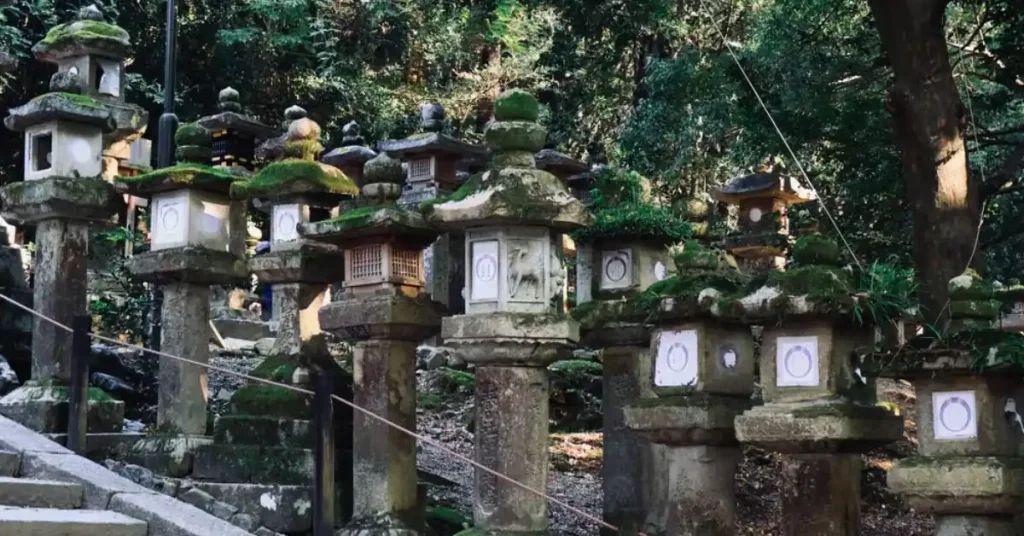
Nara Park isn’t just a deer field; it’s also the setting for some of Japan’s most significant temples, and they sit close enough together to cover on foot in one visit.
Todaiji Temple houses the Great Buddha Hall, one of the largest wooden buildings on earth, and inside sits a bronze Buddha statue that’s been there since the 8th century. Entry to the Daibutsuden runs ¥800 for adults and ¥400 for children aged 6 to 12, and the outer approach, including the dramatic Nandaimon Gate, is free to walk through even without paying to go inside.
Kasuga Taisha, a short walk further in, is famous for more than 3,000 stone and bronze lanterns lining its forest approach, lit twice a year during the Mantoro lantern festivals. The outer shrine grounds are free; a smaller paid inner area exists but isn’t essential if time is tight.
Kofukuji Temple, closer to the main entrance, is worth at least a quick stop for its five-storey pagoda, one of the most photographed structures in the whole city.
Most first-time visitors need four to five hours to cover the core loop, Deer, Todaiji, Kasuga Taisha, and Kofukuji, at a relaxed pace. Stretch it to seven or eight if you want to add Naramachi’s old merchant streets or one of the quieter gardens like Yoshikien.
Best Time Of Year To Go
Spring, particularly early April, brings cherry blossoms and genuinely stunning photos, but also the year’s heaviest crowds. Autumn, from mid-October through late November, runs it close, with cooler weather, the deer’s coats thickening for winter, and the park’s maple and ginkgo trees turning amber and red. Late October tends to be a touch quieter than peak cherry blossom season if crowd size is a real concern. Summer is doable but genuinely demanding; Japan’s heat and humidity from late June through August make a full day of walking between the park and the temples tiring by early afternoon, so build in more shade breaks than you think you’ll need. Winter is the quietest season by far, and there’s something genuinely striking about deer moving through a park dusted with snow, if you don’t mind the cold.
Visiting With Kids
Nara Park works well for families; most deer are used to smaller humans and tend to be gentle about it, but a few adjustments help. Hand crackers to a child already broken into smaller pieces rather than a full stack; it lasts longer and reduces the chance of a deer getting overeager and grabbing for a whole piece at once. Keep young kids at arm’s length rather than letting them lean in for a close photo, and treat any deer with visible antlers as one to admire from a slight distance rather than feed directly, letting an adult handle that interaction instead.
Getting Around Inside The Park
Nara Park is bigger than it looks on a map, and the temples aren’t quite as clustered together as photos suggest. From Kintetsu Nara Station to Todaiji’s Great Buddha Hall is about a 20-minute walk, and Kasuga Taisha sits a further 15 to 20 minutes beyond that through wooded paths. A local loop bus runs from both JR and Kintetsu Nara stations and stops near the main sites if walking that much isn’t appealing, though honestly, the walk itself is part of the experience, since deer show up along the path as often as they do in the open lawns.
Comfortable shoes matter more here than in most temple towns. Between the deer-spotting detours and the distance between sites, most visitors end up covering six to eight kilometres of walking over a full day without really planning to.
What To Bring
Cash, since cracker stalls and several smaller shops don’t take cards. A reusable bag or a bag with a secure zip, since anything that smells vaguely food-like, wrapped snacks, an open bottle, can draw curious noses even if it isn’t a cracker. Hand sanitiser or wipes, since deer saliva ends up on hands more often than people expect after a few rounds of feeding. And if photography matters to the trip, a camera or phone with a reasonably fast shutter, since the bowing moment happens quickly and a slow shutter finger misses it more often than not.
Food And A Break From The Deer
Naramachi, the old merchant quarter a short walk south of the park, is the easiest spot to grab lunch away from deer entirely, narrow lanes, converted townhouses, and a mix of casual cafés and traditional sweet shops. Kakinoha-zushi, persimmon-leaf-wrapped sushi, is a Nara speciality worth trying here, and it travels well if you’d rather eat it park-side on a bench. If a sit-down meal with a view matters more, several small restaurants near Kasuga Taisha look out over the forest approach rather than the crowds.
Photography Tips Worth Knowing
The best bowing photos come from getting low, at or near the deer’s eye level, rather than shooting down from standing height. Early morning light through the park’s cedar trees photographs beautifully and comes with the added benefit of thinner crowds in the background. And if a clean shot matters, have a travel companion hold the cracker while you shoot, or vice versa, trying to hold, bow-trigger, and photograph all at once rarely produces the shot you’re after.
A Quick Note For Indian Travellers
If Nara is part of a wider first trip to Japan, worth knowing that Indian passport holders currently need a visa to enter Japan, applied for in advance through a Japanese embassy or consulate or an authorised visa application centre, there’s no visa-on-arrival option. Processing typically takes a few working days once the application is complete, considerably faster than a lot of other destinations, but it still needs sorting before flights are booked rather than left for the last minute. Our Japan visa guide for covers the current document checklist.
FAQ
Do I need to buy deer crackers to visit Nara Park?
No, the park itself is free and open all day. Crackers are optional, just the only food you should offer the deer if you do.
Is Nara Park actually safe for tourists?
Mostly, yes, but injuries have risen in recent years, mainly minor nips and bumps from teasing or crowding. Basic caution, especially during autumn rutting season, matters more than guidebooks used to suggest.
How much time do I need in Nara?
Four to five hours covers the deer and the main temples. Seven to eight gives a relaxed full day including Naramachi.
Is Nara better as a day trip from Kyoto or Osaka?
Both work well, roughly 35 to 45 minutes by train from either city, so it usually comes down to wherever you’re already staying.
What’s the best time of day to visit the deer?
Early morning, before 9am, when fewer tour groups have arrived and the deer are calmer.
Final Thoughts
Nara’s deer earn their reputation, the bowing, the calm curiosity, the sheer novelty of wild animals treating tourists as a mild inconvenience rather than a threat. Just go in knowing it’s a real animal encounter, not a photo prop. Hide the crackers until you’re ready, respect the antlered ones in autumn, and head slightly further into the park than the first crowd of stalls. Do that, and Nara turns into one of the best single afternoons in Japan rather than just another item ticked off a list.


