
Nicest Places In Europe To Visit: 12 Destinations Worth The Trip In 2026

Europe has a strange advantage that almost no other continent can compete with, sheer density. You can cross an entire country’s most famous sights in a single afternoon in Belgium or spend a full week without leaving the historic core of a single Italian coastline. That compactness is exactly why Europe keeps producing the kind of destinations that end up on every serious traveller’s bucket list: cliffside villages, fairytale old towns, and alpine lakes so clear they barely look real, all reachable within a few hours of each other by train.
This guide covers twelve of the nicest places in Europe to visit, not just the obvious postcard shots, but what actually makes each one worth building a trip around, when to go, and what tends to get missed by visitors moving too fast through a packed itinerary. If a Europe trip is somewhere on your calendar and you’re also working through visa requirements or documentation for a Schengen or UK application, our Europe visa and travel planning guides cover that side of the checklist alongside this one.
1. Santorini, Greece
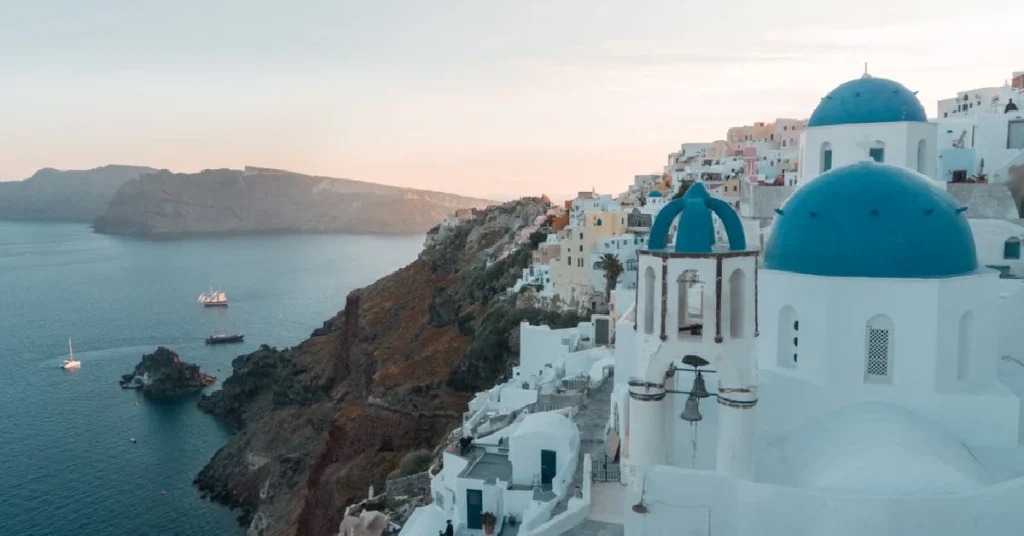
Santorini earns its reputation honestly, and it’s not just the whitewashed, blue-domed buildings clinging to the cliffside above the caldera, though that view alone has launched a thousand honeymoon photo shoots. The island itself sits on the rim of a massive volcanic caldera formed by one of the largest eruptions in recorded history, roughly 3,600 years ago, which is exactly why the landscape looks so dramatically different from anywhere else in the Greek islands, sheer cliffs dropping straight into deep blue water rather than the gentler beaches found elsewhere in the Aegean.
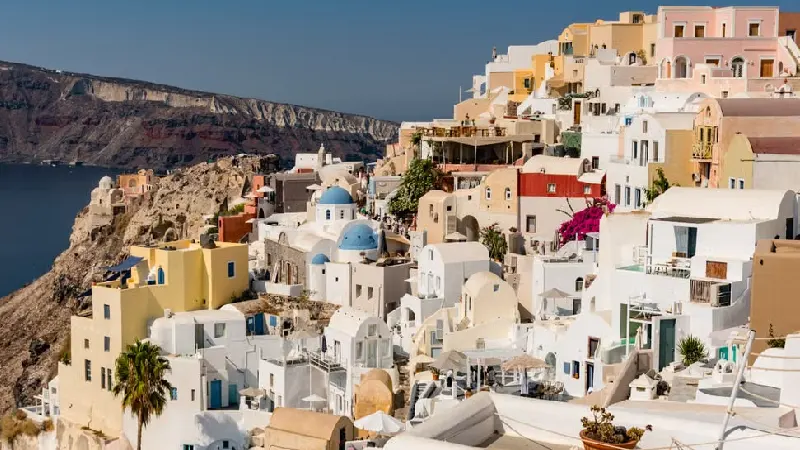
Oia gets most of the sunset crowd, and for good reason, but Imerovigli and Firostefani offer nearly identical views with noticeably thinner crowds, since most day-trippers head straight for Oia without exploring the villages in between. The island’s volcanic soil produces genuinely distinctive wine too, Assyrtiko grapes grown in low, basket-shaped vines that protect them from the island’s relentless wind, and a wine tasting tour built around the caldera views has become one of the more worthwhile half-day activities beyond the standard sunset photo stop.
2. Amalfi Coast, Italy
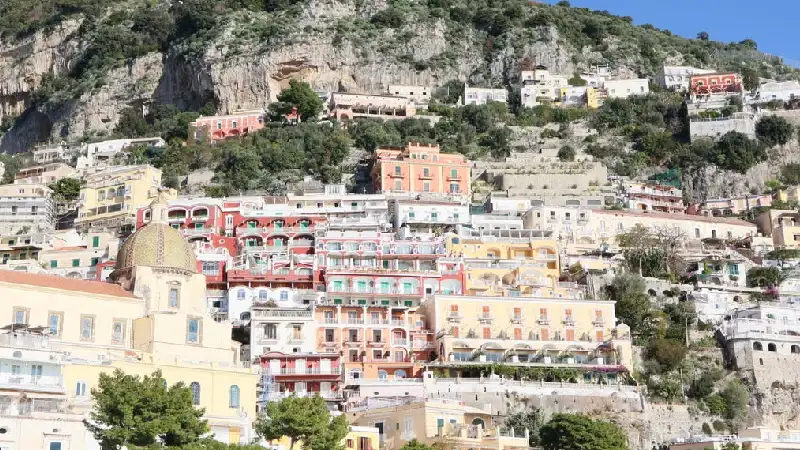
The Amalfi Coast is less a single destination than a 30-mile stretch of coastal road connecting a string of towns clinging to cliffs above the Tyrrhenian Sea, and the drive itself, with its hairpin turns and the sea dropping away on one side, is as much a part of the experience as any single stop along it. Positano is the most photographed town on the route, with pastel houses stacked steeply up the hillside, but it’s also the most crowded and expensive, and a lot of experienced travellers actually prefer basing themselves in quieter Praiano or Amalfi town itself, both offering nearly the same views with considerably more breathing room.
Ravello, sitting higher up the hillside above the main coastal towns, trades beach access for arguably the best panoramic views on the entire coast, and the gardens at Villa Cimbrone and Villa Rufolo have hosted concerts and weddings for exactly that reason. Ferries connecting the coastal towns are genuinely worth using instead of driving where possible, since the coastal road gets seriously congested in peak summer, and a boat ride along the coastline offers a completely different, arguably better, vantage point on the cliffs than the road ever does.
3. Hallstatt, Austria
Hallstatt looks almost too perfect to be real in photographs, a tiny Alpine village of wooden houses built directly against a mountainside, reflected in the still water of Lake Hallstatt with mountains rising steeply behind it. What a lot of visitors don’t realise is that Hallstatt is also one of the oldest continuously inhabited settlements in Europe; salt mining here dates back over 7,000 years, and the Hallstatt culture, a term archaeologists still use today, takes its name directly from this village.
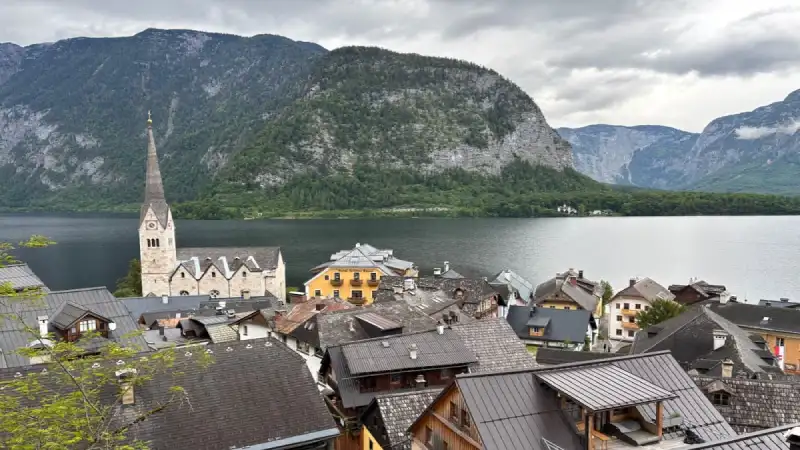
The village’s popularity has become something of a double-edged sword in recent years; its tiny size means even moderate tourist numbers can feel overwhelming by midday, so arriving before 9am or staying overnight to catch the village once the day-trip buses clear out makes a genuine difference to the experience. The historic salt mine, reachable by funicular above the village, offers both the underground tour and a viewing platform with one of the best panoramic shots of the lake and rooftops below, worth the extra hour even for visitors who’d rather skip the mine tour itself.
4. Lake Bled, Slovenia
Lake Bled offers a similar fairytale quality to Hallstatt, but with its own distinct centrepiece, a tiny island in the middle of the lake holding a single church, reachable only by traditional wooden gondola boats called pletna. Bled Castle, perched on a cliff directly above the lake, has occupied that spot for over a thousand years, and the view from its terrace, looking straight down at the church island floating in impossibly clear water, is one of the more genuinely striking castle views anywhere in Europe.
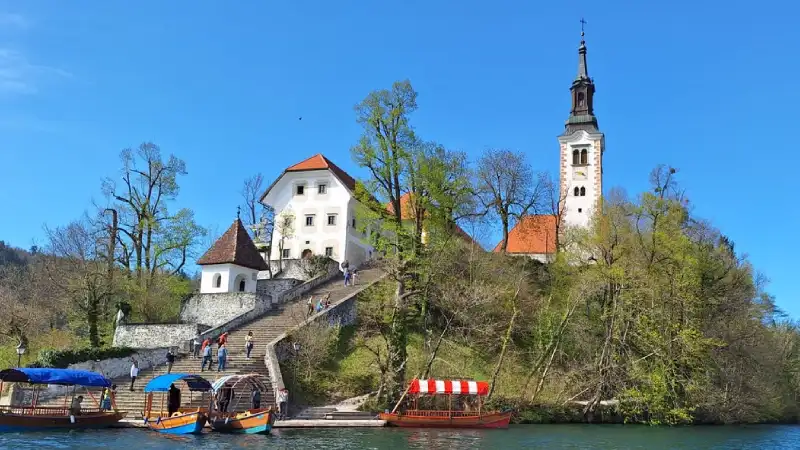
The full walk around the lake, roughly four miles along a flat, well-maintained path, gives a good half-day activity without needing serious hiking gear, and it changes perspective constantly; the castle, the island, and the surrounding Julian Alps all shift position as the path circles the water. Bled cream cake, a local speciality layered with vanilla custard and whipped cream, has become something of a required stop too, and the lakeside cafés serving it tend to have the best views to go along with it.
5. Cinque Terre, Italy
Cinque Terre translates simply to five lands and the name describes exactly what it is: five small fishing villages strung along a rugged stretch of Ligurian coastline, each one a cluster of colourful houses wedged into a cove between steep cliffs. Manarola and Vernazza tend to draw the most attention for their photogenic harbours, but all five villages, Monterosso, Corniglia, and Riomaggiore included, are genuinely worth visiting rather than picking just one or two.
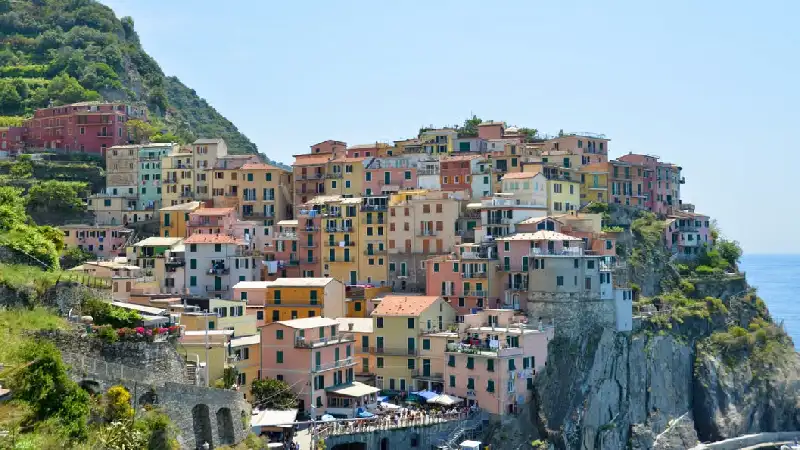
The classic way to experience all five is the coastal hiking trail connecting them, though sections have required rerouting or repair in recent years following landslides, so checking current trail status before planning a full traverse is worth doing ahead of time. The local train line running along the coast offers a reliable backup, connecting all five villages in just a few minutes between stops, which means even travellers who’d rather skip the hiking can still see all five villages comfortably in a single day. Terraced vineyards climbing the steep hillsides above the villages produce a distinctive local white wine, and a vineyard tour combined with a coastal boat ride gives a genuinely well-rounded day beyond just walking between the towns.
6. Prague, Czech Republic
Prague has built its reputation on a genuinely rare combination: a historic old town that survived World War II largely intact, which means the city’s mediaeval and Gothic architecture is authentic rather than reconstructed the way so much of postwar Europe had to be rebuilt. Old Town Square, Prague Castle and the Charles Bridge form the core of any first visit, and wandering the charming hilly streets between the Jewish Quarter and the castle district rewards slow, aimless walking more than almost any other city on this list.
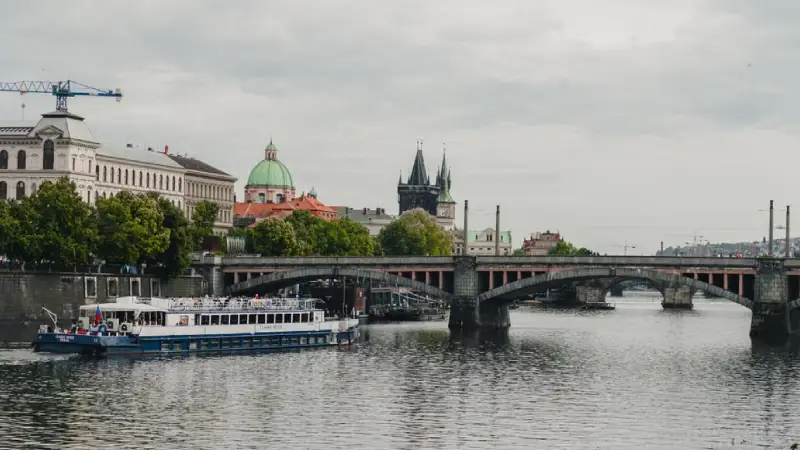
Prague’s food scene has also come into its own recently, beyond the classic goulash and knedlíky dumplings. Esta in the Karlín neighbourhood represents a newer wave of innovative Czech cooking, while traditional beer halls remain deeply woven into the city’s daily rhythm; the country produces some of the best and cheapest beer in Europe by volume. Staré Město, the Old Town, puts visitors closest to the major sights, while Malá Strana across the river offers a quieter, more romantic stay with boutique hotels tucked along narrow lanes, worth considering for couples who want a calmer base than the busier Old Town side.
7. Paris, France
Paris rarely needs an introduction, but it’s worth remembering exactly why the Eiffel Tower still works as a symbol after more than a century: it was originally built as a temporary exhibit for the 1889 World’s Fair and was nearly torn down afterward before its usefulness as a radio transmission tower saved it from demolition. The Louvre, the Musée d’Orsay and the recently restored Notre-Dame cathedral give Paris a museum and architecture density that few cities anywhere in the world can match within walking distance of each other.
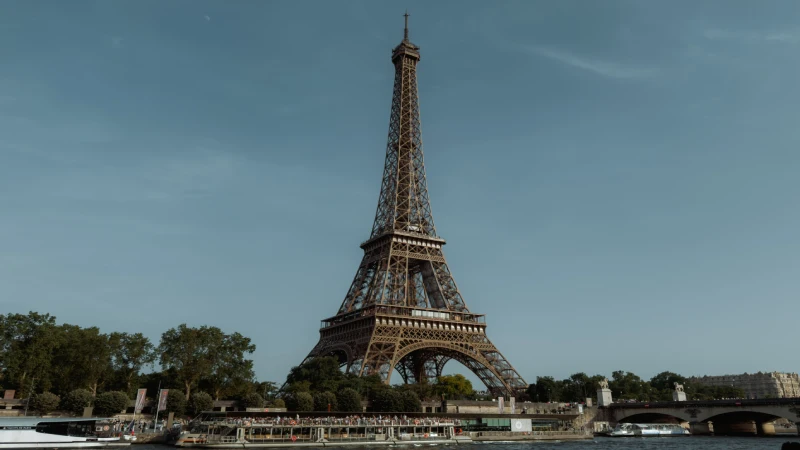
Beyond the headline monuments, Paris rewards neighbourhood-level exploration more than most capital cities: the Marais for boutique shopping and historic Jewish quarter history, Montmartre for its village-like hilltop streets and the Sacré-Cœur’s panoramic city views, and the Luxembourg Gardens for a genuinely peaceful break from the city’s pace. A Seine river cruise at night, watching the illuminated monuments pass by from the water, has become one of the more reliably romantic activities in the city, and it’s a good lower-effort alternative for travellers who’ve already spent a full day on foot.
8. Barcelona, Spain
Barcelona’s architecture sets it apart from every other city on this list in a genuinely specific way. Antoni Gaudí’s work is scattered across the city in a style that doesn’t really resemble anything built before or since, with flowing organic shapes, mosaic tilework, and structures that look almost alive. The Sagrada Família, still under construction after more than 140 years, remains the city’s defining landmark, and Park Güell offers the same distinctive style spread across a hillside park with sweeping views over the city and coastline.
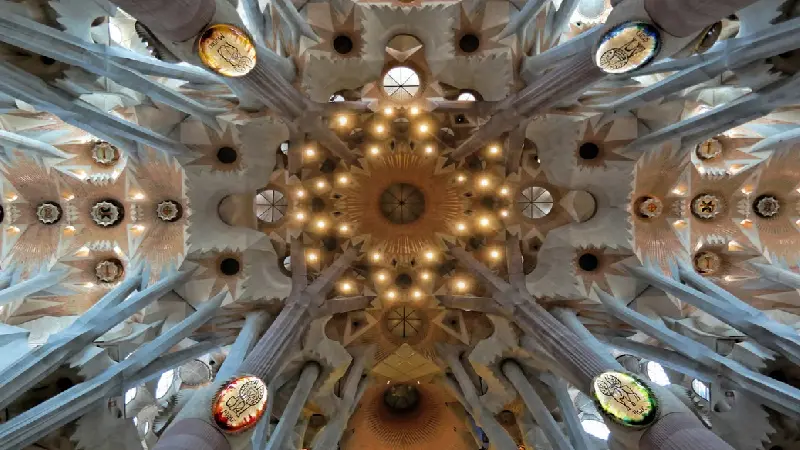
The Gothic Quarter, a maze of narrow mediaeval streets just steps from Gaudí’s modernist landmarks, gives Barcelona a genuine architectural range that few European cities pull off within the same compact centre, and it’s easy to move between the two completely different styles in the same afternoon. Barcelona’s beach access is another point in its favour over most European capitals; a proper Mediterranean beachfront runs right along the city itself, which means a morning of museum-hopping can genuinely be followed by an afternoon in the sand without leaving town.
9. Plitvice Lakes, Croatia
Plitvice Lakes National Park offers something genuinely different from the coastal towns and historic cities elsewhere on this list, a series of sixteen terraced lakes connected by waterfalls and cascades, all linked by wooden boardwalks that wind directly over and around the water. The lakes’ distinctive turquoise and emerald colours come from the mineral content and varying depths of the water, and the way the colour shifts as sunlight changes throughout the day makes this one of the more genuinely photogenic natural landscapes in Europe.
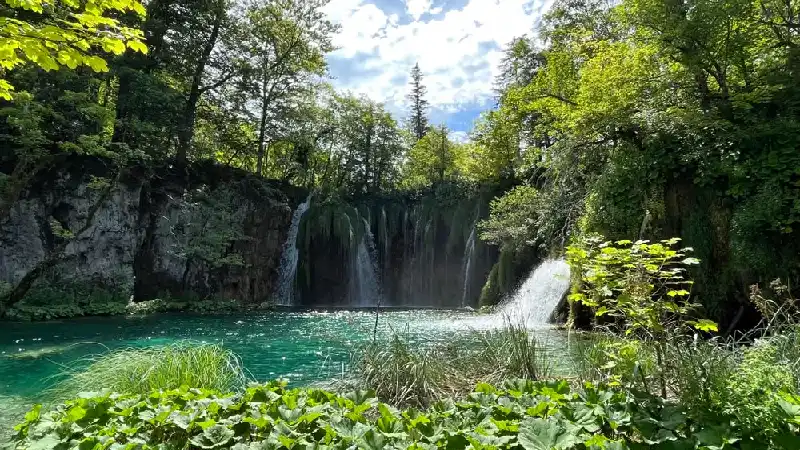
The park is genuinely large enough to require real planning; the Upper and Lower Lakes each offer different scenery, with the Lower Lakes generally considered more dramatic thanks to taller waterfalls and more open views, while the Upper Lakes feel denser and more forested. A full loop through both sections realistically takes a full day, and arriving early, ideally right at opening, matters here even more than at most destinations on this list, since the wooden boardwalks are narrow enough that midday crowds can genuinely slow down the whole visit.
10. Swiss Alps, Switzerland
The Swiss Alps don’t really function as a single destination so much as an entire mountain region, and Interlaken and Zermatt are the two towns most visitors use as a base for exploring it. Interlaken sits between two lakes, Thun and Brienz, with the Jungfrau massif rising dramatically behind the town, and it’s become the launch point for reaching the Jungfraujoch, Europe’s highest railway station, often called the Top of Europe, sitting at over 11,000 feet with views across genuine glacier terrain.
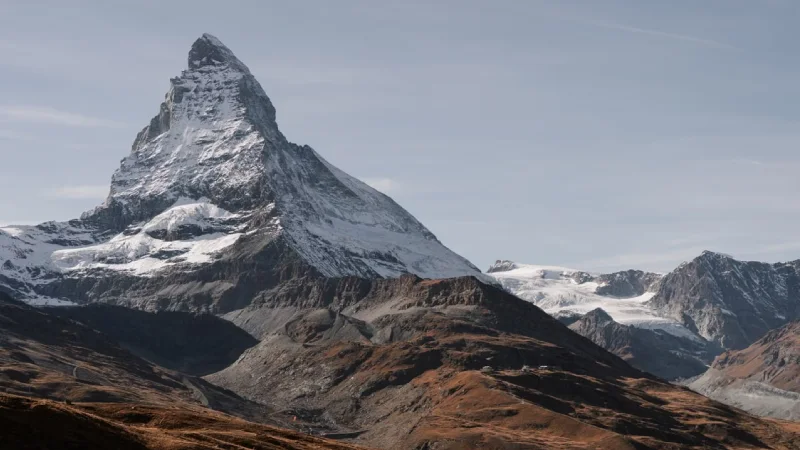
Zermatt, further south, offers arguably the single most recognisable mountain view in the country, the Matterhorn’s distinctive pyramid peak, and the town itself bans combustion-engine vehicles entirely, running instead on electric shuttles and horse-drawn sleighs, which keeps it genuinely quiet and pedestrian-friendly year-round. Switzerland’s train network deserves real credit here too, scenic routes like the Glacier Express connect these mountain regions with views that rival anything visible from the peaks themselves, making the journey between destinations as memorable as the destinations.
11. Sintra, Portugal
Sintra sits less than an hour from Lisbon, and it packs in enough colourful, fantastical architecture to feel like a completely different country, a former royal retreat scattered with palaces built to look like something out of a fairytale rather than a practical residence. The Pena Palace, painted in vivid red and yellow and perched on a hilltop wrapped in fog for much of the year, is the single most photographed building in Sintra, and its position above the tree line gives sweeping views back toward the Atlantic coast on clear days.
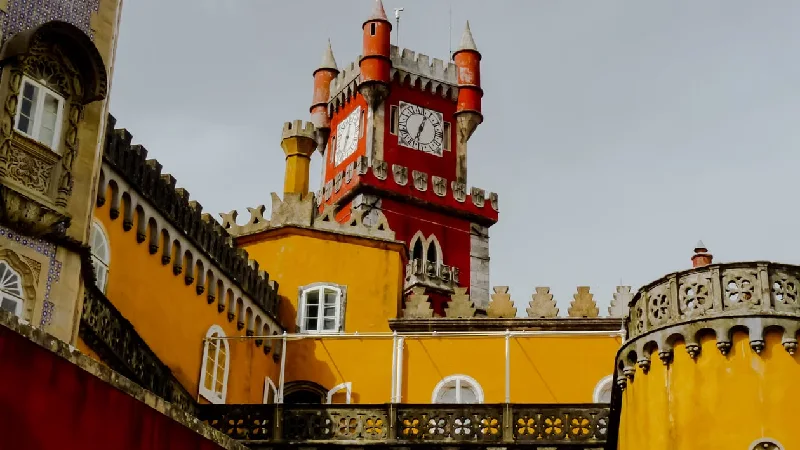
Beyond Pena Palace, Sintra holds enough additional palaces and estates, Quinta da Regaleira with its mysterious initiation well and underground tunnels, and the Moorish Castle’s ancient ramparts, that a single day trip from Lisbon genuinely isn’t enough to see everything properly. Sintra’s microclimate, noticeably cooler and mistier than Lisbon just down the road, was exactly what drew Portuguese royalty here as a summer escape in the first place, and it’s worth packing a light layer even on an otherwise warm Lisbon trip.
12. Kotor, Montenegro
Kotor remains one of Europe’s more genuinely underrated destinations, a walled mediaeval old town set against the dramatic backdrop of the Bay of Kotor, a body of water so deeply carved into the mountains that it’s often mistaken for a fjord despite technically being a submerged river canyon. The old town’s stone walls, climbing steeply up the mountainside behind the city, can be hiked for a sweeping view over the terracotta rooftops and the bay below, a genuinely rewarding, if strenuous, way to spend a morning.
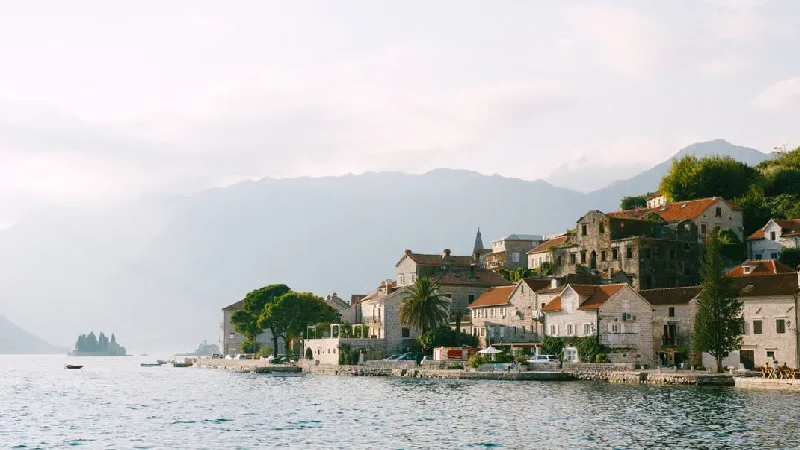
Because Kotor still sits somewhat outside the mainstream European cruise and tour circuit compared to Croatia’s Dubrovnik just up the coast, prices here run noticeably lower for comparable Adriatic scenery, and the old town’s genuine lived-in feel, actual residents rather than a purely tourist-facing historic center, gives it a different texture than some of the more polished stops on this list. A boat trip along the bay, stopping at the tiny artificial islet of Our Lady of the Rocks, adds an easy half-day activity beyond walking the old town itself.
How To Actually Group These Into A Trip
Twelve destinations spread across nine countries obviously isn’t a single itinerary, and trying to force them into one trip tends to produce a rushed, exhausting version of Europe rather than an enjoyable one. A few natural groupings make more sense instead. The Adriatic and Balkan cluster, Plitvice Lakes and Kotor, pairs well together given their relative proximity, with Dubrovnik easily added as a third stop. The Alpine cluster, Hallstatt, Lake Bled and the Swiss Alps, works as a mountain and lake focused week, though the distances between them are longer than they first appear on a map, worth budgeting proper travel days rather than rushing between them. Italy’s coastline, the Amalfi Coast and Cinque Terre, makes a strong two-region trip on its own, connected by a scenic train and ferry route along the western coast. And the big-city cluster, Paris, Barcelona and Prague, works well for travellers who want architecture, museums and food over natural scenery, all three connected by relatively short flights or high-speed rail.
Sintra fits naturally as a short add-on to a Lisbon trip rather than a standalone destination, and Santorini tends to work best paired with one or two other Greek islands rather than visited entirely on its own, given how short a proper visit to the island itself actually needs to be.
Frequently Asked Questions
What is the nicest country to visit in Europe?
It depends entirely on what kind of trip you want: Italy and Greece lead for coastline and history, Switzerland and Austria for mountain scenery, and Croatia and Slovenia for a mix of lakes, waterfalls and Adriatic coastline at a noticeably lower cost than Western Europe.
When is the best time to visit Europe?
Late spring, May and June, and early autumn, September, generally offer the best balance of good weather and thinner crowds compared to the peak July and August season, when many of these destinations see their highest visitor numbers and prices.
Which European destinations are best for a first-time visitor?
Paris, Prague and Barcelona all work well for first-time visitors thanks to strong transport connections, walkable historic centres, and enough sights concentrated in a compact area to make planning straightforward.
Are Hallstatt and Lake Bled worth visiting if they’re so crowded?
Yes, but timing matters considerably; arriving early morning or staying overnight instead of visiting as a day trip makes a real difference at both destinations, since midday crowds can noticeably affect the experience in villages this small.
Do I need a visa to visit these European destinations?
Most of these countries fall within the Schengen Area, which allows many nationalities visa-free entry for short stays, though requirements vary by passport, so it’s worth confirming your specific situation and any ETIAS authorisation requirements before booking flights.
Is it cheaper to visit Western or Eastern and Southeastern Europe?
Generally, destinations like Prague, Plitvice Lakes and Kotor run noticeably cheaper than Western European hotspots like Paris, Switzerland or the Amalfi Coast, making them worth prioritising for travellers working with a tighter budget.
Final Thoughts
Europe’s real advantage isn’t any single destination on this list; it’s how easily these twelve connect to each other, a short flight or a scenic train ride separating a volcanic Greek island from an Alpine lake village from a walled mediaeval old town on the Adriatic. Picking a regional cluster rather than trying to cover the whole list in one trip tends to produce a far better experience, more time actually enjoying each place rather than rushing to the next train station. According to Lonely Planet’s 2026 European destination guide, the continent continues to reward travellers willing to move a little slower and look past the most obvious tourist stops, and these twelve destinations, mixed between iconic and genuinely underrated, are a solid starting point for whichever version of that trip fits best.


