
Portugal Road Trip – Best Route from Lisbon to Algarve

Portugal is one of Europe’s most rewarding road trip countries for a simple reason: the distances are manageable, the roads are good, the landscapes are more varied than any country of this size has any right to be, and the food is consistently excellent at prices that remain genuinely reasonable. The Lisbon to Algarve route, in particular, offers two completely different versions of the journey – the fast motorway version and the coastal Alentejo version – and choosing between them is essentially choosing between efficiency and discovery.
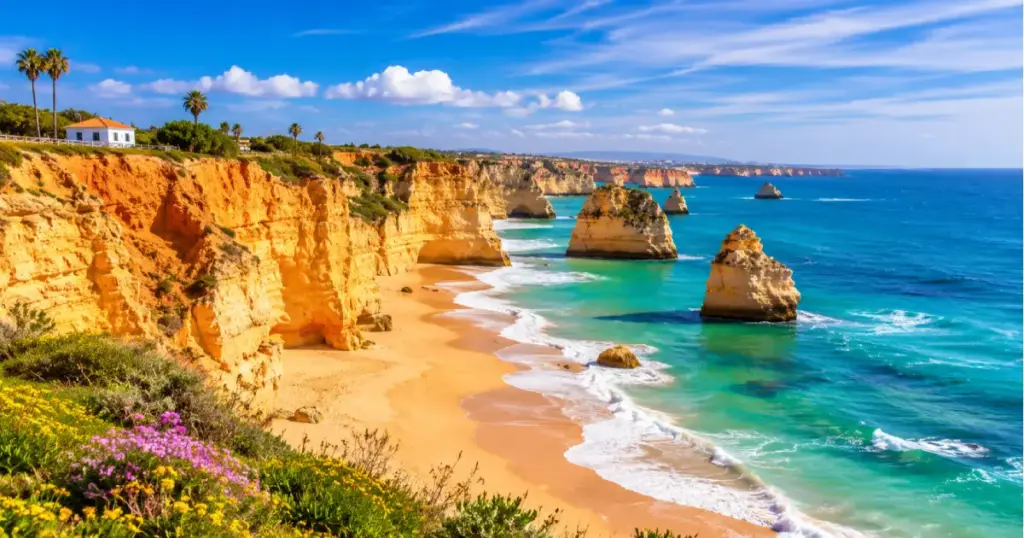
The direct route on the A2 motorway covers 280 kilometers in under three hours. It is efficient, modern, and almost entirely characterless. The coastal Alentejo route takes considerably longer but reveals a version of Portugal that the vast majority of international visitors never find: wild cliffed beaches, tiny fishing villages, vast empty dunes, and a pace of life that has nothing to do with the Algarve’s resort culture.
Quick Facts – Lisbon to Algarve Road Trip
✔ Direct A2 motorway: Lisbon to Albufeira in 2.5–3 hours – fast, cheap, almost no scenery
✔ Coastal Alentejo route: adds 90+ minutes but reveals the Portugal most visitors never find
✔ Via Verde green lane WARNING: never use it without the subscription Device – you will be fined
✔ ZTL zones: historic city centres have Limited Traffic Zones – Park outside and walk in
✔ Alcohol limit: 0.5g per litre – Lower than the UK limit, consistently enforced
✔ Speed cameras: everywhere on Portuguese highways and national roads
✔ Best months: May, June and September – warm sea, manageable crowds, real prices
✔ Algarve rental tip: rent from Faro Airport – significantly cheaper than Albufeira resort area
Route Option 1 – The A2 Motorway (3 Hours Direct)
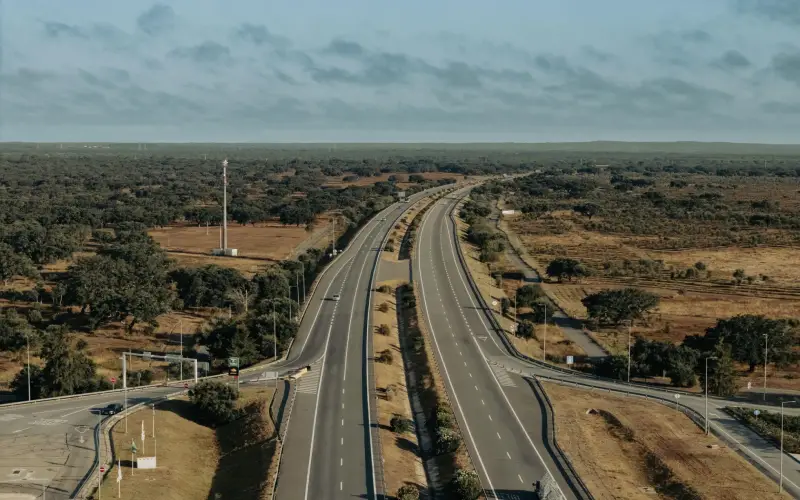
The A2 is modern, fast, and has electronic toll gantries rather than barriers. If your rental car does not have a toll device, you pay online at www.ematoll.pt within five days of the journey. The Via Verde green lanes are strictly for vehicles with a subscription device – driving through one without the device generates a fine issued weeks later through your rental company. Ask specifically about the toll device when picking up the car.
If time is limited, Évora is worth a half-day detour about one hour east of the motorway – a UNESCO World Heritage old city with a Roman temple, a medieval cathedral, and the Chapel of Bones constructed from approximately 5,000 human skeletons. The context for the chapel is philosophically interesting and worth understanding before you visit.
Route Option 2 – The Coastal Alentejo (Best Road Trip Route)
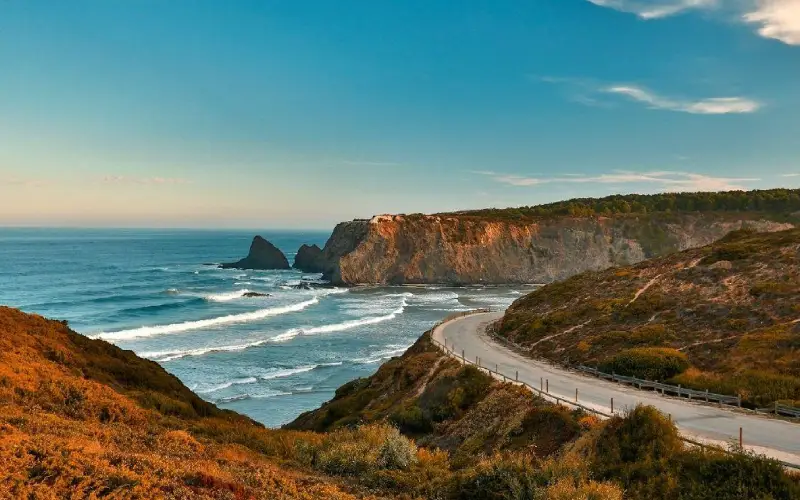
Leave Lisbon heading south across the Tagus via the Ponte 25 de Abril bridge. Take the coast road south through the Arrábida Natural Park – a stretch of protected coastline with some of the clearest water in Portugal, including beaches like Praia do Ribeiro do Cavalo where the sea is a startling blue. Access to the best beaches requires a shuttle in summer due to limited parking.
Comporta – About 80 km from Lisbon
Comporta is an odd place – a traditional fishing village that has also become one of Europe’s more fashionable low-key beach retreats, with excellent restaurants, long pine-backed beaches, and a tension between traditional Portuguese life and wealthy seasonal visitors that is part of its character. Worth a one-night detour if your schedule allows.
Vila Nova de Milfontes – The Coastal Route’s Best Stop
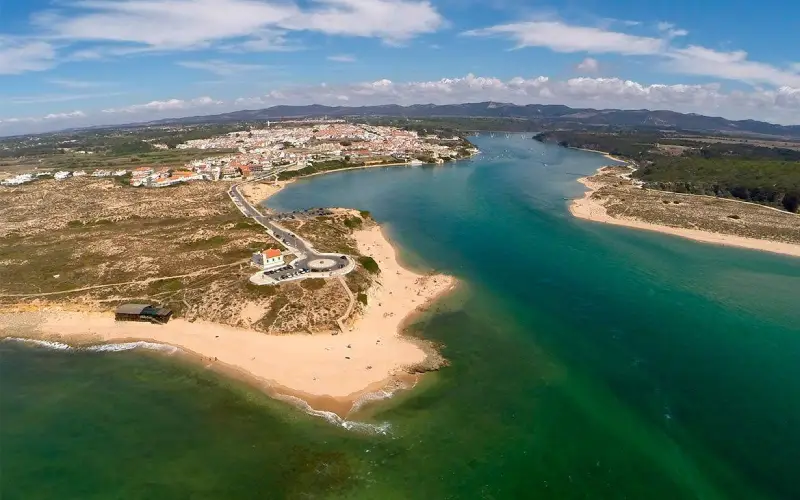
Vila Nova de Milfontes sits where the River Mira meets the Atlantic – calm river-mouth beaches on one side, wilder Atlantic surf on the other. The town has a small Moorish-period fortress, good independent restaurants, a genuine Portuguese coastal town character, and beaches that are excellent without the overdevelopment that the Algarve brings. Push further south to Porto Covo for an even smaller village with pristine beaches and real quiet.
Sagres – The End of Europe
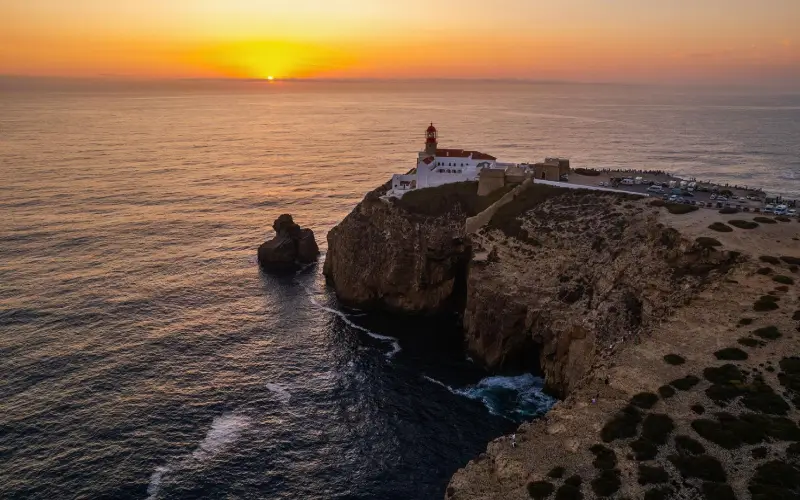
Sagres at Portugal’s most southwesterly point has a genuine end-of-the-world quality that is not purely atmospheric – it was from here that Henry the Navigator organised Portugal’s 15th-century maritime expeditions. The fortress at Sagres Point and the lighthouse at Cabo de São Vicente are worth the drive for the clifftop setting and Atlantic context alone. The surf culture is strong here, the restaurants serve excellent fresh fish, and the sunsets are famous for good reason.
| Stop | From Lisbon | What to Do | Time | Don’t Miss |
|---|---|---|---|---|
| Sesimbra | 40 km via detour | Moorish castle, harbour, fishing town | 2–3 hours | Morning fish at the harbour |
| Comporta | 80 km | Pine-backed Atlantic beach, local rice | Half day to overnight | Sunset from the beach |
| Alcácer do Sal | 120 km via A2 | Salt flats, medieval castle, storks | 1–2 hours | Stork nests on castle towers |
| Vila Nova de Milfontes | 165 km coastal | River mouth beach, petiscos, calm pace | Half day to overnight | Sunset from the castle viewpoint |
| Sagres | 290 km | End of Europe cliffs, fort, surf culture | Half to full day | Cabo de São Vicente at dawn |
| Lagos | 300 km | Sea caves, historic walls, Algarve start | 1–2 days | Ponta da Piedade boat trip |
Driving in Portugal – Practical Tips
Portuguese roads are modern and well-maintained. The alcohol limit is 0.5g per litre – lower than the UK and consistently enforced. Speed cameras are frequent. ZTL zones (Limited Traffic Zones) apply in historic town centres across Portugal including Lisbon’s Alfama, Évora, and Lagos – cameras photograph every vehicle entering. Park outside the historic centre and walk in. Older town centres are far better experienced on foot anyway.
The Via Verde gantry system is the most common trap for international visitors. If your rental car has a Via Verde device (confirm this at pickup), the tolls are charged automatically. If not, use only the manual payment lanes at toll barriers, and pay any gantry tolls online within five days. Never use a Via Verde green lane without the device.
Also Read on RoamVisa
➤ Schengen Visa from India – Complete Application Guide
Final Thoughts
The Lisbon to Algarve road trip on the coastal Alentejo route is the version of Portugal that surprises people most. International visitors tend to have a binary map of the country – Lisbon on one end, Algarve on the other, with a motorway in between. The coastal Alentejo demolishes this by presenting a third Portugal that is wilder, quieter, less touristed, and in many ways more beautiful than either endpoint. The practical challenges are modest. The coastal N120 road is narrower and slower than the motorway, which is the point.
Fill up on fuel in Vila Nova de Milfontes before the more remote southern sections. And confirm your rental car toll situation before departure to avoid invoice surprises. May and September are the sweet spots. The sea is warm enough for swimming, the wildflower landscape along the protected Alentejo coast is vivid in May, tourist volumes are human rather than overwhelming, and the restaurant prices reflect something closer to Portuguese reality than July peak-season inflation.
Frequently Asked Questions
How long does it take to drive Lisbon to the Algarve?
Direct A2 motorway: 2.5–3 hours to Albufeira. Coastal Alentejo route with stops: 2–3 days is ideal. The coastal route adds at least 90 minutes of driving even without stopping.
What is the Via Verde lane in Portugal?
Portugal’s electronic toll payment system is for vehicles with a subscription device only. Using a Via Verde lane without the device generates a fine. Always confirm whether your rental car has the device at pickup.
Is the Alentejo coast worth the longer drive?
Very much so – some of the most spectacular and least-developed Atlantic coastline in Western Europe. Vila Nova de Milfontes and Porto Covo retain a Portuguese character that the Algarve resort towns have long since moved away from.
Do I need an international driving license in Portugal?
Most non-EU licenses, including Indian licenses, require an International Driving Permit alongside the original licence. Get an IDP from your national automobile association before departure.
Best base for the Algarve?
Lagos for the western Algarve – the most characterful historic center, excellent beach access, and a genuine town feel. Faro Airport is the cheapest for rental cars.


