
Prettiest Cities in the US

Beauty in a city is a strange thing to try to measure. Some places win you over with a single view, a bridge disappearing into fog or a skyline you catch from the right angle at sunset. Others do it slower, through streets you keep wanting to walk down again even after you’ve already seen them, or a color palette on the houses that just makes everything feel a little softer than it should. I went looking at what the actual travel publications and city ranking sites have been putting out this year and pulled together the ones that kept showing up, then added a bit of my own sense of why each one earns its spot.
This isn’t a strict ranking so much as a tour through the cities that make you stop and just look for a second, whether that’s because of the setting nature gave them or the centuries of history someone bothered to preserve.
San Francisco, California
San Francisco does the thing almost no other American city manages; it makes its own topography part of the attraction. The hills aren’t just something to climb; they’re the reason certain streets end in a view of the bay that stops conversation mid-sentence. The Golden Gate Bridge gets most of the photo credit, and fairly so, but the city’s real charm comes from the way neighborhoods stack on top of each other along those steep grades, each one with its own personality packed into a few blocks.
Walk from the waterfront up through North Beach and into Chinatown and you’ll cross through what feels like three different cities in under an hour. Fog rolling through the bridge cables in the morning and burning off by afternoon adds a kind of drama most cities can’t fake even if they tried.
Charleston, South Carolina
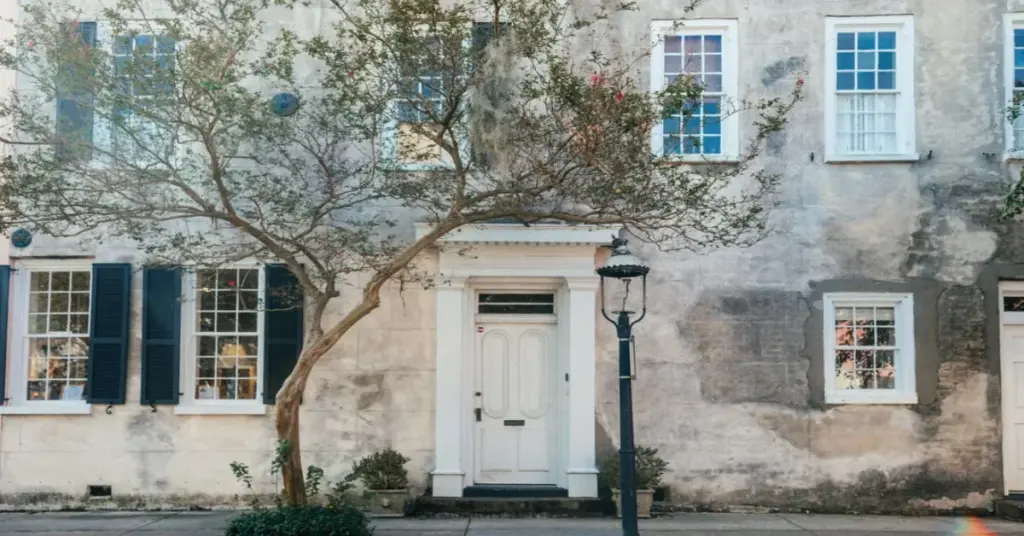
Charleston shows up on nearly every list like this one, and it’s earned every mention. Pastel-colored homes line the historic district, cobblestones remain underfoot in patches that have survived since the eighteenth century, and gas lanterns still light some of the streets after dark. It’s the kind of place that looks staged for a movie set until you realize it’s just how the city has always looked, kept up rather than recreated.
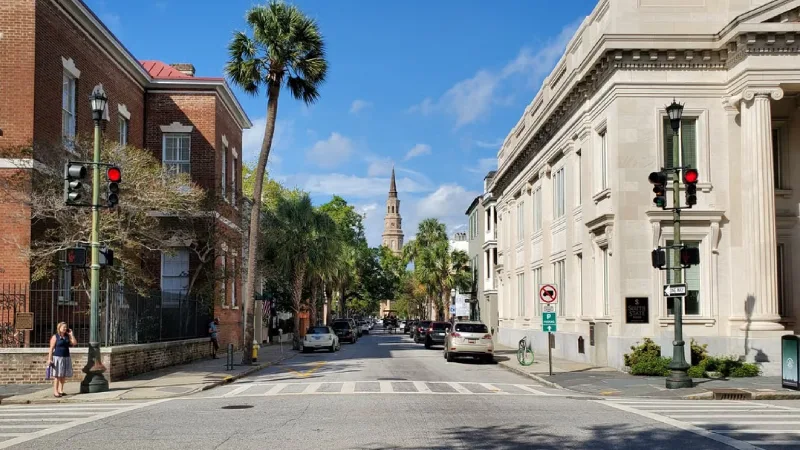
Rainbow Row, a stretch of colorful Georgian houses right along the water, has become something close to the unofficial symbol of the whole city, and it’s worth the slow walk even if you’ve already seen a hundred photos of it. Beyond the architecture, Charleston backs it up with genuinely good food, enough that its restaurant scene now pulls in Michelin recognition alongside all the postcard views.
Savannah, Georgia
Savannah gets compared to Charleston constantly, and while they share some DNA, Savannah has its own thing going on that’s worth experiencing separately. Spanish moss drips off centuries-old oak trees in the city’s historic squares, and there are twenty-two of these squares scattered through downtown, each one landscaped and quiet enough to make you want to sit for a while even if you weren’t planning to.
The whole historic district feels a little frozen in time, and that’s not an accident. Savannah has some of the strictest historic preservation rules in the country, which is part of why walking through it still feels like stepping into the nineteenth century rather than a recreation of it.
Seattle, Washington
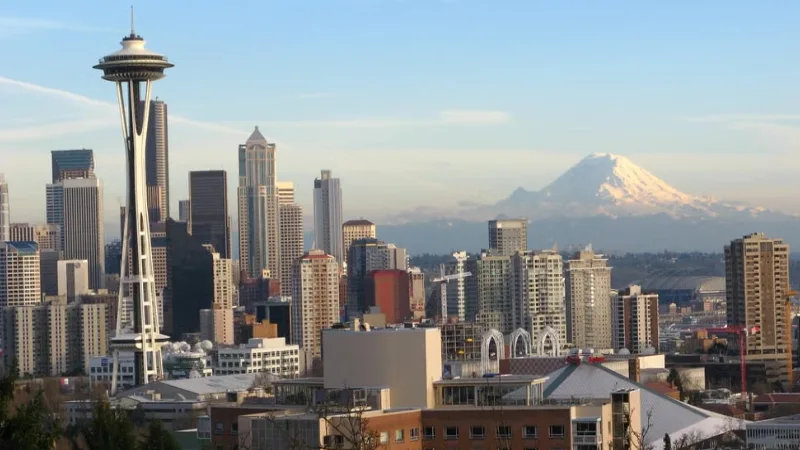
Seattle earns its spot here through pure setting more than architecture. Mount Rainier looms over the skyline on clear days, Puget Sound wraps around the city on multiple sides, and the whole place has this green, slightly damp beauty that photographs differently depending on the season and the weather rolling through.
Pike Place Market has been running since long before most cities had anything like it, and it still pulls in millions of visitors a year, partly for the flying fish and partly because it sits right above the water with views that make the whole shopping trip feel more like sightseeing. Beyond downtown, neighborhoods like Ballard and Fremont each carry their own distinct look and feel, which keeps the city from ever feeling like just one thing.
San Antonio, Texas
San Antonio doesn’t always make the shortlist when people picture pretty American cities, and that’s a genuine oversight. Spanish and German influence runs through the city’s architecture in a way that’s rare in the US, giving parts of it a texture closer to a European town than a Texas metro. The River Walk, a network of paths running along the San Antonio River below street level, threads through downtown lined with cypress trees and cafes, and it stays cool and shaded even when the Texas heat gets serious above.
The Alamo sits right in the middle of all this, giving the city a weight of history most tourists don’t expect to find wrapped in so much genuine beauty. Brackenridge Park, with its stone bridges and shaded paths, adds a quieter, more residential kind of charm once you’ve had your fill of downtown.
Portland, Oregon
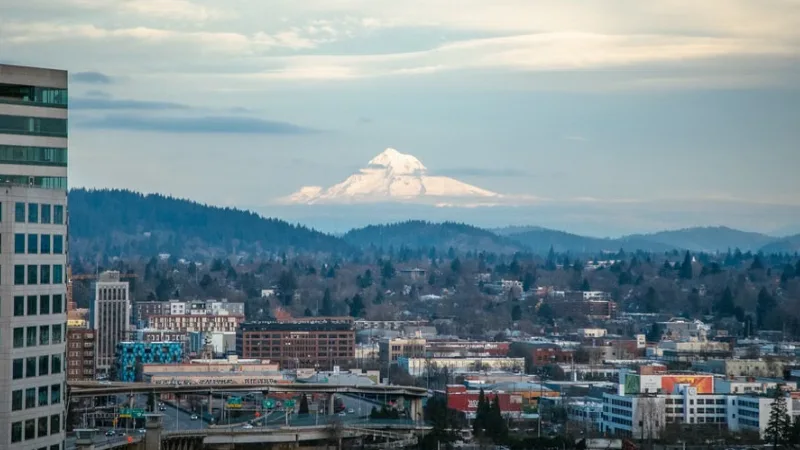
Portland’s beauty comes from how completely nature refuses to stay in the background here. Mount Hood shows up in the skyline on a clear day the way the Golden Gate Bridge shows up in San Francisco’s, an ever present backdrop that makes even ordinary street corners feel a little more dramatic. Forest Park, one of the largest urban forests in the country, sits right at the edge of the city, giving Portland a green lung that most cities this size simply don’t have room for.
Bridges cross the Willamette River at regular intervals through downtown, each with its own design, and the city’s obsession with public gardens, the Japanese Garden especially, adds a level of quiet, cultivated beauty to go along with the wilder scenery just outside town.
New Orleans, Louisiana
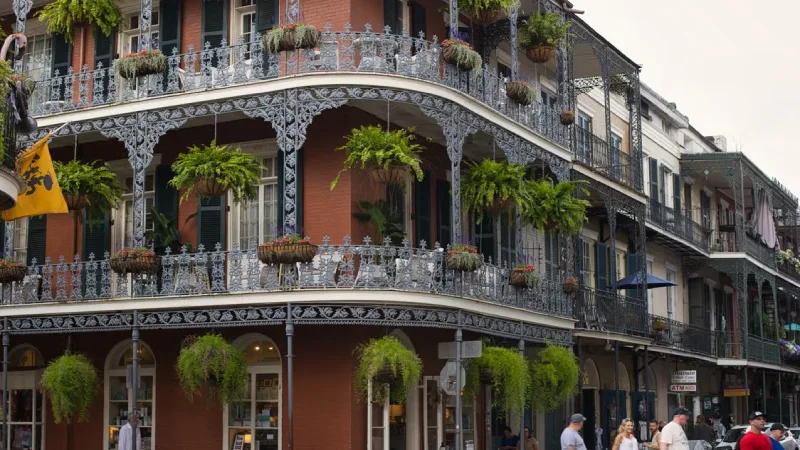
New Orleans earns its beauty through character as much as looks, though the looks genuinely hold up too. Wrought iron balconies draped in ferns and flowers line the French Quarter, and the whole neighborhood carries a color and texture that feels distinctly its own, shaped by French, Spanish, and Creole influence layered over centuries.
Live music spilling out of doorways, streetcars rattling down St. Charles Avenue past oak lined mansions, and the whole city’s willingness to lean into its own strangeness gives New Orleans a kind of beauty that’s harder to photograph well but sticks with you longer once you’ve actually walked through it.
Santa Fe, New Mexico
Santa Fe looks like almost nowhere else in the country, and that’s largely by design. Adobe style architecture, required by local building codes in much of the historic district, gives the whole city a warm, earthy uniformity that shifts color with the light throughout the day. Sitting at over seven thousand feet with the Sangre de Cristo Mountains as a backdrop, the city has a clarity of light that photographers specifically travel here to catch.

The city’s deep Native American and Spanish colonial history shows up everywhere from the architecture to the art galleries lining Canyon Road, giving Santa Fe a cultural depth that goes well beyond just being a pretty backdrop.
Annapolis, Maryland
Annapolis is smaller and quieter than most of the cities on this list, and that’s part of what makes it work. Brick sidewalks and colonial era buildings line streets that slope gently down toward the harbor, where sailboats sit docked along the water in numbers that make it clear this is still a genuine sailing town rather than a place playing dress up as one.
The Naval Academy campus adds a stately, historic weight to the waterfront, and the compact size of the whole historic district means you can genuinely walk everywhere worth seeing in an afternoon without needing a car at all.
Asheville, North Carolina
Asheville closes out this list with a different kind of beauty, mountain views wrapped around a downtown that’s managed to stay walkable, artsy and genuinely alive rather than overly polished. The Blue Ridge Mountains surround the city on nearly every side, and that mountain backdrop shows up at the end of streets throughout downtown in a way that keeps sneaking up on you even after a few days there.
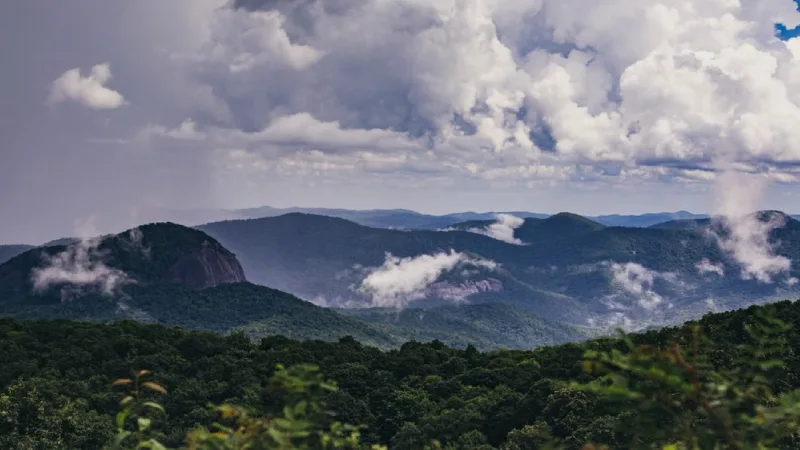
The Biltmore Estate just outside downtown adds a different kind of grandeur to the trip, a massive Gilded Age mansion set against rolling hills, while downtown itself keeps things looser with murals, live music and a food scene that’s built a genuine national reputation over the last decade.
Denver, Colorado
Denver rounds out this list with a kind of beauty that sneaks up on you gradually rather than hitting all at once. The city itself is fairly ordinary as American downtowns go, but step back and the Rocky Mountains fill the entire western horizon, close enough that on clear days it feels like the peaks are just a short drive from wherever you happen to be standing.
Union Station anchors a downtown that’s been genuinely revitalized over the last decade, and Denver’s parks system, particularly Washington Park and the paths along Cherry Creek, gives the city a green, walkable feel that a lot of visitors don’t expect from what they assume is just a jumping off point for the mountains. The light here has a clarity that comes from altitude and dry air, and it does something to sunsets over the Front Range that’s genuinely hard to describe until you’ve seen one yourself.
Planning A Trip Around A Few Of These
A handful of these cities pair naturally into a single trip. Charleston and Savannah sit close enough together, about two hours apart, to combine easily into one southern coastal itinerary. Santa Fe works well paired with a wider New Mexico or Southwest trip, and Asheville makes a strong add-on to a broader Blue Ridge Mountains road trip through Virginia and Tennessee.
Timing matters for a few of these too. Charleston and Savannah are genuinely gorgeous but brutally hot and humid in peak summer, so spring and fall visits tend to be far more comfortable. Santa Fe’s light is best in the clear, dry months outside of monsoon season in late summer, and Portland and Seattle both look considerably better under the clear skies of summer than the gray stretch that dominates the rest of their year.
Travel insurance is worth having for any multi city trip through the US, since flight delays and last minute itinerary changes are common enough on a route hitting several stops that a basic policy covering interruption and cancellation offers real protection for a fairly small cost.
Frequently Asked Questions
What is considered the prettiest city in the US?
Opinions vary, but San Francisco and Charleston both consistently top major rankings, San Francisco for its dramatic hillside setting and bay views, and Charleston for its preserved historic architecture and colorful streets.
When is the best time to visit these cities?
It depends on the city. Southern cities like Charleston and Savannah are best visited in spring or fall to avoid summer heat and humidity, while Pacific Northwest cities like Seattle and Portland look their best in summer under clearer skies.
Can I combine several of these cities into one trip?
Yes, particularly Charleston and Savannah, which sit close enough together for an easy combined itinerary, or Asheville paired with a broader Blue Ridge Mountains road trip.
Which of these cities is best for walking?
Charleston, Savannah, Santa Fe, and Annapolis are all highly walkable, with compact historic districts that let you see most major sights without needing a car.
Is travel insurance necessary for a US city trip?
It isn’t required, but it’s worth having for multi-city trips, since flight delays and itinerary changes are common enough that a basic policy covering cancellation and interruption offers genuine value.
Final Thoughts
What ties these cities together isn’t a single look or style; it’s that each one figured out what made it distinct and then protected that instead of smoothing it over. San Francisco leaned into its hills, Charleston protected its history down to the cobblestones, and Santa Fe kept its adobe skyline intact by law. That’s really the throughline across every pretty city in this country, beauty that survives tends to come from places that decided early on what was worth keeping and then kept choosing that same thing decade after decade even as everything around them changed.


