
VIA Rail Toronto to Vancouver – Honest Review of the 4-Day Journey

VIA Rail’s The Canadian is the last great transcontinental train in North America. It runs twice weekly between Toronto Union Station and Vancouver Pacific Central, the trip taking four nights and parts of five days to cover 4,466 kilometers. 4 It winds up from the Great Lakes, through the Canadian Shield, over the vast prairies of Manitoba and Saskatchewan, over the Rocky Mountains at Jasper, and down through the Fraser Canyon of British Columbia to the Pacific coast. It is one of those travel experiences that exists almost entirely for its own sake – flying Toronto to Vancouver takes 5 hours and costs 300 CAD. Taking the Canadian takes 97 hours and can cost from 600 CAD in economy to 8,000 CAD in prestige class, depending on how you travel.
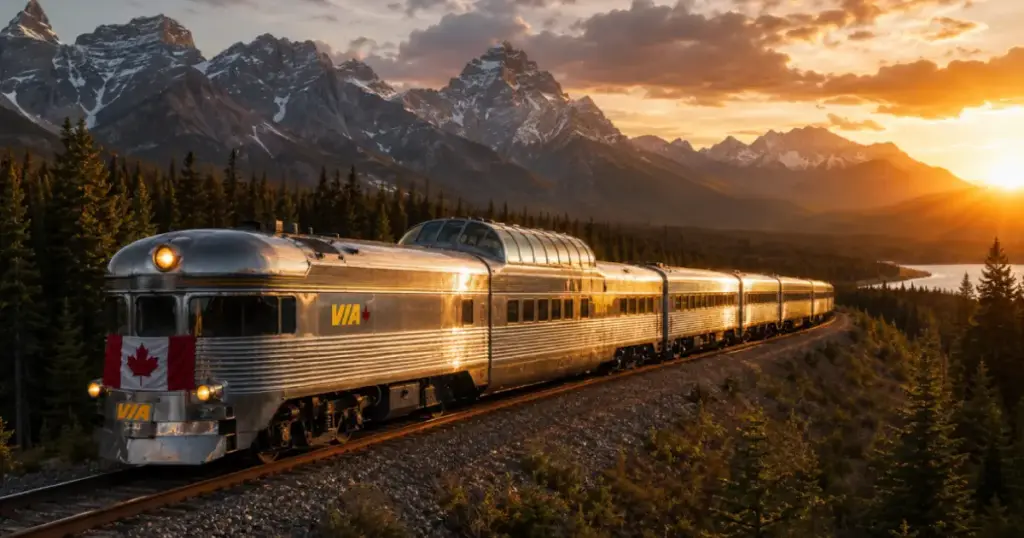
This honest review covers all three classes based on detailed real-world reports from recent journeys, the food quality (which varies dramatically by class), what the accommodations actually feel like at night, the scenery highlights mile by mile, the delay reality you need to accept, and whether the very significant price premium over flying is genuinely worth it for Indian tourists. The short answer is yes for the right traveler, no for the wrong one – and this guide will help you figure out which you are. We have cross-referenced experience reports from multiple travelers across Sleeper Plus berths, cabins for two, and Prestige accommodations to give you a realistic picture rather than VIA Rail’s marketing gloss.
Quick Facts – VIA Rail The Canadian
✓ Route: Toronto Union Station to Vancouver Pacific Central – 4,466 km in 4 days and 4 nights
✓ Three classes: Economy (seats only), Sleeper Plus (private cabin or berth), Prestige (luxury cabin)
✓ Economy fare from around 500 to 800 CAD – no meals included, no shower access
✓ Sleeper Plus berth from 1,200 CAD, cabin for two from 3,000 CAD (per person) – includes all meals
✓ Prestige Class cabin for two: 5,500 to 8,000 CAD per person with private shower, concierge, premium dining
✓ Departs 2 times per week – delays of 2 to 8 hours common due to freight priority on CN tracks
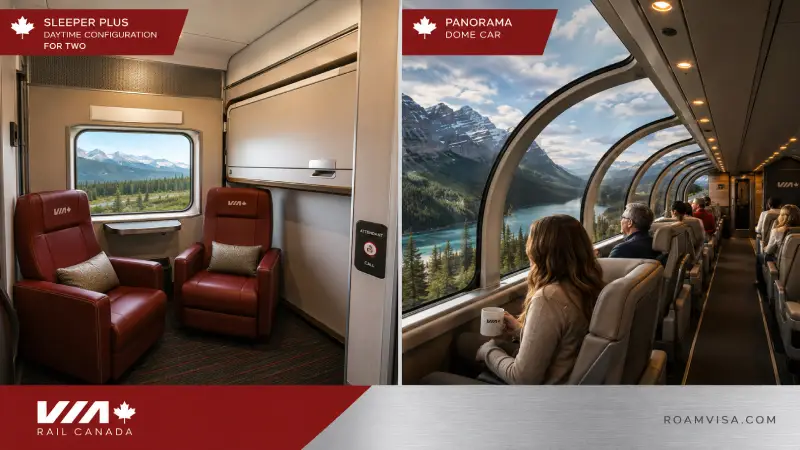
✓ Famous Panorama and Skyline glass-dome cars for scenic viewing of prairies and Rocky Mountains
The Route – What You Actually See Over 4 Days
Day 1: Toronto to Sudbury Junction and Beyond
Departure from Toronto Union Station in late morning. First few hours pass through the Greater Toronto Area suburbs and onto the Canadian Shield – rocky lake country, pine forests, remote cabin territory. The scenery is beautiful if low-key. Dinner in the dining car (Sleeper Plus and Prestige) as the train continues north and west through Ontario’s cottage country. Overnight passage through Hornepayne and onward – you will sleep through the less scenic parts.
Day 2: Winnipeg and the Start of the Prairies
Morning arrival in Winnipeg with a 1 to 2 hour station stop – enough time to walk around Union Station and grab a coffee. From Winnipeg the train continues across the vast flat prairies of southern Manitoba and into Saskatchewan. The prairies are a polarising experience – some find them monotonous, others find the endless horizon and golden wheat fields genuinely moving. This is when people spend hours in the Skyline dome car with books, coffee, and conversation. Overnight through Saskatoon and the western prairies.
Day 3: The Rockies and Jasper
This is the day you take the train for. Morning approach to the Rocky Mountains, then hours threading through mountain passes with snow-capped peaks, alpine lakes, and dense forests. Mid-afternoon arrival in Jasper with a 1 to 2 hour station stop – long enough to walk around the town and photograph the Athabasca Valley. Onward departure into British Columbia with more mountain scenery until sunset. This full day of the Rockies is genuinely spectacular, and photographs do not do it justice.
Day 4: Fraser Canyon and Arrival in Vancouver
Morning passage through the dramatic Fraser Canyon – the train follows the Fraser River through steep canyon walls with occasional salmon runs visible in the water. The scenery gradually flattens into the Fraser Valley and the approach to Vancouver’s Pacific coast. Late afternoon to early evening arrival at Vancouver Pacific Central Station. Total journey 93 to 97 hours in theory, but delays of 2 to 8 hours are very common, so practical arrival can slip well into evening.
Economy Class – The Budget Option
Economy class on The Canadian is essentially a reclining airline-style seat that you will sit in for 4 days and 4 nights. Fares start around 500 to 800 CAD one-way depending on season and booking lead time. No access to showers – you will go 4 days without one unless you buy a Sleeper Plus upgrade at a station stop. No meals included – you must buy food from the cafe car (limited options, microwaved cup noodles, pre-made sandwiches, instant macaroni and cheese) or stock up at Winnipeg or Jasper station stops.
Honest verdict on Economy: acceptable for shorter legs within the route (Toronto to Winnipeg, or Jasper to Vancouver) but genuinely difficult for the full 4-day journey. Most travellers who choose full-journey Economy report the no-shower situation becomes unpleasant by day 3. Recommended only if you are a genuinely budget-tight backpacker and you have planned to use shorter segments. For the full transcontinental experience, Sleeper Plus is worth the upgrade cost every time.
Sleeper Plus Class – The Default Good Experience
Sleeper Plus includes private cabin or open-plan berth accommodations, access to a shared shower in each car, all meals in the dining car, non-alcoholic beverages and snacks at all hours, access to the Skyline dome car, and Manor car cabin attendant service. Three sub-options within Sleeper Plus.
Upper/Lower Berths – The Budget Sleeper
Open-plan compartment with two berths (upper and lower) separated from the corridor by heavy privacy curtains. Seats convert to beds at night by the cabin attendant. Berths from around 1,200 to 1,700 CAD per person depending on season. Less private than cabins but the communal experience can be genuinely nice – you meet other passengers easily, and the berths themselves are comfortable enough for sleeping. Budget-friendly Sleeper Plus option.
Cabin for One – Private Solo Sleeper
Self-contained room for one person with its own toilet and sink, converting from a seat by day to a bed by night. Private but small. Fares from around 2,000 to 3,000 CAD for the full Toronto-Vancouver run. Good choice for solo travelers who want privacy without paying full cabin-for-two rates.
Cabin for Two – Private Room for Couples
A self-contained room with seats by day that convert into beds at night – a lower bed that folds down and an upper pull-down bunk. Private toilet and sink in the cabin. Around 3,000 to 5,000 CAD per person for the full run (based on double occupancy). The cabin is small – two leather chairs in daytime configuration with limited space to move around – but functional. Couples generally find the cabin for two the sweet spot between privacy, cost, and experience.
Prestige Class – The Luxury Option
Prestige Class is the top tier on The Canadian was introduced in 2014 as a response to Rocky Mountaineer’s luxury positioning. Prestige cabins are 50 percent larger than Sleeper Plus cabins for two, with an L-shaped leather sofa by day that converts to a double bed by night. Private bathroom with full shower and electric heated floors and walls. Extra-large window. In-cabin flatscreen television with movies and TV channels. Concierge service. Semi-exclusive access to the Park Car lounge at the back of the train during daytime in peak season. All meals included, plus premium alcoholic beverages.
Fares: 5,500 to 8,000 CAD per person for the full Toronto-Vancouver journey (double occupancy). Winter departures at the lower end, summer departures at the upper end. Honest verdict: the Prestige experience is genuinely luxurious, and the private shower alone is a massive quality upgrade over Sleeper Plus. However, the price is roughly double the Sleeper Plus cabin-for-two for marginal additional experience beyond the bathroom. For travellers who have the budget and specifically want the luxury train experience, Prestige delivers. For travelers whose primary interest is the journey itself, a Sleeper Plus cabin for two is enough and saves 3,000 to 4,000 CAD per person.
Fare Comparison – The Real Total Cost
The table below compares realistic total costs for the full Toronto-Vancouver journey across all classes, based on current VIA Rail pricing patterns across seasons. Note that VIA Rail runs dynamic pricing similar to airlines – booking 6+ months ahead secures the best rates, and off-season winter departures (November to February) are cheaper than peak summer.
| Class | Low Season (CAD) | Peak Season (CAD) | What Is Included |
| Economy (seat) | 500-800 | 800-1,200 | Reclining seat, no meals, no shower |
| Upper/Lower Berth | 1,200-1,500 | 1,500-1,800 | Berth, meals, shared shower |
| Sleeper Plus Cabin for One | 1,800-2,500 | 2,500-3,200 | Private cabin 1 person, meals, shower |
| Sleeper Plus Cabin for Two (pp) | 2,500-3,500 | 3,500-5,000 | Private cabin 2 persons, meals, shower |
| Prestige Cabin for Two (pp) | 5,500-6,500 | 6,500-8,000 | Luxury cabin, private bathroom, concierge |
A family of four taking two Sleeper Plus cabin-for-two rooms in peak summer pays approximately 14,000 to 20,000 CAD total just for the train portion. A couple in Prestige pays roughly 11,000 to 16,000 CAD combined. These numbers are why the Rocky Mountaineer versus VIA Rail comparison matters – for similar total outlay, you can do multiple Rocky Mountaineer legs with hotel nights included.
The Food Reality – Dining Car vs Cafe Car
Food quality on the Canadian is where class differences bite hardest. Sleeper Plus and Prestige passengers eat in the dining car with three-course prepared meals – breakfast open seating, lunch, and dinner in two or three assigned seatings (you pick your preference the previous evening). Menu rotates across the 4-day journey to avoid repetition. Food quality is generally reported as good rather than exceptional – comparable to a mid-range hotel dining experience. Non-alcoholic drinks are included with meals; alcohol is extra in Sleeper Plus and included in Prestige.
Economy passengers eat in the cafe car – a small snack bar with limited options. Pre-made sandwiches, microwaved meals, cup noodles, chips, and hot beverages. Prices are not high, but the food quality is airport-convenience-store level. Most honest reviewers of economy class cite the food as the weakest part of the 4-day experience and recommend bringing your own shelf-stable food from the start or stocking up heavily at Winnipeg’s 2-hour station stop, where you can walk to a nearby grocery store.

The Delayed Reality -How Late Does It Actually Arrive?
VIA Rail The Canadian runs on Canadian National (CN) freight-owned tracks. Freight trains get priority. Passenger trains wait in sidings while freight passes. Delays are frequent and often significant. Typical arrival delays on the full Toronto-Vancouver run are 2 to 8 hours late. Occasional reports of 12+ hour delays exist. VIA Rail recommends building in 1 night in Toronto before the next train and strongly advises against booking tight onward connections in Vancouver.
Related Articles: Split Ticket Train UK: How to Save Up to 40% Legally (2026 Guide)
For Indian tourists planning to fly out of Vancouver shortly after arrival, this is critical. Never book an onward flight for the same day as your Canadian arrival – leave at least a 24-hour buffer. Better to book a hotel in Vancouver for 2 nights after the scheduled arrival so that a 6 to 8 hour delay does not ruin onward plans. The delay is frustrating if you treat it as a transportation problem. It is less frustrating if you accept that the Canadian is a hospitality experience rather than efficient transport – extra hours just mean more meals in the dining car and more time in the Panorama dome.
Mistakes First-Time Canadian Travellers Make
- Booking economy class for the full 4-day journey – the no-shower reality makes this unpleasant by day 3; upgrade to at least an upper/lower berth for 700 to 900 CAD more.
- Planning a tight onward connection at Vancouver – regular 2 to 8 hour delays mean you need a 24+ hour buffer before any flight or important appointment.
- Expecting Prestige luxury everywhere – Prestige is the top class but the train itself is a 1950s Budd Company product, comfortable but not as polished as a modern 5-star hotel. Adjust expectations accordingly.
- Not booking far enough in advance for summer departures – June to August cabins sell out 6 to 9 months ahead at regular prices; waiting results in higher fares or waitlist status.
- Failing to bring snacks and a water bottle – even in Sleeper Plus with included meals, 4 days on a train benefit from having your own supplementary snacks, a refillable water bottle, and entertainment for downtime.
- Trying to use The Canadian as cheap transportation – Economy at 500 CAD sounds cheap, but flying Toronto-Vancouver is 250 to 400 CAD and takes 5 hours instead of 97 hours. The Canadian is always there for the journey itself.
- Not leaving cabin space for the experience – some travelers stay in their cabin the whole trip and miss the Skyline dome cars, the Panorama car, the Park car lounges, and the casual social atmosphere in the lounges. These are where the trip becomes memorable.
Before You Book – Know Your Canadian Train Options
The Canadian is one of two famous scenic train options in Canada – Rocky Mountaineer being the other. The two are very different products, and choosing correctly matters. Our detailed Rocky Mountaineer vs. VIA Rail comparison showing which train is worth the price walks through the key differences – Rocky Mountaineer is daylight-only with overnight hotels (no sleeping on board), while VIA Rail is an overnight sleeper train. Rocky Mountaineer covers Vancouver to Banff/Jasper only; VIA Rail covers the full transcontinental. Read that article alongside this one to decide which fits your trip.
If flying Toronto-Vancouver separately and taking the Canadian one way, timing your flight for the cheapest month keeps the total cost down. Our cheapest months to fly to Canada with real seasonal fare data show which months (November, January, and February) deliver 30 to 40 percent below peak fares from India to Toronto. Combining a cheap international arrival with the VIA Rail sleeper one-way eastbound or westbound creates a memorable itinerary without breaking the budget.
Final Thoughts
VIA Rail’s The Canadian is the real deal for the right traveler, a genuine transcontinental sleeper train experience covering 4,466 kilometers across four nights with Rocky Mountain scenery, prairie horizons, glass-domed observation cars, proper meals, and a slow travel rhythm that forces you to unplug. Indian tourists with the budget for a Sleeper Plus cabin for two or Prestige Class, flexibility to absorb delays, and genuine interest in the journey rather than the destination will remember this trip for years. The combination of landscape variety, comfortable accommodations, dining car meals, and the social atmosphere in the Skyline lounges is unique in North American travel. That said, it is not for everyone. Economy class for the full 4 days is genuinely rough without shower access.
The Canadian train is almost always slower and usually more expensive than flying, so if your goal is to get from Toronto to Vancouver efficiently, fly. The practical decision: A sleeper plus cabin for two at 3,000 to 5,000 CAD per person is the sweet spot for most couples wanting the experience without prestige pricing. Travel in the shoulder season (September or May) for better availability and lower fares than July-August peak. Book 6+ months ahead for the best rates. Build 24 hours of buffer before any onward flight from Vancouver to absorb delays gracefully. And commit mentally to the idea that the 97-hour journey is the trip itself, not wasted time en route to Vancouver. Done this way, the Canadian is genuinely one of the great rail experiences left in the world – and worth the money that the marketing promises.
Frequently Asked Questions
Is VIA Rail Toronto to Vancouver worth the price?
For Indian tourists who want the transcontinental Canadian train experience, yes – especially in a Sleeper Plus cabin for two at 3,000 to 5,000 CAD per person, which delivers the full scenery, dining, and accommodation without Prestige pricing. Not worth it as a substitute for flying – the flight is 5 hours for 250 to 400 CAD. It’s worth it as a 4-day experience for travelers interested in the journey itself.
How much does the Prestige Class on VIA Rail cost?
A Prestige Class cabin for two on the full Toronto-Vancouver run costs 5,500 to 8,000 CAD per person (based on double occupancy). Winter departures, November to February, sit at the lower end of the range; summer, July and August, at the upper end. It includes a private bathroom with a shower, concierge service, premium meals and drinks, and an in-cabin TV.
Is economy class on VIA Rail bearable for 4 days?
Marginally. Economy is a reclining seat with no access to showers, no meals included (cafe car only), and 4 nights of sleeping in your seat. Most honest reviewers report the experience becomes unpleasant by day 3 due to the no-shower reality. Recommended only for budget backpackers doing shorter legs (Toronto-Winnipeg or Jasper-Vancouver), not for the full 4-day trip.
How late does VIA Rail When do the Canadians typically arrive?
2 to 8 hours late is typical on the full Toronto-Vancouver run due to freight train priority on CN tracks. Occasional reports of 12+ hour delays exist. Never plan tight onward connections – build in at least a 24-hour buffer in Vancouver before any flight or important appointment.
Are meals included on VIA Rail from Toronto to Vancouver?
Yes, in Sleeper Plus and Prestige classes – all three meals per day in the dining car plus snacks and non-alcoholic beverages. Premium alcohol is included only in Prestige. No meals are included in economy class; you must buy limited food from the cafe car or bring your own.
When is the best time to take VIA Rail across Canada?
June to September for the best weather and longest daylight hours for scenery viewing. July and August are peak seasons with the highest fares and full trains – book 6 to 9 months ahead. Shoulder seasons (late May, early June, September, early October) offer better availability and lower fares while still having good weather. Winter journeys, December to March, offer different but beautiful snow scenery at lower fares but shorter daylight hours.



[…] VIA Rail is your choice, our detailed VIA Rail Toronto to Vancouver 4-day honest review covers exactly what each day of the transcontinental journey looks like, what food is really served […]