
Weather in Australia in September: A City-by-City Guide (2026)

Every year around this time, someone planning a September trip to Australia asks the same slightly confused question: Is it hot or cold there right now? The honest answer is both and neither, depending entirely on which part of a genuinely enormous country you’re asking about. Australia flips the calendar most of us grew up with, so September isn’t the start of autumn here; it’s the start of spring, and that single fact throws off a lot of first-time visitors who show up dressed for the wrong season entirely.
I went through what the actual weather data and travel sites are reporting for September across Australia’s major cities and regions, cross-checked a handful of sources against each other, and put together a proper city-by-city breakdown so you know exactly what to pack and where the weather actually works in your favor this month.
Why September Feels Like A Different Country Depending On Where You Land
Australia is genuinely enormous, roughly the same size as the continental United States, and it spans everything from the temperate southern coastline to genuine tropical rainforest in the north. That range means September delivers wildly different conditions depending on where you touch down. Southern cities are just waking up from winter, still cool but visibly warming. The tropical north, meanwhile, is finishing up its dry season, sunny, warm, and comfortably low on humidity, arguably at its best right before the wet season arrives later in the year.
What ties the whole country together in September is that it’s genuinely one of the more balanced, comfortable months to travel almost anywhere you choose, without the extreme summer heat of December through February or the deeper winter chill further south from June through August.
Sydney
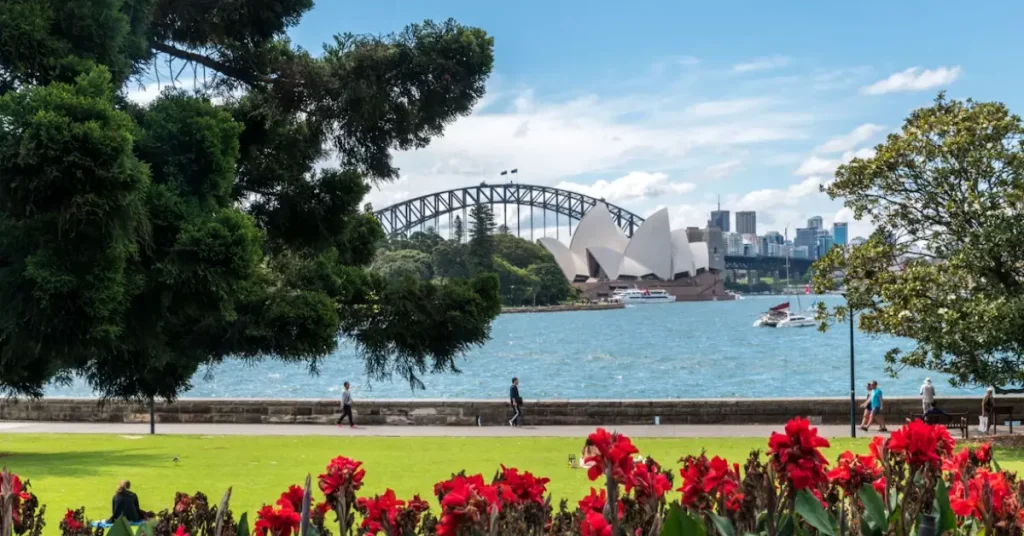
Sydney in September sits right at the start of spring, and it shows. Expect daytime highs around 20°C, with nights dropping to a cooler 11 to 12°C, cool enough for a jacket in the evening but genuinely comfortable during the day. Rainfall stays moderate, typically around 60 to 65mm spread across roughly ten days of the month, so you’ll likely catch a shower or two, but nothing that should derail an outdoor itinerary. Sunshine runs about seven hours a day on average, which is more than enough for coastal walks, harbor ferries, and outdoor dining, all of which start returning to life properly this month after winter.
Sea temperature around Sydney sits around 18°C in September, swimmable for the genuinely hardy but still a touch cool for most visitors expecting a proper beach day. Spring blossoms start appearing around the city through the month, adding a nice visual bonus to what’s already a comfortable stretch of weather for sightseeing.
Melbourne
Melbourne runs noticeably cooler than Sydney in September, and it’s worth packing accordingly. Daytime highs typically sit between 16 and 17°C, with overnight lows dropping to around 7 to 9°C, genuinely cool, and Melbourne’s famous unpredictability doesn’t take a break just because spring has technically started. Locals often joke about experiencing four seasons in a single day here, and September is exactly the kind of month where that reputation holds up; sunny mornings can shift to wind and rain by afternoon without much warning.

Rainfall in Melbourne during September tends to be light but frequent, with small amounts spread across a fair number of days rather than heavy downpours, and some data actually flags September as one of the wetter months of Melbourne’s calendar relative to its own averages, even though the totals stay modest by most standards. Pack proper layers, and don’t be surprised if you need all of them across a single afternoon.
Brisbane And The Gold Coast
Brisbane offers a genuinely pleasant middle ground in September, warmer than the southern cities without tipping into the heat of full summer. Daytime highs typically land around 23 to 24°C, with overnight lows around 14 to 15°C, comfortable enough for shorts and a light layer for evenings. Rainfall stays low this time of year, and sunny days are the clear norm rather than the exception.
The Gold Coast, just south of Brisbane, tracks closely with similar temperatures, generally 21 to 22°C during the day, and this is genuinely one of the better windows to visit the region’s beaches before the full heat and humidity of summer arrives. Water temperatures are still on the cooler side for extended swimming, but plenty of visitors find it comfortable enough for a proper beach day regardless.
Cairns And The Great Barrier Reef
Cairns in September sits toward the tail end of the tropical north’s dry season, and it’s arguably one of the best months of the year to visit this part of the country. Daytime temperatures typically run 26 to 29°C, warm and genuinely pleasant, with overnight lows around 19°C, comfortable enough that you won’t need much beyond a light layer even after dark. Rainfall is minimal this time of year, often under 30mm for the entire month, and humidity stays noticeably lower than what Cairns experiences during the wet season months later in the year.
This combination, warm, dry and comfortable, makes September a genuinely strong window for reef trips specifically, since visibility tends to be good and the weather rarely interferes with boat schedules the way it can during the wetter months. Sea temperatures stay warm enough for comfortable swimming and snorkeling throughout the month.
Perth
On the opposite coast, Perth tracks fairly closely with Sydney’s September numbers, daytime highs around 20°C, with cooler nights typically in the 10 to 11°C range. The city and surrounding region are still catching the tail end of its wetter season, so rain remains a reasonably regular feature of the month compared to the drier months ahead in Western Australia’s late spring and summer.

September is genuinely one of the best months to be in Western Australia for a completely different reason though, wildflower season hits its stride across the state’s national parks and coastal reserves through the month, turning otherwise dry landscapes into something worth a dedicated day trip on its own.
Adelaide And South Australia
Adelaide sits in similar territory to Melbourne temperature wise, daytime highs around 16°C, with cooler nights typically dropping to 9°C. Like Melbourne, it’s a transitional month here, spring is clearly underway but winter hasn’t entirely let go, and packing layers rather than committing fully to spring clothing is the sensible move.
The Red Centre: Uluru And Alice Springs
The desert interior sees one of the more noticeable shifts of the month, and it’s worth planning around specifically if Uluru is on your itinerary. Daytime temperatures climb to a genuinely warm 28 to 29°C, while nights drop sharply to around 11°C, a swing that catches a lot of first time visitors off guard if they’ve only packed for the daytime heat. Rainfall stays minimal throughout, and September specifically sits in a comfortable window before the Red Centre’s proper summer heat, which climbs considerably higher and less comfortably from November onward.
Packing both summer clothing for the day and a proper jumper or jacket for the evening is genuinely necessary here rather than optional, given how sharply the desert cools once the sun goes down.
Tasmania And Canberra
Tasmania and Canberra both sit at the cooler end of the country’s September range, and it’s worth setting expectations accordingly if either is part of your itinerary. Hobart typically sees daytime highs around 13°C with overnight lows close to freezing in some years, while Canberra runs similarly cool given its inland, elevated position. Neither destination is uncomfortable in September, but this is genuinely still a cool weather month in both places, better suited to layered city exploring than any expectation of shorts and t-shirt weather.
Darwin And The Top End
Darwin and the wider Top End of the Northern Territory sit at the opposite extreme from Tasmania, consistently warm through September with daytime highs regularly around 31 to 33°C and evenings staying mild rather than genuinely cool. Rainfall remains low as the dry season continues, making this a comfortable, reliable window for exploring the region before the wet season’s humidity and heavier rains arrive later in the year.
What’s Actually Happening In September Beyond The Weather
September brings a genuine calendar of events worth factoring into travel plans alongside the weather itself. The AFL Grand Final in Melbourne is one of the biggest single sporting events in the country and draws serious crowds if your dates happen to overlap. Brisbane Festival runs through the city with a citywide arts program, and whale watching season continues strongly along the New South Wales and Queensland coastlines through spring, a genuine bonus for coastal travelers this time of year.
Canberra’s Floriade festival, one of the largest flower festivals in the country, blankets the capital in blooms through September as well, pairing naturally with the wildflower season happening simultaneously across Western Australia if flowers and gardens are any part of your interest.
Is September Actually A Good Time To Visit Australia
For most of the country, yes, genuinely. It sits outside the peak crowds and higher prices of the December through February summer season, while still delivering comfortable, often genuinely pleasant weather across the tropical north and reasonable, if occasionally unpredictable, conditions further south. Accommodation tends to be easier to book and more reasonably priced across most cities compared to peak summer, since September falls outside Australia’s main domestic holiday periods.
The one honest caveat is beach specific. If lounging in the ocean for hours is the entire point of your trip, September’s water temperatures in the south are still on the cool side, and you’d get a warmer swim waiting until closer to summer. But for sightseeing, city exploring, hiking, wildlife and reef trips specifically, September holds up as one of the stronger months on the calendar almost anywhere you choose to go.
What To Pack
Layers are the single most useful packing strategy for a September trip spanning more than one region, since the temperature swing between Cairns and Hobart on the same day can easily exceed fifteen degrees. A light jacket or jumper covers the cooler evenings in Sydney, Melbourne and Adelaide, while the Red Centre specifically demands both warm weather clothing for the day and something genuinely warm for after sunset given how sharply desert temperatures drop.
For the tropical north, lightweight, breathable clothing and proper sun protection matter more than anything else, since September’s dry, sunny conditions in Cairns and Darwin mean strong sun exposure throughout the day. A compact umbrella or light rain jacket is worth including regardless of your specific itinerary, given how often Melbourne and Perth in particular see brief, unpredictable showers through the month.
For the most current, region specific forecasts closer to your actual travel dates, Australia’s own Bureau of Meteorology publishes official forecasts and climate data directly, and it’s worth checking a few weeks out from departure rather than relying solely on historical averages like the ones covered in this guide.
How September Compares To The Months Around It
August, the tail end of Australian winter, still carries a genuine chill through the southern cities, several degrees cooler than September across Sydney, Melbourne and Adelaide alike, so the shift into September is a real and noticeable one rather than a marginal difference. October, by contrast, pushes temperatures up further still almost everywhere, and by November the country is sliding firmly toward summer, with southern beaches finally warming enough for comfortable swimming and the tropical north beginning its transition toward the wet season.
That positioning is exactly what makes September worth considering on its own terms rather than as a compromise between two better options. It captures the tropical north at close to its annual best, dry, warm and not yet humid, while the south gets the first genuine taste of spring without the crowds or costs that build through October and November as the weather warms further and school holiday periods start to affect availability.
Final Thoughts
September in Australia rewards travelers willing to think regionally rather than expecting one single answer to cover a country this size. Head north and you’ll find some of the best reef and outback weather of the entire year, warm, dry, and genuinely comfortable. Stay south, and you’re looking at a proper transitional month, with spring blossoms and lengthening days mixed with the occasional cool, unpredictable shower. Neither version is a compromise; they’re just different trips, and knowing which one you’re actually planning for makes all the difference in how you pack and what you get out of the month.
Frequently Asked Questions
Is September a good month to visit Australia?
Yes, for most of the country. It offers comfortable weather, particularly in the tropical north, along with fewer crowds and lower prices than peak summer, though southern beaches remain too cool for extended swimming.
What is the weather like in Sydney in September?
Sydney sees daytime highs around 20°C and cooler nights around 11 to 12°C, with moderate rainfall and around seven hours of sunshine a day on average.
Is it warm enough to swim in Australia in September?
In the tropical north, including Cairns and the Great Barrier Reef, yes. In southern cities like Sydney and Melbourne, sea temperatures remain on the cool side, and most visitors find it too chilly for extended swimming.
What should I pack for Australia in September?
Layers are essential given how much temperatures vary by region and time of day, particularly in the Red Centre, where daytime warmth gives way to genuinely cold desert nights.
Is September better than other months to visit the Great Barrier Reef?
It’s genuinely one of the stronger months, sitting at the tail end of the dry season with warm temperatures, low rainfall, and good visibility for reef trips before the wet season begins later in the year.
Which part of Australia has the best weather in September?
Northern Queensland, including Cairns and Brisbane, along with Darwin and the Top End, offers the most consistently warm and dry conditions, while Melbourne, Adelaide, Hobart, and Canberra remain noticeably cooler and more changeable.


