
Best Time to Visit Scotland: Month-by-Month Weather & Travel Guide

Scotland’s weather does not follow the usual European tourist season rules. The best months to visit Scotland are not July and August – the months when everyone else goes – but May and September, when the weather is genuinely pleasant, the midges are more manageable, the prices have not yet spiked or have just dropped, and the Highland trails are not crowded. This is not a minority view held by contrarians; it is the consensus of experienced Scottish travelers and Scottish locals alike.
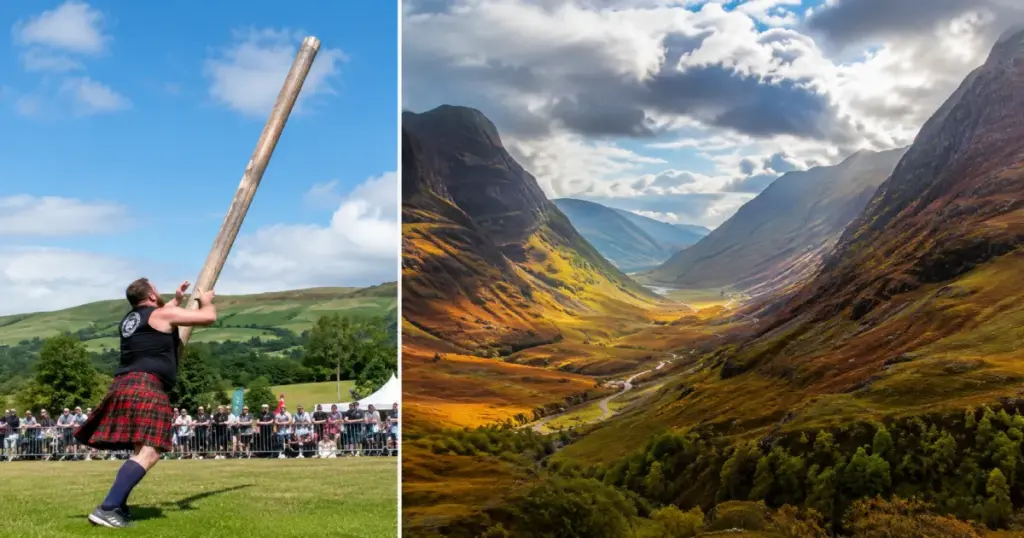
The difficulty is that Scotland’s weather is legendarily unpredictable. Four seasons in one day is not a cliche – it is a meteorological reality in the Highlands. The west coast and islands are wetter than the east. The Highlands are colder and snowier than Edinburgh. You can have a warm, sunny week in October and a cold, rainy week in June. What the month-by-month breakdown below gives you is averages and general character – not guarantees. The only guarantee about Scottish weather is that you should always pack a waterproof jacket, whatever month you visit.
This guide goes month by month through Scotland’s seasonal patterns, covering temperature, daylight, crowds, midge activity, accommodation prices, and what is happening where. Whether you are planning the Highlands and Islands, Edinburgh, the Borders, or a road trip on the North Coast 500, the timing considerations in this guide will help you choose your window and set the right expectations.
Quick Facts – Scotland Timing at a Glance
Best months overall: May and September – good weather, fewer crowds, midges manageable
Avoid August if you hate crowds: Edinburgh Fringe doubles the city population, prices triple
Midge season: June–September worst – especially near lochs and rivers at dawn and dusk
August Edinburgh: accommodation books out 6+ months ahead – plan very early or avoid
May: 14°C average, Scotland’s driest month, Highland Games begin, bluebells bloom
September: Braemar Gathering (biggest Highland Games), autumn colours start, midges decreasing
Winter (Nov–Mar): dark by 4pm, cold – but cheapest, and dramatic snowy Highlands
Scottish weather is famously unpredictable – pack for all four seasons on any trip
January and February – Cheapest, Coldest, Quietly Dramatic
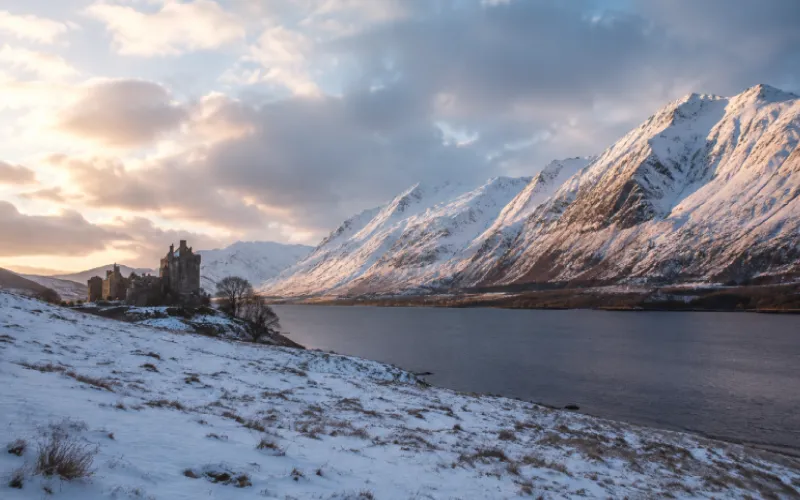
January is Scotland’s coldest and darkest month – temperatures average 3–7°C, daylight is limited to about 7–8 hours, and the Highlands can see serious snow. Most tourist infrastructure in rural Scotland is operating at reduced capacity or closed. Edinburgh in January is a different story: Hogmanay celebrations run into early January, Burns Night on the 25th is celebrated throughout the country, and the city’s restaurants and cultural venues operate year-round.
The case for January and February: they are the cheapest months to visit Scotland by a significant margin. Hotels in Edinburgh that cost £180/night in August cost £70–£90 in January. Flights are at their lowest. The Highlands look extraordinary under snow – Glencoe, the Cairngorms, and Loch Lomond all have a cinematic drama in winter that summer cannot match. The roads can be unpredictable in the Highlands (carry winter tires if possible, or hire a 4WD for remote areas), but most main roads remain open.
- Temperature: 3–7°C | Daylight: 7–8 hours | Crowds: very low | Prices: cheapest
- Edinburgh: Hogmanay (Jan 1–2), Burns Night (Jan 25) – both worth experiencing
- Highland driving: can be affected by snow – check road conditions, carry kit
- Most Highland and Island tourism businesses closed or reduced hours Jan–Feb
- Best for: Budget travellers, couples wanting solitude, photographers, winter landscape lovers
March and April – Scotland Waking Up
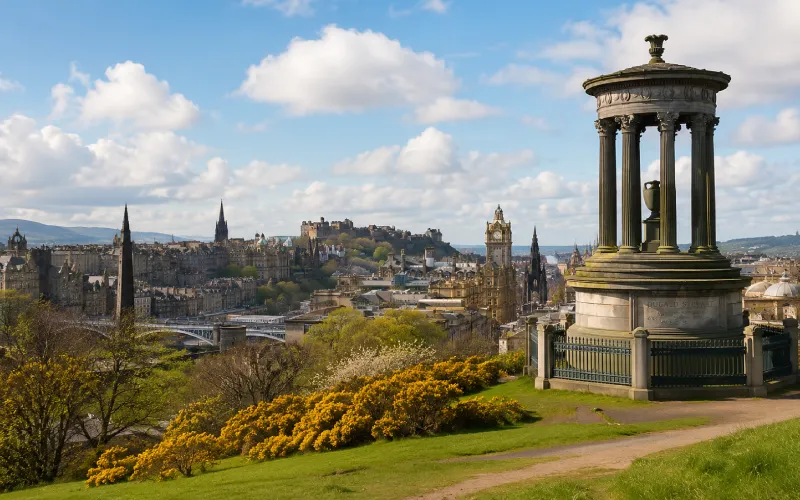
March and April see Scotland gradually coming back to life. Temperatures rise to 7–12°C by April, daylight extends to 13–15 hours by May, and the bluebells and wild primroses begin to carpet woodland floors in April. The Cairngorms ski areas typically close by April. Easter weekend is busy – book accommodation in advance if you are visiting during the Scottish or English school Easter holidays.
April is often one of Edinburgh’s driest months, and the city in April has a particular energy as spring arrives – Beltane Fire Festival at the end of April on Calton Hill is one of Scotland’s most theatrical events, a pagan fire ceremony that draws thousands of visitors. For the Highlands, April is still cold on high ground with snow possible above 600m, but the valleys are green and relatively crowd-free.
- Temperature: 7–12°C April | Daylight: 13–15 hours by April end
- Bluebells appear in Scottish woodlands – April is one of the most beautiful months
- Beltane Fire Festival, Edinburgh: last Saturday of April – dramatic pagan ceremony on Calton Hill
- Ski areas close: most Cairngorms skiing ends by April
- Midges: not yet active in April – enjoy the Highlands midge-free
May – The Best Month Overall
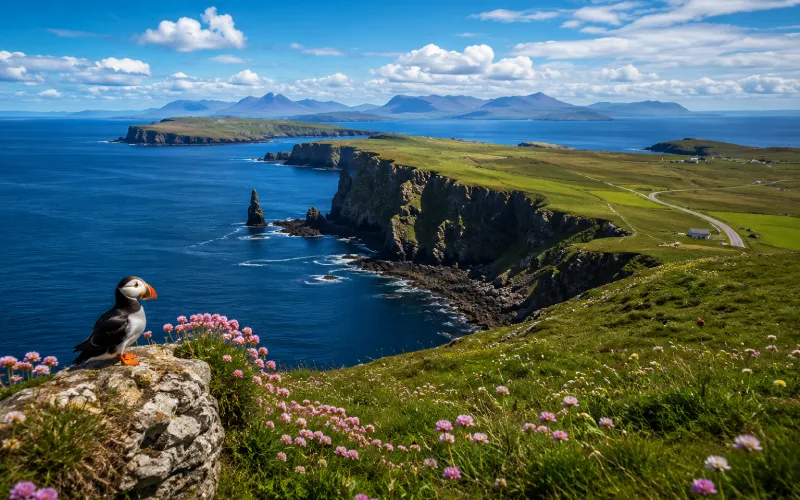
May is the month that consistently gets the most genuine enthusiasm from Scotland veterans. Average temperatures reach 14°C, Scotland has its driest weather of the year, the Highland Games season begins (small local games from late May onward), wildflowers bloom across the islands, and the midges – Scotland’s notorious biting insects – are still mostly dormant or only just beginning to appear. Crowds are meaningfully lower than June and July, and accommodation prices have not yet hit peak season rates.
May is particularly good for the Scottish Islands – the Hebrides and Orkney in May have a clarity of light that is quite unlike anything else in Britain, and the puffins arrive at their nesting colonies (particularly on the Isle of May and the Treshnish Isles) from April and are present through early August. Boat trips to see puffins operate from May onwards. On the mainland, May is the ideal month for the North Coast 500 – the roads are relatively quiet and the landscapes are vivid.
- Temperature: 14°C average | Scotland’s driest month | Midges: minimal
- Highland Games season begins late May – caber tossing, traditional dancing, piping
- Puffins: nesting colonies active May–August – Treshnish Isles, Isle of May
- North Coast 500: ideal in May – roads not yet summer-busy, landscapes vivid
- World Whisky Day: third Saturday of May – distilleries offer special tastings
June – Long Days, Rising Midges
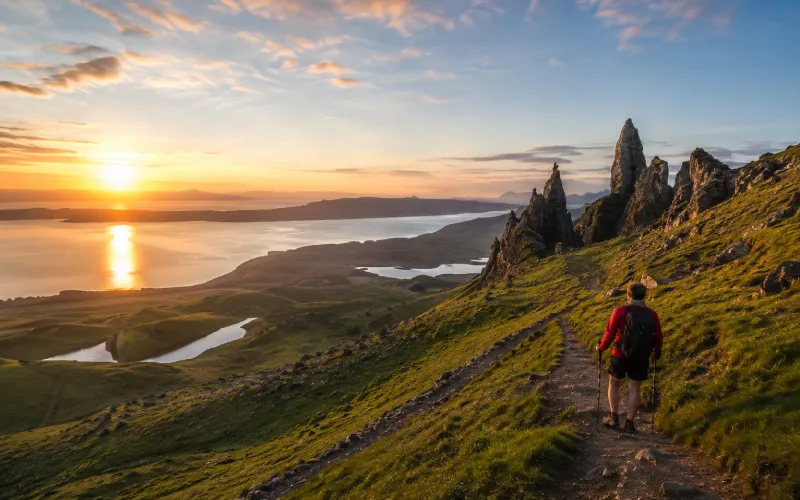
June brings Scotland’s near-endless daylight – sunset does not happen until after 10pm in Edinburgh and even later further north, meaning you genuinely have 17+ hours of daylight for exploring. Average temperatures reach 17°C. The Highland Games circuit is in full swing. Hikers and cyclists are active on Highland trails. This is early peak season, with crowds still manageable compared to July and August but prices rising.
The midge situation becomes real in June. If you are walking in the Highlands near lochs and rivers, especially at dawn and dusk, midges will find you. Carry repellent – DEET-based or Smidge (a Scottish-made repellent specifically designed against Highland midges) – and a head net if you are sensitive to insect bites. In towns and on exposed windy ridges, midges are not present; they are concentrated in still, damp, sheltered spots near water.
- Temperature: 17°C | Daylight: 17+ hours by end of June
- Midge warning: active from June – worse near lochs and rivers at dawn/dusk
- Royal Highland Show near Edinburgh: late June – Scotland’s major agricultural show, ~200,000 visitors
- Best midge deterrents: Smidge repellent spray, DEET-based products, head nets in Highlands
| Month | Avg Temp | Daylight | Midges | Crowds | Price Level | Verdict |
|---|---|---|---|---|---|---|
| January | 3–7°C | 7–8 hrs | None | Very low | Cheapest | Winter drama, tight budget |
| February | 4–8°C | 9 hrs | None | Low | Very cheap | Similar to January |
| March | 6–10°C | 11 hrs | None | Low | Low | Spring beginning |
| April | 8–12°C | 13 hrs | None | Moderate | Moderate | Bluebells, Beltane |
| May | 12–15°C | 17 hrs | Low | Moderate | Moderate | BEST MONTH OVERALL |
| June | 15–18°C | 17+ hrs | Medium | High | High | Long days, rising crowds |
| July | 17–19°C | 17+ hrs | High | Peak | Peak | Warmest, most crowded |
| August | 17–20°C | 15 hrs | High | Peak | Peak | Edinburgh Fringe – book far ahead |
| September | 13–17°C | 12 hrs | Easing | Moderate | High→Mid | EXCELLENT – Braemar Games |
| October | 10–13°C | 10 hrs | Gone | Low-Mod | Moderate | Autumn colours peak |
| November | 6–9°C | 8 hrs | None | Low | Low | Quiet, some closures |
| December | 4–7°C | 7 hrs | None | Low | Low | Hogmanay prep, dark |
July and August – Peak Season Reality Check
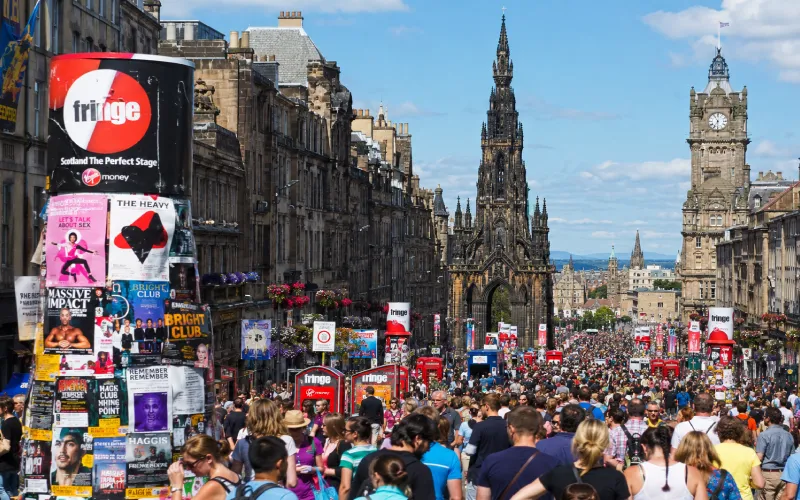
July and August are Scotland’s warmest months, with average temperatures of 17–20°C in lowland areas. August in particular is Edinburgh Festival month – the International Festival, the Fringe, the Book Festival, the Military Tattoo, and the Art Festival all run simultaneously, transforming the city into one of the most extraordinary cultural gatherings in the world and simultaneously making it one of the most expensive and crowded places in Britain.
If you want to experience the Edinburgh Festival Fringe, book your accommodation six months or more ahead, expect to pay £250–£450 per night for hotel rooms that cost £90 in October, and plan for very busy streets and queues everywhere. If you do not specifically want the Fringe, avoid Edinburgh in August and visit in May, June, or September. For the Highlands in July and August: midges are at their worst, the North Coast 500 has significant traffic, and Isle of Skye accommodation books out entirely. If you are visiting the Highlands in peak season, book every night of accommodation before you leave home.
- August Edinburgh: accommodation prices triple or more – £250–£450/night common
- August Edinburgh Fringe: 5 simultaneous festivals, city population doubles
- July–August midges: worst period – head nets recommended for Highland walks near water
- Isle of Skye in summer: accommodation often fully booked – reserve months ahead
- North Coast 500 in summer: significantly busier – consider driving in May or September
September – The Traveller’s Secret
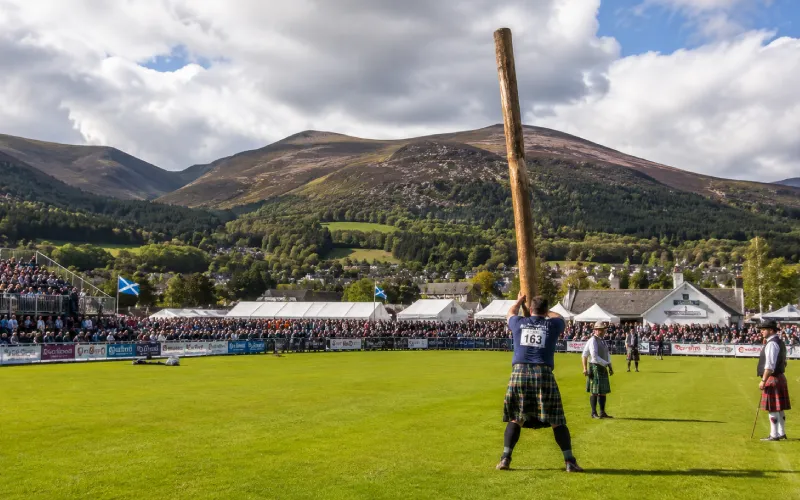
September is arguably the best month to visit Scotland for most visitors – it combines the tail end of summer warmth (12–17°C), the Braemar Royal Highland Gathering (the biggest of all Highland Games, typically held the first Saturday of September in Braemar, attended by the Royal Family), the spectacular beginning of autumn colors, and the disappearance of both the peak season crowds and the worst of the midges. Accommodation prices begin to drop from their August peaks. The lochs, glens, and Highland passes are not crowded.
The Braemar Gathering is one of Scotland’s most distinctive events – caber tossing, tug of war, Highland dancing, and piping competitions in a setting that looks like it was designed for a postcard. Tickets must be booked in advance (they sell out). The event is held near Braemar in Aberdeenshire, about 2 hours from Aberdeen by car. If you are in Scotland in early September, it is worth arranging your itinerary around it.
- Braemar Royal Highland Gathering: first Saturday of September – book tickets in advance
- Autumn colours: beginning by late September, peak in October – photography is extraordinary
- Midges: rapidly decreasing from mid-September onwards
- Accommodation prices: dropping from August peak – still book ahead for popular areas
- Weather: still pleasant and often dry – best combination of elements for most visitors
Also Read on RoamVisa
➤ UK Trip Cost Per Day – Realistic Daily Budget for Every Travel Style
Final Thoughts
May and September are Scotland’s best months for most visitors – good enough weather, manageable crowds, and the full range of tourism infrastructure open and operating. May has the edge on weather reliability and midge counts; September has the edge on autumn colours, the Braemar Gathering, and prices. If you can only go in summer, choose June over July and August – early summer gives you the long days without the peak-season premium and midge explosion. The Edinburgh Festival in August is a genuinely extraordinary experience and worth planning around if you want it – but it requires booking accommodation six-plus months ahead and accepting that you will pay significantly more for everything.
Do not try to visit Edinburgh in August as part of a casual summer itinerary without advance planning. The city is genuinely sold out. Whatever month you choose, pack a waterproof jacket. Scotland’s weather is famously unpredictable and the only constant across all twelve months is that rain is always possible. The Highlands in particular can produce four seasons in a single day. A good waterproof, layered clothing, and sensible footwear for uneven terrain will serve you far better than any single month’s weather statistics.
Frequently Asked Questions
What is the best time to visit Scotland?
May and September are the best months to visit Scotland for most visitors. May offers Scotland’s driest weather, manageable crowds, Highland Games beginning, and minimal midges. September brings the Braemar Gathering, early autumn colors, decreasing midges, and prices dropping from their August peak. Both months give good weather without the overtourism and high costs of July and August.
When are midges worst in Scotland?
Midges are worst in Scotland from June to September, with July and August being the peak months. They are most active at dawn and dusk, near lochs, rivers, and damp sheltered ground in the Highlands. In windy conditions or bright sunlight, they largely disappear. In towns and on exposed ridges, midges are rarely a problem. Use Smidge repellent or DEET-based repellent and carry a head net for walking in the Highlands in peak midge season.
Is Edinburgh worth visiting in August?
Edinburgh in August during the Fringe Festival is a world-class cultural experience – five simultaneous festivals transform the city into something unique. However, accommodation prices triple or more, the city is extremely crowded, and everything requires advance booking. If you want the Fringe, book six months ahead and budget accordingly. If you just want to visit Edinburgh, choose May, June, or September when prices are reasonable and crowds are manageable.
When is the Highland Games season in Scotland?
The Highland Games season runs from late May through September, with dozens of local games held throughout Scotland. The most famous is the Braemar Royal Highland Gathering, held on the first Saturday of September in Braemar, Aberdeenshire – attended by the Royal Family and requiring advance ticket booking. Smaller games happen throughout summer in Inveraray, Ballater, Dunoon, and many other locations.
Is Scotland worth visiting in winter?
Yes, for the right traveller. Scotland in winter (November–March) offers dramatic snowy Highlands, very low crowds, and the cheapest accommodation and flights of the year. Hogmanay (Scottish New Year) on December 31 in Edinburgh is one of the world’s great street parties. Burns Night (January 25) is celebrated nationwide. The honest limitations: daylight drops to 7–8 hours in December and January, some Highland and Island attractions close or reduce hours, and road conditions can be challenging in the Highlands.


