Best Time to Visit Canada – Month by Month Province Guide

Canada is the world’s second-largest country, spanning six time zones and encompassing everything from temperate rainforests on the Pacific coast to Arctic tundra above the 60th parallel. Asking ‘when is the best time to visit Canada?’ is like asking ‘when is the best time to visit a continent?’ The answer is entirely different depending on whether you want to ski in Whistler, watch polar bears gather in Churchill, see the Northern Lights in Yellowknife, hike in Banff, walk through fall foliage in Ontario, or experience Montreal’s vibrant summer festival season.
This guide breaks Canada’s timing down province by province and activity by activity – covering the major regions that visitors actually travel to and the specific windows that matter for each. The honest overview: summer (June–August) is when the national parks, outdoor activities, and most of the country is at its most accessible and beautiful. Fall (September–October) offers fall colours and wildlife. Winter (December–March) is cold but spectacular for Northern Lights, skiing, and unique festival culture. Spring (April–May) is the transition – unpredictable but occasionally magical.
One specific note for Indian tourists: Canada has recently introduced the eTA (Electronic Travel Authorization) requirement for visa-exempt countries. Indian passport holders require a Canadian visa (not eTA) regardless of travel history. Apply well in advance through the Canadian immigration website (ircc.canada.ca) – standard processing can take several weeks to months depending on current volumes.
Quick Facts – Canada Seasonal Timing
✔ Best overall months: June–September for Rockies and outdoor adventure | September–October for fall colours
✔ Northern Lights best: December–March in Yellowknife, Yukon, and northern Manitoba
✔ Polar bears Churchill, Manitoba: October–November – book Churchill tours 6–12 months ahead
✔ Calgary Stampede: 10 days in July – world’s largest outdoor rodeo, book accommodation months ahead
✔ Canadian Rockies Rockies (Banff/Jasper): July–August for peak hiking | May and September for fewer crowds
✔ Vancouver: mild year-round, rainy winters – cherry blossoms in March, summer dry season June–September
✔ Quebec City winter carnival: late January/early February – ice sculptures, outdoor skating
✔ Cheapest time: November–March (except Christmas week) – lowest flights and hotel prices
British Columbia – Rockies and Vancouver by Season
Best Time: June–September for Rockies | March and June–September for Vancouver
British Columbia contains both Whistler (world-class ski resort) and Banff-adjacent Yoho National Park (Emerald Lake, Kicking Horse Pass), making it a year-round destination for different activities. For the Canadian Rockies in BC, June through September is the window when all hiking trails are accessible, all park facilities are open, and road conditions are reliable. September is increasingly favoured by experienced visitors – the summer crowds have thinned, the fall colour is starting on the mountain slopes, and the weather remains genuinely pleasant with warm afternoons and cool evenings.
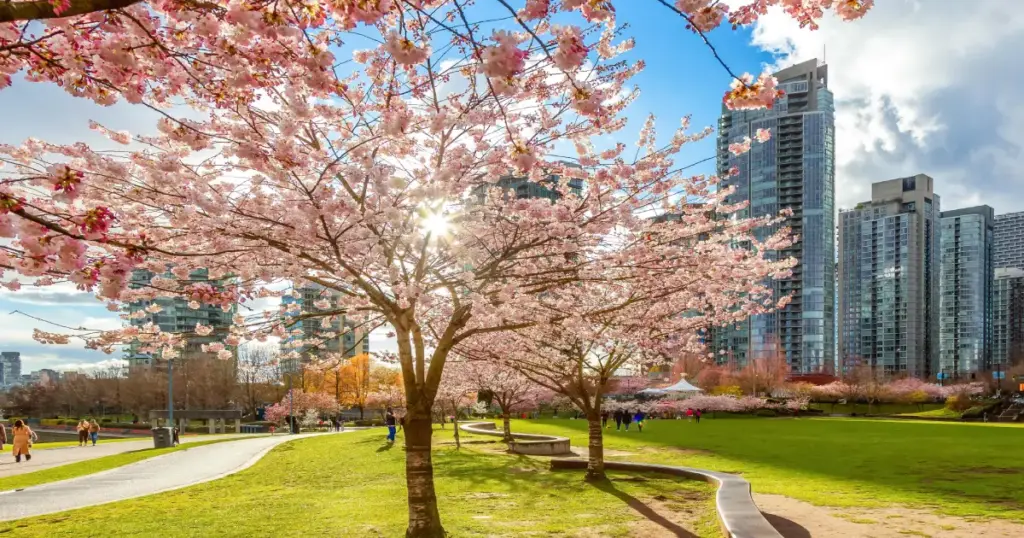
Vancouver is one of the world’s most liveable cities and worth visiting in any season, though the Pacific rainy season (October through March) means persistent grey skies and rain for extended periods. The city is at its finest from June through September – dry, warm (20–25°C), and at the peak of its outdoor culture. Stanley Park cycling, Granville Island market, and English Bay beach are all summer institutions. March in Vancouver is special for one reason: the Japanese cherry blossom season, when thousands of trees across the city and in Queen Elizabeth Park and the UBC campus turn pink simultaneously.
- Vancouver cherry blossoms: mid-March to early April – Queen Elizabeth Park and UBC best spots
- Whistler skiing: December–April, peak conditions January–March
- Whistler summer (June–Sept): PEAK 2 PEAK gondola, mountain biking, hiking, festivals
- Yoho National Park: July–September for hiking | Emerald Lake open May–October
- BC salmon run: September–October – spectacular wildlife viewing in rivers and streams
Related Articles: 7 day Canadian Rockies Banff Jasper itinerary
Alberta – Banff, Jasper, and Calgary Stampede
Best Time: June–September | September for Rockies Without Peak Crowds
Alberta is the province most visitors picture when they think of Canada – the Canadian Rockies, Lake Louise, the Icefields Parkway, and the cowboy culture of Calgary. July and August are peak season: all facilities open, maximum daylight hours (18 hours at the summer solstice), warmest temperatures for alpine hiking, and the highest visitor numbers the parks have ever recorded. Moraine Lake in July is extraordinary and also surrounded by hundreds of other people. The shuttle system is mandatory, accommodation books out months ahead, and prices reflect the demand.
September is the alternative that experiences Canadians recommend without exception. The summer crowds have gone, temperatures are still excellent for hiking (typically 15–22°C in the valleys), fall colour is beginning on the aspen and larch trees (golden larches around Lake Louise and the Larch Valley trail are specifically worth timing for mid-September to early October – one of the most spectacular natural events in Canada), and the national parks feel like they belong to you again. The Calgary Stampede – 10 days in July, the world’s largest outdoor rodeo and one of North America’s great festivals – is either a reason to visit in July or a reason to plan around it.
- Banff/Jasper July–August: peak crowds, highest prices, warmest – book everything months ahead
- Banff/Jasper September: RECOMMENDED – golden larches, fewer crowds, excellent hiking
- Larch Valley near Lake Louise: golden larch trees mid-September to early October – spectacular
- Calgary Stampede: 10 days in July – book accommodation in Calgary 4+ months ahead
- Banff townsite and Jasper winter: December–March – skiing, Northern Lights possible, cheaper
| Month | Rockies (Banff/Jasper) | Vancouver | Alberta Prairies | Northern Canada | Best For |
|---|---|---|---|---|---|
| January | Cold, skiing, Northern Lights possible | Mild, rainy, cherry blossom prep | Coldest -15 to -25°C | Aurora prime season | Skiing, Northern Lights |
| March | Still skiing, trails closed | Cherry blossoms peak | Warming slowly | Aurora season continues | Cherry blossoms, skiing |
| May | Trails opening, parks quiet | Spring, dry and pleasant | Green fields emerging | Snow receding | Quiet parks, wildflowers |
| June | Hiking season opens | Warm, dry season begins | Calgary Stampede prep | Long days, warming | Start of outdoor season |
| July–Aug | Peak season, all trails open | Best weather, festivals | Calgary Stampede July | Midnight sun North | Maximum outdoor access |
| September | Best: larch colour, fewer crowds | Warm, still good | Harvest season | Aurora starts returning | Best Rockies month |
| October | Fall colours, some closures | Rainy season starting | Harvest colours | Aurora season building | Fall foliage, fewer crowds |
| December | Skiing, Christmas, aurora | Rainy, Christmas markets | Cold prairie winters | Peak aurora season | Skiing, Northern Lights |
Ontario and Quebec – Fall Colours and City Culture
Best Time: May–June and September–October | Winter for Quebec Carnival
Ontario and Quebec together form the cultural and historical heart of English and French Canada – Toronto’s multicultural energy, Ottawa’s national institutions (free national museums), the extraordinary bilingual food-and-festival culture of Montreal, and the walled historic city of Quebec that feels closer to medieval France than to North America. The best time to experience this region is September and October for three reasons: comfortable temperatures (15–22°C), spectacular fall foliage, and the end of summer tourist peak that reduces crowds and prices.
Quebec’s Laurentian Mountains (1.5 hours north of Montreal) and Ontario’s Algonquin Provincial Park both produce extraordinary fall colour – the maples and birches turn brilliant scarlet, orange, and gold from late September through mid-October. The Ottawa Tulip Festival in May (over a million tulips planted across the capital, a gift from the Netherlands after WWII) and the Montreal Jazz Festival in late June/early July (the world’s largest jazz festival, free outdoor performances) are the two best festival reasons to visit at specific times. Quebec City’s Winter Carnival (late January/early February) is one of the world’s great winter festivals – ice sculptures, dog sled races, and an ice palace that exists only for the two-week duration.
- Ontario fall colours: Algonquin Provincial Park mid-September to mid-October – peak maple colour
- Ottawa Tulip Festival: second–third week of May – 1 million tulips, free entry
- Montreal Jazz Festival: late June/early July – world’s largest, mostly free outdoor stages
- Quebec City Winter Carnival: late January/early February – ice palace, dog sleds, bonfires
- Niagara Falls: visible year-round but best in fall (less crowded) and winter (partially frozen)
Yukon, Northwest Territories – Northern Lights and Wilderness
Best Time: December–March for Aurora | June–August for Midnight Sun
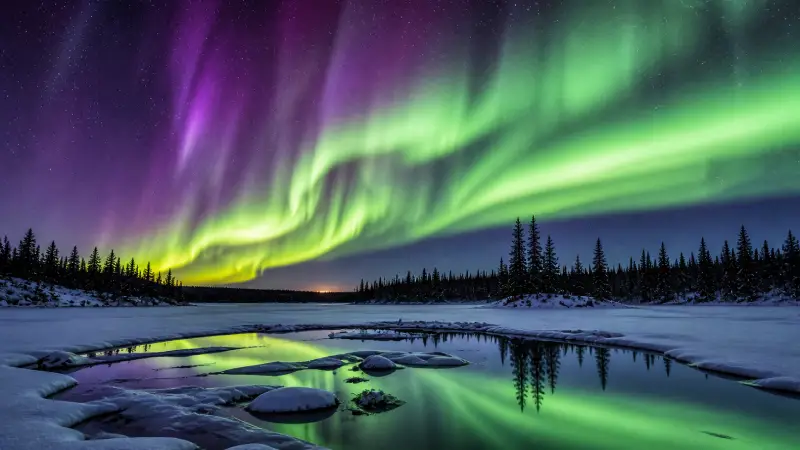
The northern territories – Yukon, Northwest Territories, and Nunavut – are a different Canada entirely. Yellowknife, the capital of the Northwest Territories, sits directly under the auroral oval and is one of the world’s best Northern Lights viewing destinations – clear, dark skies, professional aurora tours, and a 95% viewing success rate over a 3–4 night visit according to specialist tour operators. The best aurora viewing is December through March, when nights are longest (up to 16–18 hours of darkness) and clear skies most frequent.
Current context (2025–2026): We are at Solar Maximum – the peak of the sun’s 11-year activity cycle – meaning the Northern Lights are more frequent, more vibrant, and visible at lower latitudes than usual. This is the best window in a decade for aurora hunting anywhere in Canada, including the Rockies, which rarely sees the aurora in non-peak years. Book Northern Lights tours in Yellowknife well ahead – Churchill polar bear tours (October–November, the best polar bear viewing in the world) and Yellowknife aurora tours book out 6–12 months in advance.
- Yellowknife aurora: December–March – 3–4 night minimum recommended
- 2025–2026 Solar Maximum: best aurora in a decade – more frequent and visible further south
- Churchill, Manitoba polar bears: October–November – book tours 6–12 months ahead
- Yukon midnight sun: June–July – sun does not set, 24 hours of light in far north
- Yukon best weather for tourism: June–August | Aurora: September to April
Final Thoughts
The honest answer to ‘when should I visit Canada?’ is: it depends on what Canada you want. Summer (June–August) for national parks, outdoor adventure, and the full accessibility of the country’s natural attractions – but accept the crowds and higher costs that come with it. September and October for fall colours, the best shoulder-season balance of weather and crowd levels, and the start of aurora season in the north. December through March for Northern Lights, skiing, and a genuinely different Canadian experience. September in the Canadian Rockies deserves specific emphasis because it is so consistently praised by experienced visitors and so frequently overlooked by first-time planners. The golden larch trees around Lake Louise and in the Larch Valley trail peak in mid-September to early October. The weather is reliably excellent for hiking. The shuttle lineups for Moraine Lake are shorter.
The accommodation is available. The price is lower than August. There is almost no argument against September for a Rockies visit. Book Churchill polar bear tours (October–November) and Yellowknife Northern Lights tours (December–March) 6–12 months in advance. These are among the most finite-capacity wildlife and natural phenomena experiences anywhere in the world, and the capacity genuinely runs out. If seeing polar bears on Hudson Bay ice or witnessing the Northern Lights from a professional viewing site in Yellowknife is on your bucket list, the booking should happen long before you think it needs to.
Frequently Asked Questions
What is the best time to visit Canada?
September is the best single month for most visitors to Canada – excellent weather for outdoor activities, fall colours beginning in Ontario and Quebec, the Canadian Rockies at their least crowded, and the Northern Lights starting to appear in northern regions. July–August is the peak season for maximum accessibility of national parks but with the highest prices and crowds. December–March is best for Northern Lights viewing and skiing.
When is the best time to see the Northern Lights in Canada?
The best time to see the Northern Lights in Canada is December through March in northern destinations like Yellowknife (Northwest Territories) and Whitehorse (Yukon). These months have the longest nights (up to 18 hours of darkness) and clearest skies. The current Solar Maximum period (2025–2026) makes the aurora more frequent and visible at lower latitudes than usual. Book Yellowknife aurora tours 3–6 months ahead for peak viewing nights.
What is the cheapest time to visit Canada?
November through March (excluding Christmas week and major holidays) is the cheapest time to visit Canada for flights and accommodation. Hotels in Vancouver and Toronto drop 20–30% from summer rates. Flights from India to Canada are at their lowest in January–February. The trade-off is cold weather, some park and attraction closures, and short daylight hours in northern regions.
When should I visit Banff and the Canadian Rockies?
September is the recommended month for the Rockies – excellent hiking weather, golden larch trees, fewer crowds than July–August, and all major facilities still open. July and August have the warmest weather and maximum accessibility but require booking accommodation 3–4 months ahead and using mandatory shuttles for Moraine Lake and Lake Louise. May and early June are quieter but some high-altitude trails remain closed under snow.
When is the Calgary Stampede and should I plan my visit around it?
The Calgary Stampede is held for 10 days in July (typically the second and third week). It is the world’s largest outdoor rodeo and one of North America’s great festivals – worth attending if you are in Canada in July. Book Calgary accommodation 4+ months ahead as the city fills up and prices spike. If you are not specifically interested in the Stampede, plan your Calgary visit in June or August to avoid the accommodation crunch.